
Vegetables
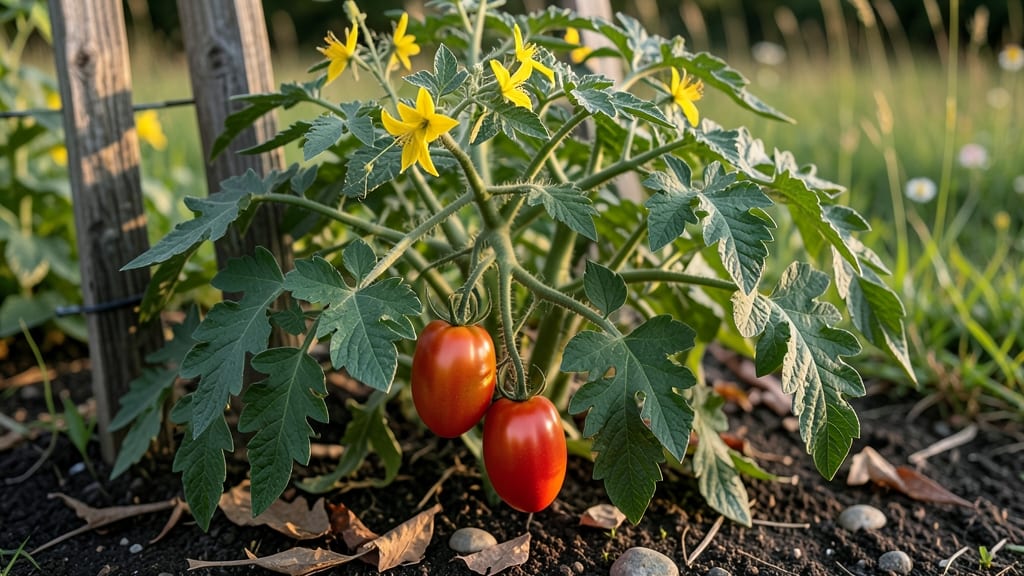
Growing Arkansas Traveller tomatoes means discovering a plant that refuses to quit—striped vines that regrow from the roots every season. ✨ I fell in love with this heirloom after my first harvest: rich, smoky-sweet fruit with a texture that melts in your mouth, not the watery mush of store-bought tomatoes.
The real magic? These plants regenerate from old roots, saving you time and money year after year.
The secret to their success starts with well-draining soil mixed with compost—think 60% garden soil, 30% compost, 10% perlite—and a sunny spot with at least 6-8 hours of direct sunlight daily.
Arkansas Travellers thrive in warm climates but tolerate cooler temperatures better than most heirlooms, making them perfect for Southern gardeners or containers that can be moved indoors during winter.
Plant seeds 1/4 inch deep, 2-3 weeks after your last frost, and space them 2-3 feet apart to give those striped vines room to sprawl.
You’ll know you’re doing it right when vines stretch 4-6 feet long, producing fruit that ripens in 70-85 days. The key to continuous harvests? Prune aggressively—remove suckers early and pinch back vines to encourage bushier growth.
These tomatoes are disease-resistant but watch for hornworms (they adore these plants) and blossom end rot (calcium deficiency). A weekly check and mulching keep pests and problems at bay.
Harvest when fruit turns deep red with bold pink stripes, and save a few seeds to replant next year. The best part? Those same roots can produce new plants for 3-5 years—no replanting, just regrowth.
Perfect for lazy gardeners who want flavor-packed tomatoes with minimal effort. Ready to grow a vine that keeps giving?
📚 In This Guide
- What you need
- Instructions
- Tips and common mistakes
- Wrapping up and next steps
What you need
- ● Seeds or Seedlings: 3–5 Arkansas Traveller tomato seeds (or young plants if starting with transplants).
- ● Containers or Garden Bed: For containers: 5-gallon pots or larger (at least 18" deep) with drainage holes.
- ● For in-ground planting: Well-draining soil in a sunny spot (6+ hours of sunlight daily).
- ● Potting Mix: 1–2 bags of high-quality, organic seed-starting mix or well-draining garden soil (amended with compost).
- ● Fertilizer: Balanced organic fertilizer (e.g., 5-5-5 or 10-10-10) for seedlings.
- ● Slow-release tomato-specific fertilizer (e.g., 3-4-6) for transplanting.
- ● Support System: 1–2 cages (6' tall) or stakes per plant (these vines grow tall!).
- ● Watering Can or Hose: With a gentle spray nozzle for seedlings.
- ● Pruning Shears: Small, sharp pair for trimming suckers and dead leaves.
- ● Mulch: Straw or shredded leaves (2–3 inches thick) to retain moisture.
- ● Grow lights (for indoor seed starting).
- ● Drip irrigation system for consistent watering.
- ● Row covers (to protect from early pests).
- ● Epsom salt (1 tbsp per plant monthly for magnesium boost).
- ● Companion plants (e.g., basil or marigolds to deter pests).
Step-by-Step instructions for growing Arkansas Traveller tomatoes
This heirloom treasure thrives with just a few key techniques—let’s get those striped vines flourishing.
🌱 Step 1: Start Seeds Indoors for Early Vigorous Growth
Plant seeds 6-8 weeks before your last frost date in 2-3 inch deep biodegradable pots filled with sterile seed-starting mix. Arkansas Travellers germinate best at 75-85°F, so use a seedling heat mat if your home runs cooler. Press seeds ¼ inch deep—any deeper delays germination because the seedling must push through too much soil.
Mist the surface with a spray bottle until the mix feels evenly damp but not soggy. Cover the tray with a humidity dome or plastic wrap to retain warmth and moisture. Check daily but resist watering again until condensation forms on the dome—this ensures consistent moisture without overwatering. You’ll see sprouts in 5-10 days, but keep the soil warm until true leaves (not the initial seed leaves) appear.
☀️ Step 2: Provide Strong Light to Prevent Leggy Seedlings
The moment seedlings emerge, move them under 14-16 hours of bright light daily. A south-facing window won’t cut it—these plants need full-spectrum LED grow lights positioned 2-4 inches above the seedlings. Without enough light, stems stretch weakly toward the source, creating "leggy" seedlings that never recover.
Rotate the trays quarter-turn daily so plants grow straight and sturdy. You’ll notice strong seedlings have thick stems, deep green leaves, and compact spacing between nodes. If leaves yellow or stems bend toward the light, your setup needs more intensity or closer placement.
🪴 Step 3: Transplant After Hardening Off for Resilience
Two weeks before your last frost, begin hardening off seedlings by placing them outside in partial shade for 1-2 hours the first day. Gradually increase exposure by 1 hour daily, moving to full sun by day 7. Arkansas Travellers handle heat well, but sudden temperature swings shock young plants.
Transplant on an overcast afternoon into well-draining soil amended with compost. Bury stems deeper than usual—up to ⅓ of the stem—to encourage strong root systems. Space plants 3-4 feet apart in rows 4 feet apart to allow airflow and prevent disease. Water deeply at the base to settle soil around roots.
✂️ Step 4: Prune for Airflow and Regrowth Potential
Arkansas Travellers regrow naturally after pruning, so remove suckers (the shoots between the main stem and branches) when they’re smaller than a pencil. This redirects energy to fruit production and prevents overcrowding. Use clean, sharp pruners to avoid tearing stems—disease lurks in jagged cuts.
When vines reach 5-6 feet tall, trim the top growth to encourage bushier growth. You’ll see new lateral branches form within 7-10 days, each capable of producing fruit. Prune in the morning so wounds dry quickly, reducing rot risk. Mulch with 2-3 inches of straw to retain moisture and suppress weeds.
💧 Step 5: Water Deeply and Fertilize for Bold Striped Fruit
Water deeply 1-2 times per week, aiming for 1-1.5 inches of water per week. Arkansas Travellers thrive with consistent moisture—let the top 2 inches of soil dry between waterings to prevent blossom-end rot. Avoid overhead watering to keep leaves dry and reduce disease pressure.
Fertilize every 4-6 weeks with a balanced organic fertilizer (like 5-5-5) to support both foliage and fruit. You’ll know the plant is happy when it produces large, striped tomatoes with sweet, tangy flavor. Harvest when fruit is fully colored and slightly soft to the touch—waiting too long makes them mealy.
Tips & tricks for perfect Arkansas Traveller tomato growth
These game-changing techniques will help you coax the boldest striped tomatoes from your Arkansas Traveller plants—no green thumb required!
Germination Gold Standard: The 75-85°F temperature range in Step 1 isn't just a suggestion—it's non-negotiable for consistent germination. I learned this the hard way after watching seeds take 3 weeks to sprout in my 68°F basement. If your home runs cooler, invest in a seedling heat mat ($20 at garden centers) or place your seed trays on top of your refrigerator. You'll see those first true leaves appear in 5-10 days instead of waiting weeks. Pro tip: Place your heat mat under the entire tray—uneven warmth causes some seeds to germinate while others languish.
Lighting Strategy: That 14-16 hours of bright light in Step 2 is where most beginners fail. I've seen gardeners swear by south-facing windows only to end up with 2-foot-tall leggy seedlings that flop over like overcooked spaghetti. The secret? Position your grow lights 2-4 inches above the seedlings and adjust as they grow. Use a timer to automate the 14-16 hours—this consistency is what builds strong stems. I rotate my trays every morning before work (takes 30 seconds!) to prevent any leaning toward the light source. You'll know you're doing it right when your seedlings develop that thick, compact growth pattern instead of stretching upward like they're reaching for heaven.
Transplanting Hack: Burying stems ⅓ deep in Step 3 might seem counterintuitive, but it's a proven technique to encourage robust root systems. Here's what I do: After removing the seedling from its pot, make a small slit in the soil with your finger about ⅓ down from the top of the stem, then gently tuck the stem into this pocket. This creates a natural "knee" that will sprout new roots. The 3-4 foot spacing might seem generous, but trust me—crowded Arkansas Travellers produce smaller fruit and attract more disease. Think of it as giving each plant room to stretch its striped legs!
Pruning Payoff: Those 7-10 days after trimming top growth in Step 4 are magical. When you see those new lateral branches emerge, you're witnessing the plant's natural regrowth potential in action. I prune in the morning so any sap that oozes from the cuts has time to dry before evening moisture could invite fungal infections. For suckers, I use my fingers to gently pinch them off when they're pencil-sized—no need for pruners. This simple act redirects all that plant energy toward producing those large, striped tomatoes instead of leafy growth. And that 2-3 inches of straw mulch? It's not just for looks—it keeps soil moisture consistent and blocks weeds that compete with your tomatoes for nutrients.
Pro Tips for Arkansas Traveller Tomato
- These game-changing techniques will help you coax the boldest striped tomatoes from your Arkansas Traveller plants—no green thumb required!
- Germination Gold Standard: The 75-85°F temperature range in Step 1 isn't just a suggestion—it's non-negotiable for consistent germination.
- Lighting Strategy: That 14-16 hours of bright light in Step 2 is where most beginners fail.
Frequently asked questions
Got questions about growing or using Arkansas Traveller tomatoes?
Here are answers to the most common queries—from planting to harvest and beyond!
When is the best time to plant Arkansas Traveller tomatoes?
The ideal time to plant Arkansas Traveller tomatoes is after the last frost date in your area, typically late April to early June in most regions. These heat-loving tomatoes thrive in warm soil (at least 60°F) and need full sun (6–8 hours daily). Start seeds indoors 6–8 weeks before transplanting for an earlier harvest.
Why do my Arkansas Traveller tomatoes crack?
Cracking is common in heirloom varieties like Arkansas Traveller due to uneven watering or rapid growth spurts. To prevent it:
- Water consistently—keep soil evenly moist (not soggy).
- Avoid overhead watering to prevent splitting.
- Mulch heavily to stabilize soil moisture.
Can I grow Arkansas Traveller tomatoes in containers?
These vining tomatoes thrive in large containers (at least 5-gallon pots) with good drainage. Use a balanced fertilizer and prune suckers to encourage bushier growth. Place pots in full sun and stake or cage them for support. Just ensure the container stays stable—these plants can get heavy!
What’s the best way to use Arkansas Traveller tomatoes?
These bold, striped beauties are perfect for:
- Fresh slicing—their sweet, tangy flavor shines in sandwiches or salads.
- Sauces & salsas—their low acidity makes them ideal for chunky salsas.
- Grilling or roasting—caramelized Travellers add depth to dishes.
- Bread & bruschetta—their texture holds up well when toasted.
How long does it take for Arkansas Traveller tomatoes to produce fruit?
From transplanting, expect 60–85 days to harvest, depending on climate. In optimal conditions (warmth + consistent care), you’ll see flowers in 4–6 weeks, followed by fruit. Regrowth is natural—prune aggressively after harvest to encourage a second flush of tomatoes!
Wrapping up and next steps
The Arkansas Traveller tomato isn’t just a garden gem—it’s a revolutionary plant that rewards patience with bold flavors and self-sustaining growth. Whether you’re a seasoned gardener or a curious beginner, these striped vines prove that great things come from small seeds.
Now that you’re armed with tips on soil, sunlight, and regrowth, it’s time to roll up your sleeves and get planting!
Start small—try a single plant in a pot or a patch in your garden—and watch your confidence (and harvest!) grow. Share your progress with fellow gardeners, experiment with recipes, and don’t forget to save those seeds for next season. Happy growing! 🌱✨