
Vegetables
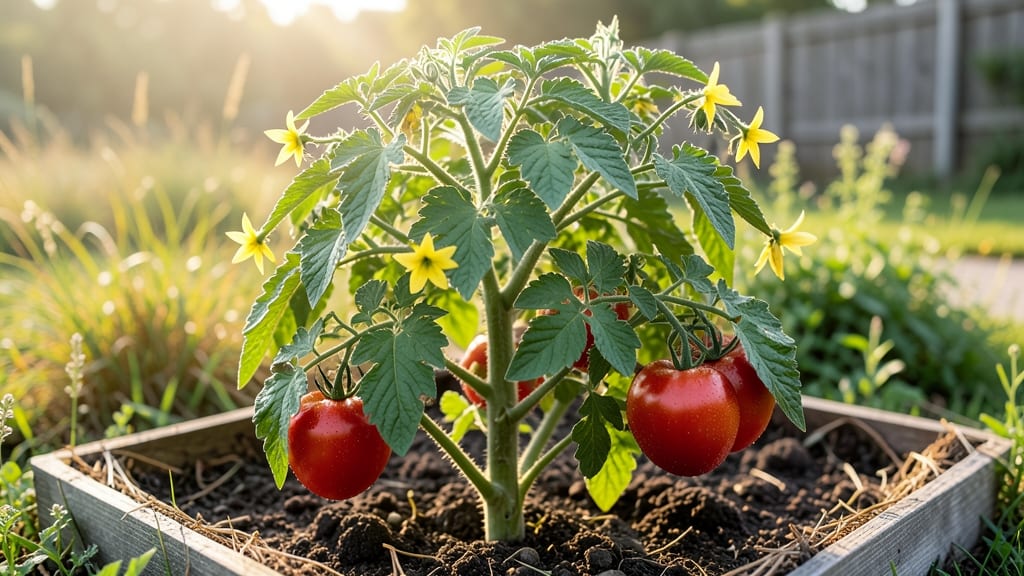
Growing Bushsteak hybrid tomatoes changed how I think about determinate varieties—these striped beauties produce pound-sized fruit and regrow from scraps, like a tomato superpower. 🌱 The first time I saw the striped beefsteaks hanging from my compact plants, I knew I’d never go back to standard cherry tomatoes again.
Their compact growth habit makes them perfect for containers or small gardens, yet they deliver restaurant-quality fruit without the sprawl.
Here’s the secret sauce: these tomatoes thrive in full sun (6-8 hours daily) and well-draining soil with a pH of 6.0-6.8. Start seeds indoors 8-10 weeks before last frost or buy sturdy transplants—just avoid overcrowding, since they need 18-24 inches of space to reach their full potential.
The real magic happens when you let them ripen on the vine; those striped beefsteaks develop a sweet-meets-tangy flavor that’ll make your neighbors ask for cuttings.
Pruning isn’t just about shape—it’s about airflow and fruit size. Pinch suckers early to encourage stronger stems, and remove lower leaves to prevent disease. Water consistently at the soil level (not overhead) to avoid cracking those massive fruits.
By mid-summer, you’ll be harvesting 3-5 pounds of tomatoes per plant, and the best part? You can propagate new plants from the stems you’d normally compost.
Frost sensitivity is the only real challenge, so plan to harvest before temperatures drop below 50°F. If you miss the window, the good news is you can still save seeds or root scraps for next year’s garden.
Whether you’re growing in pots or in-ground, this variety proves you don’t need a backyard to grow restaurant-worthy tomatoes—just patience and the right variety.
📚 In This Guide
- What you need
- Instructions
- Tips and common mistakes
- Wrapping up and next steps
What you need
- ● Seeds or Seedlings: 1–2 packets of Bushsteak Hybrid tomato seeds (or 2–3 healthy seedlings from a nursery).
- ● Containers or Garden Space: Containers: 5-gallon pots (2–3 per plant) with drainage holes.
- ● Garden Beds: Well-draining soil in a sunny spot (6+ hours of sunlight daily).
- ● Soil: High-quality potting mix or garden soil amended with compost (1 part compost to 3 parts soil).
- ● Fertilizer: Balanced tomato fertilizer (10-10-10 or 5-10-10 NPK ratio).
- ○ Optional: Fish emulsion or compost tea for organic boosts.
- ● Support: Cages (4–6 ft tall) or stakes (5–6 ft) to support the vines.
- ● Watering Supplies: Watering can or hose with a gentle spray nozzle.
- ● Pruning Tools: Sharp pruning shears or scissors (sterilized with rubbing alcohol).
- ● Mulch: Straw or shredded leaves to retain moisture and suppress weeds.
- ● pH Test Kit: To ensure soil pH is between 6.0–6.8 (ideal for tomatoes).
- ● Drip Irrigation System: For consistent watering (especially in hot climates).
- ● Row Covers: Lightweight fabric to protect seedlings from pests or frost.
- ● Grow Lights: If starting indoors before the last frost (12–16 hours of light daily).
Step-by-step instructions for growing Bushsteak Hybrid tomatoes
Here's how to cultivate this remarkable striped heirloom—where every cutting can grow into a new plant.
🌱 Step 1: Start Seeds Indoors 8-10 Weeks Before Last Frost
Fill 4-inch pots with sterile seed-starting mix (never garden soil—it compacts and invites disease). Plant 2 seeds per pot at ¼-inch depth, just below the soil surface. The Bushsteak's thick seeds need gentle pressure to make contact with moist soil. I like to use a humidity dome or plastic wrap to trap warmth, since these tomatoes germinate best at 75-80°F. Keep the soil consistently damp but never soggy—you'll know it's right when the surface stays dark, not light and crusty.
Place pots in a warm, bright location (a seedling heat mat helps if your home runs cool). Germination takes 7-14 days—longer if your home is below 65°F. Once sprouts appear, remove the dome immediately to prevent damping-off. Watch for first true leaves (the second set after the initial seed leaves)—that's your signal to begin 14-hour daily light cycles using a grow light if natural light is insufficient.
☀️ Step 2: Harden Off and Transplant After All Frost Risk Passes
Two weeks before your last frost date, move seedlings outside for 1-2 hours daily in a sheltered spot. Gradually increase exposure over 10-14 days until they're acclimated to full sun. The Bushsteak's striped skin is sensitive to cold—don't rush this step or you'll see yellowing leaves and stunted growth. Transplant after soil warms to 60°F and night temps stay above 50°F, using cage supports (these plants can get 4-5 feet tall despite their "bush" name).
Space plants 18-24 inches apart in well-draining soil amended with compost. Bury the stem 1 inch deeper than in the pot—this encourages stronger root systems. Water deeply at transplanting to settle soil around roots, then maintain 1 inch of moisture in the topsoil. Mulch with straw to retain moisture and prevent soil-borne diseases that plague heirloom tomatoes.
💧 Step 3: Prune and Train for Maximum Yield
The Bushsteak's unique striped fruit thrives when you prune aggressively—remove suckers (side shoots) weekly to focus energy on main stems. Leave 2-3 main stems per plant for best airflow and fruit production. Pinch off flowers until the plant reaches 3 feet tall, then let it fruit. This delayed flowering prevents blossom-end rot (a common issue with heirlooms) and ensures larger, striped fruits.
Stake or cage plants immediately—these tomatoes produce 1-2 pound fruits that need support. Water at the base (never overhead) to prevent fungal diseases. The striped pattern fades with uneven watering, so maintain consistent moisture. Harvest when fruits are fully colored and slightly soft—they don't ripen further off the vine. Here's the magic: Save seed scraps! The Bushsteak regenerates from cuttings—place stems in water until roots form, then transplant.
✂️ Step 4: Extend the Season With Regrowth Techniques
When frost threatens, prune back the plant to 6 inches tall and move it indoors to a sunny window or under grow lights. Reduce watering slightly but keep soil damp. You'll see new growth within 2-3 weeks—this is the Bushsteak's remarkable ability to regenerate. In spring, transplant it back outside for another season. The striped pattern remains vibrant if you maintain full sun (6+ hours daily) and consistent care.
For year-round production, take 6-inch cuttings from healthy stems in late summer. Dip in rooting hormone, plant in moist potting mix, and cover with a plastic bag to retain humidity. Roots form in 3-4 weeks—transplant these to pots and overwinter indoors. The Bushsteak's striped beauty and regenerative nature make it a garden standout that pays dividends year after year.
Tips & tricks for perfect Bushsteak Hybrid tomato cultivation
These insider tricks will help you coax the most vibrant striped fruits from your Bushsteak plants—while avoiding the pitfalls that frustrate even experienced gardeners.
The Germination Goldilocks Zone: Those 75-80°F temperatures for germination aren't just numbers—they're the sweet spot where Bushsteak seeds activate their unique striped patterning. I've found that placing pots on a seedling heat mat set to 78°F (with the ambient room at 68°F) creates the perfect gradient. Too cold below 65°F and you'll wait weeks; too hot above 85°F and seeds may rot before sprouting. The humidity dome keeps moisture consistent without drowning roots—just remember to remove it immediately after sprouts appear to prevent damping-off.
Harden Off Like a Pro: The 10-14 day hardening process is where most gardeners rush and pay the price. Start with just 1 hour of morning sun in a sheltered spot, then gradually add afternoon exposure. I've seen Bushsteak seedlings go from vibrant green to yellowing in 24 hours when moved too quickly—this variety's striped skin is particularly sensitive to temperature shocks. A good rule of thumb: if your seedlings look wilted after hardening, they're not ready for the next step. Also, avoid hardening on windy days—the delicate leaves can tear.
Pruning Strategy for Striped Perfection: The weekly sucker removal in Step 3 isn't just about yield—it's what intensifies those stripes. When you leave 2-3 main stems, you're creating the perfect balance of energy distribution. Here's my secret: use clean, sharp pruners and make cuts at a 45-degree angle just above a leaf node. This prevents disease entry points while encouraging stronger regrowth. And when you pinch those early flowers, you're not just preventing blossom-end rot—you're allowing the plant to develop the robust vascular system needed to support those 1-2 pound striped fruits.
Regrowth Hack for Year-Round Production: The 6-inch cuttings technique in Step 4 works best when taken from stems that are 1-2 inches thick—these have the most regenerative capacity. After dipping in rooting hormone, I like to use a clear plastic cup as a propagation chamber: fill with moist potting mix, insert the cutting, then cover with a plastic bag secured with a rubber band. Place near a south-facing window where it gets 6+ hours of indirect light. The roots typically form in 3-4 weeks, but I check weekly by gently tugging—if resistance is felt, roots have developed. This method lets me keep Bushsteak plants producing for years.
Pro Tips for Bushsteak Hybrid Tomato
- These insider tricks will help you coax the most vibrant striped fruits from your Bushsteak plants—while avoiding the pitfalls that frustrate even experienced gardeners.
- The Germination Goldilocks Zone: Those 75-80°F temperatures for germination aren't just numbers—they're the sweet spot where Bushsteak seeds activate their unique striped patterning.
- Harden Off Like a Pro: The 10-14 day hardening process is where most gardeners rush and pay the price.
Frequently asked questions
Got questions about growing the Bushsteak Hybrid tomato? You’re not alone! Here are answers to the most common queries—from propagation to harvest—so you can grow this striped, regrowable superstar with confidence.
Can I regrow a Bushsteak tomato from scraps like other heirlooms?
The Bushsteak Hybrid is part of the "regrowable" tomato family, but success depends on the stem. Use the top 2–3 inches of the stem (with leaves) in water or soil—just like a regular tomato cutting. Avoid the base, where roots form poorly. Patience is key: roots may take 2–4 weeks!
How long does it take to grow a Bushsteak tomato from seed?
From seed to harvest, plan for 70–85 days in ideal conditions (warm soil, full sun). Seedlings sprout in 7–14 days, and flowers appear after 6–8 weeks. Rush the process with heat mats or a greenhouse—just avoid transplant shock by hardening off seedlings for 7–10 days before moving outdoors.
Why are my Bushsteak tomatoes cracking or splitting?
Cracking is common in fast-growing varieties like Bushsteak, often caused by inconsistent watering or heavy rainfall after dry spells. To prevent it:
- Water deeply but evenly (1–2 inches per week).
- Mulch to retain moisture.
- Harvest fruits when 70–80% ripe to avoid over-maturation.
Are there alternatives if my Bushsteak plants struggle in my climate?
If your zone is too hot (Zone 10+) or cold (Zone 5 or below), try these regrowable tomato hybrids with similar traits:
- ‘Supersteak’ – Heat-tolerant, disease-resistant.
- ‘Mountain Merit’ – Cold-hardy, reliable producer.
- ‘Solar Fire’ – Drought-resistant, great for containers.
How should I store or preserve Bushsteak tomatoes?
These tomatoes are best eaten fresh (they don’t store long due to their thin skin), but you can extend their life with:
- Room temp: 1 week in a paper bag (ethylene gas slows ripening).
- Refrigerator: 3–5 days (separate from other produce to avoid chilling injury).
- Preservation: Slice for sun-dried tomatoes, blend into sauces, or freeze whole (peeled) for soups.
Wrapping up and next steps
The Bushsteak Hybrid Tomato isn’t just a delicious addition to your garden—it’s a game-changer for sustainability and flavor! 🌱 With its striped beauty, regrowth magic, and easy-care nature, this tomato proves that growing your own food can be both rewarding and fun.
Whether you’re a seasoned gardener or just starting out, this hybrid is perfect for expanding your harvest with minimal effort.
Ready to take the next step? Start with a single seedling or scrap and watch your garden transform. Share your progress with fellow plant enthusiasts, or experiment with new recipes—your striped, regrowable tomatoes deserve the spotlight! 🍅✨