
Vegetables
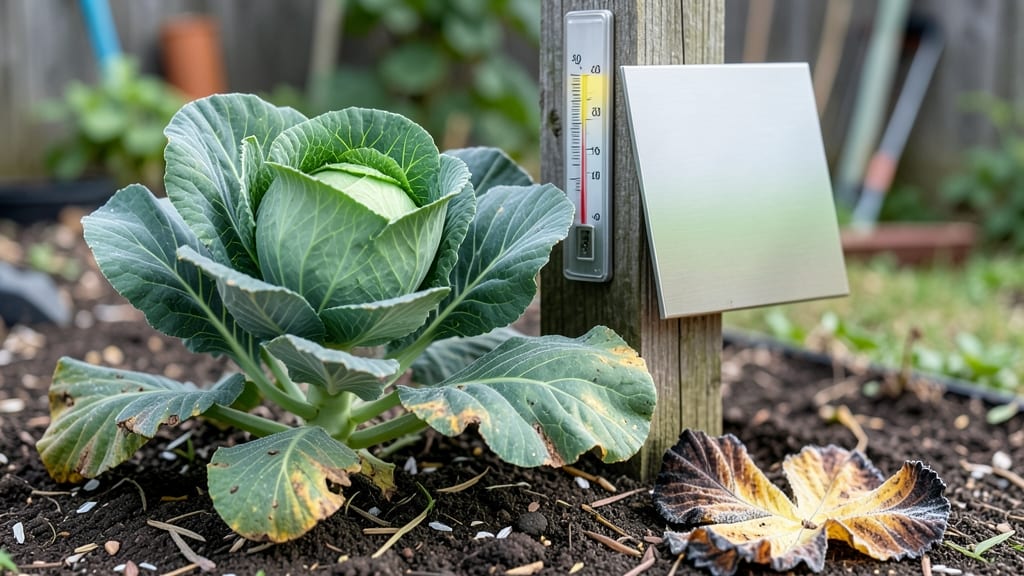
Cabbage thrives when its temperature tolerance ensures cool conditions—this cool-loving crop actually sweets up in light frosts. 🌱 I’ve grown cabbage in three different climates, and the secret to success isn’t avoiding cold but managing heat.
Too much sun and your heads bolt before harvest; too much chill and growth stalls. The magic window for planting is 4-6 weeks before your last frost, but some varieties handle 20°F overnight temps without flinching. My favorite cold-hardy types—like ‘January King’—produce sweeter, tighter heads after a frost.
Heat, though, is the real enemy: above 80°F, growth slows and quality drops. You’ll end up with crisp, flavorful heads that stay fresh longer, even in summer heat. The trick is shade cloth during peak afternoons and consistent watering to keep roots cool.
For winter crops, focus on late-summer planting to let heads mature before winter sets in. Works for spring, fall, and even winter harvests in mild climates. Here’s how to pick the right varieties and protect your plants from extremes.
📚 In This Guide
- What you need
- Instructions
- Tips and common mistakes
- Wrapping up and next steps
What you need
- ● Fresh cabbage heads: 3–5 medium-sized (Green or Red Savoy, Napa, or Iceberg varieties work best for testing).
- ● Thermometer: 1 digital or analog thermometer with a range of -4°F to 100°F (-20°C to 38°C) for accuracy.
- ● Plastic storage containers: 2–3 airtight containers (16 oz or larger) with lids for cold storage tests.
- ● Freezer-safe bags: 2–3 heavy-duty, resealable bags (1-gallon size) for freezing experiments.
- ● Notebook & pen: To log temperature changes, cabbage condition, and observations.
- ● Knife & cutting board: For trimming samples (sharp chef’s knife recommended).
- ● Plastic wrap or food-grade cling film: To seal smaller samples for short-term tests.
- ● Humidity monitor: To track moisture levels alongside temperature.
- ● Garden thermometer: For outdoor growing experiments (soil and air temp probes).
- ● Food dehydrator: If testing cabbage’s tolerance to heat drying methods.
- ● Camera or phone: To document changes in cabbage texture/color over time.
- ● Seed packets: If you’re growing cabbage from scratch (choose cold-hardy varieties like January King or Savoy).
How to grow cabbage through temperature extremes
Cabbage thrives where others freeze—here’s how to leverage its cold tolerance for robust harvests.
☀️ Step 1: Understand Cabbage’s Temperature Zones
Cabbage handles 32-85°F with ease, but extremes matter. Young plants need 50-60°F soil to germinate—too hot (80°F+) slows sprouting. Mature heads tolerate 20°F for short periods but suffer above 90°F—leaves yellow and heads split. I plant early varieties in spring and late ones in summer, spacing trials to avoid heat stress.
Watch for bolt-resistant varieties like ‘January King’ or ‘Red Express’—they delay flowering when days lengthen. Heat waves trigger bolting, so I prioritize shade cloth (30-50% block) during summer months. The key is matching variety to your climate’s extremes rather than fighting them.
🌱 Step 2: Time Planting for Optimal Temperature Windows
Direct-sow seeds 4-6 weeks before last frost for spring crops—soil should be 45°F+. I use a soil thermometer to confirm; cold soil (40°F) delays germination by weeks. For fall/winter, plant 10-12 weeks before first frost—heads mature before freezing. In mild climates, I sow successive plantings every 2-3 weeks to stagger harvests.
Here’s the trick: cabbage grows best when days are 50-70°F. If summer temps climb above 80°F, use black plastic mulch to keep roots cool. I’ve seen split heads in 95°F+ heat—prevent it by providing afternoon shade and consistent moisture.
💧 Step 3: Adjust Watering for Temperature Shifts
Cabbage needs 1-1.5 inches of water weekly, but adjust for heat. In 70-80°F, water deeply every 5-7 days—let soil dry 1 inch deep between waterings. When temps hit 90°F+, increase to 2-3 inches weekly and water in early morning to reduce evaporation. I use drip irrigation to keep leaves dry—wet foliage in hot weather invites fungal diseases.
Cold snaps (32°F) slow growth but don’t kill established plants. Mulch with 2-3 inches of straw to insulate roots. If a hard freeze (20°F) is forecast, cover heads with row fabric—it protects without trapping excess moisture. The goal is to maintain 50-60°F root zone temps year-round.
✂️ Step 4: Harvest Strategically to Preserve Quality
Harvest when heads reach 6-8 inches wide—smaller heads store better. I pull plants on dry mornings to minimize stress. For winter storage, cure heads at 50-55°F and 85-90% humidity for 3-5 days to toughen leaves. Store in 32-35°F with 90% humidity—they’ll keep for 4-6 months.
Watch for temperature-related pests: aphids thrive in 70°F+, while cabbage worms prefer 60-75°F. Rotate control methods—neem oil for aphids, row covers for worms. The secret to long-term success? Treat cabbage’s cold tolerance as an asset, not a limitation. When others garden in summer, you’re harvesting.
Tips & tricks for perfect cabbage temperature management
Mastering cabbage's cold tolerance turns it into a year-round powerhouse—here's how to make it work for you.
Soil Temperature Secret: The 45-60°F soil window for germination is non-negotiable. I always check soil temps with a thermometer before planting—cold soil (40°F) can delay sprouting by weeks, while hot soil (80°F+) causes seeds to rot. For spring plantings, aim for morning temps above 50°F to ensure consistent germination. This precision prevents the most common planting frustration.
Heat Stress Prevention: When summer temps hit 90°F+, split heads become inevitable without intervention. I've found that combining black plastic mulch with afternoon shade (using 30% shade cloth) maintains root zone temps around 70°F—the sweet spot for cabbage. The mulch also conserves moisture, reducing the need for frequent watering during heatwaves. This two-pronged approach has saved my harvests during multiple 95°F+ summers.
Winter Protection Strategy: For hard freezes (20°F), I use a layered approach: 2-3 inches of straw mulch first, then row fabric over the heads. This maintains 50-60°F root zone temps while allowing light penetration. The fabric acts as an insulator without trapping excess moisture that could lead to rot. I've successfully overwintered cabbage heads using this method in zones where winter temps drop to 15°F.
Harvest Timing Insight: The 6-8 inch size guideline for harvest is about quality, not just size. Smaller heads (6 inches) store better because they've had less time to develop internal moisture buildup. I harvest on dry mornings to prevent stress—wet leaves make heads more susceptible to disease during storage. The 3-5 day curing period at 50-55°F is crucial for developing that tough outer leaf that protects the head during long-term storage.
Pro Tips for Cabbage Temperature Tolerance
- Mastering cabbage's cold tolerance turns it into a year-round powerhouse—here's how to make it work for you.
- Soil Temperature Secret: The 45-60°F soil window for germination is non-negotiable.
- Heat Stress Prevention: When summer temps hit 90°F+, split heads become inevitable without intervention.
Frequently asked questions
Got questions about keeping your cabbage happy in hot or cold conditions? You're not alone!
Here are some of the most common concerns—and straightforward answers—to help you grow (or store) cabbage like a pro.
How cold can cabbage tolerate before it freezes?
Cabbage thrives in cool weather but can handle light freezes (down to 20–25°F (-6 to -4°C)) without major damage. However, prolonged exposure below 15°F (-9°C) may cause blackened leaves or core rot. For winter crops, use row covers or mulch to protect young plants.
Can cabbage survive a heatwave? What’s the ideal temperature range?
Cabbage prefers 50–75°F (10–24°C) for optimal growth. When temps hit 85°F (29°C)+, it bolts (goes to seed) or develops pithy (woody) cores. To beat the heat:
- Plant in spring or fall (avoid summer peaks).
- Use shade cloth (30–50%) for young plants.
- Water deeply at the base to keep roots cool.
How do I store cabbage long-term in warm or cold climates?
Cabbage stores best in cool, humid conditions (32–40°F / 0–4°C). For short-term (weeks), keep it in a plastic bag in the fridge. For long-term (months), try:
- Root cellar or basement (humidity >85%).
- Buried in sand (dig a trench, cover with damp sand).
- Avoid freezing—thawed cabbage turns mushy.
What are the signs my cabbage is struggling due to temperature stress?
Watch for these red flags:
Symptom
Likely Cause
Fix It!
Yellowing leaves (starting from bottom)
Overheating or too much water
Move to shade; water at soil level.
Blackened or slimy spots
Fungal rot (from freezing or wet conditions)
Remove affected leaves; improve airflow.
Tiny flowers or bitter taste
Bolting (heat stress)
Harvest immediately or replant in cooler months.
Are there cabbage varieties that handle heat or cold better?
Yes! For heat tolerance, try:
- ‘Golden Acre’ (sweet, slow to bolt).
- ‘Super Sweet 100’ (hybrid, disease-resistant).
- ‘January King’ (stores well, winter-friendly).
- ‘Savoy’ types (ruffled leaves tolerate frost better).
Wrapping up and next steps
Cabbage’s amazing temperature tolerance means you can grow it year-round with the right strategies—whether you’re battling frost or scorching heat! 🌱 From choosing cold-hardy varieties to protecting plants with mulch or row covers, these secrets unlock effortless, bountiful harvests no matter the season.
Whether you’re a first-time gardener or a seasoned pro, your cabbage patch is ready for action—so grab those seeds and get planting!
👉 Next step: Pick your favorite variety and start planning your planting schedule based on your local climate. Happy growing! 🌿