
Vegetables
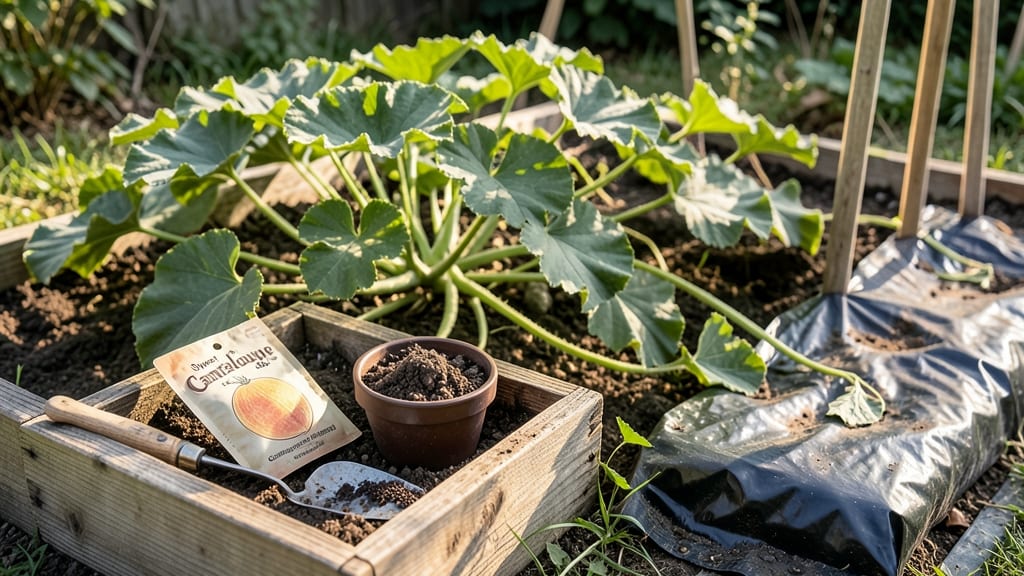
Growing cantaloupe from seed delivers sun-ripened sweetness straight from your backyard—no store-bought melons required. 🌱 I learned the hard way that cantaloupes need warmth, space, and patience, but once you nail these basics, you'll harvest 10-15 pounds of fragrant fruit in just 70 days.
The secret starts with soil that stays warm and well-draining, because cold roots mean no melons.
You'll need a sunny spot with at least 6 hours of direct light daily, seeds started indoors 4 weeks before last frost, and plenty of room—these vines sprawl 6-8 feet if left to their own devices.
Trellising saves space and keeps fruit cleaner, but only try it with bushier varieties like 'Athena' or 'Hale's Best'. The biggest rookie mistake? Overwatering—cantaloupes hate soggy soil, so let the top inch dry between waterings.
By mid-summer, you'll spot tiny blossoms that turn into golden, honey-scented melons hanging from the vines. The telltale sign? The stem near the fruit turns brown and papery—that's your cue to harvest.
One ripe cantaloupe means more are coming, so check daily once they start coloring up. The first taste of homegrown cantaloupe changes everything—nothing compares to that sweet, juicy burst.
Works best in zones 4-10 with warm summers, but even cooler climates can grow cantaloupes if you start seeds early indoors and use black plastic mulch to warm the soil.
For city gardens, try container-growing with dwarf varieties like 'Tiny'—just expect smaller fruit. Here's where the magic begins: your first homegrown slice waiting on the kitchen counter.
📚 In This Guide
- What you need
- Instructions
- Tips and common mistakes
- Wrapping up and next steps
What you need
- ● Cantaloupe seeds: 5–10 seeds (choose heirloom or hybrid varieties like Hale’s Best or Athena for reliable results).
- ● Seed-starting mix: 2–3 cups of sterile, well-draining potting soil (or coconut coir for eco-friendly options).
- ● Seed trays or small pots: 2–4 biodegradable or plastic cell packs (2–3 inches deep).
- ● Grow lights or sunny windowsill: 6–8 hours of warmth (70–85°F) for germination.
- ● Transplant containers: 5-gallon pots or raised beds (12–18 inches deep) for mature plants.
- ● Fertilizer: Balanced organic fertilizer (e.g., 5-5-5) or compost tea for nutrient boosts.
- ● Watering can or hose with gentle nozzle: For consistent moisture without disturbing roots.
- ○ Mulch: Straw or black plastic (optional but helps retain moisture and suppress weeds).
- ● Seedling heat mat: Speeds up germination in cooler climates.
- ● Trellis or stakes: Supports vines if space is limited (though cantaloupes prefer sprawling).
- ● pH test kit: Ensures soil pH is 6.0–6.8 (ideal for cantaloupes).
- ● Row covers: Protects young plants from pests or frost.
- ● Pruning shears: For trimming excessive vines (if needed).
Step-by-step instructions for growing cantaloupe from seed
Here's how I turn tiny seeds into juicy melons in just 70 days—no shortcuts, just proven techniques.
🌱 Step 1: Start Seeds Indoors 3-4 Weeks Before Last Frost
Fill 2-inch deep seedling trays with sterile seed-starting mix and plant 2-3 seeds per cell at ½-inch depth. Cantaloupe seeds germinate best in warm soil—keep the tray on a heat mat set to 80-85°F. You'll see sprouts in 5-10 days, but don't be surprised if some take longer in cooler rooms.
Once seedlings emerge, remove the heat mat and place them under grow lights for 14-16 hours daily. Without enough light, they'll stretch leggy and never recover. Thin to the strongest seedling per cell after 2 weeks—gently snip the others at soil level with scissors to avoid disturbing roots.
☀️ Step 2: Harden Off and Transplant After All Frost Risk Passes
Two weeks before your last frost date, begin hardening off seedlings by placing them outside in partial shade for 2-3 hours daily. Gradually increase exposure over 7-10 days, ending with full sun. This toughens stems and prevents transplant shock.
Choose a full-sun location with well-draining soil and room to spread—cantaloupe vines can stretch 10-15 feet. Plant seedlings 12-18 inches apart in hills of 3-4 plants each, spaced 5-6 feet apart. Bury stems slightly deeper than they were in pots to encourage root development.
💧 Step 3: Water Deeply and Maintain Consistent Moisture
Water deeply once weekly (about 1-1½ gallons per plant) rather than daily shallow watering. Cantaloupe roots run deep, and inconsistent moisture causes bitter fruit. You'll know you're doing it right when the top 2 inches of soil feel dry between waterings.
Mulch around plants with 2-3 inches of straw or grass clippings to retain moisture and suppress weeds. Avoid wetting leaves when watering—this prevents powdery mildew, a common fungal issue. If you see yellowing leaves, it's usually a sign of overwatering, not thirst.
✂️ Step 4: Prune and Support Vines for Maximum Yield
When vines reach 6 feet long, begin training them onto a trellis or letting them sprawl in rows. Remove any suckers (side shoots) that form in the leaf axils—these divert energy from fruit production. You'll also want to prune any leaves that shade the developing melons, ensuring full sun exposure for at least 6 hours daily.
Fertilize lightly with 5-10-10 fertilizer when flowers appear, using ½ teaspoon per plant. Too much nitrogen promotes leafy growth at the expense of fruit. Watch for male flowers first (long stems, no swelling at base), followed by female flowers (small melon-shaped swelling at base)—these are your future harvests.
🍉 Step 5: Harvest at Peak Ripeness for Best Flavor
Cantaloupe is ready to harvest 70-85 days after planting when the stem near the fruit slips easily from the vine. The skin should develop a cream-colored "bloom" near the stem, and the fruit will give slightly when pressed. Cut stems with pruners, leaving 1 inch of stem attached to preserve freshness.
Store ripe cantaloupes at 50-55°F for up to 2 weeks. If you miss the window, unripe melons can be left on the vine to ripen further in sunny weather, but they'll never taste as sweet as those picked at peak ripeness. Here's the thing—once you taste homegrown cantaloupe, store-bought versions will never compare.
Tips & tricks for perfect homegrown cantaloupe
These are the game-changing tricks I wish I knew when I first grew cantaloupe—now you won't make the same mistakes I did.
Germination Secret: The 80-85°F heat mat is non-negotiable for reliable germination. If you don't have one, try placing the seed tray on top of your refrigerator (not inside) or use a warm spot near your oven. Pro tip: Soak seeds in warm water for 24 hours before planting—they'll sprout faster and more uniformly.
Lighting Strategy: Those 14-16 hours of grow lights are crucial, but quality matters more than quantity. LED grow lights are more energy-efficient and produce less heat than fluorescent bulbs. Position lights just 2-3 inches above seedlings to prevent stretching. If you notice seedlings growing tall and thin, you're not providing enough light intensity.
Transplanting Hack: When hardening off, I start with just 1 hour outside on day one, then add 30 minutes each subsequent day. This gradual approach prevents transplant shock better than the standard 2-3 hour jump. Also, transplant on a cloudy day—the less direct sun, the better for stressed seedlings.
Pruning Insight: The 6-foot vine length before pruning is just a guideline—watch for the first female flowers (with that little melon-shaped swelling) to appear. Once you see those, you can prune more aggressively to direct energy to fruit development. I've found that removing every other leaf along the main vine maximizes sun exposure to developing melons.
Pro Tips for Growing Cantaloupe From Seed
- These are the game-changing tricks I wish I knew when I first grew cantaloupe—now you won't make the same mistakes I did.
- Germination Secret: The 80-85°F heat mat is non-negotiable for reliable germination.
- Lighting Strategy: Those 14-16 hours of grow lights are crucial, but quality matters more than quantity.
Frequently asked questions
Got questions about growing cantaloupe from seed?
You’re not alone! Here are answers to the most common queries to help you grow sweet, juicy melons with confidence.
How long does it take for cantaloupe seeds to germinate?
Cantaloupe seeds typically sprout in 5–10 days after planting, depending on soil temperature and moisture. Keep the soil consistently warm (around 70°F+) and damp—germination speeds up with warmth! If seeds don’t sprout in 2 weeks, they may need more light or a cozier spot.
Can I grow cantaloupe in containers, or do I need a garden bed?
Yes! Cantaloupe thrives in large containers (at least 5 gallons) with good drainage. Choose bush varieties like ‘Tasty Jewel’ for smaller spaces. Just ensure the container gets 6–8 hours of sunlight daily and use a lightweight potting mix. Containers warm up faster than soil, speeding up growth!
Why are my cantaloupe plants wilting or turning yellow?
Wilting or yellowing leaves often signal overwatering, underwatering, or pests. Check soil moisture—cantaloupe prefers 1 inch of water per week. Squash vine borers or powdery mildew can also cause stress. Inspect leaves for holes or white powder; treat with neem oil or row covers if needed.
Do cantaloupes need a trellis, or should I let them sprawl?
Cantaloupe vines sprawl naturally (up to 6 feet), but trellising can save space and improve air circulation. If using a trellis, support the fruit with netting to prevent rot. However, bush varieties (like ‘Athena’) stay compact and don’t need extra support—ideal for small gardens!
How do I know when cantaloupes are ripe for harvest?
Ripe cantaloupes have three key signs: the stem slips easily from the vine, the blossom end (near the stem) turns yellow or cream, and the fruit emits a sweet, musky scent. Avoid harvesting too early—underripe melons lack flavor and sugar! Use a knife to gently check the rind for a slight give near the blossom end.
Wrapping up and next steps
Growing cantaloupe from seed is a rewarding journey that yields juicy, homegrown sweetness in just 70 days! With the right soil, sunlight, and care, you’ll enjoy the satisfaction of harvesting your own melons—perfect for fresh eating, salads, or sharing with neighbors. 🍉✨
Ready to dive deeper? Start by sketching your garden layout or exploring companion planting tips to maximize your cantaloupe’s potential. Happy growing—your taste buds (and future harvests) will thank you!