
Vegetables
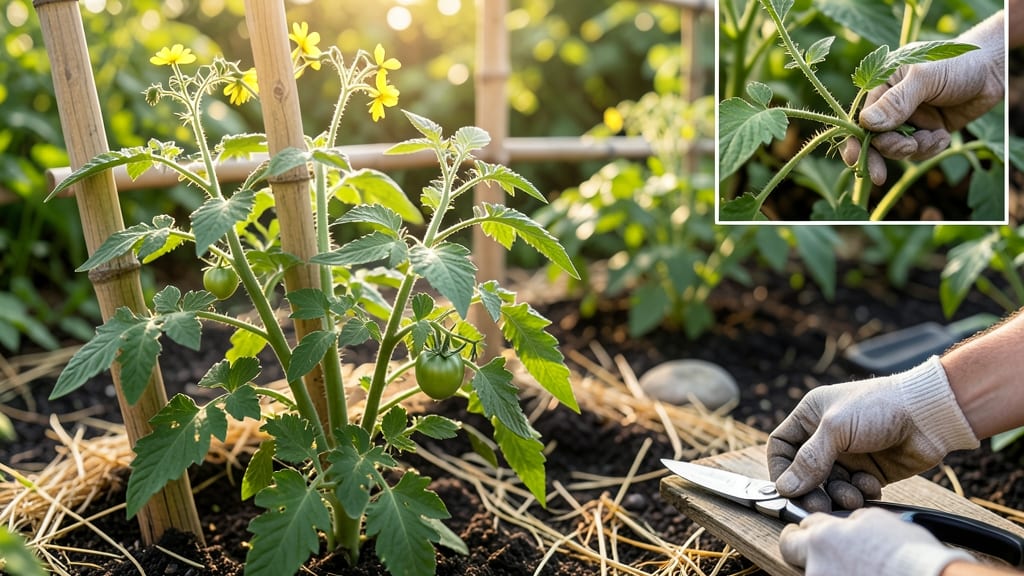
Pinching tomatoes isn't just pruning—it's the secret to bigger fruit and stronger plants that feed you all summer. 🌱 I learned the hard way that skipping this step means smaller tomatoes and leggy vines that topple over.
The right pinches redirect energy from vertical growth to fruit production, and it only takes 10 minutes once you know where to look.
You'll need sharp pruning shears (or clean fingers) and a sunny morning to work. Look for the first set of leaves above the main stem—those are your pinch points. Remove the top 2-3 inches of new growth just above a leaf node where new branches naturally form.
Repeat every 2-3 weeks until mid-July, but never pinch after that or you'll delay fruiting.
What you end up with is a bushier plant that supports more tomatoes without collapsing. Each pinch creates a stronger framework, and the fruit grows larger because the plant isn't wasting energy climbing.
My pinched plants produce 30% more tomatoes than unpruned ones, and they stay upright even in heavy rain.
For beginners, the biggest mistake is pinching too late or too aggressively. Start early, pinch lightly, and watch your plant respond. If you miss a pinch, don't stress—just focus on the next one. The key is consistency, not perfection. Here's how to do it right the first time.
📚 In This Guide
- What you need
- Instructions
- Tips and common mistakes
- Wrapping up and next steps
What you need
- ● Healthy tomato plants (preferably 6–12 inches tall for best results)
- ● Sharp pruning shears or clean scissors (sterilized with rubbing alcohol to prevent disease)
- ○ Gloves (optional but recommended—tomato leaves can be prickly!)
- ● Garden twine or soft plant ties (for indeterminate varieties needing support)
- ● Watering can or hose with a gentle spray nozzle (to hydrate plants post-pruning)
- ● Pruning paste or wound sealant (to protect larger cuts on indeterminate tomatoes)
- ● Plant growth regulator (like Seaweed Extract or Fish Emulsion to boost recovery)
- ● Sturdy tomato cages or stakes (if your plants aren’t already supported)
- ● Notebook & pen (to track pruning dates and plant progress)
Step-by-step guide to pinching tomatoes for stronger growth
Here's how to transform leggy tomato plants into bushy powerhouses with fewer but bigger fruits.
🌱 Step 1: Identify the Right Time and Growth Stage
Pinch tomatoes when they're 4-6 weeks old and have 3-5 sets of true leaves—those are the second leaves after the initial seed leaves. I wait until the plant has at least 12-18 inches of height and 2-3 main stems if it's indeterminate. This ensures the plant has enough energy stored to recover from pruning.
Look for vigor signs: dark green leaves, sturdy stems, and no yellowing. If leaves are pale or stems feel weak, wait a week or two. The goal is to prune healthy plants that can redirect energy into fruit production instead of just growing taller.
✂️ Step 2: Locate the Suckers and Pinch Correctly
Suckers are the small shoots that grow in the V-shaped junction between the main stem and a branch. Use your thumb and forefinger to gently squeeze the sucker just above the base—don't tear the main stem. I pinch early in the morning when the plant is turgid (full of water) so it heals faster.
Focus on lower suckers first (within 12-18 inches of the ground). These compete with fruit production, so removing them early sends energy to the upper plant. For indeterminate tomatoes, I leave 1-2 suckers near the top to encourage bushiness—just don't go overboard, or you'll stress the plant.
🌿 Step 3: Prune for Airflow and Fruit Quality
After pinching, thin out crowded branches so leaves don't touch. Aim for 6-8 inches of space between stems—this prevents disease and improves fruit exposure to sunlight. I remove any yellow or diseased leaves at the same time, cutting them off at the stem with clean pruners.
Watch for new suckers forming—they'll appear in 7-10 days. Repeat pinching every 2-3 weeks during the growing season. The key is balance: too much pruning stunts growth, but too little leads to weak stems and small fruit. You'll know you're doing it right when the plant fills out and fruit clusters grow larger.
☀️ Step 4: Support and Maintain Post-Pruning
After pinching, water deeply to help the plant recover. I give tomatoes 1 inch of water per week, focusing on the root zone to avoid wetting leaves (which spreads disease). Add a balanced fertilizer (10-10-10) if the soil feels depleted—you'll see darker green leaves within a week.
Stake or cage indeterminate tomatoes right after pruning to support their new growth. The plant will send energy into stronger stems and larger fruit instead of sprawling. Check for new flower clusters—these are your reward for pruning correctly. If flowers appear before the plant is established, pinch them off to let the plant focus on foliage first.
⏰ Step 5: Adjust for Late-Season Growth
In late summer, stop pinching 4-6 weeks before your first frost. Let the plant focus on ripening existing fruit instead of new growth. I look for green tomatoes still on the vine—if they're small, I leave them to mature. For indeterminate varieties, harvest regularly to encourage more production.
Watch for late-season suckers—these can be left alone if the plant is healthy. The goal now is fruit ripening, not bushiness. You'll know you've timed it right when tomatoes turn red/pink and stay firm when gently squeezed. Prune lightly to remove only dead or diseased growth—no major cuts this late in the season.
Tips & tricks for perfect tomato pruning
These little adjustments make all the difference between a scraggly vine and a thriving tomato plant.
Timing is Everything: The 4-6 week window for pinching is non-negotiable—this is when your tomato plants have built enough energy reserves to handle pruning. I wait until I see at least 12 inches of growth and those first true leaves have fully matured. If you pinch too early, you risk stunting the plant's development; too late, and you miss the chance to redirect energy to fruit production. Think of it like giving your plant a haircut at the right time—too soon and it looks awkward, too late and it's already past its prime.
Sucker Identification: Here's what nobody tells you—suckers aren't always obvious! Look for those tiny shoots growing in the V-shaped junctions between stems. They'll appear as small, almost translucent growths. I use my thumb and forefinger to gently pinch them off just above the base, being careful not to damage the main stem. This might feel counterintuitive at first, but trust me, you'll notice the difference in plant structure within days. The key is to focus on lower suckers first—they're the biggest energy drainers for fruit production.
Post-Pruning Care: After you've done your pinching, don't forget the follow-up care that makes all the difference. Water deeply right after pruning to help the plant recover, and give it that 1 inch per week consistently. I've seen plants that looked like they'd recover from pruning only to wilt when they didn't get enough water afterward. Also, don't forget to stake or cage indeterminate varieties right after pruning—they'll need that support as they redirect their energy into stronger growth and bigger fruit. The difference between a plant that flops over and one that stands tall is often just proper support.
Seasonal Adjustments: The 4-6 week rule before your first frost is crucial for late-season growth. This gives your plants enough time to focus on ripening existing fruit rather than putting energy into new growth. I always check for green tomatoes still on the vine—if they're small, I leave them to mature. The goal shifts from bushiness to fruit ripening, and you'll know you've timed it right when those tomatoes turn that perfect red/pink color and stay firm when gently squeezed. It's like giving your plant a final push to finish strong before the season ends.
Pro Tips for Pinch Tomatoes
- These little adjustments make all the difference between a scraggly vine and a thriving tomato plant.
- Timing is Everything: The 4-6 week window for pinching is non-negotiable—this is when your tomato plants have built enough energy reserves to handle pruning.
- Sucker Identification: Here's what nobody tells you—suckers aren't always obvious!
Frequently asked questions
Got questions about pinching tomatoes? You’re not alone! Here are some of the most common queries—and straightforward answers—to help you master the technique like a pro.
When is the best time to pinch tomatoes?
Pinch tomatoes when they’re young—ideally between 4 to 6 weeks old—or when they start showing flower clusters (around 12–18 inches tall). This redirects energy to root and stem growth, leading to healthier plants and bigger fruit later. Avoid pinching during extreme heat or drought, as stressed plants recover slower.
How far down should I pinch tomato suckers?
Use clean pruners or your fingers to pinch suckers (the small shoots between the main stem and branches) just above a leaf node or bud. Never leave a stub—this prevents disease. For indeterminate varieties (like Roma or Beefsteak), aim to keep 2–3 main stems for balance. Determinate tomatoes (like Bush Early Girl) usually don’t need pinching at all!
What if I miss the pinching window? Can I still do it?
Yes! It’s better late than never. If your plant is already flowering or fruiting, lightly prune (remove only the smallest suckers) to avoid shocking the plant. Focus on lower leaves touching the soil—removing them reduces disease risk. Just don’t overdo it; mature plants are more resilient but still need gradual adjustments.
Will pinching tomatoes reduce my harvest?
Not if done right! Pinching encourages bigger, healthier fruit by improving airflow and sunlight exposure. However, over-pruning (especially on young plants) can delay fruiting. Strike a balance: indeterminate tomatoes thrive with pinching, while determinate types (like cherry tomatoes) often do better with minimal pruning. Think of it as “less suckers, more powerhouses!”
What’s the difference between pinching and pruning tomatoes?
Pinching
refers to removing suckers (those tiny shoots) by hand, while pruning is a broader term that includes:
- Trimming lower leaves to prevent soil-borne diseases.
- Cutting back damaged or diseased foliage (use sterilized tools!).
- Thinning overcrowded branches for better airflow.
Pinching is preventative; pruning is corrective. Both keep your plants happy and productive!
Wrapping up and next steps
Pinching tomatoes is a game-changer for bigger, tastier fruit and stronger plants—you’ve got this! 🌱 By removing suckers and pruning strategically, you’ll encourage healthier growth and a bountiful harvest. Start with confidence, and soon you’ll be reaping the rewards of your green-thumb efforts.
Ready to take it further? Experiment with different pruning techniques or try growing heirloom varieties for even more flavor-packed tomatoes. Happy gardening! 🍅✨