
Vegetables
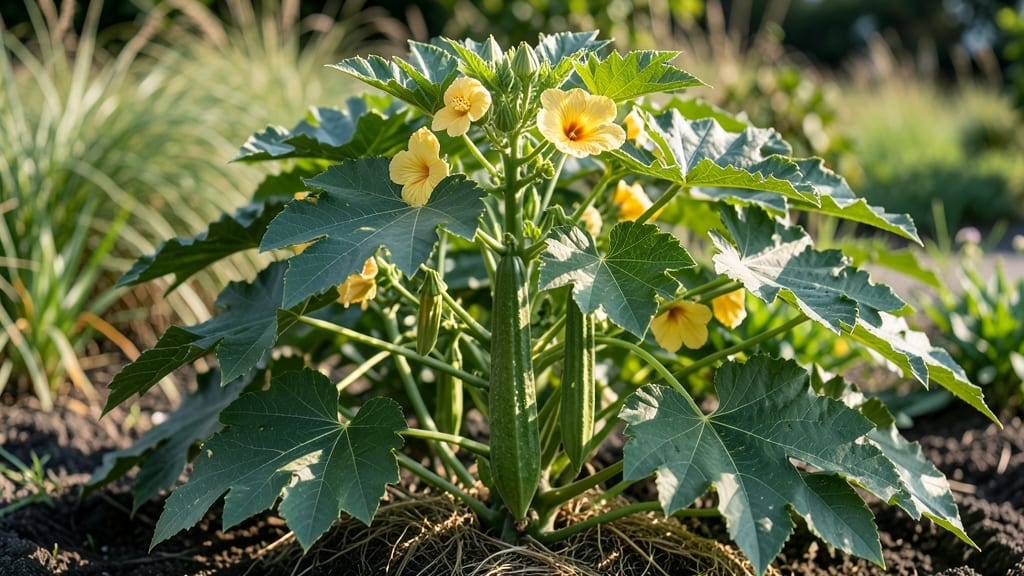
Growing okra on the vine in cold climates feels like cheating the system—those crisp pods thriving when most gardens are buried under snow. ✨ I’ve grown okra in zones 4-5 for years, and the secret isn’t just about heat-loving plants—it’s about timing, soil, and a few sneaky tricks to keep them producing until frost.
The key starts with soil: okra craves warmth, so we trick it with black plastic mulch in early spring to raise soil temps by 10-15°F.
Plant seeds two weeks after your last frost date, and space them 12-18 inches apart in rows 3 feet wide—this gives roots room to stretch deep for moisture. Once sprouted, keep soil consistently moist (not soggy) and watch for those 3-inch pods forming in 50-60 days.
Harvesting is where the magic happens: pick pods when they’re 3-4 inches long, or they’ll turn woody and tough. I snip mine every 2-3 days—this encourages more flowers and pods, and the plants keep producing until first frost.
A late summer mulch of straw helps extend the season by 2-3 weeks, even in cooler zones. Don’t let cold weather scare you off—okra’s heat tolerance is a myth in the right setup. With these hacks, you’ll enjoy fresh pods from July through September, even in short seasons.
Ready to try it?
📚 In This Guide
- What you need
- Instructions
- Tips and common mistakes
- Wrapping up and next steps
What you need
- ● Okra Seeds: Choose cold-tolerant varieties like Clemson Spineless or Emerald (1–2 lbs for a small garden, 3–4 lbs for larger plots).
- ● Containers or Raised Beds: 5–10 gallon pots (1–2 per plant) or
- ● Raised beds (minimum 12" deep, 3' x 6' for 4–6 plants).
- ● High-Quality Potting Mix: 2–3 cubic feet of well-draining, organic mix (add perlite or vermiculite for cold climates).
- ● Black Plastic Mulch: 4' x 50' roll to retain heat and suppress weeds.
- ● Row Covers or Frost Blankets: 3' x 50' lightweight fabric (breathable but insulating).
- ○ Cold Frame or Mini Greenhouse: Optional but highly recommended for extending the season (e.g., 4' x 6' frame with clear plastic).
- ● Drip Irrigation or Soaker Hoses: 50' length to deliver consistent moisture without wetting foliage.
- ● Fertilizer: Balanced 10-10-10 (1 lb per 100 sq ft) or
- ● Compost (5–10 gallons per plant at planting).
- ● Stakes or Trellis: 4–6 ft bamboo stakes or A-frame trellis (1 per plant to support vines).
- ● Pruning Shears: Sharp, sterilized shears for harvesting and maintenance.
- ● Heat Mats: Electric or solar-powered (for seed starting or early season).
- ● Grow Lights: LED full-spectrum bulbs (for indoor seedling stage).
- ● Mycorrhizal Fungi: Inoculant to boost root health in poor soil.
- ● Pest Deterrents: Neem oil spray (for aphids/whiteflies).
- ● Row cover clips (to secure fabric).
- ● pH Test Kit: To ensure soil pH is 6.0–6.8 (okra loves slightly acidic soil!).
How to grow okra in cold climates for continuous harvests
Cold weather doesn’t have to stop your okra dreams—here’s how to beat the chill and enjoy fresh pods all season.
🌱 Step 1: Extend the Growing Season with Smart Timing
Okra thrives in warmth, so start seeds indoors 6-8 weeks before your last frost date using a heat mat to maintain soil temperatures at 80-85°F. I use biodegradable pots so I can transplant without disturbing delicate roots. Place them under grow lights for 14-16 hours daily—okra seedlings need strong light to avoid leggy growth.
Watch for first true leaves (the second set after the initial cotyledons) before transplanting. If nighttime temperatures dip below 55°F, delay planting until soil warms to at least 65°F. Cold soil stunts root development, so test it with your finger—it should feel warm 2-3 inches deep before planting.
☀️ Step 2: Choose the Right Location and Use Row Covers
Plant okra in a south-facing spot with full sun (8+ hours daily). In cold climates, I use black plastic mulch to absorb heat and raise soil temperatures by 5-10°F. Lay it down 2 weeks before planting—this jumpstarts root growth and keeps the soil warm longer into fall.
For extra protection, install floating row covers after planting. Secure them with stakes and clips, leaving only 2-3 inches of space at the base to prevent heat buildup. Remove covers during the day when temperatures rise above 70°F to allow pollination—okra flowers need airflow to set pods.
💧 Step 3: Water Deeply and Fertilize Strategically
Okra roots run deep, so water 1-2 inches per week, delivering moisture 2-3 inches into the soil to encourage strong taproots. I use drip irrigation set on a timer to avoid wetting leaves, which reduces fungal diseases like powdery mildew. Mulch heavily with straw or grass clippings to retain moisture and regulate soil temperature.
Fertilize lightly at planting with balanced 10-10-10 and again when flowers appear. Okra is sensitive to excess nitrogen—too much produces leafy growth at the expense of pods. Instead, side-dress with compost tea every 4-6 weeks for steady nutrients without burning roots.
✂️ Step 4: Prune and Protect for Extended Harvests
Pinch off the first few flowers to encourage bushier growth. Once pods form, harvest every 2-3 days—okra pods grow fast and turn woody if left on the vine. I cut stems with clean pruners just above a leaf node to promote branching and more yields.
As temperatures drop in late summer, cover plants with frost blankets at night. Okra can tolerate brief 32°F dips if protected, but prolonged cold halts growth. If frost threatens, harvest remaining pods and replant seeds indoors for a winter greenhouse crop—just keep lights on 12 hours daily to maintain growth.
🪴 Step 5: Overwinter Seeds for Next Year’s Plants
Save seeds from your healthiest pods by drying them in a paper bag for 2 weeks in a warm, dry place. Store them in an airtight container in the fridge—okra seeds stay viable for 3-4 years. Next spring, start them early under grow lights again, and you’ll have a head start on the season.
Here’s the thing—okra in cold climates rewards patience. By combining heat tricks, protective covers, and smart harvesting, you’ll enjoy fresh pods well beyond the usual summer window. The key is staying ahead of the chill, not fighting it.
Tips & tricks for perfect okra on the vine
Cold-climate okra growing isn't about fighting nature—it's about working with it. These battle-tested strategies will help you extend your harvest well beyond the usual summer window.
Heat Mat Precision: That 80-85°F soil temperature range is non-negotiable for okra seeds. I've found that using a heat mat with a built-in thermostat set to 82°F gives the most consistent results—any lower and germination slows dramatically. Place a small thermometer in the soil to verify the heat mat is actually maintaining that temperature at the seed level, not just at the surface where it might read warmer.
Lighting Strategy: The 14-16 hours of daily grow light is crucial, but quality matters more than quantity. I use full-spectrum LED grow lights positioned just 6 inches above the seedlings. If you notice leggy growth after a week, move the lights closer or increase the light duration slightly—okra seedlings will stretch toward any light source if they're not getting enough intensity.
Transplanting Timing: Don't rush transplanting just because you've hit the 6-8 week mark. Wait until you see those first true leaves AND the soil is consistently 65°F at 2-3 inches deep. I test this by sticking my finger in—the soil should feel warm like a hot bath, not cool like a damp sponge. Transplanting too early into cold soil shocks the delicate roots and sets back growth for weeks.
Row Cover Hack: When using floating row covers, leave that 2-3 inch gap at the base to prevent heat buildup that can actually harm your plants. I've seen okra plants wilt under covers when the gap was too small because the trapped heat created a mini greenhouse effect. Also, make sure to remove covers when daytime temps rise above 70°F—okra flowers need that airflow to set pods properly.
Pro Tips for Okra On The Vine
- Cold-climate okra growing isn't about fighting nature—it's about working with it.
- Heat Mat Precision: That 80-85°F soil temperature range is non-negotiable for okra seeds.
- Lighting Strategy: The 14-16 hours of daily grow light is crucial, but quality matters more than quantity.
Frequently asked questions
Got questions about growing okra on the vine in colder climates? You’re not alone! Here are answers to the most common queries—from timing tricks to troubleshooting—so you can keep those pods coming even when frost threatens.
Can okra survive frost? What’s the best way to protect it?
Okra is a tropical plant and cannot tolerate frost—even a light freeze will kill it. For cold climates, grow okra in containers and move them indoors (or under a greenhouse) when temps drop below 50°F (10°C). Use row covers or cold frames for outdoor plants, but expect shorter harvests. Start seeds indoors 8–10 weeks before your last frost to extend the season.
How long does it take for okra to go from seed to harvest?
Okra grows fast! From seed to first harvest, count on 50–60 days under ideal conditions (warm soil, full sun, and consistent moisture). Pods mature quickly—check vines every 2–3 days to avoid overgrowth. Pro tip: Harvest young pods (3–4 inches long) for tender, gummy texture; larger pods get tougher and seedy.
What’s the ideal soil temperature for okra seeds?
Okra seeds won’t sprout until soil reaches 65–70°F (18–21°C). Use a seedling heat mat or plant in black plastic mulch to warm the soil faster. If your climate has cool springs, opt for transplants (start seeds indoors) or wait until late May/early June. Cold soil = no germination!
Can I grow okra in containers? What’s the best setup?
Okra thrives in 5-gallon containers or larger with well-draining soil and full sun. Use a trellis or cage to support vines (they can grow 5–6 feet tall!). Choose dwarf varieties like ‘Clemson Spineless’ for smaller spaces. Move pots to a sunny windowsill or greenhouse in winter to extend harvests year-round.
What pests or diseases should I watch for with okra?
Okra faces few pests but may attract aphids, spider mites, or flea beetles. Spray with neem oil or insecticidal soap if needed. Diseases like powdery mildew or bacterial blight thrive in humid conditions—space plants for airflow and avoid overhead watering. Rotate crops annually to prevent soil-borne issues.
What can I plant after okra in the same spot?
Okra is a light feeder, so follow it with heavy feeders like tomatoes, peppers, or squash. Avoid replanting okra or other mallow family plants (e.g., cotton, hollyhock) in the same spot to prevent disease buildup. Green manure crops (like clover) can refresh the soil before replanting.
Wrapping up and next steps
Growing okra in cold climates isn’t just possible—it’s a rewarding adventure with the right strategies! 🌱 By leveraging season extension techniques, choosing cold-hardy varieties, and protecting your plants from frost, you can enjoy fresh pods year-round.
Whether you’re a seasoned gardener or a curious beginner, these hacks make okra accessible to everyone.
Now that you’re armed with the know-how, roll up your sleeves and get planting! Start small with a few plants, experiment with containers or row covers, and watch your okra thrive.
Share your progress with fellow gardeners—you might just inspire someone else to try their hand at this tropical treasure in colder climates. Happy growing! 🌿