
Vegetables
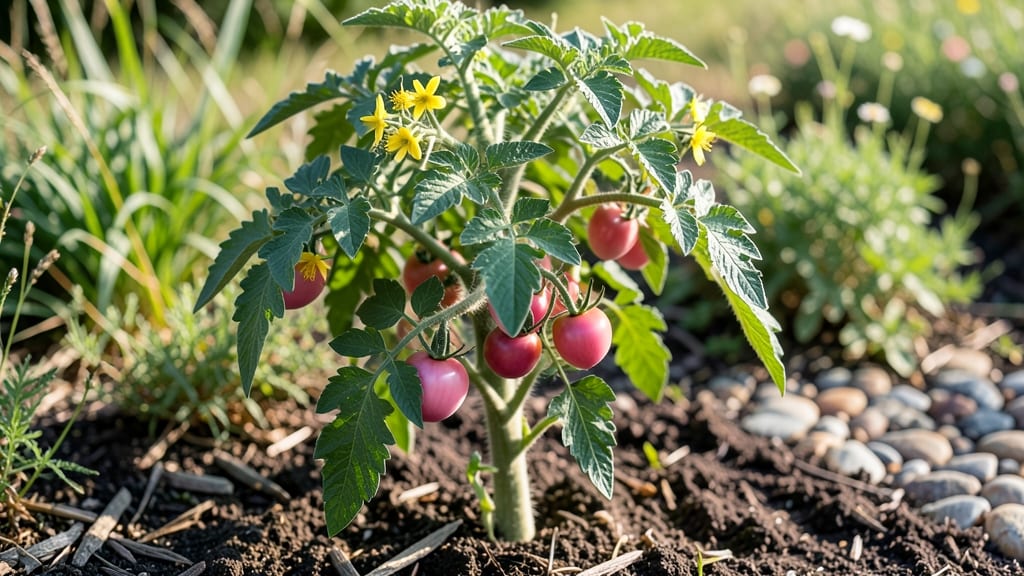
Growing Pink Girl tomatoes changed how I garden—these striped beauties keep coming back year after year without replanting. 🌱 Their bold pink-and-green stripes make them a showstopper, while their sweet, tangy flavor keeps me reaching for seconds.
Unlike most tomatoes, Pink Girl thrives as a perennial in warm climates, so once planted, they multiply and produce for years.
Start with well-draining soil and full sun—at least 6-8 hours daily—or they’ll get leggy and produce fewer fruits. I’ve found they handle heat better than most varieties, but mulch helps retain moisture during dry spells.
The key? Plant them deep—bury 2/3 of the stem to encourage strong root systems. They’re compact (3-4 feet tall), so they fit perfectly in small spaces or containers.
Harvest begins 60-70 days after transplanting, and you’ll get 2-3 pounds of fruit per plant if you keep up with pruning and watering. The flavor? A perfect balance of sweet and tart, great for slicing or sauces.
Plus, they’re disease-resistant, so you’ll spend less time spraying and more time enjoying the harvest. My plants even attract pollinators like bees and butterflies—nature’s bonus!
Here’s the best part: in zones 8-11, they’ll regrow from the roots every spring, giving you free plants for years. For cooler climates, treat them as annuals but save seeds for next year. Once you try Pink Girl, you’ll never go back to boring red tomatoes again.
📚 In This Guide
- What you need
- Instructions
- Tips and common mistakes
- Wrapping up and next steps
What you need
- ● Pink Girl tomato seeds or seedling: 1-2 plants (start from seeds indoors 6-8 weeks before last frost, or buy a healthy young plant from a nursery).
- ● Containers or garden bed: For containers: 5-gallon pots or larger (at least 12-18 inches deep) with drainage holes. Quantity: 1 per plant.
- ● For in-ground: Full sun spot (6+ hours/day) with well-draining soil.
- ● High-quality potting mix: 1 bag (look for organic, peat-free, and moisture-retentive blends like Miracle-Gro Potting Mix or FoxFarm Ocean Forest).
- ○ Balanced fertilizer: 10-10-10 or 5-5-5 (e.g., Jack’s Classic) for transplanting. Optional: Slow-release granules or liquid feed like Fish Emulsion.
- ● Tomato cages or stakes: 1 per plant (6-8 ft tall for indeterminate varieties).
- ● Mulch: Straw or shredded leaves (1-2 inches thick) to retain moisture.
- ● Gloves & trowel: For planting and soil prep.
- ● Watering can or hose with gentle nozzle: Avoid blasting stems.
- ○ Pruning shears: To remove suckers (optional but recommended for bushier growth).
- ○ pH test kit (optional): Ideal soil pH: 6.0–6.8. Adjust with lime (to raise) or sulfur (to lower) if needed.
- ○ Row cover or shade cloth (optional): For early-season frost protection or hot climates.
Step-by-step instructions for growing Pink Girl tomatoes as perennials
Here's how I turn these striking striped tomatoes into a reliable, regrowing garden star.
🌱 Step 1: Choose the Right Location and Soil
Pink Girl tomatoes thrive in full sun—at least 6-8 hours daily. I pick the warmest, sunniest spot in my garden, often near a south-facing fence that reflects extra heat. These plants love warmth and can't tolerate cold drafts, so avoid low-lying areas where frost lingers.
Amend your soil with 2-3 inches of compost mixed into the top 12 inches. Pink Girl tomatoes prefer well-draining, slightly acidic soil (pH 6.0-6.8). If your soil is heavy clay, add a 50/50 mix of compost and perlite to improve drainage. You'll know it's right when the soil crumbles easily when squeezed—not sticky or powdery.
☀️ Step 2: Plant After Frost and Stake Early
Wait until after your last frost date and when soil reaches 60°F before planting. Since these are perennials, I plant them in early spring and again in late summer for a second harvest. Dig a hole twice as wide as the root ball but only as deep as the container.
Install a 5-6 foot tall stake or trellis right when you plant—these tomatoes grow vigorously and need support. Gently loosen the roots if they're root-bound, then place the plant so the top of the root ball sits 1 inch below soil level. This encourages strong root growth. Water deeply right after planting to settle the soil and remove any air pockets.
💧 Step 3: Water Deeply and Mulch Thickly
Water 1-2 inches per week, but check the top inch of soil first—if it's dry, it's time to water. I use a soaker hose to deliver moisture slowly at the base, avoiding wet leaves which can spread disease. Early morning watering prevents fungal issues from overnight dampness.
Spread 3-4 inches of organic mulch around the base, leaving a 2-inch gap around the stem. Straw or shredded leaves work well. Mulch keeps roots cool in summer and prevents soil-borne diseases. You'll notice fewer weeds and more consistent soil moisture after applying mulch—this is key for perennial tomatoes.
✂️ Step 4: Prune and Train for Maximum Production
Prune suckers (the small shoots growing between the main stem and branches) regularly to focus energy on fruit production. I remove them when they're 2-3 inches long—this prevents overcrowding and improves air circulation. Leave only the main stem and strong lateral branches to grow.
Train vines along the stake or trellis by gently tying them with soft plant ties every 12-18 inches. This keeps the plant upright and prevents breakage. You'll see more fruit set and better air flow, which reduces disease risk. Harvest when tomatoes are fully colored but still firm—this encourages more production.
🌿 Step 5: Overwinter for Perennial Growth
In fall, stop fertilizing 6-8 weeks before first frost. Water deeply one last time to help roots establish before dormancy. Cut back foliage to 6 inches above ground level, leaving the stem intact. This protects the crown from cold damage.
Mulch heavily with 6-8 inches of straw or leaves to insulate roots through winter. In early spring, remove old mulch and add fresh compost before new growth appears. You'll see tender new shoots emerge in 3-4 weeks—this is your sign the plant survived and is ready for another growing season.
Tips & tricks for growing Pink Girl tomatoes
Here's what I wish I knew before planting these vibrant striped tomatoes that keep coming back.
Sunlight Secret: Those 6-8 hours of daily sun are non-negotiable for Pink Girl tomatoes. I've learned the hard way that even partial shade can lead to pale fruit and fewer tomatoes. If your garden doesn't get full sun, consider growing them in containers near a sunny wall instead. The striped pattern actually fades in low light, so you'll know immediately if they're not getting enough sun.
Soil Test Tip: Before amending your soil with the 2-3 inches of compost, test your pH level. Pink Girl tomatoes prefer slightly acidic soil (pH 6.0-6.8), and you can adjust with lime to raise pH or sulfur to lower it. I use a simple soil test kit—it's worth the investment for these finicky plants. The right soil consistency makes all the difference in how well they establish and produce fruit.
Staking Strategy: That 5-6 foot tall stake or trellis isn't just for looks—it's crucial for these vigorous growers. I install mine right at planting time and use soft plant ties every 12-18 inches to prevent stem damage. A sturdy stake helps prevent disease by improving air circulation around the plant. Plus, it makes harvesting those striped beauties so much easier when they're hanging at eye level.
Overwintering Insight: The 6-8 inches of straw or leaves for winter protection is more important than you might think. I've seen plants survive winters with just 3-4 inches, but they produce less fruit the following season. The extra insulation protects the crown from freezing temperatures. In early spring, remove the old mulch and add fresh compost—you'll see those tender new shoots emerge in just 3-4 weeks, proving the plant survived perfectly.
Pro Tips for Pink Girl Tomato
- Here's what I wish I knew before planting these vibrant striped tomatoes that keep coming back.
- Sunlight Secret: Those 6-8 hours of daily sun are non-negotiable for Pink Girl tomatoes.
- Soil Test Tip: Before amending your soil with the 2-3 inches of compost, test your pH level.
Frequently asked questions
Got questions about growing your own Pink Girl tomatoes? You’re not alone! These striped beauties are easy to grow but come with a few quirks—like their perennial regrowth habits. Here’s what you need to know before diving in:
Can Pink Girl tomatoes really regrow every year?
Yes! Unlike annual tomatoes, Solanum lycopersicum var. cerasiforme (the Pink Girl’s scientific name) is a perennial in warm climates (USDA Zones 9-11). In cooler areas, treat it as an annual but protect it with mulch or containers to overwinter. With proper care, it can produce fruit for years—just like its namesake!
How long does it take for Pink Girl tomatoes to fruit?
Patience is key! From seed, expect 60–90 days to harvest. If starting with a transplant, you’ll see fruit in 45–60 days. The striped varieties mature slightly slower than standard tomatoes, but the wait is worth it for those vibrant pink-and-white gems.
Do Pink Girl tomatoes need special care in hot or cold weather?
These tomatoes thrive in warmth (70–85°F) but can struggle in extreme heat (<90°F+) or frost (<50°F). Use shade cloth in peak summer or move potted plants to a sheltered spot. In cold climates, grow them in containers and bring them indoors before frost. A black plastic mulch also helps retain heat!
What can I do if my Pink Girl tomatoes crack or turn yellow?
Cracking
? It’s often due to inconsistent watering—keep soil evenly moist (but not soggy). Yellowing leaves may signal overwatering, nutrient deficiency, or disease (like early blight). Prune affected leaves, improve drainage, and fertilize with balanced tomato food. For extra protection, spray with neem oil preventatively.
Are there alternatives to Pink Girl tomatoes for small spaces?
If space is tight, try these compact, regrowing-friendly varieties:
- Tumbling Tom® (cherry tomatoes, great for hanging baskets)
- Micro Tom (dwarf, fruits in 60 days)
- Patio Princess (bush-type, 2–3 ft tall)
- Black Cherry (perennial in warm zones, disease-resistant)
Wrapping up and next steps
Growing Pink Girl tomatoes is a rewarding journey that blends beauty with bounty—thanks to their stunning stripes and natural regrowth! Whether you’re a beginner or seasoned gardener, these perennials offer zero waste and year-round potential with minimal effort. 🌱✨
Now that you’re armed with the right tools and tips, it’s time to roll up your sleeves and plant! Start small—try a pot or a sunny patch—and watch your garden transform. Ready to harvest? Share your progress or experiment with new varieties next season!