
Vegetables
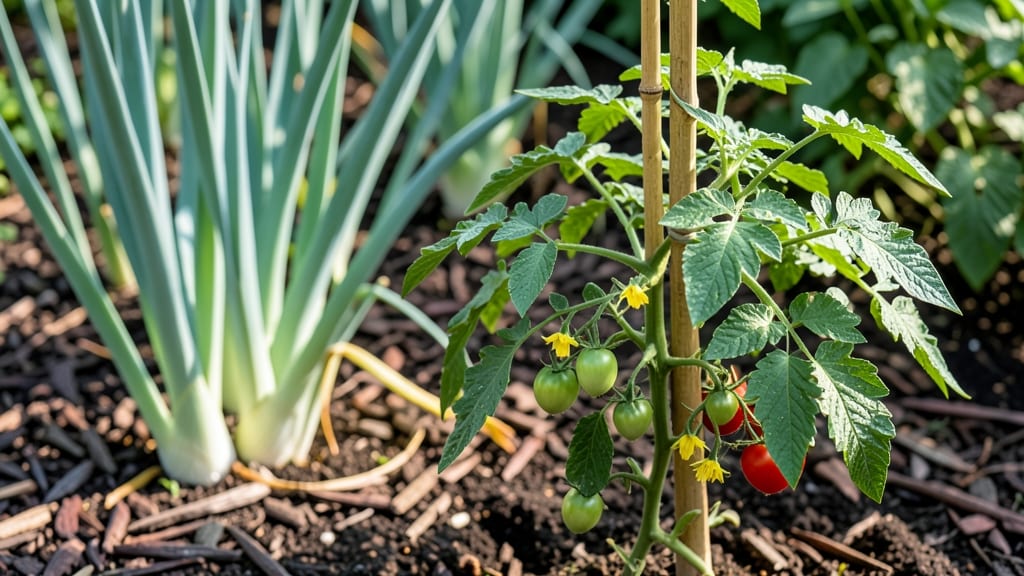
Growing tomatoes and leeks together in containers proves you don’t need a backyard for a productive harvest. 🌱 The leek’s cold tolerance protects young tomato plants from late frosts, while the tomato’s heat love keeps the leeks thriving through summer—both in just 5 gallons of soil.
My first container duo produced enough tomatoes for sauces and salads, plus leeks for soups, all from two 12-inch pots on my balcony.
Start with tomato varieties like 'Tiny Tim' or 'Patio Princess' that thrive in containers, paired with hardneck leeks like 'King Richard' for their cold resistance. Plant tomatoes first in well-draining potting mix with compost, then tuck leeks around the edges—roots spread outward, not deep.
A 5-inch layer of mulch keeps moisture in and weeds out, cutting watering time by half.
By midsummer, you’ll see tomatoes ripening on the vine while leeks grow taller, their pale green shafts perfect for harvesting. The leeks act as natural pest deterrents, and their deep roots help stabilize the container.
Prune suckers from tomatoes regularly to focus energy on fruit, and harvest leeks when they reach 1 inch in diameter.
This combo works in pots, grow bags, or fabric containers—just ensure they’re at least 12 inches deep. In cooler climates, move containers indoors during hard frosts, or grow leeks as a fall crop while tomatoes finish their season.
The key is patience: leeks take 100 days to mature, but their flavor deepens with time.
📚 In This Guide
- What you need
- Instructions
- Tips and common mistakes
- Wrapping up and next steps
What you need
- ● Tomato Seeds or Seedlings: Cold-resistant varieties like ‘Stupice’ or ‘Mountain Merit’ (2-4 plants per container)
- ● OR 4-6" potted seedlings (transplant after last frost)
- ● Leek Seeds or Seedlings: Cold-hardy varieties like ‘King Richard’ or ‘Musselburgh’ (3-5 plants per container)
- ● OR 6" seedlings (start 8-10 weeks before last frost)
- ● Containers: 5-gallon pots or larger (minimum 12" deep for tomatoes, 10" for leeks)
- ● Drainage holes (non-negotiable!)
- ● Saucer or tray (to catch runoff)
- ● Potting Mix: High-quality, well-draining mix (avoid garden soil—it compacts!)
- ● Add perlite or vermiculite (10% by volume) for aeration
- ● Fertilizer: Balanced organic fertilizer (e.g., 5-5-5 or composted manure)
- ● Slow-release granules (follow package rates)
- ● Support Structures: Cage or stake (for tomatoes, 4-6 ft tall)
- ○ Small trellis or bamboo stakes (optional for leeks)
- ● Basic Tools: Trowel or small shovel
- ● Pruners (for harvesting/snipping)
- ● Spray bottle (for seedling misting)
- ○ Optional (But Helpful!): pH test kit (ideal range: 6.0–7.0 for tomatoes, 6.0–6.8 for leeks)
- ● Mulch (straw or shredded leaves to retain moisture)
- ● Row covers (for early-season frost protection)
- ● Drip irrigation kit (if watering consistency is a challenge)
- ● Location: Full sun (6–8+ hours daily)
- ● Wind protection (containers can tip easily!)
Step-by-Step instructions for growing tomatoes and leeks together in containers
This cold-hardy pairing thrives when planted together—here’s how to make it work in limited space.
🌱 Step 1: Select Compatible Containers and Soil Mix
Choose 5-gallon containers with drainage holes for each tomato plant, since tomatoes need deep roots and plenty of space. Leeks tolerate shallower pots but still require at least 3-gallon capacity—I use fabric grow bags for them because they prevent root circling. Fill each container with a custom mix: blend 60% premium potting soil, 20% compost, and 20% perlite for excellent drainage.
Leeks are the key to cold resistance here—their allium roots deter pests and improve soil structure. Mix in 1 tablespoon of balanced organic fertilizer (5-5-5) per container before planting. This ensures both plants get nutrients without competing aggressively. Press the soil down lightly so it’s firm but not compacted—you want roots to push through easily.
🌿 Step 2: Plant Tomatoes and Leeks at the Right Time and Depth
Start tomatoes indoors 8-10 weeks before your last frost date—they need warmth to germinate. Leeks, however, are cold-hardy and can go straight into containers 4-6 weeks before last frost. Plant tomato seeds ¼ inch deep in their containers, while leek seeds (or sets) go ½ inch deep—they need more soil coverage to prevent bolting.
Here’s the trick: interplant leeks around the base of tomato plants once both have 2-3 true leaves. Space leeks 6 inches apart in a circle around each tomato, leaving 12 inches between containers. This mimics their natural companion planting benefits while maximizing small-space yields. Water gently after planting to settle the soil without displacing seeds.
☀️ Step 3: Provide Strategic Light and Temperature Control
Tomatoes need full sun (6-8 hours daily), but leeks tolerate partial shade (4-6 hours)—so position containers where tomatoes get south-facing sun while leeks receive morning light and afternoon shade. Use a grow light on a timer (14-16 hours/day) if natural light is insufficient, keeping it 4-6 inches above plants to prevent legginess.
Leeks thrive in cooler temperatures (50-70°F), while tomatoes prefer 70-85°F. During heatwaves, move tomato containers to a shaded patio while leaving leeks in place—they’ll continue growing. Mulch tomato containers with 2 inches of straw to retain moisture and cool roots. Watch for leek greens reaching 12 inches—that’s when they start contributing to the tomato’s microclimate by shading soil and reducing evaporation.
💧 Step 4: Water and Fertilize for Maximum Yield
Water deeply every 2-3 days until the top 2 inches of soil feel dry—tomatoes are thirsty but hate soggy roots. Leeks, being more drought-tolerant, need watering every 3-4 days unless the soil is bone-dry. Use a drip irrigation system or water at the base of plants to avoid fungal issues on leaves. I always water in the early morning so foliage dries quickly.
Fertilize tomatoes every 2 weeks with liquid seaweed extract (rich in potassium for fruit set) and leeks monthly with fish emulsion (nitrogen for leaf growth). The leeks’ deep roots help break up compacted soil, improving water and nutrient uptake for tomatoes. Stop fertilizing leeks 6 weeks before harvest—you want their flavor to concentrate.
✂️ Step 5: Prune, Support, and Harvest Strategically
Prune tomato suckers (the shoots in the leaf axils) weekly to direct energy into fruit production. Install cages or stakes as soon as plants hit 12 inches tall—tomatoes grow fast and need support. Leeks don’t need pruning but benefit from removing yellowed lower leaves to keep the stalk clean and reduce disease risk.
Harvest tomatoes when they’re fully colored and slightly soft to touch—usually 70-85 days after transplanting. Leeks are ready when their diameter reaches 1 inch (about 100-120 days). To harvest leeks, cut the entire plant at the base—don’t pull, or you’ll damage the roots. Store leeks in the fridge for up to 2 weeks or freeze them whole for later use. The leek tops are edible too—chop and use like chives!
Tips & tricks for perfect tomato-leek container pairings
Between us, these two plants are a match made in small-space heaven—but only if you nail the details. Here's what nobody tells you about making this duo truly thrive.
Container Selection: Fabric grow bags are my secret weapon for leeks—they prevent root circling and allow for better air circulation, which is crucial when leeks reach their 12-inch height mark. For tomatoes, look for 5-gallon containers with sturdy handles; I've learned this the hard way after watching flimsy pots tip over during watering. The drainage holes in Step 1 aren't optional—they're non-negotiable for preventing root rot, especially with tomatoes that need that perfect balance of moisture.
Soil Science: That 60-20-20 soil mix in Step 1 isn't just random numbers—it's about creating the perfect air-to-water ratio. The perlite prevents compaction while the compost provides slow-release nutrients both plants will appreciate. Here's what I do: I sift the mix through a fine mesh screen before filling containers to eliminate any large clumps that could create air pockets where roots won't grow. And that 1 tablespoon of 5-5-5 fertilizer? Mix it into the bottom inch of soil first—this creates a nutrient-rich zone that roots will seek out first.
Light Strategy: The 6-8 hours of full sun for tomatoes is non-negotiable, but here's the trick with leeks: they'll actually tell you when they're getting enough light. When their greens reach 12 inches (as mentioned in Step 3), they'll start developing that beautiful blue-green hue—this is your cue that they're happy with their partial shade. I position my containers so tomatoes get morning sun while leeks catch the afternoon light; this creates a natural temperature gradient that both plants appreciate during heatwaves.
Harvest Hack: For leeks, timing is everything—wait until their diameter reaches 1 inch before harvesting, as specified in Step 5. But here's the pro move: I harvest leeks in stages. Once they reach harvest size, I cut the outer leaves and use them like chives, letting the inner stalk continue growing. This extends your harvest window by several weeks and gives you continuous greens for cooking. For tomatoes, I always harvest in the morning when their sugars are at peak concentration, and I twist gently rather than cut to avoid damaging the plant.
Pro Tips for Tomato And Leek
- Between us, these two plants are a match made in small-space heaven—but only if you nail the details.
- Container Selection: Fabric grow bags are my secret weapon for leeks—they prevent root circling and allow for better air circulation, which is crucial when leeks reach their 12-inch height mark.
- Soil Science: That 60-20-20 soil mix in Step 1 isn't just random numbers—it's about creating the perfect air-to-water ratio.
Frequently asked questions
Got questions about growing tomatoes and leeks together in your container garden? You’re not alone! Here are some of the most common queries—plus straightforward answers to help you cultivate this cold-resistant duo like a pro.
Can tomatoes and leeks grow well together in the same container?
Yes! Both thrive in similar conditions—full sun (6+ hours daily) and well-draining soil. Leeks act as natural pest deterrents (like aphids) for tomatoes, while tomatoes’ deep roots won’t compete with leeks’ shallow growth. Just ensure the container is at least 12 inches deep to accommodate both.
When should I plant tomatoes and leeks together?
Start leeks 4–6 weeks before your last frost date (they’re cold-hardy), then transplant tomatoes after the soil warms to 50°F+. For containers, sow leeks first—they grow slower. If using starts, space leeks 6–8 inches apart and tomatoes 18–24 inches apart to avoid overcrowding.
What if my leeks bolt (go to seed) before harvesting?
Leeks bolt due to heat or short days. To prevent this, harvest outer leaves first (they’re edible!) and keep soil consistently moist. If bolting happens, pull the plant early—leeks are still tasty when young. For next time, choose ‘King Richard’ or ‘Musselburgh’ varieties, which are slower to bolt.
Can I substitute leeks for another vegetable in this combo?
Swap leeks for green onions, shallots, or garlic—all deter pests and share similar care needs. Avoid root veggies like carrots (they’ll compete for space). For a sweet twist, try bush beans; they fix nitrogen in the soil, benefiting tomatoes!
Why are my tomato leaves yellowing near the leeks?
Yellow leaves often signal overwatering or nutrient competition. Check soil moisture—containers dry faster! If leeks are hogging nutrients, add a balanced fertilizer (like 10-10-10) every 4–6 weeks. For extra insurance, mulch with straw to retain moisture and reduce stress on both plants.
Still stumped? Drop your container setup details in the comments—we’re happy to troubleshoot!
Wrapping up and next steps
Growing tomatoes and leeks together in containers is a fantastic way to enjoy a bountiful, cold-resistant harvest—even in small spaces! 🌱 These two veggies thrive when paired, offering flavor, versatility, and resilience for gardeners of all levels.
Whether you’re a beginner or a seasoned green thumb, this duo proves that big rewards come from small (and cold-hardy!) beginnings.
Ready to dig in? Start by planting your seeds or seedlings this season—your future salads, soups, and stir-fries will thank you! 🍅🧅 Grab your containers and get growing!