
Vegetables
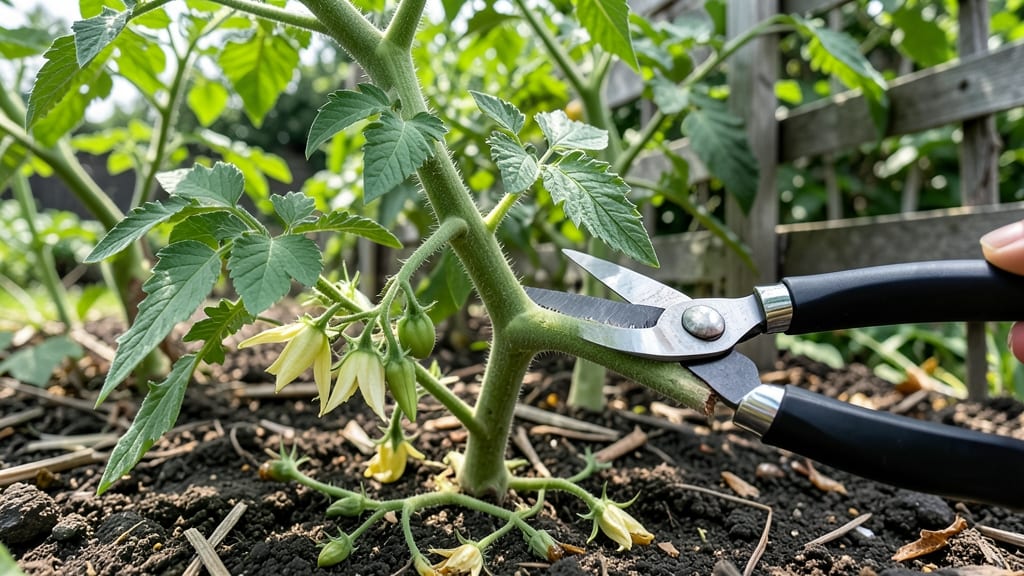
Your indeterminate tomatoes could produce 50% more fruit this season with just one simple cut. 🌱 I learned the hard way that skipping this step means fewer tomatoes and more leggy, disease-prone plants—until I finally understood how topping works.
The key is timing and technique: you’ll want to do this when plants hit 3-4 feet tall, using clean shears to snip just above a leaf that’s growing outward. This forces the plant to branch out, creating more fruiting sites and better air circulation.
My striped 'Indigo Rose' plants now sprawl beautifully, loaded with fruit from top to bottom. After topping, expect new shoots within 2 weeks—each one a potential new stem for more tomatoes. The plants stay compact enough for containers or trellises while still yielding like a ground-hugging bush.
Just avoid cutting into the main stem or you’ll stunt growth for good. Works for all indeterminate varieties, from heirlooms to slicers. Here’s exactly how to do it without killing your plants—and the mistakes that’ll ruin your harvest if you’re not careful.
📚 In This Guide
- What you need
- Instructions
- Tips and common mistakes
- Wrapping up and next steps
What you need
- ● Indeterminate tomato seeds or seedlings: Striped varieties like 'Black Krim', 'Green Zebra', or 'Striped Roman' (3–5 plants per gardener, depending on space).
- ● Growing containers or garden bed: 5-gallon pots or raised beds (at least 18" deep).
- ● Well-draining soil mix (compost, peat moss, and perlite in a 2:1:1 ratio).
- ● Support system: Tall cages (6–8 ft) or sturdy stakes (5–6 ft) + garden twine.
- ● Fertilizer: Balanced organic fertilizer (10-10-10) or compost tea (apply every 2–3 weeks).
- ● Basic gardening tools: Trowel, pruners (sterilized), and hand gloves.
- ● Watering supplies: Drip irrigation or watering can with a fine rose.
- ○ Optional (but helpful!): Mulch (straw or shredded leaves) to retain moisture.
- ● Copper tape (to deter pests like hornworms).
- ● pH test kit (ideal soil pH: 6.0–6.8).
How to prune indeterminate tomatoes for bold growth and heavy fruit
Indeterminate tomatoes keep growing all season—here's how to shape them for striped varieties that produce continuously.
✂️ Step 1: Wait Until Plants Are Established
Hold off on pruning until your plants have 5-7 true leaves and show strong stems—usually 3-4 weeks after transplanting. This gives roots time to anchor while the plant builds energy for fruit production. You'll know it's ready when the main stem is thicker than a pencil and new leaves appear every 5-7 days.
Resist the urge to trim early. Weak plants can't recover from pruning, and you'll end up with leggy stems and fewer tomatoes. If your plants are growing slowly, check for consistent moisture—indeterminate tomatoes need 1-2 inches of water weekly during fruiting. Use your finger to test soil depth: top 2 inches should feel damp but not soggy.
✂️ Step 2: Remove Suckers at the Right Places
Suckers are the small shoots that grow in the V-shaped junction between the main stem and a branch. For striped varieties, focus on removing suckers below the first flower cluster—this directs energy upward where it matters most. Use clean, sharp pruning shears to snip suckers at their base, not by tearing them off.
Here's the thing—don't prune suckers above the first flower cluster unless you're growing a single-stem plant (which isn't ideal for striped varieties). Those suckers can become productive branches later in the season. Watch for new suckers forming weekly—check your plants every 3-5 days during peak growth. If you see a sucker larger than a pencil eraser, it's already stealing energy from your fruit.
☀️ Step 3: Open the Plant for Airflow and Sun
Indeterminate tomatoes grow tall and bushy, but striped varieties need maximum sunlight to develop their bold colors. Prune back any overlapping branches that shade the center of the plant—aim for a vase-like shape with an open middle. This prevents disease and lets sunlight reach all sides.
Pay special attention to lower leaves—remove any that touch the soil or block airflow. These are prime spots for blight and rot. I like to leave 3-4 leaves below each fruit cluster to support the weight. If your plant starts leaning, tie it to a strong stake or trellis every 7-10 days as it grows. The goal is a balanced, upright plant that doesn't flop over when heavy with fruit.
⏰ Step 4: Adjust Pruning as the Season Progresses
Once your plant reaches your ceiling or trellis height (usually 6-8 feet), stop removing suckers entirely. These late-season suckers can produce additional fruit that ripens when others are done. Focus instead on pruning only diseased or damaged leaves—striped tomatoes are sensitive to stress, so keep cuts minimal.
As flowers appear, watch for small yellowing leaves—this often signals overwatering or nutrient burn. Cut back on water slightly if the soil stays damp longer than 3-4 days. In late summer, reduce pruning altogether to let the plant focus on ripening existing fruit. The last thing you want is new growth when your striped beauties are almost ready to harvest.
🌿 Step 5: Harvest Strategically to Encourage More Fruit
Striped indeterminate tomatoes produce continuously—the more you pick, the more they'll keep flowering. Harvest fully colored fruit (even if not completely ripe) to prevent the plant from shutting down to focus on ripening. Use two hands: support the vine with one while gently twisting the tomato free with the other.
Here's a pro tip: leave 1-2 tomatoes per cluster to ripen fully on the vine for maximum flavor development. The rest can go into a cool, dark place to finish ripening indoors. After each harvest, rinse your hands and check the plant for new suckers—you'll often find 3-5 new growth points ready for their turn to shine.
Tips & tricks for pruning indeterminate tomatoes
These simple strategies will help you shape your striped varieties for maximum fruit production all season long.
Timing is Everything: The 3-4 week wait before pruning in Step 1 is non-negotiable for striped varieties. I learned this the hard way after pruning too early and ending up with weak stems that couldn't support the bold fruit colors. Wait until you see those 5-7 true leaves and stems thicker than a pencil—this means the plant has built enough energy reserves to handle pruning without stress. The 5-7 day leaf growth pattern is your best indicator of readiness.
Sucker Removal Strategy: When you're removing suckers below the first flower cluster in Step 2, focus on the V-shaped junctions. I use a pair of clean pruning shears to make precise cuts at the base—never tear them off, as this can damage the main stem. The pencil eraser size rule is my go-to: if a sucker is larger than that, it's already diverting energy from your fruit. Check your plants every 3-5 days during peak growth to stay ahead of new suckers forming.
Airflow and Sunlight Optimization: For those vibrant striped colors in Step 3, aim for that open vase shape. I prune back any branches that overlap, creating a tunnel effect that blocks sunlight. Leave just 3-4 leaves below each fruit cluster—they provide support without shading. The key is balance: enough leaves to support fruit weight, but not so many that they block airflow. This simple adjustment prevents disease while maximizing sunlight exposure for those bold stripes.
Seasonal Adjustments: Once your plant hits that 6-8 foot height in Step 4, switch your focus entirely. Stop removing suckers and only prune diseased leaves—striped tomatoes are sensitive to stress. Watch for those yellowing leaves as a signal to adjust watering. If soil stays damp for more than 3-4 days, cut back slightly. Late summer is all about letting the plant focus on ripening existing fruit rather than producing new growth.
Pro Tips for Topping Indeterminate Tomatoes
- These simple strategies will help you shape your striped varieties for maximum fruit production all season long.
- Timing is Everything: The 3-4 week wait before pruning in Step 1 is non-negotiable for striped varieties.
- Sucker Removal Strategy: When you're removing suckers below the first flower cluster in Step 2, focus on the V-shaped junctions.
Frequently asked questions
about topping indeterminate tomatoes—especially bold-striped varieties—can help you avoid common pitfalls and maximize your harvest. Here are answers to the most pressing queries:When is the best time to top indeterminate tomatoes?
Top indeterminate tomatoes when they’ve grown at least 3–4 feet tall and have 5–7 main stems. Wait until after the last frost and when the plant is actively growing (spring/summer). Avoid topping too early—you’ll stunt growth, or too late—you’ll miss the prime harvest window.
How do I know if I’ve topped too much or too little?
If you’ve topped too much, the plant may stop flowering or produce smaller fruit. If you’ve topped too little, you’ll get a bushier (but less productive) plant. Aim to leave 2–3 leaves above the pruning point—this balances growth and fruiting.
Can I use pruning shears or should I pinch by hand?
Both work! Pruning shears are best for thick stems (clean cuts prevent disease). Pinching by hand is gentler for delicate stems but can be slower. Sterilize tools with rubbing alcohol to avoid spreading pests.
Will topping affect the flavor or size of my striped tomatoes?
No—topping improves flavor and size by directing energy to fewer, larger fruit. Striped varieties (like ‘Indigo Rose’ or ‘Black Krim’) thrive with proper topping since they’re already vigorous. Just ensure you’re not removing too many leaves, which can stress the plant.
What if my indeterminate tomato plant keeps growing after topping?
It’s normal! Indeterminate tomatoes are perpetual growers. If new suckers appear, prune them regularly to maintain shape. If growth stalls, check for pests, underwatering, or nutrient deficiencies (like nitrogen). A balanced fertilizer can help.
Wrapping up and next steps
Growing topping indeterminate tomatoes with bold striped varieties is a rewarding way to enjoy a continuous harvest all season long! These vigorous plants thrive with the right care—whether you’re pruning, fertilizing, or protecting them from pests—so don’t hesitate to roll up your sleeves and get hands-on. 🌱
Ready to take the next step? Start by selecting a few striped heirlooms like ‘Indigo Rose’ or ‘Black Krim’, then experiment with your own pruning techniques or companion planting to maximize yields. Your garden—and your taste buds—will thank you! 🍅✨