
Vegetables
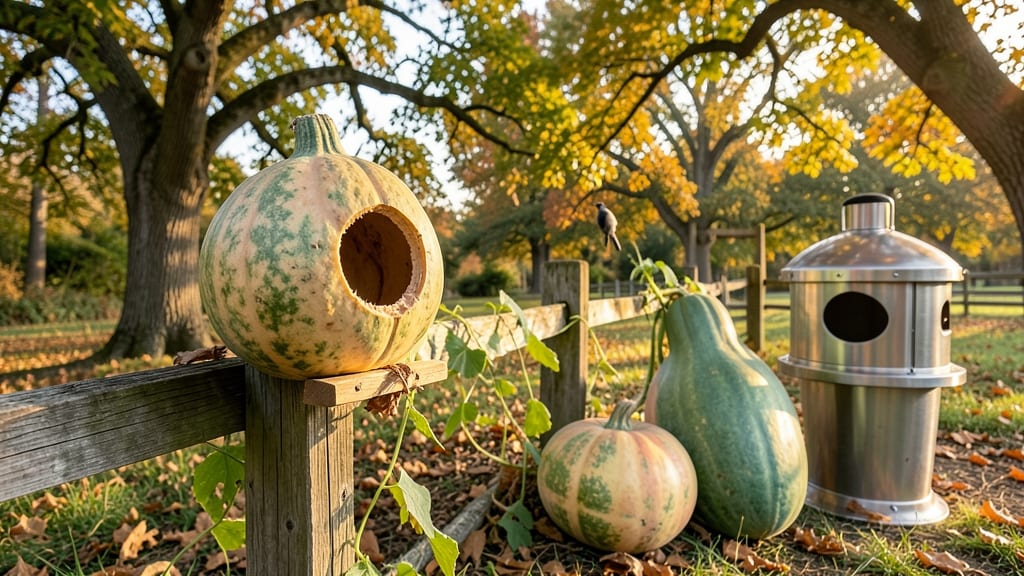
Gourd birdhouses attract bluebirds, wrens, and chickadees—birds that turn your garden into a lively ecosystem. 🌿 I’ve watched wrens dart in with nesting material and bluebirds claim their gourd homes with cheerful songs, transforming a quiet corner into a bustling wildlife hub.
These natural cavities fit perfectly in gardens where traditional wood houses might blend too well. Gourds offer just the right snugness for small birds while resisting rot better than untreated wood. Plus, their unique shape deters larger birds and squirrels that might otherwise raid nests.
You’ll see more pollinators, fewer pests, and a chorus of dawn songs as these birds establish territories. The key is placement—hang them 5-6 feet high, facing away from prevailing winds, and near shrubs for cover. Perfect for small spaces, cottage gardens, or even urban yards.
Here’s how to set them up for success!
📚 In This Guide
- What you need
- Instructions
- Tips and common mistakes
- Wrapping up and next steps
What you need
- ● Gourd: A dried, hollowed-out gourd (like a sugar gourd, acorn squash, or buffalo gourd)—at least 8–12 inches long with a 3–4 inch diameter entrance hole (adjust for bird species).
- ● Drill or knife: For carving the entrance hole and drainage holes (use a 1/2-inch bit or sharp utility knife).
- ● Saw: A hacksaw or coping saw to cut the top off the gourd (leave a 1–2 inch rim for stability).
- ● Sandpaper: Medium-grit (80–120) to smooth rough edges and remove splinters.
- ○ Non-toxic paint or sealant (optional but recommended): Outdoor-safe, water-based paint (e.g., acrylic) or linseed oil to preserve the gourd and deter pests.
- ○ Perch (optional but helpful): A 1/2-inch diameter dowel, cut to 1–2 inches long, positioned 1/4 inch below the entrance hole.
- ● Mounting hardware: Stake or post: A 4–6 foot wooden stake (treated or cedar) for ground mounting.
- ● OR Shepherd’s hook or bracket for hanging (ensure it’s sturdy and rust-proof).
- ● Predator guard: A metal mesh or hardware cloth (1/4-inch grid) to wrap the stake and deter squirrels/raccoons.
- ● Weatherproofing: Clear silicone sealant to patch small cracks in the gourd.
- ● Natural perch alternative: A twisted vine or small branch for a rustic look.
- ● Marking paint: Non-toxic, bright paint (e.g., red or blue) to mark the gourd for easy identification.
How to choose and prepare a gourd birdhouse for nesting birds
Here's how to turn a simple gourd into a cozy home that bluebirds, wrens, and chickadees will love.
🌱 Step 1: Select the Right Gourd Type
Look for dried, hollow gourds like buffalo, calabash, or bottle gourds—these are naturally favored by nesting birds. The entrance hole should be 1.5 to 2 inches wide for chickadees and wrens, or 3 to 4 inches wide for bluebirds. I always check for cracks or soft spots first—birds won’t use a gourd that feels unsafe.
Size matters too. A 6-inch diameter gourd works for wrens, while bluebirds prefer 8-10 inches. Hang it at least 5 feet off the ground—predators like raccoons can’t reach, and birds feel secure. You’ll know you’ve picked well when the gourd feels sturdy but lightweight enough to hang easily.
🪴 Step 2: Clean and Prepare the Gourd
Start by removing all seeds and debris from the inside. Use a spoon or small stick to scrape out any remaining pulp—birds are picky about cleanliness. I soak the gourd in a 10% bleach solution (1 part bleach to 9 parts water) for 10 minutes to kill bacteria, then rinse thoroughly with water. Let it dry completely in the sun for 2-3 days—this mimics how birds naturally sanitize their nests.
Next, drill or cut the entrance hole to the right size for your target species. Smooth any rough edges with sandpaper—sharp spots can injure birds. If the gourd has a natural stem, leave it intact; birds often use it as a perch. You’ll notice the gourd feels lighter after cleaning, and the scent fades—birds prefer neutral, clean-smelling spaces.
☀️ Step 3: Hang the Gourd in the Ideal Location
Bluebirds love open fields with short grass nearby, while wrens and chickadees prefer wooded edges or gardens. Hang the gourd on a south- or east-facing tree branch where it gets morning sun but afternoon shade. The gourd should face away from prevailing winds—birds avoid drafty spots. I tie it with 3-4 feet of sturdy twine or wire so it can sway slightly; this mimics natural movement and feels safer to birds.
Place the gourd at least 15 feet from feeders—birds want nesting sites away from competition and predators. If you’re near a pond or water source, even better; wrens and bluebirds adore easy access to water. You’ll know the location is right when you see birds investigating it within a few days—watch for curious peeks and test landings.
⏰ Step 4: Monitor and Maintain the Nesting Site
Check the gourd once a week in early spring to see if birds have started nesting. Look for twigs, feathers, or mud near the entrance—these are early signs. Avoid disturbing the area; birds may abandon nests if they sense human presence. If you spot eggs, back off completely—handling them can harm the parents’ instincts.
After nesting season, clean the gourd again in late fall. Remove old nest materials (they can harbor parasites) and store it in a dry place until next year. I like to mark the gourd with a small tag noting the year—it helps track which birds return. You’ll know your gourd is successful when the same species visits year after year, often with the same nesting habits.
Tips & tricks for perfect gourd birdhouses
Here's what nobody tells you about creating irresistible nesting spots for your feathered friends.
Species-Specific Hole Sizing: The entrance hole dimensions are critical—don't eyeball it! For chickadees and wrens, use a 1.5- to 2-inch hole (about the diameter of a golf ball). Bluebirds need a larger 3- to 4-inch hole (similar to a softball). I use a hole saw for precision, then test by holding a ping pong ball against it—if it fits snugly, you're golden.
Natural Drying Strategy: That 2- to 3-day sun-drying period in Step 2 isn't just about cleanliness—it's about creating the right scent profile. Birds are sensitive to smells, and a properly dried gourd will have that fresh, neutral aroma they prefer. If you're in a rainy climate, supplement with a fan to speed up drying while maintaining that natural scent.
Location Observation: When selecting your hanging spot in Step 3, consider the bird's natural behavior. Bluebirds prefer open areas where they can spot predators from a distance, while wrens like wooded edges for quick cover. I've found that placing gourds near existing bird activity—like where birds already perch—dramatically increases success rates. Watch for birds investigating the area for a few days before hanging your gourd.
Seasonal Timing: The once-weekly checks in Step 4 should start in late winter when birds begin scouting for nesting sites. In colder climates, delay until after the last frost. I mark my calendar with the first week of March as my target start date—this gives birds time to adjust to spring conditions before nesting begins. Remember, birds are creatures of habit, so consistency in your monitoring schedule helps them feel secure.
Pro Tips for What Birds Will Nest In A Gourd Birdhouse
- Here's what nobody tells you about creating irresistible nesting spots for your feathered friends.
- Species-Specific Hole Sizing: The entrance hole dimensions are critical—don't eyeball it!
- Natural Drying Strategy: That 2- to 3-day sun-drying period in Step 2 isn't just about cleanliness—it's about creating the right scent profile.
Frequently asked questions
Got questions about gourd birdhouses? You’re not alone! Here are some of the most common queries—and their answers—to help you set up a successful nesting spot for feathered friends.
What types of birds are most likely to nest in a gourd birdhouse?
A gourd birdhouse is especially popular with cavity-nesting birds, including eastern bluebirds, tree swallows, chickadees, and house wrens. These birds love the natural, rustic feel of gourds and appreciate the ventilation they provide. Smaller gourds (4–6 inches) attract wrens, while larger ones (6–8 inches) suit bluebirds and swallows.
When is the best time to hang a gourd birdhouse for nesting?
Hang your gourd birdhouse late winter to early spring (February–March in most regions) to give birds time to inspect and claim it before breeding season. Avoid placing it too early—birds may use it for shelter instead of nesting. Pro tip: Wait until after peak migration (April–May) if you’re in a colder climate to ensure resident birds have priority.
Do I need to clean out a gourd birdhouse after the nesting season?
Yes! Clean out old nests, debris, and mites in late fall or early winter using a 10% bleach solution (1 part bleach to 9 parts water) to disinfect it. Let it dry completely before rehanging. Skipping this step can spread diseases like avian pox or attract pests. Bonus: Leave a few small holes in the gourd for drainage to prevent mold.
Can I use a plastic or ceramic birdhouse instead of a gourd?
While gourds are ideal for their natural texture and ventilation, plastic or ceramic houses can work too—just ensure they have 1–1.5-inch entrance holes (for bluebirds/wrens) and proper drainage. Gourds, however, mimic natural cavities better, reducing stress for skittish birds. If you prefer alternatives, opt for untreated wood or recycled materials for a similar organic appeal.
Why isn’t any bird using my gourd birdhouse?
Several factors might deter birds: Check the location (too exposed or hidden?), height (5–10 feet off the ground is ideal), or competition (squirrels or other birds may be hogging it). Also, ensure the entrance hole is the right size and the gourd isn’t too damp (rot can repel birds). Try moving it to a sunny, open area near shrubs for cover, and be patient—some birds take weeks to scout!
Wrapping up and next steps
Creating a gourd birdhouse is a fantastic way to support local wildlife while enjoying the beauty of birds up close! 🌿 From eastern bluebirds and chickadees to house wrens, these charming homes attract a variety of feathered friends—just ensure the size, placement, and design suit their needs.
Whether you're a seasoned bird enthusiast or a beginner, this project is rewarding and simple.
Ready to get started? Grab a gourd, gather your tools, and watch your backyard become a bustling bird sanctuary! 🐦✨