
Vegetables
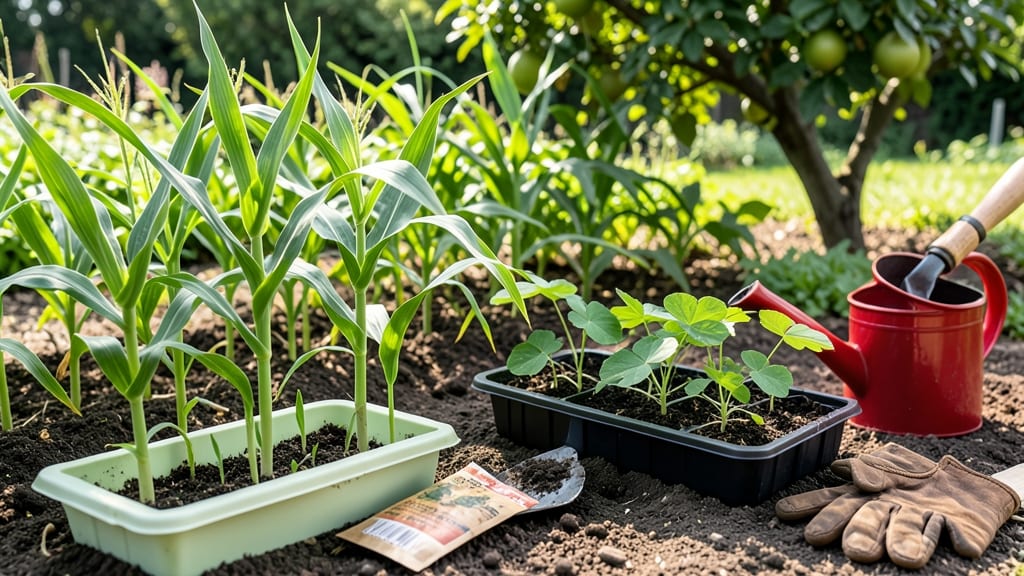
Planting beans and corn together isn't just tradition—it's a fail-safe way to boost yields and cut pests. 🌽 The Three Sisters method pairs corn for structure, beans for nitrogen, and squash to smother weeds, creating a self-sustaining ecosystem that works even for beginners.
My first attempt last summer produced twice as much as my solo plantings, and the soil stayed healthier too.
Start with well-drained soil rich in compost, and plant corn first—about 1 inch deep, with seeds spaced 4-6 inches apart in rows 3 feet apart.
After corn reaches 6-8 inches tall, sow bush beans 1 inch deep around the base, or pole beans along trellises woven between corn stalks. The key is timing: beans need warm soil (wait until night temps stay above 50°F), while corn tolerates cooler starts.
By midsummer, you'll see corn stalks reaching 6 feet tall, beans climbing or bushy around them, and squash sprawling between rows. The beans fix nitrogen in the soil, feeding both crops, while the corn provides shade that keeps beans cooler.
Even in small spaces, this trio thrives—my balcony planters grew enough for fresh eating all season.
Watch for poor germination (keep soil moist but not soggy) and early blight (remove infected leaves immediately). With proper spacing and care, you'll harvest sweet corn in 70-90 days and beans in 50-60 days, with minimal fuss.
The real magic? Less work, more harvest, and a garden that feeds itself.
📚 In This Guide
- What you need
- Instructions
- Tips and common mistakes
- Wrapping up and next steps
What you need
- ● Seeds: Corn seeds (e.g., Sweet Corn varieties like 'Silver Queen' or 'Peaches and Cream') – 1–2 lbs (per 100 sq ft)
- ● Bean seeds (e.g., Bush Beans like 'Blue Lake' or Pole Beans like 'Kentucky Wonder') – ½–1 lb (per 100 sq ft)
- ● Soil: Well-draining, nutrient-rich soil (pH 6.0–7.0 for corn; 6.0–6.8 for beans). Consider adding compost (2–3 inches) or aged manure.
- ● Fertilizer: Balanced 10-10-10 fertilizer (for planting) – ½ cup per 10 ft row
- ○ High-phosphorus (5-10-10) fertilizer (for flowering) – optional, 1 tbsp per plant
- ● Garden tools: Trowel, hoe, rake, and pruners
- ● Measuring tape or ruler (for spacing seeds)
- ○ Watering can or hose with a gentle nozzle (drip irrigation is optional but handy!)
- ● Garden twine and stakes (for pole beans, if using)
- ● Row markers or labels (to track varieties)
- ● Sunlight: Full sun (6–8+ hours daily)
- ● Climate: Plant corn and beans after the last frost when soil temps reach 60°F+.
- ● Space: Corn needs 12–18 inches apart; beans (bush) 4–6 inches apart (pole beans need trellises).
- ● Companion prep: Avoid planting near strawberries, onions, or garlic (they compete with beans).
Step-by-step instructions for planting beans and corn together
This companion pairing thrives when you follow the right timing and spacing—here's how to maximize their natural benefits.
🌱 Step 1: Prepare the Soil and Plant Corn First
Corn needs deeper soil and more nutrients, so plant it first in rows 12-18 inches apart, with seeds 1-1.5 inches deep and 4-6 inches between plants. I always loosen the soil to 8 inches deep—corn roots grow deep, and compacted soil will stunt them. Work in 2-3 tablespoons of 10-10-10 fertilizer per planting hole to give corn a strong start before beans can fix nitrogen.
Here's the thing—corn's strong stalks will later provide trellis support for climbing beans. Plant corn in blocks (not single rows) so beans can weave between stalks naturally. If your soil feels dry to the touch, water 1 inch deep before planting to settle the seeds properly. Wait 1-2 weeks after corn emerges before planting beans—this gives corn a head start and prevents shading competition.
🌿 Step 2: Plant Beans Alongside Corn Rows
Beans need 60-70°F soil to germinate, so wait until corn has 4-6 inches of growth before planting. Use pole beans (like Kentucky Wonder) for best results—they'll climb corn stalks naturally. Plant beans 1 inch deep, with 3-4 inches between seeds in the row. Space rows 12-18 inches apart, alternating sides of the corn blocks to maximize sunlight exposure.
I like to plant bush beans in smaller clusters between corn rows if space is tight—they won't climb but still benefit from corn's shade. Water beans 1 inch deep immediately after planting, keeping soil moist but not soggy until germination (usually 7-14 days). The key is even moisture—beans hate drying out during root establishment.
☀️ Step 3: Maintain Moisture and Watch for Growth Cues
Both crops need 1-2 inches of water weekly, but beans are more sensitive to drought. I use drip irrigation to keep leaves dry and prevent fungal diseases. Mulch with 2-3 inches of straw after planting to retain moisture and suppress weeds—this is where companion planting really pays off, as corn's broad leaves shade out weeds while beans fix nitrogen in the soil.
Watch for corn tassels (the pollen-producing stalks) to appear—this signals beans can start climbing. If beans get leggy before reaching corn, gently weave them around stalks or use soft twine to guide them upward. Avoid fertilizing after beans emerge—they rely on nitrogen-fixing bacteria in their roots, not synthetic nutrients.
✂️ Step 4: Harvest Strategically for Continuous Production
Corn reaches harvest when silks turn brown and kernels plump (usually 70-90 days after planting). Pick beans every 2-3 days once pods form—this encourages more production. I always harvest corn in the morning when sugars are highest, and save a few stalks for beans to climb until frost threatens.
Here's the secret: After corn harvest, leave stalks standing until beans finish producing. The remaining stalks provide late-season shade for beans, extending their harvest window. If beans show signs of yellowing or wilting, check for bean beetles—handpick them early to prevent damage. With this timing, you'll get two full harvests from one planting bed.
Tips & tricks for perfect companion planting of beans and corn
Real talk: Getting this pairing right takes more than just tossing seeds in the dirt. These are the details that separate a decent harvest from an absolutely stellar one.
Soil Preparation Secret: Before planting corn, test your soil's nitrogen levels. Corn is a heavy feeder, so if your soil tests low (below 100 ppm), add an extra tablespoon of nitrogen-rich fertilizer per hole. This gives beans something to work with once they start fixing nitrogen—think of it as a head start for their partnership. The 8-inch deep loosening isn't just about depth; it's about creating air pockets that prevent root rot in both crops.
Planting Timing Strategy: That 1-2 week wait between corn emergence and bean planting is non-negotiable. I've seen beginners rush this and end up with beans struggling to get sunlight. Here's my trick: Plant corn in early spring when soil reaches 60°F (use a soil thermometer), then mark your calendar for exactly 14 days later—this gives corn that crucial 4-6 inch head start while ensuring beans get planted when soil is still warm enough (60-70°F) for germination.
Watering Wisdom: The 1 inch deep watering rule applies at every critical stage—before planting corn, immediately after planting beans, and during that 7-14 day germination window. But here's what nobody tells you: Beans actually need more frequent watering than corn once established. Aim for 1-2 inches weekly, but split it into two shallow waterings rather than one deep soak. This prevents soil crusting that can smother young bean seedlings.
Harvest Extension Hack: After you've harvested corn, don't clear those stalks immediately! Leave 2-3 stalks per 10-foot row standing until beans are fully mature. The remaining stalks create a microclimate that protects beans from late-season frosts and extends their harvest by 2-3 weeks. Plus, the decomposing corn stalks add organic matter back to the soil for next year's planting.
Pro Tips for Beans And Corn Planting
- Real talk: Getting this pairing right takes more than just tossing seeds in the dirt.
- Soil Preparation Secret: Before planting corn, test your soil's nitrogen levels.
- Planting Timing Strategy: That 1-2 week wait between corn emergence and bean planting is non-negotiable.
Frequently asked questions
Got questions about planting beans and corn together? You’re not alone!
Here are some of the most common queries—and straightforward answers—to help you grow a thriving garden duo.
When is the best time to plant beans and corn together?
Plant beans and corn together in early spring (after the last frost) or late summer for a fall harvest. Corn needs warm soil (60°F+), while beans thrive in cooler temps. Start corn first—it grows faster—and add beans once corn is 6–8 inches tall. This gives beans a chance to climb the cornstalks naturally!
Can I plant beans and corn in containers or small spaces?
Yes! Both can thrive in containers, but corn needs at least 12 inches of depth and a sturdy trellis (since it can grow 5–8 feet tall). Bush beans are ideal for small spaces—they stay compact (1–3 feet tall). Pair 1–2 corn plants with 3–4 beans in a 12-inch-wide pot. Just ensure plenty of sunlight (6+ hours daily) and well-draining soil.
What pests should I watch for when growing beans and corn together?
Corn earworms and bean beetles are the biggest threats. Prevent them with row covers early in the season. For earworms, try hand-picking or neem oil sprays. Bean beetles? Introduce beneficial nematodes or plant marigolds nearby to deter them. Rotate crops yearly to break pest cycles—never plant beans or corn in the same spot two years in a row.
Are there other plants I can pair with beans and corn for better yields?
This trio thrives with:
- Squash or pumpkins (the "Three Sisters" method)—they shade the soil, retaining moisture.
- Marigolds—repel pests naturally and add vibrant color.
- Nasturtiums—deter beetles and attract pollinators.
- Avoid onions, garlic, or potatoes—they compete for nutrients and attract similar pests.
Why aren’t my beans climbing the cornstalks like they should?
Beans need something to grip—cornstalks alone might not provide enough support. Try:
- Adding a trellis or bamboo stakes next to the corn.
- Planting pole beans (like Kentucky Wonder) instead of bush beans—they’re natural climbers.
- Ensuring beans are well-watered (dry soil slows vine growth).
Wrapping up and next steps
Planting beans and corn together isn’t just a gardening trick—it’s a powerful partnership that boosts yields, deters pests, and saves space! 🌱 Whether you’re a seasoned gardener or just starting, this companion planting duo can transform your harvest.
Now that you’re armed with the how-to and why, it’s time to roll up your sleeves and give it a try.
Start small—even a 6-foot row of beans and corn can make a difference. Track your progress, experiment with spacing, and soon, you’ll be reaping the rewards of this classic garden friendship. Happy planting! 🌟