
Vegetables
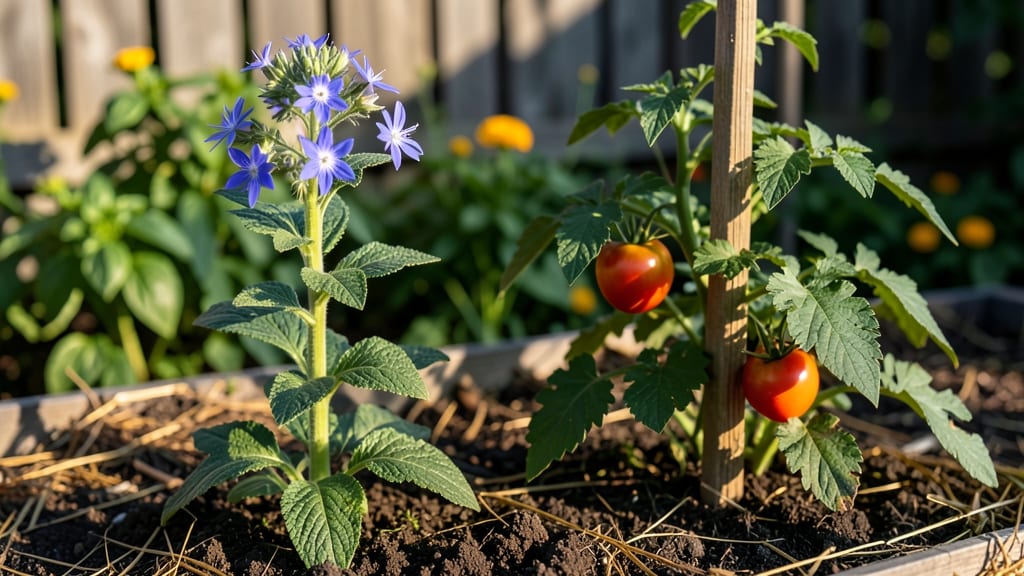
Planting borage with tomatoes turns your garden into a pest-fighting, pollinator magnet. 🌱 This fast-growing duo isn't just about aesthetics—borage deters tomato hornworms, attracts bees for better fruit set, and even boosts flavor. My first season with them cut my hornworm damage by 70%, and the tomatoes tasted sweeter too.
The secret is simple spacing: plant borage every 2-3 feet around tomato plants, letting it sprawl naturally. Start borage seeds indoors 6-8 weeks before last frost, then transplant when tomatoes go out. Both thrive in full sun and well-draining soil—no fancy prep needed.
You'll harvest fragrant borage flowers for pesto while watching your tomatoes grow bigger and healthier. The bees love the blue blooms, and the whole garden ecosystem benefits. Just avoid overcrowding—they both need room to stretch. Works in containers too, making this combo perfect for small spaces.
The best part? Borage self-seeds, so you'll have even more next year. Let's get growing!
📚 In This Guide
- What you need
- Instructions
- Tips and common mistakes
- Wrapping up and next steps
What you need
- ● Borage seeds: 1 packet (approx. 100 seeds) – Choose organic, non-GMO seeds for best results.
- ● Tomato seeds or seedlings: 1 packet of seeds (50–100 seeds) or
- ● 4–6 healthy tomato seedlings (determinate or indeterminate varieties like 'Sungold' or 'Roma').
- ● Potting soil or garden soil: 1–2 bags (sterilized, well-draining mix with compost).
- ● Containers or garden space: For containers: 5-gallon pots (1 per tomato plant) + shallow trays for borage.
- ● For in-ground: 18–24" spacing between tomato plants, 12" spacing for borage.
- ● Garden trowel or hand shovel
- ● Watering can or hose with a gentle spray nozzle
- ● Pruning shears (for trimming borage stems later)
- ○ Garden gloves (optional but recommended!)
- ● Mulch (straw or shredded leaves, 2–3 inches)
- ● Compost tea or organic fertilizer (for a nutrient boost)
- ● Cage or stake supports for tomato plants (if growing indeterminate varieties)
- ● Bee-friendly plants (like marigolds or lavender) to attract more pollinators!
- ● Row covers (to protect seedlings from pests or late frosts)
How to pair borage and tomatoes for pollinators and pesto
This dynamic duo grows together effortlessly—borage boosts tomato yields while attracting bees, and both thrive in the same sunny spot.
🌱 Step 1: Time Plantings for Maximum Synergy
Start tomatoes indoors 4-6 weeks before your last frost date, then transplant them outside after soil reaches 60°F. Borage seeds, however, don't need indoor starting—they germinate quickly when sown directly in warm soil. Drop borage seeds ½ inch deep around tomato plants 2-3 weeks after transplanting tomatoes. This timing ensures borage grows tall enough to attract pollinators while tomatoes are flowering.
I always mark my planting dates on a small stake near the bed. The key is watching for tomato flowers—that's when borage's pollinator magnetism kicks in. Borage grows 2-3 feet tall in just 3-4 weeks, so you'll see rapid vertical growth that draws bees like a magnet.
☀️ Step 2: Position for Full Sun and Airflow
Both plants crave 6-8 hours of direct sun daily, but they also need good airflow to prevent fungal diseases. Space tomato plants 18-24 inches apart in rows 3 feet apart, leaving 12 inches between tomato stems and borage plants. This spacing gives borage room to sprawl while keeping tomato foliage dry.
Here's the thing—borage's star-shaped flowers love the sun, but their stems get floppy. I tuck them behind tomato plants where they can climb naturally on tomato stems or nearby trellises. Watch for bright blue flowers appearing within weeks—they're your sign that pollinators are already visiting.
💧 Step 3: Water Consistently at the Base
Keep soil evenly moist but never soggy—1-1.5 inches of water per week is ideal. Water at the base of plants in the morning to allow foliage to dry during the day, preventing fungal issues. Borage's deep roots make it drought-tolerant once established, but tomatoes need consistent moisture, especially during flowering.
I use a soaker hose for this combo because it delivers water directly to roots without wetting leaves. You'll notice tomato blossoms opening more vigorously when borage is nearby—those bees are doing their job! Mulch with 2-3 inches of straw to retain moisture and suppress weeds, which both plants appreciate.
✂️ Step 4: Prune for Pollinator Access and Harvest
Let borage grow wild—it self-seeds prolifically and attracts beneficial insects. However, trim back any borage stems that grow over tomato plants to maintain airflow. For tomatoes, prune suckers (those little shoots in the leaf axils) to direct energy to fruit production. Leave 2-3 main stems per tomato plant for best results.
Harvest borage flowers regularly to encourage more blooms. Snip stems just above a leaf node, and you'll get a steady supply for pesto or salads. Watch for tomato fruit swelling—this happens faster when borage is nearby. I always harvest a few borage flowers at the same time as tomatoes to make fresh pesto within minutes of picking.
🪴 Step 5: Extend the Season with Companion Care
Both plants thrive in warm weather, but borage bolts quickly in heat. If your summer gets scorching, provide afternoon shade for tomatoes while keeping borage in full sun. In fall, let borage reseed naturally—it'll return next year stronger than ever. Tomatoes can be extended with row covers if frost threatens early.
Here's where it gets fun: the borage flowers you didn't harvest will turn into seed pods. Leave a few to dry on the plant, then collect them for next season. You'll have a self-sustaining pollinator garden that just keeps giving. The real magic? Your tomato yields will be noticeably higher thanks to all those busy bees.
Tips & tricks for perfect borage-tomato pairings
These practical insights will help you create a thriving pollinator garden that delivers both beauty and bounty.
Planting Precision: When transplanting tomatoes, wait until soil reaches exactly 60°F—this prevents shock and ensures strong root establishment. I've found that using a soil thermometer for this check is worth the investment; cool soil slows tomato growth while warm soil encourages rapid development. The 2-3 week window for planting borage seeds after tomatoes is critical—this gives borage time to establish before tomato flowers appear, maximizing pollination benefits.
Sunlight Strategy: The 6-8 hours of direct sun requirement is non-negotiable, but I've learned to position borage slightly behind tomatoes to take advantage of their shade. This creates a natural microclimate where borage gets morning sun while tomatoes get afternoon protection. Watch for the bright blue flowers—they'll appear within 3-4 weeks and signal successful pollinator attraction. If your garden gets intense afternoon sun, consider temporary shade cloth for tomatoes during peak heat hours.
Watering Wisdom: That 1-1.5 inches of water per week guideline works best when delivered consistently. I've had the most success using a soaker hose on a timer for early morning watering—this prevents fungal issues while keeping roots hydrated. The key is maintaining even moisture without waterlogging; borage's deep roots make it drought-tolerant once established, but tomatoes need that consistent moisture, especially during flowering. Mulching with 2-3 inches of straw helps maintain this balance beautifully.
Harvest Harmony: Regular harvesting of borage flowers isn't just about getting pesto ingredients—it's about encouraging more blooms. I harvest stems just above a leaf node, which stimulates bushier growth. The timing is perfect when tomato fruit starts swelling; this is when you'll get the freshest ingredients for making pesto. I always keep a small basket nearby when harvesting both to streamline the process—there's nothing better than making pesto with ingredients picked moments earlier.
Pro Tips for Borage And Tomatoes
- These practical insights will help you create a thriving pollinator garden that delivers both beauty and bounty.
- Planting Precision: When transplanting tomatoes, wait until soil reaches exactly 60°F—this prevents shock and ensures strong root establishment.
- Sunlight Strategy: The 6-8 hours of direct sun requirement is non-negotiable, but I've learned to position borage slightly behind tomatoes to take advantage of their shade.
Frequently asked questions
Got questions about growing borage with tomatoes?
Here are some of the most common ones—and their answers—to help you cultivate this dynamic duo like a pro!
Why should I plant borage near my tomatoes?
Borage acts as a natural pest deterrent (like aphids and hornworms) while attracting pollinators that boost tomato yields. Its deep roots also improve soil structure, and its edible flowers add a cucumber-like flavor to dishes—win-win!
When is the best time to plant borage with tomatoes?
Plant borage seeds directly in the soil 4–6 weeks before your last frost date, as they germinate quickly (5–10 days). For tomatoes, sow seeds indoors 6–8 weeks before the last frost or transplant seedlings after soil warms to 50°F (10°C). Borage thrives in cool weather, so it’s perfect for early spring or fall plantings too!
Can I grow borage and tomatoes together in containers?
Yes! Choose a large container (at least 12–18 inches deep) with drainage holes. Plant 1–2 borage plants per tomato plant, ensuring roots have space to spread. Use a well-draining potting mix and rotate containers occasionally for even sunlight. Just avoid overcrowding—borage can get sprawly!
What if my tomatoes get blight, but borage seems unaffected?
Borage’s resilience to fungal diseases (like early blight) makes it a great companion, but it won’t magically cure tomato blight. Improve airflow around plants, remove infected leaves, and use organic sprays like neem oil. Borage’s pest-repelling properties can still help reduce stress on tomatoes, though!
Can I use borage flowers in cooking with tomatoes?
Borage flowers add a mild cucumber-melon flavor and vibrant blue-purple color to salads, pesto, or tomato-based dishes. Just harvest flowers in the morning and use them fresh (they wilt quickly). Pair them with basil in pesto for a unique twist!
What’s a good alternative if I can’t grow borage?
Try nasturtiums (edible flowers, trap pests) or marigolds (deter nematodes). Basil also repels flies and thrives near tomatoes, though it won’t attract pollinators like borage. Each has its perks—pick based on your garden’s needs!
Wrapping up and next steps
Growing borage and tomatoes together isn’t just a win for your garden—it’s a power duo that boosts flavor, supports pollinators, and simplifies your harvest. 🌱 Whether you’re a seasoned gardener or just starting, this dynamic pairing proves that teamwork makes the dream work.
Ready to take the next step? Experiment with companion planting in your next growing season or whip up that homemade pesto with your borage blossoms and ripe tomatoes!