
Vegetables
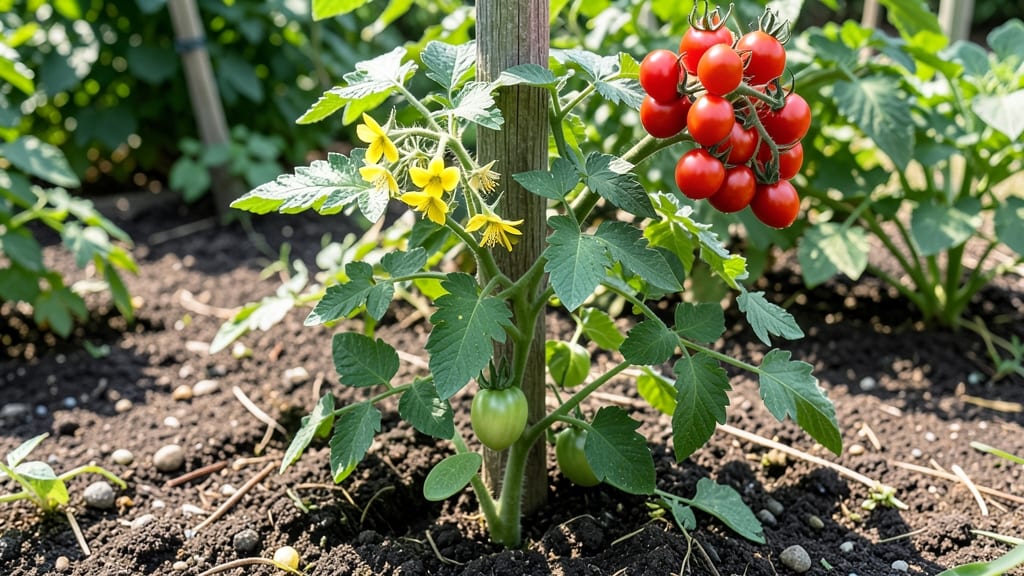
Cherry tomatoes go from tiny seeds to sunburst vines in just 8-12 weeks—if you nail each growth stage. 🌱 I’ve watched my first plants struggle through leggy seedlings and missed pollination, but now I know exactly what to expect each month to guarantee a bountiful harvest.
The journey starts with seed germination (weeks 1-2), where you’ll see those first tiny leaves unfurl. Then comes vegetative growth (weeks 3-5) as vines stretch toward the sky—this is when proper sunlight and pruning make or break your plant’s structure.
By week 6, you’ll spot those first flower buds, signaling the shift to fruit set and the start of the most exciting phase.
Once flowers bloom, you’re in the fruiting stage (weeks 7-12), where consistent watering, trellising, and even a gentle handshake to help pollination will turn those blossoms into sweet, juicy tomatoes.
I’ve learned that skipping pruning here leads to fewer (but bigger) tomatoes, while overwatering causes cracking—both mistakes I’ve made the hard way.
By harvest time, your plants will look like a sun-drenched jungle, producing clusters of tomatoes every few days. The key is staying ahead of each stage’s needs—whether that’s thinning seedlings, supporting heavy vines, or protecting fruit from pests.
Let’s break down exactly what to do (and avoid) at each step to turn your garden into a cherry tomato powerhouse.
📚 In This Guide
- What you need
- Instructions
- Tips and common mistakes
- Wrapping up and next steps
What you need
- ● Cherry tomato seeds or seedlings: Choose disease-resistant varieties like 'Sweet 100,' 'Sun Gold,' or 'Tiny Tim.' Quantity: 4–6 plants per person (or 1–2 per container if growing in pots).
- ● Growing containers or garden bed: Containers: 5-gallon pots (1 plant per pot) or fabric grow bags (minimum 12" deep). Quantity: 1 per plant.
- ● Garden bed: Full sun (6–8+ hours/day), well-draining soil with pH 6.0–6.8.
- ● High-quality potting mix: Lightweight, organic blend with perlite or vermiculite for drainage. Quantity: 1–2 bags (1–2 cubic feet each).
- ● Fertilizer: Balanced fertilizer (10-10-10 or 5-5-5): For seedlings and early growth.
- ● Tomato-specific fertilizer (high in potassium and phosphorus, e.g., 5-10-10): For flowering/fruiting stages.
- ● Mulch: Straw or shredded leaves to retain moisture and suppress weeds. Quantity: 2–3 inches per bed.
- ● Hand trowel or transplanting spade (for seedling placement).
- ● Watering can or hose with adjustable nozzle (gentle watering avoids soil erosion).
- ● Pruning shears or scissors (for removing suckers and dead leaves).
- ○ Stakes or cages (3–4 ft tall) (1 per plant to support vines). Optional: Tomato clips or twine for DIY support.
- ● pH testing kit (to monitor soil acidity).
- ● Garden gloves (for comfort and hygiene).
- ● Grow lights (if starting seeds indoors, 12–16 hours/day).
- ● Drip irrigation system (for consistent moisture).
- ● Row covers or shade cloth (to protect from pests or extreme heat).
- ● Compost or worm castings (for nutrient boosts).
- ● Plant markers (to track varieties and growth stages!).
How to track cherry tomato growth through each development phase
Watch your plants transform from tiny seedlings into heavy-fruiting vines—here’s what to expect each month.
🌱 Step 1: Germination and Seedling Stage (Weeks 1-4)
After sowing, germination begins in 5-10 days at 75-85°F soil temperatures. You’ll see tiny white roots emerge first, followed by a curled sprout breaking through the soil surface. Keep the seedling tray covered with a humidity dome until 50% of seeds sprout—this prevents damping-off disease that turns stems to mush overnight.
Once the first true leaves appear (not the initial cotyledons), remove the dome and place seedlings under grow lights or in a south-facing window. Leggy seedlings with pale stems mean insufficient light—move them within 2-4 inches of the light source immediately. Strong seedlings have thick stems and deep green leaves spaced 1 inch apart.
☀️ Step 2: Vegetative Growth (Weeks 5-8)
By 4-6 weeks, your cherry tomatoes will have 4-6 true leaves and be ready for transplanting. Look for hair-like roots at the pot edges—this signals root-bound plants that need more space. When transplanting, bury stems 1 inch deeper than they grew in pots to encourage stronger root systems.
During this phase, focus on fertilizing every 2 weeks with a balanced 10-10-10 formula. You’ll notice new leaves forming at the top and side shoots developing—these are critical for future fruit production. Prune suckers (the small shoots in leaf axils) when they’re less than 2 inches long to direct energy to the main stem.
🌿 Step 3: Flowering Initiation (Weeks 9-12)
When temperature drops below 65°F at night, your plants will shift from leaf production to flowering. You’ll see tiny yellow blossoms form in leaf axils—these are your future fruit clusters. Hand-pollinate on cloudy days by gently shaking the vines or using a small brush to transfer pollen between flowers.
Reduce nitrogen fertilizer now—too much leaf growth delays fruiting. Instead, switch to a low-nitrogen, high-phosphorus (5-10-10) formula to support flower and fruit development. Watch for small green fruits forming—these will grow rapidly once pollinated. If flowers drop off, check for low humidity (below 40%) or temperature swings (above 90°F).
🍅 Step 4: Fruiting and Maturity (Weeks 13-16+)
By 10-12 weeks, you’ll harvest your first pint-sized cherry tomatoes. Look for full color (red, yellow, or purple) and firm, plump fruits—these are ready to pick. Prune yellow leaves and suckers weekly to maintain airflow and prevent disease. A mature vine produces 5-10 clusters of fruit, with each cluster containing 10-20 tomatoes.
Increase watering slightly during fruiting—1-1.5 inches per week—but avoid wetting leaves to prevent blight. You’ll notice new flowers forming at the top while lower clusters ripen. Continue harvesting every 2-3 days to encourage continuous production. If vines look exhausted by late summer, reduce water slightly to signal dormancy and prepare for fall.
Tips & tricks for perfect cherry tomato growth
Mastering these growth stages means understanding the subtle cues your plants give—here's how to optimize each phase for maximum yield.
Temperature Precision: Maintain that 75-85°F soil temperature range during germination by using a seedling heat mat if your home stays cooler. I've seen germination times double when soil temperatures drop below 70°F—the roots simply can't absorb moisture efficiently. For nighttime temperatures below 65°F during flowering, consider a small greenhouse or row cover to protect blossoms from chilly air, which can cause flower drop.
Lighting Strategy: In Step 1, when you notice seedlings stretching toward light (a sign of insufficient light), don't just move them closer—rotate the tray quarter-turn daily to prevent lopsided growth. For indoor growers, LED grow lights positioned 2-4 inches above seedlings provide optimal light spectrum without overheating. The key is maintaining 14-16 hours of light daily during vegetative growth to maximize leaf production.
Fertilizer Transition: The switch from 10-10-10 to 5-10-10 fertilizer during flowering is crucial—too much nitrogen at this stage will produce lush foliage but delay fruiting. I recommend making this transition when you first see those tiny yellow blossoms forming. For organic gardeners, compost tea or fish emulsion provides the phosphorus boost without the risk of over-fertilizing.
Pruning Precision: When pruning suckers in Step 2, use clean, sharp scissors to avoid tearing stems. The less than 2 inches long guideline is perfect timing—larger suckers already draw energy from the main stem. For indeterminate varieties, I prune suckers weekly throughout the season to maintain airflow and prevent disease. Remember that each pruning cut should be made just above a leaf node where new growth can emerge.
Pro Tips for Cherry Tomato Growth Stages
- Mastering these growth stages means understanding the subtle cues your plants give—here's how to optimize each phase ...
- Temperature Precision: Maintain that 75-85°F soil temperature range during germination by using a seedling heat mat i...
- Lighting Strategy: In Step 1, when you notice seedlings stretching toward light (a sign of insufficient light), don't...
Frequently asked questions
How long does it take for cherry tomatoes to go from seed to harvest?
Cherry tomatoes typically take 60–75 days from transplanting (or 70–90 days from seed) to reach maturity, depending on the variety and growing conditions. Early varieties like 'Tiny Tim' may ripen in as little as 50 days, while heirlooms like 'Sweet Million' lean toward the longer end. Keep an eye on your plants—color change is the best indicator!
Why are my cherry tomato plants flowering but not fruiting?
If your plants are blooming but not setting fruit, it’s often due to pollination issues, temperature extremes, or over-fertilizing with nitrogen. Hand-pollinate flowers with a small brush, ensure temps stay between 60–85°F, and switch to a low-nitrogen, high-phosphorus fertilizer (like 5-10-10) to encourage fruiting. Humidity or rain can also wash away pollen—try growing in a greenhouse or row cover if needed.
Can I speed up cherry tomato growth in containers?
Yes! Use large containers (5+ gallons), ensure they have drainage holes, and opt for compact or dwarf varieties like 'Tumbling Tom' or 'Micro Tom.' Place pots in full sun (6+ hours/day), water consistently (but avoid soggy soil), and fertilize weekly with a balanced liquid fertilizer. Prune suckers and lower leaves to boost airflow and fruit production.
What’s the best temperature range for cherry tomato growth?
Cherry tomatoes thrive in daytime temps of 70–85°F and nighttime temps above 55°F. Below 50°F, growth slows, and flowers may drop. Heatwaves above 90°F can cause blossom drop or poor fruit set. Use shade cloth in peak summer or grow in cooler climates (zones 3–11) with row covers or greenhouses for extended seasons.
Are cherry tomatoes annuals or perennials?
Cherry tomatoes are tender annuals, meaning they complete their life cycle in one growing season. However, in USDA zones 9–11, they can sometimes overwinter as perennials if protected from frost. Most gardeners replant fresh seeds or seedlings each spring for the best yield and disease prevention.
Wrapping up and next steps
Growing cherry tomatoes from seed to harvest is a rewarding journey filled with vibrant colors and delicious rewards! 🌱 By understanding each month-by-month stage—from germination to fruiting—you’ll set your plants up for success.
Whether you’re a seasoned gardener or a curious beginner, patience and care will turn your tiny seeds into a bountiful harvest.
Ready to dive in? Start by gathering your supplies and pick a sunny spot—your cherry tomato adventure begins now! 🌿