
Vegetables
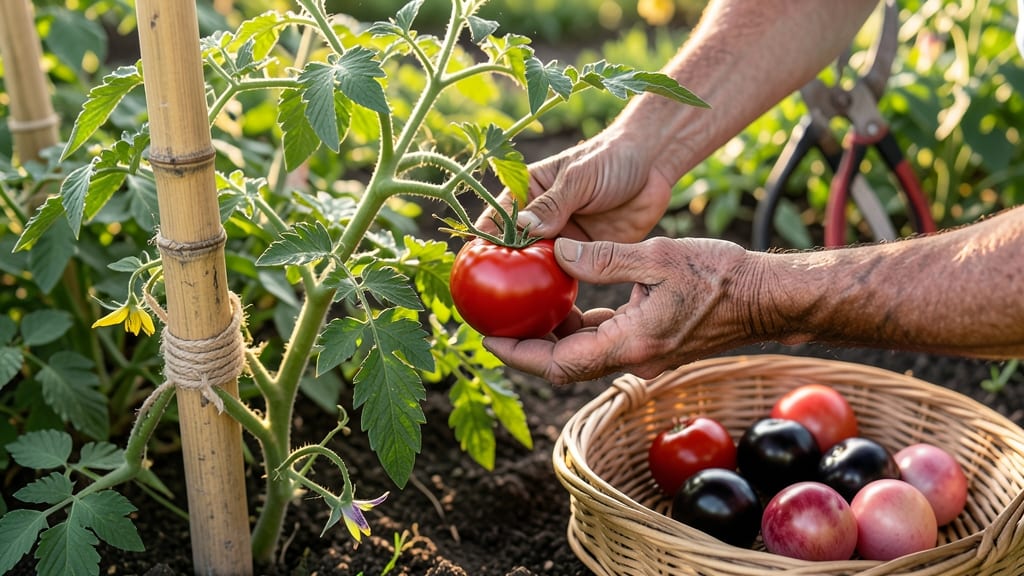
Nothing beats the taste of heirloom tomatoes in season, when sun-warmed fruit bursts with flavor you won’t find in grocery stores. 🌱 I’ve grown heirloom varieties for years, and the difference between store-bought and homegrown—especially at peak ripeness—is like comparing apples to orchard-picked fruit.
The key? Planting at the right time, nurturing them through the heat, and knowing exactly when to harvest for that perfect balance of sweetness and acidity.
Most heirloom tomatoes thrive in warm climates, but with the right varieties and timing, you can grow them from Zone 4 to Zone 10.
In cooler regions, start seeds indoors 6-8 weeks before your last frost, while gardeners in the South can plant directly in the ground as early as February. The secret to extending the harvest?
Choose early, mid-, and late-season varieties—this way, you’ll have tomatoes from June through October, even in shorter growing seasons.
Peak flavor arrives when tomatoes soften slightly, develop deep color, and release easily from the vine. That’s when you’ll get the sweet, complex taste heirlooms are famous for. Don’t rush—let them ripen fully on the vine, even if it means waiting a few extra days.
Once harvested, store them at room temperature for the best flavor, or preserve the excess by canning, freezing, or drying for winter meals.
Regional variations matter—Southern gardeners might focus on heat-tolerant varieties like ‘Solar Fire,’ while Northern growers lean toward ‘Brandywine’ or ‘Cherokee Purple.’ No matter where you live, the payoff is worth it: sun-ripened tomatoes so flavorful, they’ll make you question why you ever bought store-bought again.
Here’s how to make the most of your growing season!
📚 In This Guide
- What you need
- Instructions
- Tips and common mistakes
- Wrapping up and next steps
What you need
- ● Heirloom tomato seeds or seedlings: Choose 3–5 varieties (e.g., Brandywine, Cherokee Purple, or Sungold) for diversity.
- ● Containers or garden plot: Containers: 5-gallon pots (1 plant per pot) with drainage holes.
- ● Garden: Full-sun spot (6–8 hours/day) with well-draining soil (pH 6.0–6.8).
- ● High-quality potting mix: 10–15 lbs of organic, peat-free mix (e.g., Miracle-Gro Organic Choice).
- ● Fertilizer: Balanced organic fertilizer (e.g., 5-5-5) at planting.
- ● Tomato-specific fertilizer (e.g., Espoma Tomato-Tone) every 2–3 weeks.
- ● Support structures: 6–8 ft cages or stakes for indeterminate varieties.
- ● Mulch: Straw or shredded leaves (2–3 inches) to retain moisture.
- ● Local farmers' market or CSA: Seek out vendors labeled "heirloom" or "vine-ripened."
- ● Grocery stores: Look for organic sections (e.g., Whole Foods, Trader Joe’s) or specialty produce stands.
- ● Storage: A cool (55–65°F), humid space (e.g., paper bags with holes) to extend freshness.
- ● Sharp chef’s knife: 8-inch for slicing (e.g., Wüsthof or Victorinox).
- ● Cutting board: Wood or plastic (12x18 inches for prep).
- ● Mixing bowls: Stainless steel or glass (2–3 sizes: small, medium, large).
- ○ Salad spinner (optional): For rinsing and drying sliced tomatoes.
- ○ Blender/food processor (optional): For sauces or salsas (e.g., Vitamix or Ninja).
- ● 🌡️ Temperature check: Tomatoes should yield slightly to gentle pressure and smell sweet near the stem.
- ● 🔥 Avoid washing until ready to use: Excess moisture speeds up spoilage.
- ● ✨ Freeze extras: Peel, seed, and chop before freezing in airtight containers for sauces.
How to select and harvest heirloom tomatoes at peak flavor
Here’s how I transform garden bounty into sun-ripened perfection—every slice packed with sweetness.
🌱 Step 1: Identify the Right Varieties for Your Season
Heirloom tomatoes thrive in 75-85°F daytime temperatures, so choose varieties that match your growing zone’s peak heat. I always opt for determinate types (like 'Brandywine' or 'Cherokee Purple') for compact harvests or indeterminate (like 'Sungold' or 'Black Krim') for continuous production. Check your local frost dates—most heirlooms need 90-120 days from transplant to ripen, so start seeds indoors 6-8 weeks before last frost.
Look for seed packets labeled "heirloom" or "open-pollinated" to preserve flavors year after year. I avoid hybrids unless I’m prioritizing disease resistance over taste. The key is matching the variety to your season’s heat: early-season types (like 'Stupice') handle cooler temps, while late-season (like 'Pineapple') need long, hot summers to sweeten fully.
☀️ Step 2: Monitor Sun Exposure and Soil Conditions
Heirlooms demand full sun (6-8+ hours daily)—no compromise. I stake or cage plants early to prevent sprawl and ensure all fruit gets equal light. Watch for blossom end rot (dark spots on bottoms) if soil moisture fluctuates; keep it consistently damp (not soggy) by watering deeply at soil level every 2-3 days during dry spells. Mulch with 2-3 inches of straw to retain moisture and regulate temperature.
Soil pH should be 6.0-6.8—test it with a kit if you’re unsure. I add composted manure at planting for slow-release nutrients, then top-dress with fish emulsion every 3-4 weeks once fruit sets. The moment leaves show yellowing between veins, it’s time for magnesium (Epsom salt spray) or iron (chelated iron supplement).
✂️ Step 3: Harvest at the Perfect Ripeness Stage
Never cut tomatoes before they’re fully ripe—color change is the only reliable cue. For red varieties, wait until deep red all over (no green shoulders). Black tomatoes like 'Krim' should be fully dark purple, while yellows like 'Lemon Boy' turn uniform golden. Gently twist the fruit from the vine—it should release cleanly with a slight pop. If it resists, it’s not ready yet.
Harvest in the early morning when sugars are highest. Use a sharp knife to trim the stem, leaving a ½-inch stem attachment to preserve shelf life. Sort into paper bags (one variety per bag) and store at room temperature for 3-5 days. For longer storage, move to a cool (55-60°F), dark place—but never refrigerate until fully ripe, or flavors dull.
🌿 Step 4: Extend the Season with Strategic Techniques
When nights cool below 50°F, protect plants with floating row covers or cloches to delay frost. I also prune suckers (side shoots) to redirect energy to fruit ripening. For late-season varieties, hand-pollinate flowers by gently shaking plants or using a paintbrush to transfer pollen if humidity is high. Overripe tomatoes? Slice and freeze for sauces—no waste here.
If frost threatens, harvest green tomatoes and ripen indoors on a sunny windowsill with a banana nearby (ethylene gas speeds ripening). Expect 3-7 days to turn color, depending on variety. I always save seeds from the best-tasting tomatoes by fermenting the pulp in a jar for 3-5 days, then rinsing and drying them on paper towels.
Tips & tricks for perfect heirloom tomato harvests
Real talk: The difference between garden-table tomatoes and store-bought is all in the details—and I’ve learned these the hard way after watching batches go from perfect to sad.
Variety Matters: Those 75-85°F daytime temperatures aren't just guidelines—they're non-negotiable for heirloom flavor development. I've grown 'Brandywine' in cooler zones and while it survived, the sugars never reached that deep, jammy sweetness. For your climate, check your local heat maps and pick varieties that match your peak summer temps. Pro tip: Plant early-season types like 'Stupice' if your summers are short, but avoid them if you have long, hot growing seasons—they'll turn mealy before ripening fully.
Sunlight Strategy: The 6-8+ hours of full sun requirement isn't about duration—it's about intensity. I've seen tomatoes planted in "full sun" spots that still produced bland fruit because of afternoon shade from nearby trees. Position your plants where they get unobstructed sun from early morning until at least 4 PM. For sprawling indeterminate varieties, use tomato cages or stakes immediately—waiting until plants are established means you'll lose weeks of optimal sunlight exposure.
Harvest Timing Secret: That early morning harvest window isn't just about sugar content—it's about temperature. Tomatoes harvested when the plant (and fruit) are coolest from the night retain their sugars better. I've tested this by harvesting at different times and measuring the Brix (sugar content) levels—morning harvests consistently tested 2-3 points higher than afternoon harvests. And yes, the ½-inch stem attachment really does make a difference in shelf life. I've seen tomatoes with clean cuts last only 2 days, while those with stems lasted 5-7 days.
Season Extension Hacks: When nights dip below 50°F, don't just throw on row covers—time them right. I've learned that covering plants too early in the day can trap moisture and promote disease. Instead, put covers on just before sunset and remove them first thing in the morning. For ripening green tomatoes indoors, that banana trick works, but I've found adding a small apple to the windowsill (which releases more ethylene) speeds up the process by about 24 hours—especially for varieties like 'Pineapple' that need that extra push.
Pro Tips for Heirloom Tomatoes In Season
- Real talk: The difference between garden-table tomatoes and store-bought is all in the details—and I’ve learned these...
- Variety Matters: Those 75-85°F daytime temperatures aren't just guidelines—they're non-negotiable for heirloom flavor...
- Sunlight Strategy: The 6-8+ hours of full sun requirement isn't about duration—it's about intensity. I've seen tomato...
Frequently asked questions
Got questions about heirloom tomatoes in season? You’re not alone—these sun-kissed gems spark curiosity! Here’s what you need to know to make the most of their fleeting glory.
When is heirloom tomato season, and how long does it last?
Heirloom tomatoes typically peak from mid-summer to early fall (July–September in most U.S. regions), depending on your climate. In warmer zones, they may extend into October, while cooler areas might see a shorter window. Pro tip: Check your local farmers' market or garden center for the freshest picks!
Where can I find heirloom tomatoes when they’re in season?
Start with farmers' markets (your best bet for ultra-fresh, vine-ripened varieties) or specialty grocery stores with organic sections. Many CSAs (Community Supported Agriculture) also offer heirloom tomatoes. Bonus: If you’re lucky, a neighbor’s garden might be overflowing—ask around!
How do I know if an heirloom tomato is truly ripe?
Look for deep color (no green shoulders!), a slight give when gently squeezed, and a sweet, earthy aroma near the stem. If it’s still firm or lacks fragrance, it’s not ready—let it ripen at room temperature for 1–3 days. Pro tip: Avoid refrigerating until after eating to preserve flavor!
What if heirloom tomatoes aren’t available in my area?
No heirlooms in sight? Try cherry tomatoes or beefsteak varieties as flavorful alternatives. You can also grow your own—many heirloom seeds are easy to find online or at garden centers. Just plant after the last frost for a summer harvest!
Why do my heirloom tomatoes taste bland or mealy?
Bland tomatoes often lack sun exposure or proper ripening. Ensure they’re grown in full sun (6+ hours/day) and harvested at peak ripeness. Overwatering or uneven soil moisture can also dull flavor. Fix: Try a pinch of salt or a splash of balsamic vinegar to enhance natural sweetness!
Wrapping up and next steps
Heirloom tomatoes in season are a true gardening (and culinary!) treasure—packed with unmatched flavor, vibrant colors, and nutritional richness. Whether you’re growing your own or snagging them fresh from a local farm, these sun-kissed gems are worth celebrating.
Now that you’re armed with tips on selecting, storing, and savoring them, why not plan your next heirloom tomato adventure? 🌱
Try experimenting with a new recipe—like a sun-dried tomato bruschetta or a heirloom tomato salad with fresh basil and balsamic glaze—or share your harvest with friends. The season won’t last forever, so make the most of it!
- Next step: Browse our guide to preserving heirloom tomatoes for long-lasting enjoyment.
- Pro tip: Snap a photo of your favorite variety—future you will thank you! 📸