
Vegetables
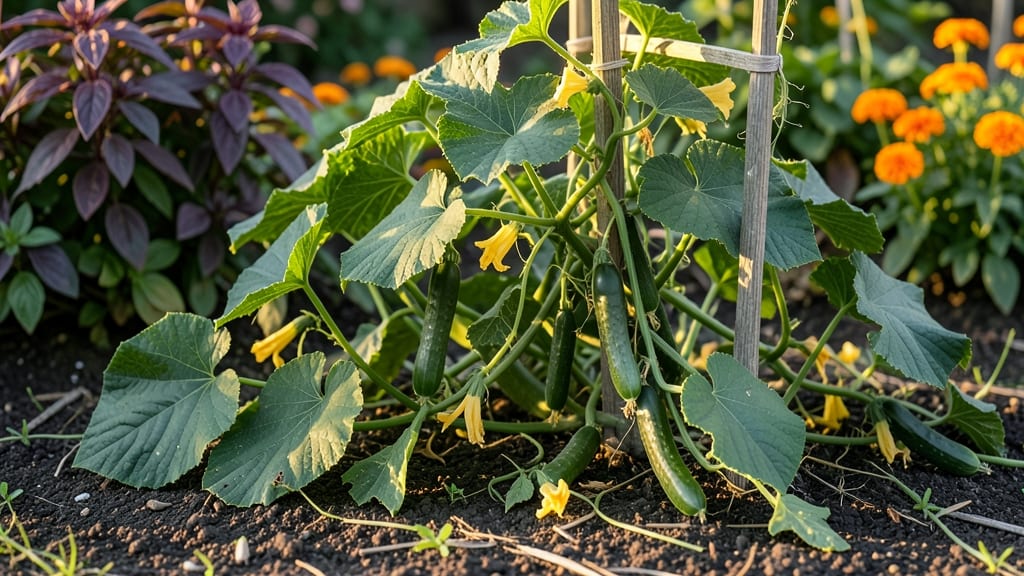
Growing cucumbers and cantaloupe together turns your garden into a 50-day harvest machine with bold stripes and sweet rewards. 🌱 I've seen this combo work magic in my summer garden—cucumbers climbing trellises while cantaloupes sprawl nearby, both thriving under the same care.
The secret lies in their shared love for warmth, space, and consistent moisture, though each has its own quirks.
Both plants demand full sun (6+ hours daily) and rich, well-draining soil with a pH between 6.0 and 7.0. Cucumbers prefer slightly more nitrogen early on, while cantaloupes need phosphorus for those signature sweet fruits.
Plant cucumbers 12 inches apart along trellises, and give cantaloupes 3 feet of space to sprawl—crowding invites disease. Water at the base daily, keeping soil damp but never soggy.
By day 50, you'll be harvesting crisp cucumbers and fragrant cantaloupes that taste like summer in every bite. The cucumbers stay productive for weeks, while cantaloupes deliver a small but explosive harvest.
The key is patience: cantaloupes need 100+ frost-free days to ripen, so start seeds indoors 3-4 weeks before your last frost if your zone's short on heat.
This duo works best in warm climates (zones 4-10) but can succeed in cooler areas with black plastic mulch or row covers. Avoid planting near potatoes or melons—they compete for nutrients.
With the right setup, you'll have a garden that's as visually striking as it is productive, proving that sometimes, the best partnerships grow together.
📚 In This Guide
- What you need
- Instructions
- Tips and common mistakes
- Wrapping up and next steps
What you need
- ● Seeds: Cucumber seeds (e.g., 'Straight Eight,' 'Marketmore') – 3-5 seeds per plant (or 1 seed per container if direct-sowing)
- ● Cantaloupe seeds (e.g., 'Athena,' 'Hale’s Best') – 2-3 seeds per hill (thin to 1-2 strongest seedlings)
- ● Soil: Well-draining, fertile soil with a pH of 6.0–6.8. Mix in 2–3 inches of compost or aged manure before planting.
- ○ Containers (optional): 5-gallon pots or fabric grow bags (for cucumbers) with drainage holes.
- ● Fertilizer: Balanced 10-10-10 fertilizer (or compost tea) at planting.
- ● Low-nitrogen 5-10-10 fertilizer (e.g., tomato/vegetable blend) when flowers appear.
- ● Garden trowel or transplanting spade
- ● Watering can or hose with a gentle spray nozzle
- ● Row covers or frost cloth (for early planting in cooler climates)
- ○ Trellis or stakes (4–6 ft tall) for cucumbers (optional but recommended for space-saving)
- ● Mulch (straw or black plastic) to retain moisture and suppress weeds
- ● Sunlight: Full sun (6–8+ hours daily)
- ● Water: Consistent moisture (1–2 inches per week; drip irrigation ideal)
- ● Mycorrhizal fungi (boosts root health)
- ● Bee-friendly flowers (e.g., marigolds) to attract pollinators
- ● pH test kit (to monitor soil acidity)
- ● Pruning shears (for cucumber vines)
Step-by-Step instructions for growing cucumbers and cantaloupes together
Here's how to pair these fast-growing vines for maximum space efficiency and harvests in under two months.
🌱 Step 1: Prepare the Raised Bed or Hill Mounds
Choose a south-facing location with 6+ hours of direct sun daily. For cucumbers and cantaloupes, I build 12-inch tall mounds spaced 4 feet apart—this improves drainage and warms the soil faster. Mix 2 cubic feet of compost into the top 6 inches of native soil for each mound. The compost boosts microbial activity that helps roots access nutrients quickly.
Test soil moisture by squeezing a handful—it should hold together but not drip. If your soil feels compacted, add 1 part perlite to every 3 parts soil to prevent root rot. Cantaloupes and cucumbers both hate soggy feet, so good drainage is non-negotiable. I like to work in a 5-gallon bucket of aged manure per mound too—this gives them a slow-release nitrogen boost without burning tender roots.
🌿 Step 2: Plant Seeds at Optimal Depth and Spacing
Direct-sow cucumber seeds ½ inch deep and cantaloupe seeds 1 inch deep after all frost risk has passed—your local last frost date plus 10-14 days of warm weather. I plant 3 cucumber seeds per mound in a triangle pattern and 2 cantaloupe seeds slightly deeper in the center. The cantaloupes need more depth because their taproots grow aggressively.
Space the seeds 18 inches apart within each mound. You'll thin to the strongest seedling after 2 weeks, but planting extra gives you backup if one fails. Water gently with a spray nozzle to avoid displacing seeds. The soil should feel evenly moist but not saturated—think of a wrung-out sponge. I cover the bed with 2 inches of straw mulch immediately after planting to retain moisture and suppress weeds.
☀️ Step 3: Train Vines and Manage Watering
When seedlings reach 4 inches tall, I install 3-foot tall trellises on either side of each mound. Train cucumbers to climb vertically—this saves space and improves air circulation, reducing powdery mildew risk. Cantaloupes stay on the ground but benefit from light trellis support for their vines to spread without smothering each other.
Water deeply every other day at the base, aiming for 1 inch of water per week. Use a soaker hose to deliver moisture slowly—this prevents leaf diseases that thrive in wet foliage. Cantaloupes need slightly more water than cucumbers, so I give them ½ inch extra during fruit development. Always water in the early morning so leaves dry quickly.
✂️ Step 4: Prune and Fertilize for Maximum Yield
When cucumber vines hit the trellis, pinch off the tip of the main stem to encourage bushier growth with more fruit. For cantaloupes, remove any flowers that appear before 4 true leaves form—they won't produce quality fruit. I also prune away any yellowing leaves to redirect energy to fruit production.
Side-dress with 1 cup of 10-10-10 fertilizer per mound when vines start flowering. Cantaloupes need more potassium for sweet fruit, so I switch to 5-10-10 at fruit set. Watch for square cucumbers or small melons—these signal the plant needs more phosphorus. A balanced liquid feed every 2 weeks keeps both thriving.
🍉 Step 5: Harvest at Peak Ripeness
Cucumbers are ready when they're 6-8 inches long and firm to the touch. I harvest every 2-3 days to encourage more production—overripe cucumbers turn bitter and attract pests. Cantaloupes take longer: wait until the beige netting (the bloom) on the stem end turns creamy yellow and the fruit feels heavy for its size. Give it a gentle twist—if it releases easily, it's ripe.
Cut cantaloupes from the vine with clean pruners to avoid damaging stems. Store cucumbers in the fridge for 1 week and cantaloupes at 50-55°F for up to 2 weeks. The key to repeat harvests? Keep deadheading spent flowers and fertilizing lightly—your plants will reward you with 50 days of nonstop production.
Tips & tricks for growing cucumbers and cantaloupes together
These practical insights will help you maximize your harvest while avoiding common pitfalls with this dynamic duo.
Soil Preparation Secret: The 12-inch mound height isn't just about drainage—it also creates a thermal mass that warms up faster in spring. I've found that adding a thin layer of black plastic mulch over the mounds 1-2 weeks before planting raises soil temperatures by 5-10°F, giving you a head start on the growing season. This is especially helpful if you're planting near your last frost date. Just remember to poke holes in the plastic where you'll plant seeds.
Seedling Survival Strategy: When planting your 3 cucumber seeds and 2 cantaloupe seeds in Step 2, I recommend using biodegradable seed starter pots instead of direct sowing if your spring weather is unpredictable. Plant the pots at the correct depths, then transplant the strongest seedlings after 2 weeks when you're thinning. This gives you a backup if some seeds fail to germinate—something that happens more often with cantaloupes due to their larger seeds.
Watering Wisdom: The 1 inch per week watering guideline assumes average conditions, but cantaloupes actually need 1.5 inches per week during fruit development. I track this by using a rain gauge near my garden. When cantaloupe vines start flowering, I increase watering to every other morning rather than every other day. This extra moisture helps prevent blossom-end rot in developing fruits—something I used to struggle with until I adjusted my watering schedule.
Harvesting Hack: For cantaloupes, the creamy yellow bloom indicator is foolproof, but I've found an extra trick: tap the melon gently with your knuckles. A ripe cantaloupe will sound hollow when tapped near the stem end. This works best when combined with the other ripeness indicators. For cucumbers, harvest in the early morning when they're coolest and firmest—this prevents them from becoming seedy and bitter later in the day.
Pro Tips for Cucumber And Cantaloupe
- These practical insights will help you maximize your harvest while avoiding common pitfalls with this dynamic duo.
- Soil Preparation Secret: The 12-inch mound height isn't just about drainage—it also creates a thermal mass that warms up faster in spring.
- Seedling Survival Strategy: When planting your 3 cucumber seeds and 2 cantaloupe seeds in Step 2, I recommend using biodegradable seed starter pots instead of direct sowing if your spring weather is unpredictable.
Frequently asked questions
Got questions about growing cucumbers and cantaloupe together? You’re not alone!
Here are the most common queries—plus quick, actionable answers—to help your striped duo thrive in just 50 days.
Can cucumbers and cantaloupe grow well together in the same garden bed?
Both are warm-season crops with similar growing conditions (full sun, well-draining soil). Plant them at least 3–4 feet apart to avoid competition for nutrients. Cantaloupe vines sprawl, while cucumbers climb—use trellises for cucumbers to save space. Just monitor for pests (like cucumber beetles) and thin seedlings if overcrowding occurs.
How do I time planting cucumbers and cantaloupe for a 50-day harvest?
Start seeds indoors 3–4 weeks before the last frost (or direct-sow after soil hits 60°F+). Cantaloupe takes 70–90 days to mature, while cucumbers ripen in 50–70 days. For a staggered harvest, plant cucumbers 1–2 weeks earlier than cantaloupe. Use row covers early to protect tender seedlings from cold snaps.
Why are my cantaloupe flowers falling off before fruiting?
This usually means stress from heat, drought, or poor pollination. Hand-pollinate flowers (use a soft brush to transfer pollen) if bees are scarce. Ensure soil stays consistently moist (but not soggy) and mulch to retain humidity. If nights dip below 55°F, cover plants with frost cloth to prevent shock.
Can I substitute zucchini or honeydew for cucumbers/cantaloupe in this combo?
Yes! Zucchini (like cucumbers) thrives in the same conditions, while honeydew (like cantaloupe) shares pollination needs. Pro tip: Avoid planting melons and squash together if space is tight—they’re heavy feeders. For a low-maintenance swap, try butternut squash (75-day harvest) or summer squash (50–60 days) alongside cucumbers.
What’s the fastest way to deter pests like cucumber beetles or squash bugs?
Start with row covers (remove when flowers appear for pollination). Plant nasturtiums or marigolds nearby as trap crops. For severe infestations, spray neem oil (early morning/evening) or introduce beneficial nematodes. Rotate crops yearly to break pest cycles—never plant melons or cucurbits in the same spot two years in a row.
Bonus Tip:
Need extra space? Try vertical gardening! Train cucumbers up a trellis and let cantaloupe vines spread on the ground. This saves room and improves airflow, reducing disease risk.
Wrapping up and next steps
Growing your own cucumber and cantaloupe duo is a rewarding journey that yields delicious, homegrown produce in just 50 days! With the right soil, sunlight, and care, these bold-striped stars will thrive—adding vibrant flavors and nutrients to your table. 🌱✨
Ready to take the next step? Start by sketching your garden layout, then plant those seeds and watch your garden transform into a fruitful oasis. Happy growing—your future harvest is waiting! 🍉🥒