
Vegetables
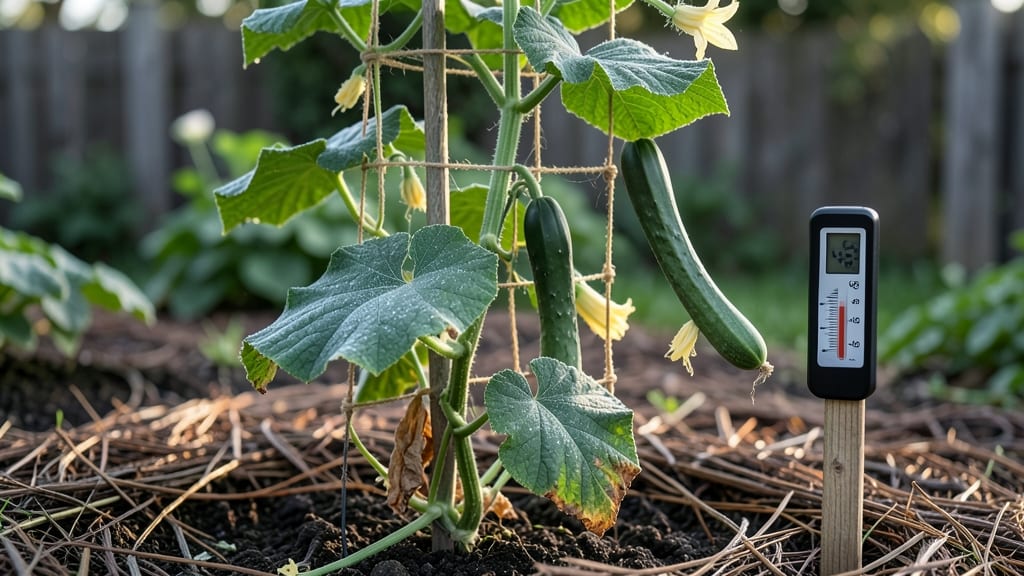
Cucumbers wilt below 50°F—that’s their absolute minimum temperature, and pushing them colder risks stunted growth or death. 🌱 I learned this the hard way when my seedlings turned yellow overnight after a late spring frost, and I’ve since perfected how to shield them from chilly surprises.
The real danger zone starts at 45°F—below that, germination stalls, roots suffer, and vines struggle to produce fruit. Even warm days won’t save them if nights dip too low. My trick?
Start seeds indoors when soil temps hover around 60°F and use row covers or cold frames once they’re planted. What you’ll gain is stronger, faster-growing plants that climb and fruit reliably.
The key is matching temperature to growth stages: seedlings need warmth, mature vines tolerate cooler evenings, and flowers need 75-85°F to pollinate properly. For cooler climates, extend the season with black plastic mulch or a low tunnel—both raise soil temps by 5-10°F.
Even in mild zones, a greenhouse corner can push harvests earlier. Here’s how to keep them thriving no matter the forecast.
📚 In This Guide
- What you need
- Instructions
- Tips and common mistakes
- Wrapping up and next steps
What you need
- ● Cucumber seeds or seedlings: Choose cold-tolerant varieties like 'Northern Pickling' or 'Straight Eight' (10–20 seeds or 5–10 seedlings, depending on space).
- ● Thermometer (digital or analog): A soil and air thermometer (e.g., blank">Incubator-style or blank">probe-type) to monitor temperatures accurately. Pro tip: 🌡️ Place the soil probe 2–3 inches deep for precise readings!
- ● Growing containers or garden bed: Containers: 5-gallon pots or larger (1–2 per plant) with drainage holes.
- ● Garden bed: Well-draining soil with a minimum 12-inch depth for root growth.
- ● High-quality potting mix or garden soil: A blend with 50–60% organic matter (e.g., blank">Miracle-Gro Potting Mix or homemade compost). Avoid heavy clay soil.
- ● Row covers or frost blankets: Lightweight floating row covers (e.g., blank">Agribon AG-19) to protect seedlings from temperatures below 50°F (10°C).
- ○ Cold frames or mini greenhouses: Optional but ideal for extending the growing season (e.g., blank">18"x24" cold frame).
- ● Watering can or hose with a gentle nozzle: Cucumbers need 1–1.5 inches of water per week; avoid wetting leaves to prevent disease.
- ● Fertilizer (balanced or organic): Seedling stage: 10-10-10 or fish emulsion (diluted to half-strength).
- ● Fruiting stage: 5-10-10 or compost tea for a potassium boost.
- ● Mulch (straw or black plastic): Helps retain soil warmth and reduce temperature fluctuations. 🔥 Black plastic mulch can raise soil temps by 5–10°F (3–6°C)!
- ● Heating mat: For indoor starts (e.g., blank">100W heating mat) to keep soil above 70°F (21°C).
- ● Grow lights: LED full-spectrum bulbs (e.g., blank">24W LED clip-on) if growing indoors with limited sunlight.
- ● Trellis or cages: To support vining varieties and improve air circulation (e.g., blank">5-foot tomato cages).
- ● pH testing kit: To ensure soil pH is between 6.0–6.8 (ideal for cucumbers).
- ● Insect netting: Protects against pests like cucumber beetles, especially in warm but not scorching climates.
Understanding cucumber minimum temperature for healthy growth
Cold snaps can devastate cucumbers—here's how to protect them without stunting growth.
🌱 Step 1: Identify Your Cucumber Variety's Cold Threshold
Most commercial cucumbers tolerate down to 50°F before suffering chilling injury, but heirloom varieties often need 55°F or warmer. Check your seed packet—some cold-hardy types like 'Northern Pickling' or 'Burpee Bush Champion' can handle brief dips to 45°F, though growth slows dramatically. I always verify this first because assuming a variety's tolerance can lead to stunted plants or worse.
Watch for yellowing leaves or blackened leaf edges—these are early signs of cold stress. If your plants are in containers, move them to a sheltered spot immediately. Cold damage spreads quickly, so act at the first sign. Never wait for symptoms to worsen; cucumbers recover poorly from prolonged chilling.
☀️ Step 2: Create Microclimates to Extend the Growing Season
Use row covers or low tunnels to raise soil temperatures by 5-10°F—this is the simplest way to protect cucumbers when nighttime temps drop below 55°F. I drape lightweight fabric over hoops or stakes, securing edges with bricks or soil. Remove covers during the day to prevent overheating, which can be just as damaging as cold. Monitor soil temperature with a probe; aim for 60°F or warmer for consistent germination and growth.
For container-grown cucumbers, group pots together and wrap them in bubble wrap or insulating blankets at night. This creates a buffer zone that retains warmth. Place containers on black plastic mulch during the day—it absorbs heat and radiates it back to the roots. Avoid plastic directly on soil; it can overheat roots if left in place overnight.
💧 Step 3: Adjust Watering to Prevent Cold-Related Shock
Cucumbers stressed by cold become more susceptible to root rot and fungal diseases, so watering becomes critical. Reduce frequency to every 3-4 days when temps drop below 60°F, letting the top 2 inches of soil dry out between waterings. Overwatering in cool conditions suffocates roots, making plants more vulnerable to temperature swings. I always check soil moisture with my finger—if it feels damp more than 1 inch down, hold off on watering.
Water deeply in the morning to allow foliage to dry before evening. Wet leaves overnight invite downy mildew, a common cold-season problem. If you must water in the evening, use a soaker hose to keep leaves dry. Avoid overhead sprinklers entirely when nights are chilly. Mulch with straw or shredded leaves to insulate roots and maintain even soil temperatures.
✂️ Step 4: Prune and Protect During Temperature Drops
When forecasts predict below 50°F, prune back any yellow or damaged leaves to redirect energy to healthy growth. Remove only the affected areas—never cut into healthy tissue. I also tie vines to stakes more securely; wind combined with cold can snap tender stems. Secure plants loosely enough to allow growth but tightly enough to prevent flailing in gusts.
For extreme cold snaps (below 45°F), cover plants with frost cloth or even old bedsheets secured with clips. Avoid plastic—it traps too much moisture and can scald leaves. Leave the cover off during the day if possible, but if temps stay low all day, remove it only for a few hours to prevent overheating. Check plants daily for signs of stress; cucumbers under cover can overheat just as easily as they can freeze.
⏰ Step 5: Plan for Long-Term Cold Protection
If your growing season is short, opt for fast-maturing varieties (under 55 days) to harvest before cold sets in. I always plant a second crop of short-season cucumbers like 'Straight Eight' or 'Marketmore' in late spring for a fall harvest. Start seeds indoors 4-6 weeks before the last frost, then transplant when soil reaches 60°F—this gives plants a head start before cooler weather arrives.
For year-round growing in colder climates, consider greenhouse cultivation or high tunnels. These structures raise soil temperatures by 10-15°F and extend the season by 4-6 weeks on either end. Even a simple cold frame over a single row can make a dramatic difference. Test your setup in early spring to ensure it performs as expected before committing to a full season of planting.
Tips & tricks for thriving cucumbers in cool weather
Here's what nobody tells you about keeping cucumbers happy when temperatures drop.
Variety Selection: The 50°F threshold isn't universal—commercial cucumbers handle cooler temps better than heirlooms. If you're growing 'Northern Pickling' or 'Burpee Bush Champion', you can push those brief dips to 45°F, but expect slower growth. For heirlooms like 'Straight Eight', maintain 55°F or warmer to prevent chilling injury. I always cross-check seed packets because assuming tolerance can mean the difference between a thriving plant and a stunted one.
Microclimate Mastery: Those 5-10°F temperature boosts from row covers or low tunnels make all the difference when nights dip below 55°F. The key is monitoring soil temps—aim for 60°F or warmer. I use a soil thermometer because air temps can be misleading. Pro tip: Remove covers by mid-morning to prevent overheating, which stresses plants just as much as cold.
Watering Wisdom: When temps drop below 60°F, reduce watering to every 3-4 days and let the top 2 inches of soil dry between sessions. Overwatering in cool conditions suffocates roots and invites fungal diseases. I check moisture by sticking my finger 1 inch deep—if it's damp, wait another day. Morning watering is non-negotiable; wet leaves overnight create the perfect conditions for downy mildew.
Protective Measures: For extreme cold (45°F or lower), frost cloth is your best friend—but avoid plastic at all costs. It traps moisture and can scorch leaves. I've learned this the hard way after ruining a batch of plants with plastic sheeting. Instead, use lightweight fabric and secure it loosely. Check plants daily under covers; they can overheat just as easily as they can freeze.
Pro Tips for Cucumber Minimum Temperature
- Here's what nobody tells you about keeping cucumbers happy when temperatures drop.
- Variety Selection: The 50°F threshold isn't universal—commercial cucumbers handle cooler temps better than heirlooms.
- Microclimate Mastery: Those 5-10°F temperature boosts from row covers or low tunnels make all the difference when nights dip below 55°F.
Frequently asked questions
Got questions about keeping your cucumbers happy in cooler weather? Here are some of the most common concerns—and straightforward answers—to help you grow thriving plants, even when temperatures dip.
What’s the absolute minimum temperature cucumbers can tolerate?
Cucumbers thrive best between 70–90°F (21–32°C), but they can handle brief dips down to 50°F (10°C). Prolonged exposure below 55°F (13°C) risks stunted growth, yellowing leaves, or even death. If frost threatens (32°F/0°C), cover plants immediately or harvest what you can!
Can cucumbers survive a light frost?
Nope! Cucumbers are frost-sensitive—even a light frost (32°F/0°C) will kill them. If frost is forecasted, act fast: harvest ripe cucumbers, mulch heavily, or use row covers to protect tender plants. Better yet, grow cucumbers in containers and move them indoors (or to a greenhouse) when temps drop.
How can I extend the growing season for cucumbers in cold climates?
Try these tricks to beat the chill:
- Start indoors 3–4 weeks before the last frost, then transplant seedlings after soil warms to 60°F (15°C).
- Use black plastic mulch or straw to absorb heat and insulate roots.
- Opt for cold-tolerant varieties like ‘Northern Pickling’ or ‘Corinto.’
- Plant in south-facing beds or near heat-retaining structures (like brick walls).
For extra protection, row covers can raise temperatures by 5–8°F (3–4°C).
What should I do if my cucumber plants look wilted or yellow in cold weather?
Cold stress often causes wilting or yellowing leaves. First, check the soil temperature—if it’s below 55°F (13°C), your plants may be struggling. Water consistently (but avoid soggy soil), and consider a lightweight row cover for daytime warmth. If leaves turn yellow, it could signal root damage—trim affected foliage and fertilize lightly with compost tea to revive growth.
Are there cold-hardy alternatives to traditional cucumbers?
If your climate is too chilly for cucumbers, try these cool-weather-friendly picks:
- Sukkulent cucumbers (Cucumis sativus var. hardwickii): Native to Africa, these handle cooler temps (down to 45°F/7°C) and are drought-resistant.
- Winter squash or pumpkins: Heartier and more frost-tolerant, though they take longer to mature.
- Peppers (bell or jalapeño): Some varieties (like ‘Aristotle’) tolerate 50°F (10°C) better than cucumbers.
- Leafy greens: Spinach, kale, or Swiss chard thrive in cooler weather and pair well with cucumbers in salads!
For a true cucumber fix, consider greenhouse growing or container gardening with movable pots.
Wrapping up and next steps
Understanding the cucumber minimum temperature is key to growing healthy, productive plants—whether you're a seasoned gardener or just starting out! 🌱 Cucumbers thrive best in warmth but can handle brief dips below 50°F (10°C) with the right care.
By monitoring soil and air temps, choosing cold-hardy varieties, and using protective measures like row covers, you’ll set your plants up for success.
Now that you’re armed with these insights, why not put them to the test? Start small—plant a few cucumbers in a controlled environment (like a greenhouse or raised bed) and track their progress. Every gardener’s journey begins with a single seed, and yours could be just around the corner! 🌱✨