
Vegetables
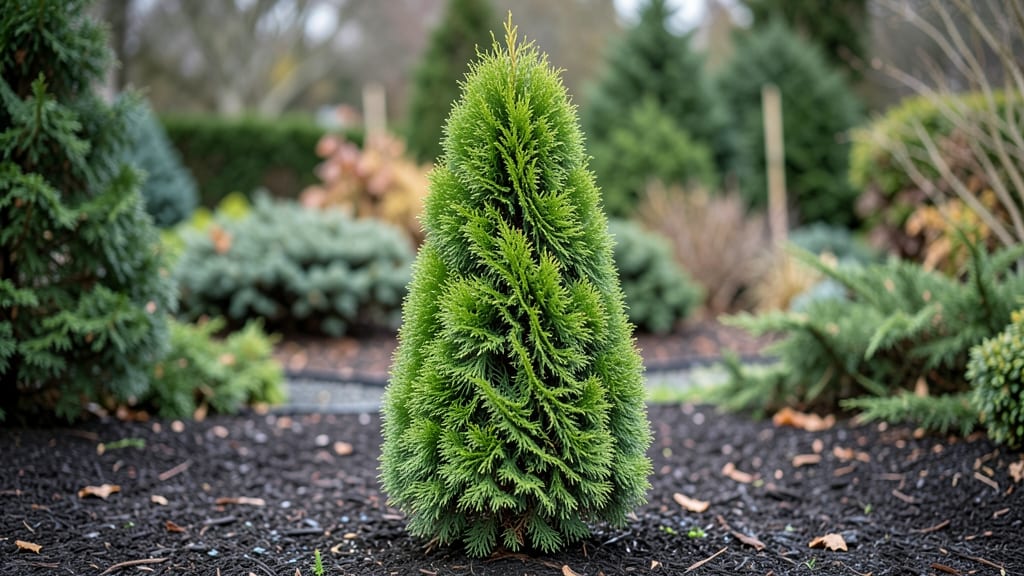
Transform your yard into a lush, year-round privacy screen with emerald green arborvitae Thuja, a cold-hardy evergreen that outlasts most plants. 🌿 These resilient trees thrive in zones 3-7, and their vibrant green needles stay fresh even in winter—no brown, scraggly messes here.
The secret to their success is simple: plant them in well-draining soil with full sun to partial shade, and keep them consistently moist for the first year.
After that, they’re practically maintenance-free, growing about 12 inches per year until they reach their mature height of 12-15 feet—perfect for hedges or windbreaks. You’ll love how they hold their shape without constant pruning, and their dense foliage blocks noise and wind like a natural fortress.
By year three, your screen will be thick enough to create real privacy, with minimal effort from you. For best results, space them 3-4 feet apart in rows, and mulch around the base to retain moisture.
If you notice browning tips, it’s usually a sign of underwatering or salt buildup—just adjust your watering and watch them bounce back.
📚 In This Guide
- What you need
- Instructions
- Tips and common mistakes
- Wrapping up and next steps
What you need
- ● Emerald Green Arborvitae Thuja seedlings: 3–5 plants (spaced 3–4 feet apart for full coverage in 3 years).
- ● Well-draining soil: Mix of native soil + 30% compost or peat moss (1–2 cubic yards per 100 sq. ft.).
- ● Organic mulch: 2–3 inches of pine straw or shredded bark (spread in a 2-foot radius around each plant).
- ● Fertilizer: Slow-release, balanced fertilizer (10-10-10 or 20-20-20, 1 lb per plant).
- ● Watering supplies: Garden hose with a gentle spray nozzle or drip irrigation system.
- ● Garden gloves & trowel: For planting and soil prep.
- ○ Stakes & twine (optional): 4–6 stakes per plant for young trees in windy areas.
- ○ Plant protector (optional): Tree guards or wire mesh to deter deer/browsing.
- ● Sunlight: Full sun (6+ hours daily) or partial shade (4–6 hours).
- ● pH level: Slightly acidic to neutral (6.0–7.5). Test soil or amend with sulfur/lime if needed.
- ● Spacing: Plan a 3–4 ft gap between plants for mature width (~3 ft) and height (~12–15 ft).
- ● Water access: Consistent moisture for the first year (deep watering 2–3x/week).
Instructions for planting Emerald Green Arborvitae for a privacy screen
Here's how to establish a lush, cold-hardy screen that delivers full privacy in just three years.
🪴 Step 1: Choose and Prepare Planting Sites
Select a location with full sun to partial shade—Emerald Green Arborvitae thrive in 6+ hours of sunlight daily. Measure your space: these evergreens grow 3-4 feet wide and 12-15 feet tall at maturity, so space plants 4-6 feet apart for a dense screen. For your 4 plants, that means a 12-16 foot linear space.
Dig holes twice as wide and just as deep as the root ball. Amend the native soil with 2 inches of compost mixed into the bottom 6 inches of each hole. This improves drainage and gives roots a nutrient boost right where they need it most. Avoid planting in low spots where water pools—these trees hate soggy feet.
🌱 Step 2: Plant with Proper Spacing and Support
Remove each plant from its container and gently loosen the roots if they're circling. Position the root ball so the top sits 1-2 inches above ground level—this prevents water from pooling against the trunk and causing rot. Backfill with native soil mixed with compost, tamping lightly every 2 inches to eliminate air pockets.
Water deeply immediately after planting to settle the soil and encourage root contact. I like to use a hose on gentle setting for 10-15 minutes per plant until water runs out the bottom of the hole. Add a 2-3 inch layer of mulch around the base, keeping it 6 inches away from the trunk to prevent moisture buildup that causes disease.
☀️ Step 3: Water and Fertilize for First-Year Establishment
Water newly planted Arborvitae 2-3 times per week for the first growing season, providing 1-2 gallons per plant each time. You'll know they're getting enough when the soil 1-2 inches down stays consistently moist but not soggy. After the first year, they'll establish deep roots and need watering only during prolonged dry spells.
Apply a balanced, slow-release fertilizer (10-10-10) in early spring and again in midsummer. Use ½ pound per 100 square feet of planting area. Avoid high-nitrogen fertilizers—they encourage soft, disease-prone growth. I also recommend a soil test every 2-3 years to check pH (ideal range is 6.0-7.5) and adjust if needed.
✂️ Step 4: Prune for Shape and Health
Prune your Emerald Green Arborvitae in late winter or early spring before new growth begins. Remove only 10-15% of the plant's volume at a time to maintain its natural pyramid shape. Use clean, sharp pruners to make cuts just above a healthy bud or branch collar.
Watch for brown, wilted branches—these are dead and should be removed immediately to prevent disease spread. Never prune more than ⅓ of the plant in one season, or you'll stress it and reduce its cold hardiness. I like to step back and admire the shape after pruning—you should see an open, airy center that allows light to penetrate to the lower branches.
⏰ Step 5: Protect and Maintain for Long-Term Growth
Emerald Green Arborvitae are Zone 3-7 cold-hardy, but newly planted trees need winter protection. Apply 3-4 inches of mulch around the base in late fall, and consider wrapping young trees with burlap or tree guards in harsh winter climates. This prevents winter burn from cold, dry winds.
Monitor for spider mites and bagworms—common pests that can defoliate your screen. Treat infestations immediately with horticultural oil or insecticidal soap. With proper care, your 4 plants will form a nearly impenetrable 12-foot-tall privacy barrier in just 3 years, providing year-round greenery and noise reduction.
Tips & tricks for perfect Emerald Green Arborvitae planting
These simple strategies will help your cold-hardy screen grow strong and healthy from the start.
Site Selection Secret: While full sun works best, these trees tolerate partial shade—just aim for at least 4 hours of direct sunlight daily to maintain their vibrant green color. I've planted them under large maples with dappled shade, and they still thrived. The key is avoiding deep shade where branches get sparse and leggy. Also, check your yard's microclimates—south-facing spots get hotter and drier, so you might need to water more frequently there.
Root Care Technique: When loosening circling roots in Step 2, don't just pull them apart—use your fingers to gently separate them outward. This encourages outward root growth rather than keeping them tightly bound. After planting, I like to make two small vertical cuts (about ½ inch deep) on opposite sides of the root ball with a clean knife. This helps roots spread faster into the surrounding soil.
Watering Wisdom: The 10-15 minutes of watering per plant after planting might seem like a lot, but it's essential. You want water to run out the bottom of the hole—this ensures the entire root ball gets saturated. For the first year, I set a reminder on my phone for those 2-3 weekly waterings. A simple way to check soil moisture is to stick your finger 1-2 inches down—if it feels dry, it's time to water. Overwatering is just as bad as underwatering, so let the soil dry slightly between waterings.
Mulch Mastery: That 2-3 inch layer of mulch isn't just decoration—it's a living protection system. I use shredded hardwood mulch because it breaks down slowly and improves soil structure over time. The critical part is keeping it 6 inches away from the trunk to prevent rot. In winter, I add an extra 1-2 inches of mulch to insulate roots from temperature swings. Just avoid piling mulch against the trunk—this creates a moist environment that attracts pests and causes disease.
Pro Tips for Emerald Green Arborvitae Thuja
- These simple strategies will help your cold-hardy screen grow strong and healthy from the start.
- Site Selection Secret: While full sun works best, these trees tolerate partial shade—just aim for at least 4 hours of direct sunlight daily to maintain their vibrant green color.
- Root Care Technique: When loosening circling roots in Step 2, don't just pull them apart—use your fingers to gently separate them outward.
Frequently asked questions
How fast does Emerald Green Arborvitae grow?
This evergreen grows 12–24 inches per year under ideal conditions (full sun, well-drained soil). With proper spacing (3–4 feet apart), you’ll get a dense privacy screen in 3–5 years. Patience pays off—taller, fuller growth comes with age!
Is Emerald Green Arborvitae cold-hardy?
Absolutely!
This variety thrives in USDA Zones 3–8, handling winter temps down to -40°F (-40°C). For extra protection in harsh climates, mulch the base and water deeply before the first frost to prevent winter burn.
Can I plant Emerald Green Arborvitae in shade?
While it prefers full sun (6+ hours/day), it tolerates partial shade (3–6 hours). In deep shade (<3 hours), growth slows, and branches may become sparse. If planting in shade, choose a moist, well-draining spot to avoid root rot.
What pests or diseases should I watch for?
Common issues include:
- Spider mites: Look for yellowing needles or webbing. Treat with neem oil or a strong spray.
- Bagworms: Remove brown "bags" by hand or use Bt spray early in the season.
- Root rot: Avoid soggy soil—improve drainage with compost or sand if needed.
Can I prune Emerald Green Arborvitae for a hedge shape?
Yes!
Prune in late spring or early summer to shape or encourage bushiness. Use sharp shears to trim back 1/3 of new growth at a time. Avoid heavy pruning in fall/winter—it stresses the plant. Never "top" it (cutting the top flat), as this harms the center.
What’s a good alternative if I need faster privacy?
If speed is key, consider:
- Leyland Cypress: Grows 3–4 feet/year but needs more water.
- Green Giant Arborvitae: Faster than Emerald Green but less cold-hardy.
- Bamboo (clumping types): Fast-growing but invasive—plant in containment barriers!
Wrapping up and next steps
Transforming your outdoor space with an emerald green arborvitae Thuja is a rewarding project that pays off in both beauty and privacy! 🌿 With the right care—whether it’s well-draining soil, consistent watering, or smart spacing—you’ll enjoy a lush, cold-hardy screen in just three years.
Don’t wait for perfection; start small, stay patient, and watch your investment grow into a stunning, low-maintenance landscape gem.
Ready to take the next step? Pick your plants, mark your spot, and dig in! Whether you’re a beginner or a seasoned gardener, your future privacy screen is just a shovel’s throw away. 🌱