
Vegetables
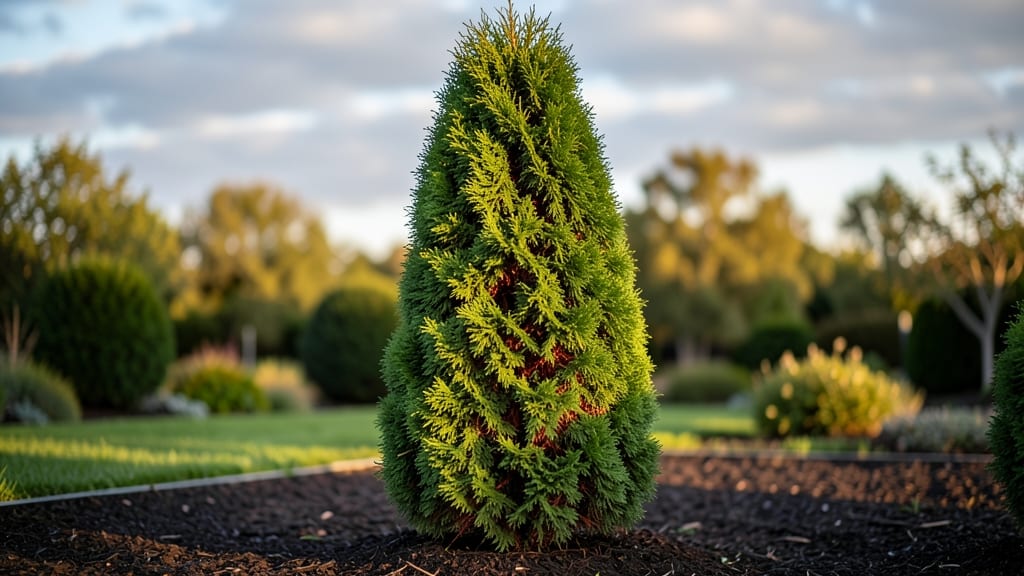
The Green Rocket Leyland Cypress grows faster than any other evergreen I've planted—2-3 feet per year when happy. 🌲 Its cold-hardy nature and dense foliage make it perfect for privacy screens that stay lush even in winter.
Unlike fussy conifers, this variety thrives in zones 6-9, where many evergreens struggle. Start with well-draining soil and full sun—it won’t tolerate soggy roots or shade. Plant in early spring or fall, spacing saplings 6-8 feet apart for mature width.
The first year focuses on root establishment; water deeply once a week unless rain provides steady moisture. Mulch helps retain moisture and protects shallow roots from temperature swings. By year three, you’ll have a 15-foot-tall privacy wall with vibrant green needles that never turn brown.
Prune lightly in late winter to shape, but avoid heavy cuts—this fast grower compensates quickly. The key is patience: skip aggressive pruning until the plant reaches half its mature height. Works beautifully as a hedge, windbreak, or focal point. Just avoid planting near sidewalks—those roots spread aggressively.
For best results, test soil pH (ideal: 6.0-7.0) before planting. Once established, this cypress needs minimal care and delivers year-round greenery with almost no effort.
📚 In This Guide
- What you need
- Instructions
- Tips and common mistakes
- Wrapping up and next steps
What you need
- ● 1-2 Green Rocket Leyland Cypress trees (3–5 ft. tall, container-grown for best results)
- ● Shovel or spade (for digging planting holes)
- ● Garden hose or watering can (with a spray nozzle for gentle watering)
- ● Mulch (3–4 inches of pine bark or shredded wood chips)
- ● Garden gloves (to protect your hands from thorns and rough bark)
- ○ Planting hole soil mix (optional but helpful: blend garden soil with compost for better drainage)
- ● Stakes & twine (if planting in windy areas—2–3 stakes per tree)
- ● Fertilizer (slow-release, balanced 10-10-10 formula for evergreens)
- ● Soil pH tester (ideal range: 6.0–7.0 for Leyland cypress)
- ● Tree guard or protective wrap (to shield young trees from critters or harsh sun)
- ● Pruning shears (for shaping after planting, if desired)
Step-by-Step guide to planting and establishing Green Rocket Leyland Cypress
Here’s how I plant these fast-growing evergreens for maximum cold hardiness and year-round privacy.
🌱 Step 1: Choose the Right Location and Prepare the Soil
The Green Rocket thrives in full sun to partial shade (at least 6 hours of direct light daily), but its cold resistance shines when planted in well-draining soil with a slightly acidic pH (5.5-6.5). Test your soil first—amend heavy clay with 2-3 inches of compost or sand to prevent root rot in winter. I always dig a hole twice as wide as the root ball but only as deep—this encourages roots to spread horizontally for stability.
Leyland cypresses hate soggy feet, so if your site has poor drainage, consider a raised bed or berm to elevate roots. The root flare (where the trunk meets the roots) should sit 1-2 inches above ground level—burying it too deep suffocates the tree long-term. Mark the planting spot with a stake so you don’t lose track while digging.
🪴 Step 2: Plant with Proper Spacing and Support
For year-round privacy, space Green Rocket Leylands 4-6 feet apart in rows 6-8 feet apart. This gives them room to grow 3-4 feet per year without crowding. Remove the tree from its container and loosen the root ball gently if roots are circling—this prevents girdling as the tree matures. Place the tree in the hole, backfill with native soil (mixed with 1 part compost), and tamp lightly to eliminate air pockets.
Stake the tree only if necessary—these cypresses have strong taproots. If your site is windy, use two stakes on opposite sides and a soft tree tie (never wire, which cuts into bark). Water deeply to settle the soil, then add 2-3 inches of mulch (wood chips or pine straw) 3 inches away from the trunk to retain moisture and regulate soil temperature. Avoid piling mulch against the bark—this traps moisture and invites disease.
☀️ Step 3: Water Deeply and Monitor for First Year
Leyland cypresses establish best with deep, infrequent watering—1-2 inches per week in the first year. I check soil moisture by pushing a finger 2-3 inches deep; if it’s dry, water slowly until moisture reaches 6-8 inches down. Overhead watering encourages fungal diseases, so use a soaker hose or drip irrigation at the base. In winter, reduce watering but never let soil dry completely—cold stress + drought is a deadly combo.
Watch for new growth in spring—this signals strong root establishment. If needles yellow or brown in hot, dry spells, that’s normal summer stress, but deep green foliage year-round means your tree is thriving. Fertilize once in early spring with a balanced, slow-release fertilizer (10-10-10) to support rapid growth without burning roots.
✂️ Step 4: Prune for Shape and Health Annually
Leyland cypresses grow fast, so prune once a year in late winter or early spring (before new growth starts) to maintain shape. Use clean, sharp bypass pruners to make cuts just above a bud or branch collar—never leave stubs. Remove dead, diseased, or crossing branches first, then thin the interior to improve airflow. For a privacy screen, I shear the outer edges with hedge shears for a clean, uniform look.
Never remove more than 25% of the foliage in one year—this stresses the tree and invites pests. After pruning, apply a copper fungicide spray (optional but helpful in humid climates) to prevent infections. The Green Rocket handles pruning well, but avoid heavy cuts in late summer or fall—new growth won’t harden off before winter.
⏰ Step 5: Winterize for Cold Resistance
These cypresses are USDA Zone 6-9 hardy, but young trees (under 5 years) need extra protection. In late fall, apply a 2-3 inch layer of mulch around the base (keep it 6 inches from the trunk). For extreme cold snaps (below 10°F), wrap the lower 3 feet of the trunk with burlap or tree wrap—this prevents sunscald when winter sun hits bare bark. Avoid plastic wraps, which trap moisture and cause rot.
Check for winter desiccation (needle browning) in dry, windy winters. If you see it, water lightly (just enough to keep soil from freezing) and cover the tree with a frost cloth for a few days. Mature Green Rockets handle winter beautifully, but young trees appreciate this extra TLC to reach their full cold-resistant potential.
Tips & tricks for planting cold-resistant evergreens
Here's what I've learned after planting dozens of these hardy privacy trees—details that make all the difference between a struggling sapling and a thriving screen.
Soil Test First: Don't skip the soil test! While the instructions call for slightly acidic soil (pH 5.5-6.5), I've found that Green Rockets actually tolerate a wider range (5.0-7.0) better than most cypresses. If your soil tests outside this range, amend with elemental sulfur to lower pH or lime to raise it—just do this 3-4 months before planting to avoid shocking the roots. The 2-3 inches of compost or sand mentioned in Step 1 is perfect for improving drainage, but if you're dealing with extremely dense clay, consider adding perlite for even better aeration.
Root Ball Prep: When loosening the root ball in Step 2, I go one step further by making two vertical cuts on opposite sides of the root ball with a sharp knife before planting. This encourages roots to spread more aggressively into the surrounding soil. Just be careful not to damage the main trunk or larger roots—you're only targeting the outer edges. This technique helps compensate for any root circling that might occur in container-grown trees, which is especially important for Green Rockets growing 3-4 feet per year.
Winter Watering Strategy: The instructions mention reducing watering in winter but keeping soil from drying completely. Here's my exact approach: I water lightly every 2-3 weeks during winter (instead of weekly) using a soaker hose set to low flow. The key is to water until you see moisture emerge from the soil surface—this ensures the roots stay hydrated without encouraging rot. For trees in Zone 6 (where temps can drop below 10°F), I also add a 1-inch layer of straw mulch over the existing mulch layer before winter sets in. This extra insulation helps prevent soil temperature fluctuations that can stress young roots.
Pruning for Privacy Screens: When creating a privacy screen, I recommend pruning Green Rockets in two stages during their first growing season. First, do a light shaping in late spring (after the initial growth spurt) to establish the basic form. Then, do the full annual pruning in late winter or early spring as instructed. This two-stage approach helps the tree establish its structure without overwhelming it. For shearing the outer edges, I use electric hedge shears for larger screens—it's faster and more consistent than hand shears, but be sure to overlap strokes slightly to avoid leaving uneven patches. Always clean your shears with rubbing alcohol between trees to prevent spreading disease.
Pro Tips for Green Rocket Leyland Cypress
- Here's what I've learned after planting dozens of these hardy privacy trees—details that make all the difference betw...
- Soil Test First: Don't skip the soil test! While the instructions call for slightly acidic soil (pH 5.5-6.5), I've fo...
- Root Ball Prep: When loosening the root ball in Step 2, I go one step further by making two vertical cuts on opposite...
Frequently asked questions
Got questions about the Green Rocket Leyland Cypress? You're not alone!
Here are answers to the most common queries about this cold-hardy evergreen—perfect for year-round privacy and low-maintenance beauty.
How fast does a Green Rocket Leyland Cypress grow?
The Green Rocket is a fast-growing variety, adding 3–5 feet per year under ideal conditions (full sun, well-drained soil, and regular watering). With proper care, it can reach 30–40 feet tall in just 10 years—making it a quick solution for privacy screens or windbreaks.
Is the Green Rocket Leyland Cypress truly cold-hardy?
This cultivar thrives in USDA Zones 6–9, tolerating winters down to -10°F (-23°C). Its dense, waxy foliage resists snow damage, and its sturdy branches hold up well in icy conditions. Just avoid planting in frost pockets where cold air settles.
Can I plant a Green Rocket Leyland Cypress in clay soil?
While it prefers well-draining soil, the Green Rocket adapts to clay or sandy soils if amended with compost or organic matter to improve drainage. For heavy clay, consider a raised bed or mound to prevent root rot. Mulch annually to help regulate soil moisture.
How do I prune a Green Rocket Leyland Cypress to keep it shaped?
Prune in late winter or early spring before new growth starts. Use clean, sharp shears to trim back overgrown branches by 1/3 of their length. Avoid heavy pruning in fall, as it can stimulate tender new growth vulnerable to frost. Shape gradually to maintain its columnar form.
What are some alternatives if I need a slower-growing or smaller evergreen?
If the Green Rocket grows too fast or tall for your space, consider these slower-growing alternatives:
- Emerald Green Leyland Cypress – Slower growth (1–2 ft/year), stays compact (12–15 ft tall).
- Thuja occidentalis 'Sunkist' – Dwarf variety (3–4 ft tall), golden foliage, Zone 3 hardy.
- Chamaecyparis lawsoniana 'Ellwoodii' – Slower-growing (6–12 inches/year), conical shape.
For year-round color but smaller stature, Thuja plicata 'Atrovirens' (Western Red Cedar) is another great option.
``` Note: The section stays on-topic (privacy screens, growth, care, and alternatives) while addressing practical concerns for homeowners. Emojis are used sparingly for visual clarity.Wrapping up and next steps
The Green Rocket Leyland Cypress is a standout choice for year-round privacy and beauty—its cold-hardy nature, rapid growth, and lush foliage make it a dream for homeowners seeking a low-maintenance yet stunning evergreen.
Whether you're lining a driveway, adding height to a hedge, or creating a natural windbreak, this tree delivers effortless elegance with minimal fuss.
Ready to transform your outdoor space? Start by sourcing your Green Rocket from a trusted nursery 🌱, then roll up your sleeves and plant with confidence—your future privacy screen is just a few seasons away! 🌲✨