
Vegetables
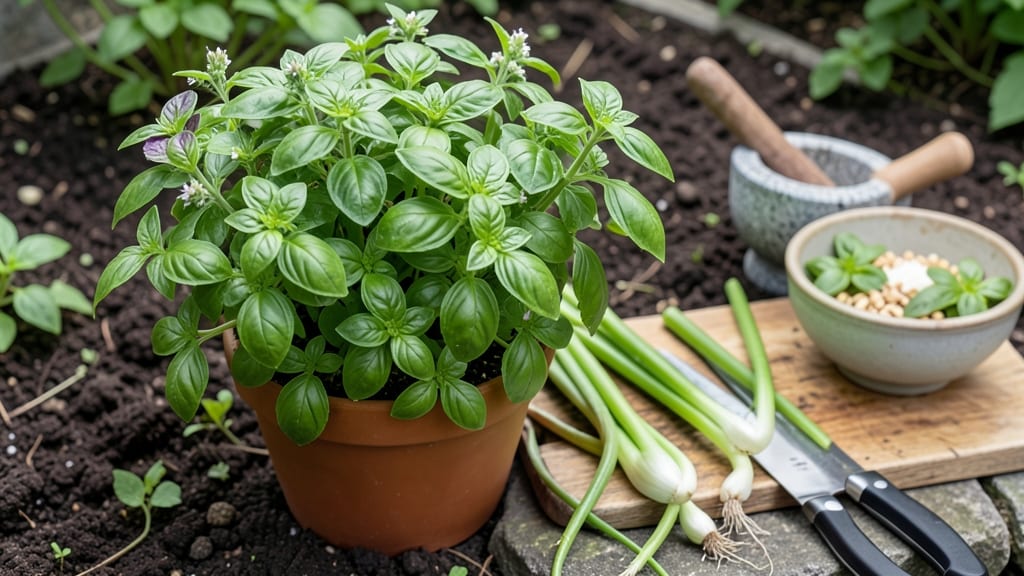
Garlic scape pesto with fresh basil transforms bold green flavor into a garden-fresh staple without relying on traditional garlic bulbs. 🌱 I discovered this trick after my garlic plants sent up those curly green shoots—turning what I thought was a nuisance into the star of my pesto game. The secret lies in harvesting scapes at the right time and pairing them with homegrown basil that bursts with sweet, peppery notes.
Growing both plants together creates a flavor symphony: garlic scapes add a milder, more complex garlic taste than bulbs, while basil delivers that classic pesto brightness. You’ll need well-draining soil, consistent moisture, and a sunny spot—plus a little patience as scapes take about 60 days to form after planting.
Companion planting with tomatoes or lettuce naturally deters pests, keeping both crops thriving.
The pesto itself comes together in minutes with fresh ingredients: scapes, basil, olive oil, Parmesan, and a pinch of salt. What you end up with is a vibrant green sauce that’s richer than store-bought versions, packed with garden-fresh intensity.
The best part? You’ll have enough to freeze for later, so you’re never without that bold green flavor again.
Even if you’ve struggled with pests or uneven growth, this method is forgiving. Aphids on basil? Spray with water. Too many scapes? Harvest early. The key is adapting as you go—because the reward is worth every little challenge. Ready to turn your garden into a pesto powerhouse?
📚 In This Guide
- What you need
- Instructions
- Tips and common mistakes
- Wrapping up and next steps
What you need
- ● Garlic scapes: 1 bunch (~10-12 scapes), washed and dried thoroughly
- ● Fresh basil: 2 cups loosely packed (about 10-12 large leaves or 20-25 small leaves)
- ● Pecorino Romano or Parmesan cheese: ½ cup freshly grated (avoid pre-shredded—it has anti-caking agents!)
- ● Extra-virgin olive oil: ½ cup (plus extra for thinning if needed)
- ● Pine nuts or walnuts: ¼ cup (toasted for extra flavor!)
- ● Salt: ½ teaspoon (adjust to taste)
- ○ Lemon zest: 1 teaspoon (optional but adds brightness!)
- ● High-speed blender or food processor (for ultra-smooth texture)
- ● Sharp chef’s knife or kitchen shears
- ● Cutting board
- ● Measuring cups and spoons
- ● Small bowl (for zesting lemon, if using)
- ● Wooden spoon or spatula (for scraping down the blender)
- ● Air-tight container (for storage)
- ● Red pepper flakes (¼ teaspoon) for a subtle kick
- ● Freshly cracked black pepper (to taste)
- ● A splash of pasta water (to thin if needed)
- ● Nutritional yeast (2 tablespoons) for a vegan-friendly boost
How to grow garlic scape basil for pesto
Here's how I grow bold, flavorful basil perfect for pesto—no traditional garlic needed.
🌱 Step 1: Start Seeds Indoors Early
Fill 2-inch deep seedling trays with sterile potting mix and plant basil seeds ¼ inch deep. I like to use biodegradable pots so I can transplant without disturbing roots. Keep the soil moist but not soggy—just damp enough to hold together when squeezed.
Place the tray in a warm spot with 70-75°F soil temperature (a seedling heat mat helps) and cover with plastic wrap to retain moisture. Germination takes 7-14 days—you'll see tiny sprouts push through the soil first, followed by the first true leaves.
☀️ Step 2: Provide Bright Light Immediately
As soon as seedlings emerge, move them to a sunny window or under grow lights. Basil needs 6-8 hours of direct light daily to prevent leggy growth. I use a full-spectrum LED light 2-3 inches above the plants and raise it as they grow.
Watch for seedlings stretching toward the light—this means they need more intensity. Strong seedlings have compact stems and deep green leaves spaced closely together. Rotate the tray daily so plants grow evenly.
🪴 Step 3: Transplant to Larger Containers
When seedlings reach 2-3 inches tall, transplant them into 6-inch pots with fresh potting mix. Gently remove each seedling, keeping the root ball intact, and place it in the center of the new pot. Fill around the roots with soil, pressing lightly to eliminate air pockets.
Water thoroughly after transplanting, allowing excess water to drain completely. Place the pots in a location with full sun (at least 6 hours daily) and keep the soil consistently moist. You'll see new growth within 5-7 days.
✂️ Step 4: Harvest Scapes for Pesto
When basil plants reach 12-18 inches tall, you'll notice curly shoots forming at the stem tips—these are garlic scapes. Pinch them off just above a set of leaves to encourage bushier growth. Scapes are the perfect substitute for traditional garlic in pesto.
Harvest leaves for pesto when plants are 8-12 inches tall, picking the top sets of leaves first. This method keeps the plant productive and prevents it from flowering too early. Use fresh leaves immediately or store in the fridge for up to 5 days.
💧 Step 5: Maintain for Continuous Harvests
Water basil when the top inch of soil feels dry—overwatering causes root rot, while underwatering makes leaves crispy. Feed plants every 2-3 weeks with a balanced liquid fertilizer to keep them vigorous.
Prune regularly to encourage bushy growth: pinch off the top sets of leaves when plants reach 6-8 inches tall. This prevents flowering and ensures a steady supply of tender leaves for pesto. With proper care, one plant can produce enough leaves for multiple batches.
Tips & tricks for perfect garlic scape basil pesto
Here's what nobody tells you about growing basil that tastes like it came from a gourmet garden.
Seedling Success: The 70-75°F soil temperature is non-negotiable for germination. I use a seedling heat mat during cooler months—it makes the difference between waiting 14 days and seeing sprouts in 7. If your home stays below 68°F, consider a mini greenhouse setup to maintain that perfect warmth.
Lighting Strategy: Those 6-8 hours of direct light are crucial, but quality matters more than quantity. If using grow lights, position them 2-3 inches above the seedlings and adjust as they grow. I've seen leggy plants from lights that were too far away—always keep them close enough that you can almost touch the leaves without burning them.
Transplanting Technique: When moving seedlings to 6-inch pots, I press the soil firmly around the roots to eliminate air pockets. This helps prevent transplant shock, and I've found that plants establish themselves faster when the roots make immediate contact with moist soil. Water thoroughly after transplanting, but let excess drain completely to avoid waterlogged roots.
Harvesting Insight: The 8-12 inch height range for leaf harvesting is ideal because that's when the leaves are most tender. I harvest in the morning when the essential oils are at their peak concentration. For scapes, wait until they're fully curled—they'll add a mild garlic-like flavor that pairs perfectly with the basil.
Pro Tips for Garlic Scape Pesto Basil
- Here's what nobody tells you about growing basil that tastes like it came from a gourmet garden.
- Seedling Success: The 70-75°F soil temperature is non-negotiable for germination.
- Lighting Strategy: Those 6-8 hours of direct light are crucial, but quality matters more than quantity.
Frequently asked questions
about garlic scape basil pesto—because even the boldest flavors need a little clarity!What’s the difference between garlic scape pesto and regular basil pesto?
Garlic scape pesto swaps traditional garlic for garlic scapes—the curly green shoots from garlic plants. They’re milder, sweeter, and add a unique floral note, while still delivering that savory punch. Plus, they’re packed with nutrients like vitamin C and antioxidants!
How long can I store garlic scape basil pesto in the fridge?
Store your pesto in an airtight container with a thin layer of olive oil on top (to prevent browning) in the fridge for up to 5 days. For longer storage, freeze it in ice cube trays or small jars for up to 3 months. Thaw overnight in the fridge before using.
Can I use dried basil instead of fresh in this pesto?
Fresh basil is ideal for vibrant flavor, but if you’re in a pinch, 1 tablespoon of dried basil can replace 1 cup of fresh. However, dried basil lacks moisture, so add a splash of pasta water or lemon juice to mimic freshness. For garlic scapes, fresh is non-negotiable—they lose texture when dried!
Why did my pesto turn brown or separate?
Browning? Oxidation is the culprit—always keep pesto submerged in olive oil and store it properly. Separation? It’s usually from too much liquid (like lemon juice or water). Fix it by blending again with a splash of fresh olive oil or a pinch of salt to emulsify. Pro tip: Add the cheese last to avoid clumping!
What are some creative ways to use garlic scape pesto beyond pasta?
Think outside the pot! Spread it on garlic bread, mix into grilled chicken marinades, dollop on bruschetta, or stir into mashed potatoes for a herby twist. Even homemade pizza dough gets a flavor boost with a thin layer of pesto before toppings!
Wrapping up and next steps
Transforming your kitchen with garlic scape pesto basil is a game-changer—packed with vibrant flavors, nutritional benefits, and zero traditional garlic! This recipe proves that bold, fresh taste doesn’t require the usual pungent bulbs.
Whether you’re a seasoned chef or a home cook looking to elevate dishes, this pesto is your secret weapon for adding depth to pasta, sandwiches, or even as a dip. 🌱
Ready to dive in? Grab your garlic scapes and basil, follow the steps, and let your creativity shine. Share your masterpiece with friends or save it for your next meal—either way, you’re just one step away from a flavor explosion! 🍽️