
Vegetables
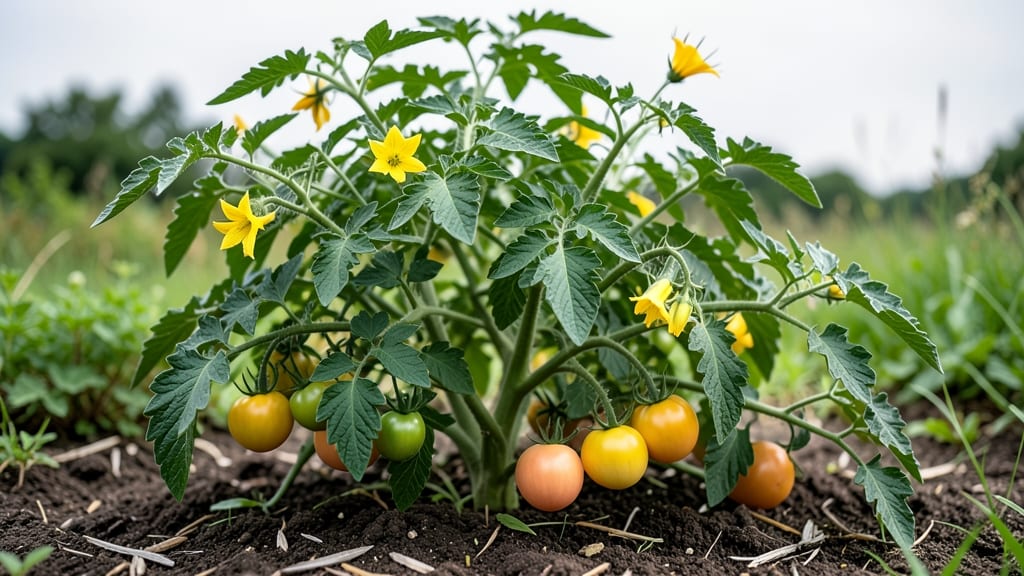
Growing Golden Jubilee tomatoes from seed means striped, sunburst fruits that taste like summer in a single bite—and you can harvest them in just 60 days. 🌱 I’ve grown this heirloom for three seasons now, and each year, the bold stripes and sweet-tart flavor make it my favorite for slicing fresh tomatoes straight off the vine.
The key? Fast germination, consistent warmth, and a little extra care during flowering to prevent blossom-end rot.
These tomatoes thrive in full sun (6+ hours daily) and rich, well-draining soil with a pH between 6.0 and 6.8. Start seeds indoors 6-8 weeks before your last frost, then transplant seedlings after all danger of frost has passed.
The plants grow 6-8 feet tall, so provide sturdy cages or stakes early—waiting until they’re heavy with fruit is a recipe for snapped stems.
By mid-summer, you’ll be picking 1-2 pound fruits with golden stripes that deepen as they ripen. The flavor? A perfect balance of sweet and tangy, with just enough acidity to keep your mouth watering.
Prune suckers regularly to focus energy on fruit production, and fertilize lightly every 2-3 weeks with a balanced organic feed once flowers appear.
Common challenges? Blossom-end rot (fix with calcium) and cracking (water consistently). But with these tips, you’ll avoid the most frustrating pitfalls and end up with a bounty that’ll have your neighbors asking for seeds. Ready to grow your own sunburst tomatoes?
📚 In This Guide
- What you need
- Instructions
- Tips and common mistakes
- Wrapping up and next steps
What you need
- ● Seeds: 5–10 Golden Jubilee tomato seeds (heirloom, striped variety)
- ● Seed-starting mix: 1–2 quarts of lightweight, sterile potting soil (or a seed-starting kit)
- ● Containers: 4–6 biodegradable seedling pots (2–3 inches deep) or a seed tray with cell inserts
- ● Grow lights or sunny windowsill: 12–16 hours of light daily (or a south-facing window with 6+ hours of sunlight)
- ● Watering can or spray bottle: With a fine mist nozzle for gentle watering
- ● Fertilizer: Balanced liquid fertilizer (5-5-5 or 10-10-10) or organic options like fish emulsion or compost tea
- ● Transplant pots or garden space: 5-gallon containers (with drainage holes) or a well-draining garden bed (6+ inches deep)
- ● Support system: 1–2 tomato cages (6+ feet tall) or sturdy stakes (5–6 feet long) + twine
- ● Gloves: A pair to protect hands from soil and thorns
- ● Pruning shears: Small, sharp pair for trimming suckers and dead leaves
- ○ pH testing kit (optional): To ensure soil pH is between 6.0–6.8
- ○ Mulch (optional): Straw or shredded leaves to retain moisture and suppress weeds
- ● Patience & sunshine! 🌞 Golden Jubilees thrive in warm climates (60–85°F) and need consistent care.
Step-by-Step instructions for growing Golden Jubilee tomatoes from seed
Here's how to coax those stunning striped fruits from tiny seeds in just 60 days.
🌱 Step 1: Prepare Seed Starting Mix and Containers
Fill clean 2-3 inch deep seed trays or small pots with a sterile seed-starting mix—never garden soil. I like to mix in 10% perlite for extra drainage, which prevents the delicate seedlings from rotting. Moisten the mix until it holds together when squeezed but doesn't drip water.
Press the soil down lightly so the surface is firm but not compacted. This ensures good seed-to-soil contact, which is critical for germination. Tap the tray gently on the table to settle everything evenly. Golden Jubilee seeds are large, so you only need to plant 1-2 seeds per cell—overcrowding leads to weak, spindly seedlings.
🌱 Step 2: Sow Seeds at the Right Depth
Plant seeds ¼ inch deep—about the diameter of the seed itself. Sowing too deep delays germination because the seedling exhausts its energy reserves before reaching light. Cover lightly with a sprinkle of additional mix, then mist the surface gently with a spray bottle until evenly moist.
I label each tray immediately with the variety and date—after a week of identical green sprouts, you won't remember which is which. Place the tray in a warm spot (75-85°F) with indirect light. A seedling heat mat speeds germination significantly, cutting the wait from 10-14 days to just 7-10 days.
☀️ Step 3: Provide Optimal Light for Strong Seedlings
The instant seedlings break through the soil, move them to 14-16 hours of bright light daily. A south-facing window rarely provides enough intensity, so I use a full-spectrum LED grow light positioned 2-4 inches above the plants. Raise it as they grow to maintain that gap.
Without sufficient light, seedlings stretch desperately upward (called "leggy") and never recover proper strength. Strong Golden Jubilee seedlings have thick stems, deep green color, and compact spacing between leaves. You'll see leggy growth as thin, pale stems with leaves spaced far apart—this is your signal to move the light closer.
🪴 Step 4: Transplant to Larger Pots When Seedlings Develop True Leaves
After 4-6 weeks, when seedlings show 3-4 true leaves, transplant them to 5-inch pots filled with fresh potting mix. Handle seedlings by their leaves, never the stems, to prevent damage. Bury them slightly deeper than before—this encourages stronger root development.
Water gently at the base to settle the soil around the roots. Place the pots in a sunny spot but avoid direct midday sun for the first few days to reduce transplant shock. Golden Jubilee tomatoes are vigorous growers, so they'll quickly outgrow their temporary pots—plan to transplant again to 1-gallon containers or the garden after 2-3 more weeks.
✂️ Step 5: Prune and Support for Maximum Fruit Production
Once plants reach 18-24 inches tall, prune suckers (the small shoots that form in the leaf axils) to encourage stronger main stems and more fruit. I remove all suckers below the first flower cluster—this redirects energy to developing tomatoes rather than extra foliage.
Install a sturdy 6-foot tomato cage or trellis to support the plants as they grow. Golden Jubilee tomatoes produce heavy fruit, so proper support prevents stems from snapping. Pinch off the first few flowers if the plant is still small—this encourages bushier growth before the main harvest season begins.
Tips & tricks for growing Golden Jubilee tomatoes
Here's what nobody tells you about nurturing these showstopping striped beauties from seed.
Soil Science: The 10% perlite mix in Step 1 isn't just about drainage—it creates tiny air pockets that prevent that dreaded "damping off" fungus. I've seen seedlings survive damp conditions with this mix when others in plain soil rotted completely. For extra insurance, consider adding 1 tbsp of cinnamon per gallon of mix—it's a natural antifungal that works wonders. The firm-but-not-compacted surface in Step 1 ensures seeds stay in contact with moisture without becoming waterlogged, which is especially critical for Golden Jubilee's thick seeds that need consistent hydration.
Germination Strategy: That 75-85°F warm spot in Step 2 is non-negotiable, but here's the secret: place your seed tray on top of your fridge (not inside). The warmth rises naturally without overheating like a heat mat might. If you're impatient like I was, the 7-10 day germination window with a heat mat is magical—but don't skip the labeling! I've had to toss trays of unlabeled seedlings when they all sprouted at once. Use a fine-tip permanent marker for variety names and dates directly on the tray edge.
Lighting Hack: The 14-16 hours of light in Step 3 is crucial, but timing matters more than you'd think. Set a timer for your grow light to turn on at 6 AM and off at 8 PM—this mimics natural daylight cycles and prevents seedlings from getting confused. Watch for that 2-4 inch distance from light to leaves: if you see seedlings growing toward one side of the pot, rotate them daily to ensure even growth. The compact leaf spacing you're aiming for in Step 3 should look like stacked coins—anything more spread out means more light is needed.
Transplanting Wisdom: When you bury seedlings deeper in Step 4, you're actually encouraging root growth along the buried stem. This creates a stronger anchor for the heavy Golden Jubilee fruits later. For the first few days after transplanting, I water with a mix of 1 part hydrogen peroxide (3%) to 4 parts water—it sterilizes the soil and gives seedlings a gentle oxygen boost while they recover from the shock. The 1-gallon containers mentioned for final transplanting should have drainage holes; if your don't, drill them yourself or use saucers to catch excess water.
Pro Tips for Golden Jubilee Tomatoes
- Here's what nobody tells you about nurturing these showstopping striped beauties from seed.
- Soil Science: The 10% perlite mix in Step 1 isn't just about drainage—it creates tiny air pockets that prevent that dreaded "damping off" fungus.
- Germination Strategy: That 75-85°F warm spot in Step 2 is non-negotiable, but here's the secret: place your seed tray on top of your fridge (not inside).
Frequently asked questions
Got questions about growing Golden Jubilee tomatoes? You’re not alone!
This vibrant, striped heirloom variety is a favorite for its flavor and speed—but it does come with a few quirks. Here are answers to the most common queries to help you grow a bountiful harvest.
How long do Golden Jubilee tomatoes really take to mature?
Golden Jubilee tomatoes are fast—typically ready in 60–65 days from seed when grown in warm conditions. If you start seeds indoors (6–8 weeks before last frost) and transplant carefully, you’ll see ripe fruit by mid-summer in most climates. Pro tip: Use black plastic mulch or row covers to warm the soil early and speed up ripening!
Can Golden Jubilee tomatoes handle cold weather?
These tomatoes are heat-lovers and struggle in temperatures below 50°F (10°C). Young plants can be damaged by frost, so wait until nighttime temps stay above 55°F (13°C) before transplanting. If your spring is chilly, opt for container growing near a sunny wall or use row covers for protection.
Why aren’t my Golden Jubilee tomatoes turning red?
Slow ripening? Check these fixes:
- Sunlight: Ensure 6–8+ hours of direct sun daily—partial shade delays color.
- Watering: Consistent moisture (1–2 inches/week) prevents stress; avoid wetting leaves to reduce disease.
- Fertilizer: Too much nitrogen = leafy growth, not fruit. Switch to a low-N, high-P/K fertilizer (like 5-10-10) when flowers appear.
- Patience: Some tomatoes ripen unevenly—pick green ones early if frost threatens!
What’s a good alternative if Golden Jubilee tomatoes don’t thrive in my climate?
If your growing season is short or too hot, try these fast, flavorful alternatives:
- Solar Fire (58 days): Heat-tolerant, red-orange hybrid with sweet flavor.
- Mountain Merit (65 days): Disease-resistant, reliable in cooler areas.
- Cherry Tomatoes (e.g., ‘Sweet Million’) (50–60 days): Ripen faster and often produce more fruit.
How should I store and use Golden Jubilee tomatoes to keep them fresh?
These tomatoes are best eaten fresh, but with care, you can extend their shelf life:
- Ripe tomatoes: Store at room temp (not the fridge!) for 2–3 days. For longer storage, refrigerate (but texture softens).
- Green tomatoes: Cure in a cool, dark place (like a pantry) for 1–2 weeks to ripen.
- Preserving: Perfect for sauces, salsas, or roasting—their sweetness shines when caramelized!
Wrapping up and next steps
Growing Golden Jubilee tomatoes is a rewarding journey that brings bold, striped beauty to your garden in just 60 days! 🌱 These vibrant heirlooms are perfect for both beginners and seasoned gardeners, offering a mix of flavor and visual appeal.
Whether you’re aiming for a bountiful harvest or simply adding a pop of color to your meals, these tomatoes are a game-changer.
Ready to dive in? Start by gathering your supplies, then plant those seeds with confidence—your future golden-striped harvest awaits! For even more tips, explore our garden planning guide or share your progress with fellow gardeners. Happy growing! 🌿