
Vegetables
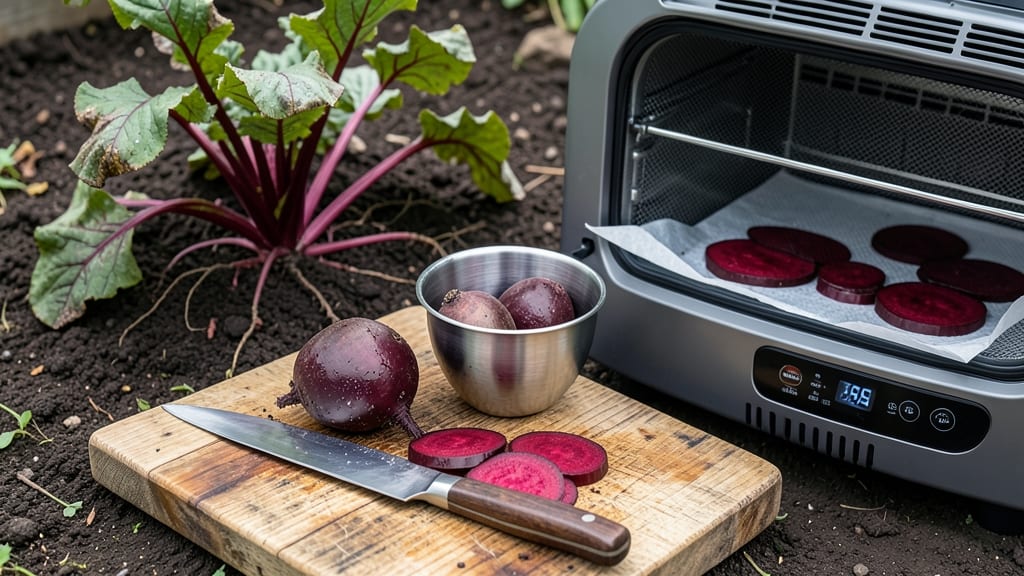
Drying beets transforms last summer's harvest into vibrant, shelf-stable sweetness that lasts for months—no freezer space required. 🌱 I've dried beets three years running, and the secret lies in timing (harvest when they're fully mature but before hard frost) and consistent moisture control during drying.
The process is simpler than it sounds: wash, peel, slice into even pieces, and dry until leathery but not brittle. My favorite method uses a dehydrator at 135°F for 6-8 hours, but an oven or even a sunny windowsill works too.
The key is checking moisture levels—properly dried beets should crumble slightly when pressed. You'll end up with concentrated sweetness perfect for soups, stews, or roasted dishes. A single cup of dried beets rehydrates to about 3 cups, making them a space-saving pantry staple.
Store in airtight containers away from light for up to 12 months. Works for both baby beets and large varieties, and the same technique applies to carrots and parsnips too. Here's how to do it right the first time!
📚 In This Guide
- What you need
- Instructions
- Tips and common mistakes
- Wrapping up and next steps
What you need
- ● Fresh beets – Choose medium to large beets (about 2–3 inches in diameter) for best results. Aim for 1–2 pounds per batch (adjust based on your drying setup).
- ● Sharp knife or mandoline slicer – A serrated or chef’s knife works well for peeling and slicing. For uniformity, a mandoline (with a ⅛-inch blade) is ideal.
- ● Large pot and water – For blanching (1 large pot with enough water to fully submerge the beets).
- ● Ice bath or cold water – A large bowl or sink filled with ice and water to halt cooking after blanching.
- ● Paper towels or clean kitchen towel – For thoroughly patting dry sliced beets before drying.
- ● Dehydrator with trays – Or a baking sheet with a wire rack if oven-drying. Ensure trays are non-reactive (stainless steel or BPA-free plastic).
- ○ Parchment paper or silicone mat – Optional but helpful for easy cleanup when oven-drying.
- ● Food-grade storage containers or jars – For storing dried beets (airtight glass jars or Mylar bags with oxygen absorbers for long-term storage).
- ● Beet peeler or vegetable brush – Speeds up peeling and removes dirt efficiently.
- ● Citric acid or lemon juice – A ½ teaspoon per quart of water in the blanching water helps preserve color.
- ● Digital food thermometer – Ensures beets reach the ideal drying temp (135°F for dehydrators, 140°F for ovens).
- ● Vacuum sealer – Extends shelf life by removing air from storage containers.
- ● Labeling supplies – Masking tape and markers to label jars with dates and contents.
Step-by-step instructions for drying beets at home
Preserving beets this way keeps their natural sweetness locked in for months—here's how I do it every fall.
🌱 Step 1: Harvest and Prep Beets for Drying
Choose firm, medium-sized beets with no soft spots or blemishes. I like Chioggia or Detroit Dark Red varieties—they hold up best. Cut off the greens, leaving about ½ inch of stem attached. This prevents bleeding during drying. Rinse beets under cool water to remove dirt, then scrub gently with a vegetable brush if needed.
Peel the beets only if you prefer a smoother texture—unpeeled beets retain more nutrients. Slice them into ¼-inch thick rounds or sticks (like matchsticks). Thinner slices dry faster, but thicker pieces hold their shape better. Pat dry completely with paper towels—any moisture left will cause mold during drying.
💧 Step 2: Blanch for Color and Texture
Bring a pot of water to a boil and add 1 tablespoon lemon juice or vinegar per gallon to preserve color. Blanch beet slices for 2-3 minutes until just tender but still firm. Overcooking turns them mushy. Drain immediately in a colander, then plunge into ice water for 1 minute to stop cooking and lock in color.
Spread the blanched beets on clean kitchen towels to air-dry for 10 minutes. This extra drying step prevents soggy spots in the dehydrator. I arrange them in a single layer on a wire rack—crowding causes uneven drying. Watch for any slices that look overly wet; pat those again with a paper towel.
☀️ Step 3: Dehydrate on Low Heat
Set your dehydrator to 135°F—any hotter and beets lose flavor or turn leathery. Arrange beet slices in a single layer on dehydrator trays, leaving ¼ inch between pieces for airflow. Place trays in the machine with space around them for circulation. Close the lid and let them dry for 6-8 hours.
Check after 4 hours—they're done when slices bend slightly but don't break, and edges feel dry to the touch. If any slices look too pale, they need more time. Store dried beets in airtight containers with a silica gel packet to absorb any remaining moisture. Properly dried beets will keep for 6-12 months in a cool, dark place.
⏰ Step 4: Rehydrate and Use
To use dried beets, soak them in warm water for 30 minutes to 2 hours until pliable. The longer they soak, the softer they become. I like to add a pinch of salt and a splash of apple cider vinegar to the soaking water—it brightens their flavor. Drain well before using in soups, stews, or salads.
Rehydrated beets shrink significantly, so plan accordingly. For example, 1 cup dried beets yields about 2 cups rehydrated. You can also grind dried beets into a powder for smoothies or sprinkle them into grain dishes. The earthy-sweet flavor intensifies when dried, so use them sparingly at first.
Tips & tricks for perfect dried beets
These little details make all the difference between beets that dry beautifully and ones that turn out bland or moldy.
Selection Tip: Look for beets that are firm and heavy for their size—this means they're hydrated and will dry evenly. I always check the stem end for soft spots, which can indicate early spoilage. The color should be vibrant, not dull, as faded beets lose flavor during drying. Chioggia beets with their striking rings dry perfectly and add visual appeal to finished dishes.
Blanching Secret: The 2-3 minute blanch isn't just about cooking—it's about setting up the texture for perfect drying. I test doneness by piercing a slice with a fork; it should offer slight resistance but still feel tender. The ice water bath after blanching is crucial—it stops the cooking process instantly, locking in that bright color. If you skip this step, your dried beets will turn dull and lose their natural sweetness.
Dehydrator Strategy: That 135°F setting is non-negotiable—any hotter and you'll end up with leathery beets that lose their delicate texture. I like to arrange my beet slices with the cut sides facing up on the dehydrator trays. This creates more surface area for moisture to escape, resulting in faster, more even drying. If you notice any slices drying unevenly, rotate the trays halfway through the 6-8 hour process.
Storage Wisdom: The silica gel packet in your storage container isn't just optional—it's essential for preventing moisture buildup that can cause mold. I like to add a small piece of parchment paper between layers of dried beets to maintain separation. When stored properly in a cool, dark place, your dried beets will keep their vibrant color and sweet flavor for up to 12 months. The flavor actually intensifies over time!
Pro Tips for Dry Beets
- These little details make all the difference between beets that dry beautifully and ones that turn out bland or moldy.
- Selection Tip: Look for beets that are firm and heavy for their size—this means they're hydrated and will dry evenly....
- Blanching Secret: The 2-3 minute blanch isn't just about cooking—it's about setting up the texture for perfect drying...
Frequently asked questions
Got questions about drying beets? You’re not alone! Here are some of the most common concerns—and straightforward answers—to help you master the process like a pro.
How long do dried beets last?
When stored properly in an airtight container in a cool, dark place, dried beets can last 1 to 2 years. Check for moisture or mold regularly—if they smell off or feel damp, it’s time to toss them. Freezing dried beets (after packaging) can extend their shelf life even further!
Can I dry beets in a dehydrator instead of an oven?
A dehydrator is a fantastic alternative—just slice them thinly (¼-inch thick) and dry at 135°F (57°C) for 6–8 hours. The even airflow speeds up the process and reduces energy use. Pro tip: Rotate trays halfway for consistent drying!
What’s the best way to rehydrate dried beets?
Soak dried beet slices in hot water for 10–15 minutes or simmer them in broth for soups. For whole dried beets, boil for 45–60 minutes until tender. Discard the soaking water if using for recipes—it can be bitter. For a flavor boost, add a pinch of salt or a splash of apple cider vinegar!
Why did my beets turn mushy instead of drying?
Mushiness usually means over-slicing, uneven drying, or high humidity. To fix it:
- Slice beets uniformly (¼-inch thick max).
- Pat them very dry before drying.
- Use a fan or open oven door to circulate air.
- Store in a desiccant packet to absorb moisture.
Can I dry beet greens too?
Yes! Beet greens are edible and nutrient-packed—just rinse, pat dry, and dehydrate at 125°F (52°C) for 2–3 hours until crisp. Store separately from the roots (they’re more delicate). Use them later in soups, pestos, or as a garnish. Bonus: They’re packed with calcium and iron!
Do I need to peel beets before drying?
Not necessarily! The skin adds fiber and nutrients, but it can toughen during drying. If you prefer, peel them first, but leave a tiny bit of skin on for color and texture. For pre-peeled beets, trim off any blemishes or woody ends—just ensure they’re completely dry before dehydrating.
Wrapping up and next steps
You’ve now mastered the art of drying beets—transforming their vibrant sweetness into a long-lasting pantry staple! Whether you’re dehydrating, air-drying, or oven-drying, the key is patience and precision to preserve their rich flavor and nutrients. 🌱
Ready to put your new skills to use? Start small—try drying a batch of beets for soups, stews, or homemade snacks, and soon you’ll be stocking your kitchen with homemade goodness. Happy preserving!