
Vegetables
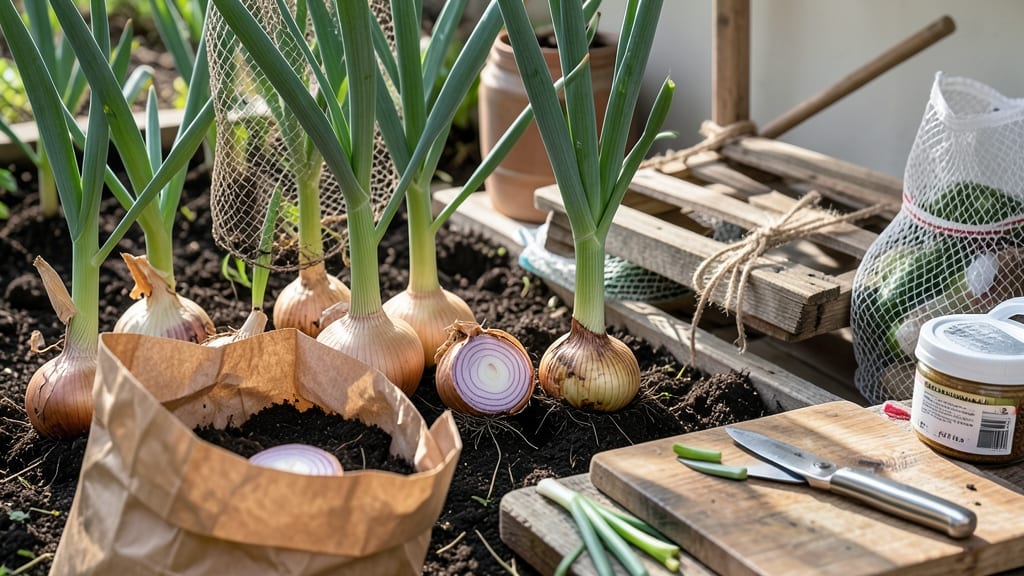
Preserving onions at home saves money and keeps your kitchen stocked year-round. 🌱 I learned the hard way that fresh onions don’t last—until I mastered simple curing and storage tricks that make them keep for months without spoiling.
The secret lies in selecting the right onions and giving them the perfect drying conditions.
You’ll need just a few supplies: a dry, well-ventilated space, twine or mesh bags, and onions with intact roots and dry skins. No fancy equipment—just patience and a little airflow.
The process takes about 2-3 weeks, but the payoff is onions that stay crisp and flavorful long after store-bought ones turn papery.
Once cured, you can braid them for decoration or store them whole in mesh bags where they’ll stay fresh for 6+ months. The key is keeping them cool, dry, and away from moisture. No more sad, sprouting onions in your pantry—just reliable, homegrown flavor whenever you need it.
Works for yellow, red, or sweet onions, and adapts to any kitchen space. Whether you’re a gardener with a bountiful harvest or just tired of buying onions that go bad too fast, this method changes the game. Let’s get started!
📚 In This Guide
- What you need
- Instructions
- Tips and common mistakes
- Wrapping up and next steps
What you need
- ● Fresh onions: Choose dry, firm, and unblemished onions (yellow, red, white, or sweet varieties). Aim for 2–5 lbs depending on your storage method.
- ● Dry, well-ventilated space: A cool (40–60°F), dark pantry, basement, or garage with 50–70% humidity is ideal.
- ● Mesh bags or breathable fabric sacks: 1–2 (5–10 lb capacity) to allow airflow while keeping onions contained.
- ● Paper bags or brown paper: 1–2 (for short-term storage or braiding).
- ○ Plastic wrap or aluminum foil: Optional for vacuum-sealing or wrapping individual onions.
- ○ Vacuum sealer (optional): Extends shelf life by 6–12 months if you prefer sealed storage.
- ● Sharp knife or onion slicer: For prepping onions if fermenting or pickling.
- ● Glass jars or airtight containers: 1–4 (quart-sized) for fermenting or pickling.
- ● Salt (non-iodized): 1–2 cups (for fermenting or curing).
- ● White vinegar or apple cider vinegar: 1–2 cups (for pickling).
- ● Water: 1–2 cups (for soaking or fermenting).
- ● Rubber bands or twine: For braiding onions (traditional method).
- ○ Food-grade plastic bins (optional): For organizing stored onions in layers.
- ● ✨ Choose the right onions: Avoid onions with sprouts or soft spots—they won’t last long!
- ● 🌡️ Temperature matters: Never refrigerate whole onions (it turns their sugar to sweetness and makes them spoil faster).
- ● 🔄 Airflow is key: Overcrowding leads to mold—space onions out in bags or baskets.
Step-by-Step guide to preserving onions at home
Here's the simple, no-fuss method I use every fall to keep onions fresh through winter.
🪴 Step 1: Select and Prepare Your Onions
Start with firm, dry onions—avoid any with soft spots, sprouting, or damp patches. Brush off excess dirt but leave the papery skin intact, as it protects against moisture. I like to use yellow or red storage onions because they keep best. Cut off the stems and roots, leaving about ½ inch of stubble—this helps prevent rot while allowing airflow.
Spread onions in a single layer on a clean towel or mesh rack in a well-ventilated area for 3-5 days. This drying step is critical—it removes residual moisture that causes mold. You’ll know they’re ready when the necks feel dry to the touch and the skin looks slightly papery.
☀️ Step 2: Choose Your Preservation Method
For short-term storage (3-6 months), braid 3-4 medium onions together by threading their stems through each other. Hang the braid in a cool, dark place with good airflow, like a pantry or basement. Check monthly and remove any that soften or sprout.
For long-term storage (6-12 months), place onions in a mesh bag or open cardboard box (never airtight containers). Store in a dark, dry spot where temperatures stay between 40-50°F. A root cellar or unheated garage works perfectly. Avoid refrigeration—cold triggers moisture buildup and spoilage.
⏰ Step 3: Monitor and Rotate Storage
Every 2-3 weeks, gently inspect your onions for softness, sprouting, or mold. Remove any compromised ones immediately—they’ll spoil the rest. If stored properly, onions should stay firm and dry for months. I like to label storage containers with the date to track freshness.
Rotate older onions to the front of your storage spot. This "first in, first out" method ensures you use the oldest ones first and avoid waste. If you notice sprouting, you can still use the onion—just pull the green shoots and store the bulb separately.
🌱 Step 4: Revive Dried-Out Onions (If Needed)
If onions lose some crispness over time, don’t toss them! Soak the bulb in cool water for 10-15 minutes to rehydrate. Pat dry thoroughly before using. This trick works especially well for onions stored past 6 months—they’ll still cook beautifully.
For onions that feel slightly shriveled but aren’t moldy, place them in a paper bag with an apple for 24 hours. The apple’s ethylene gas helps restore some moisture and firmness. Avoid plastic bags—condensation will speed up spoilage.
Tips & tricks for perfect onion preservation
These simple strategies will help you extend your onions' shelf life and keep them fresher longer than ever.
Drying is Non-Negotiable: That 3-5 day drying period in Step 1 might feel long, but it's the secret weapon against mold. I learned this the hard way after storing onions straight from the bag—mold appeared within weeks. Use a fan on low setting to speed up drying without over-drying the onions. The goal is to remove surface moisture while keeping the bulbs firm.
Storage Location Matters: For long-term storage, aim for a spot that stays between 40-50°F—this is cooler than most basements but warmer than refrigerators. A closet with good airflow or a root cellar works perfectly. If your home doesn't have these options, a dark pantry corner with a small fan circulating air will help maintain that ideal temperature range.
Braiding Technique: When braiding 3-4 onions in Step 2, make sure the stems are evenly spaced. I like to start with the largest onion in the center for stability. If you're worried about breaking stems, cut them slightly longer (about 1 inch) before braiding—the extra length gives you more working room. This simple adjustment makes braiding much easier, especially for beginners.
Labeling System: I can't emphasize this enough—label every storage container with the date. Use masking tape and a marker to write the month and year. This prevents the "first in, first out" system from becoming "first in, last out." When you see a container labeled "Oct 2023," you'll automatically reach for fresher onions first, reducing waste significantly.
Pro Tips for Preserve Onions At Home
- These simple strategies will help you extend your onions' shelf life and keep them fresher longer than ever.
- Drying is Non-Negotiable: That 3-5 day drying period in Step 1 might feel long, but it's the secret weapon against mold.
- Storage Location Matters: For long-term storage, aim for a spot that stays between 40-50°F—this is cooler than most basements but warmer than refrigerators.
Frequently asked questions
Got questions about storing onions like a pro? Here are some of the most common ones—and their easy answers!
How long can I store onions at room temperature?
Whole, dry onions last 1–2 months in a cool, dark, and well-ventilated spot (like a pantry or mesh bag). Sliced or chopped onions? They’ll only keep 7–10 days in the fridge—use an airtight container to slow spoilage.
Can I freeze onions for long-term storage?
Yes! Freezing works best for cooked onions (sautéed, caramelized, or chopped) to prevent texture loss. For raw onions, blanch them first (dip in boiling water for 2–3 minutes, then ice bath). Store in airtight bags or containers for up to 12 months.
Why do my onions spoil faster than expected?
Moisture and heat are the enemies! Onions rot quickly if stored in humid areas (like the fridge) or in sealed plastic bags (traps condensation). Always keep them in a dry, dark place—and avoid refrigerating whole onions unless they’re already sprouting.
What’s the best way to revive wilted or dried-out onions?
Soak them in ice water for 10–15 minutes to rehydrate. For whole onions, place them in a bowl of cold water for a few hours. If they’re still limp, chop them and use in cooked dishes (like soups or stir-fries) where texture matters less.
Can I store onions with potatoes or other veggies?
No!
Onions release gases that speed up potato spoilage (and vice versa). Keep them separate in breathable containers or mesh bags. Also avoid storing them near apples or pears—their ethylene gas can cause premature sprouting.
Wrapping up and next steps
Preserving onions at home is easier than you think—and it’s a game-changer for reducing food waste while keeping your kitchen stocked with flavor! Whether you choose braiding, freezing, fermenting, or pickling, each method offers a simple way to extend freshness without sacrificing taste.
Now that you’ve got the know-how, why not try one (or all!) of these techniques today?
Start small: pick a method that fits your storage space and cooking habits, then experiment with flavors and textures. Before you know it, you’ll be the go-to expert for long-lasting onions—and your wallet (and pantry) will thank you! 🌱✨