
Vegetables
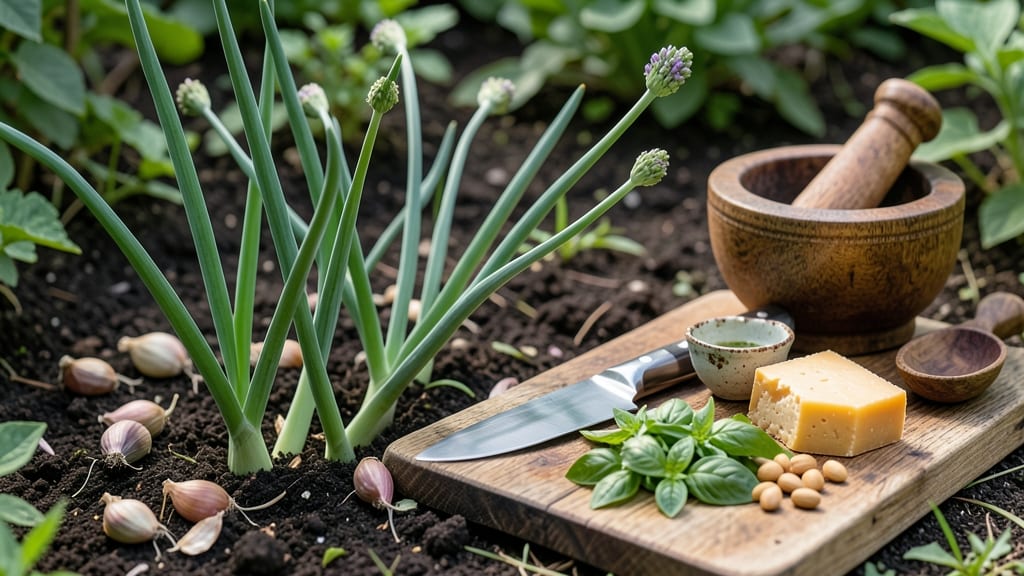
When you learn how to use garlic scapes in pesto, you’ve unlocked a bold, herby ingredient waiting to transform your green sauce. 🌱 I used to toss them out—until I discovered how they add a milder, sweeter garlic punch to classic pesto.
The best part? Harvesting scapes actually makes your garlic bulbs bigger and stronger.
Timing matters: snip scapes when they’re 6-8 inches long and still curled, but before they straighten out. Store them in the fridge for 5-7 days or freeze them whole for later—no chopping needed. For next year’s harvest, leave a few scapes uncut to encourage more bulb growth.
Swap basil for scapes in pesto at a 1:1 ratio—they’ll give your sauce a delicate garlic aroma and vibrant green color.
A simple recipe calls for 2 cups chopped scapes, 1 cup basil, ¼ cup nuts, ½ cup olive oil, and ¼ cup grated Parmesan. Pulse in a food processor until smooth.
This trick turns kitchen scraps into flavor gold while rewarding your garden with healthier garlic. Try it once, and you’ll never waste a scape again—your taste buds (and plants) will thank you.
📚 In This Guide
- What you need
- Instructions
- Tips and common mistakes
- Wrapping up and next steps
What you need
- ● Garlic scapes: 1 bunch (about 8–10 scapes), thoroughly washed and trimmed (remove any tough ends).
- ● Fresh basil: 2 cups packed leaves (about 20–25 large leaves or 1 small bunch).
- ● Nuts/seeds: ½ cup raw pine nuts, walnuts, or cashews (toasted for extra flavor!).
- ● Parmesan cheese: ½ cup freshly grated (or pecorino for a tangier kick!).
- ○ Garlic: 1–2 cloves, minced (for depth—optional but highly recommended!).
- ● Extra-virgin olive oil: ½–⅔ cup (plus more for thinning if needed).
- ● Lemon juice: 1–2 tbsp (for brightness!).
- ● Salt: ½ tsp (adjust to taste).
- ● Food processor or mortar & pestle: For blending (a high-speed blender works too!).
- ● Cheese grater: For Parmesan (or buy pre-grated if short on time!).
- ● Knife & cutting board: For chopping garlic scapes, basil, and garlic.
- ● Measuring cups/spoons: For precision (especially with nuts and oil!).
- ● Small bowl: For mixing in lemon juice and salt at the end.
- ○ Optional: A fine-mesh strainer (if you prefer a smoother pesto).
Step-by-Step instructions for crafting garlic scape pesto
Here's how to elevate classic pesto with the delicate, garlicky sweetness of fresh scapes.
🌿 Step 1: Harvest and Prep the Garlic Scapes
Select scapes that are firm and vibrant green—avoid any that feel woody or have browned tips. Cut them at the base with clean scissors, leaving the bulb intact for future harvests. Rinse gently under cool water to remove dirt, then pat dry thoroughly with a kitchen towel. I like to trim off the very bottom inch where the scape meets the bulb, as it can be slightly tougher.
For optimal flavor, use scapes within 24 hours of harvesting. The longer they sit, the more bitter they become. If you can't use them immediately, store them loosely wrapped in a paper towel in the refrigerator for up to 3 days. The freshness of the scapes is everything—don't compromise here.
🌱 Step 2: Chop the Scapes and Aromatics
Separate the scapes into two parts: the tender green stems and the thicker, slightly woody lower sections. Discard the woody parts or save them for homemade stock. Finely chop the green stems into ¼-inch pieces—this ensures even distribution in the pesto and prevents large, unappetizing chunks. I use a sharp chef's knife for precision, rocking it gently to maintain control.
Add 2 cloves of garlic (peeled) and ½ cup of fresh basil leaves (packed) to the chopped scapes. The garlic should be minced, not chopped, for a more concentrated flavor. If you're using older scapes, reduce the garlic slightly to avoid overpowering the sauce. Pulse everything together in a food processor for 10-15 seconds—just until combined but still slightly textured.
💧 Step 3: Blend with Oil and Nut Base
With the processor running, slowly drizzle in ½ cup of extra-virgin olive oil and ½ cup of toasted pine nuts or walnuts (cooled). The nuts add a satisfying crunch and richness that balances the garlic's sharpness. If you're using walnuts, toast them in a dry skillet over medium heat for 3-5 minutes until fragrant—this deepens their flavor significantly.
Pulse the mixture again for 10 seconds, then taste. You're aiming for a harmonious blend where the garlic scape's mild sweetness shines alongside the basil's brightness. If the pesto tastes too raw, add a pinch of salt to draw out the flavors. The texture should be creamy but still slightly chunky—over-blending turns pesto into a paste.
✂️ Step 4: Finish with Cheese and Seasoning
Add ½ cup of grated Parmesan cheese (preferably freshly grated) and ¼ cup of grated Pecorino Romano for a tangy depth. Pulse briefly to combine, then taste again. This is where the magic happens—the cheese binds everything together while adding umami and saltiness. If the pesto needs more body, stir in an additional 1-2 tablespoons of olive oil.
Season generously with ½ teaspoon of salt and ¼ teaspoon of black pepper. For a touch of acidity that brightens the flavors, add 1 teaspoon of lemon juice. Adjust the seasoning gradually—it's easier to add more salt than to fix oversalting. The pesto should taste vibrant, with the garlic scape's subtle sweetness cutting through the richness of the cheese and nuts.
🪴 Step 5: Store and Use Immediately
Transfer the pesto to a clean jar or airtight container. Press a piece of plastic wrap directly onto the surface to prevent oxidation, then refrigerate. Use within 3-4 days for the best flavor, as the garlic scapes lose their freshness over time. If you need to store it longer, freeze the pesto in 1-tablespoon portions for easy use in future dishes.
This pesto shines on pasta, grilled meats, or as a sandwich spread. For extra richness, toss it with cooked penne or farfalle and reserve some pasta water to thin it out if needed. The garlic scape's unique flavor transforms classic pesto into something truly special—don't skip the freshness factor here.
Tips & tricks for perfect garlic scape pesto
These small adjustments will take your garlic scape pesto from good to extraordinary—trust me, the details matter.
Freshness is Non-Negotiable: In Step 1, when you're selecting garlic scapes, look for vibrant green stems that snap easily when bent—not limp or rubbery. The 24-hour window for peak freshness is critical: older scapes develop a bitter, grassy flavor that overpowers the delicate sweetness we're aiming for. If you harvest your own, use them immediately or store them in a paper towel-lined container in the fridge—plastic traps moisture and accelerates spoilage.
The Chopping Technique: In Step 2, when you're prepping the scapes, aim for ¼-inch pieces that are uniform in size. This ensures even distribution in the pesto and prevents any one chunk from dominating the flavor profile. I use a sharp chef's knife and rock it gently to maintain control—no sawing motions! The garlic should be minced (not chopped) for concentrated flavor, and the basil leaves should be packed tightly in the cup measurement to maximize their aromatic impact.
Toast Those Nuts: In Step 3, don't skip toasting the nuts—those 3-5 minutes over medium heat make all the difference. Toasted walnuts or pine nuts develop a nutty depth that balances the garlic's sharpness. Watch them closely! They burn quickly, and once they're toasted, they should be fragrant and just starting to turn golden. Let them cool completely before adding to the food processor, or they'll melt into the oil and create a greasy texture.
Texture Control: In Step 3 and 4, remember that pesto should be creamy but still have texture—over-blending turns it into a paste. Pulse the mixture for just 10-15 seconds in Step 2, then again for 10 seconds in Step 3. Taste after adding cheese in Step 4: if it needs more body, stir in 1-2 tablespoons of olive oil, but don't overdo it. The perfect pesto should coat the back of a spoon but still have visible specks of garlic, basil, and nuts.
Pro Tips for Use Garlic Scapes In Pesto
- These small adjustments will take your garlic scape pesto from good to extraordinary—trust me, the details matter.
- Freshness is Non-Negotiable: In Step 1, when you're selecting garlic scapes, look for vibrant green stems that snap easily when bent—not limp or rubbery.
- The Chopping Technique: In Step 2, when you're prepping the scapes, aim for ¼-inch pieces that are uniform in size.
Frequently asked questions
Got questions about using garlic scapes in pesto?
You’re not alone! Here are answers to the most common queries to help you master this flavor-packed twist on classic pesto.
Can I substitute garlic scapes for regular garlic in pesto?
Garlic scapes add a milder, sweeter flavor compared to raw garlic cloves. Use them instead of garlic or blend them in for a unique depth. For every 1 clove of garlic, try 1–2 inches of chopped scapes. Pro tip: If you love bold garlic flavor, add a pinch of garlic powder alongside the scapes!
How long do garlic scapes keep before they go bad in pesto?
Fresh scapes last about 5–7 days in the fridge, but once blended into pesto, they’ll keep for 3–5 days (covered tightly). For longer storage, freeze pesto in ice cube trays or airtight containers for up to 3 months. Thaw in the fridge before using.
What if my garlic scapes taste bitter?
Bitterness usually means the scapes are past their prime. Harvest them when still firm and green (not woody or yellowing). If they’re already bitter, balance the flavor by adding extra lemon juice, Parmesan, or a touch of honey to your pesto. Bonus: Younger scapes are sweeter—pick them early!
Can I make garlic scape pesto without nuts?
Yes! Swap pine nuts or walnuts for toasted breadcrumbs, sunflower seeds, or even avocado for creaminess. For extra richness, blend in a spoonful of nut butter (like almond or cashew). Just ensure you’re still balancing the sauce with enough oil to emulsify. Tip: Roast your seeds first for deeper flavor!
How do I use leftover garlic scape pesto?
Versatility is the name of the game! Toss it with pasta, spread it on toast, mix into dips, or use it as a marinade for grilled chicken. Freeze extras in popsicle molds for quick portions—just thaw and enjoy! Pro move: Stir a splash of pasta water into stiff pesto to loosen it up.
Wrapping up and next steps
Garlic scapes aren’t just scraps—they’re a flavor-packed game-changer in pesto! Whether you’re swapping them in for basil or blending them into a unique herby twist, these curly stems bring a mild, garlicky sweetness that elevates your dish.
With just a few simple steps, you’ve got a nutrient-rich, vibrant sauce ready to transform pasta, sandwiches, or grilled veggies.
Now that you’re a garlic-scape pesto pro, why not experiment further? Try swapping in other greens like dill or chives, or even adding a splash of lemon for brightness. Your kitchen—and taste buds—will thank you! 🌿✨