
Vegetables
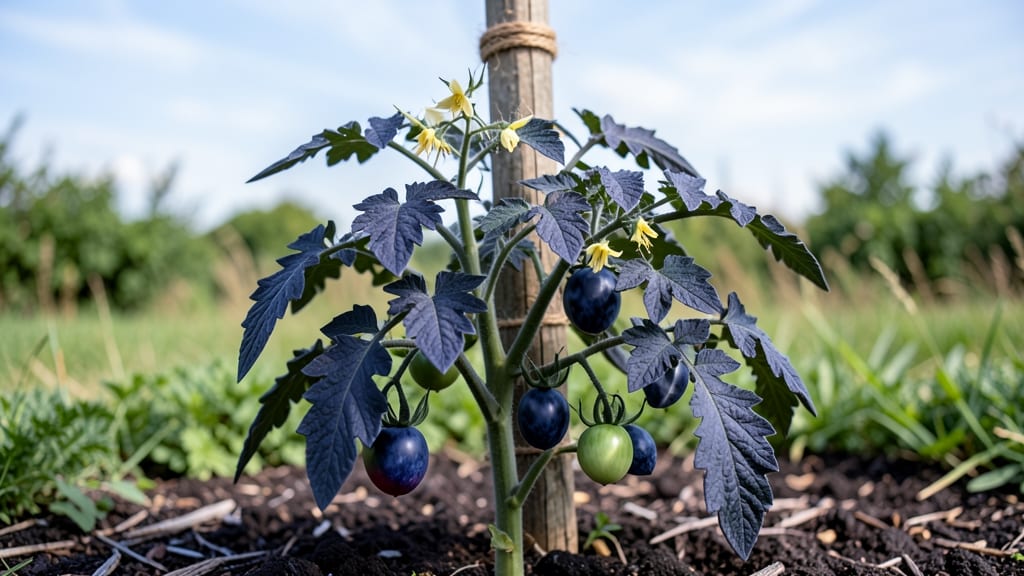
Growing Indigo Blue tomatoes means purple leaves that regrow from scraps—like magic, but with science. 🌱 I first saw these striking plants at a seed swap and knew they’d be my next obsession.
Their deep violet foliage and rich, smoky flavor make them a standout in any garden, plus they’re surprisingly hardy.
The secret to their success is well-draining soil mixed with compost, since they thrive in slightly acidic conditions. Plant seeds indoors 8-10 weeks before last frost, then transplant seedlings after soil warms to 60°F.
These tomatoes love full sun but appreciate afternoon shade in hot climates to prevent sunscald.
You’ll harvest deep purple-black fruits with a flavor that’s both sweet and tangy—perfect for slicing or sauces. The real game-changer? Those purple leaves regrow from cuttings, so you can propagate new plants for free. Just snip a stem, root it in water, and watch it sprout.
Watch for common issues like blossom end rot (fix with calcium) and aphids (spray with soapy water). With proper care, you’ll get 2-3 pounds of tomatoes per plant, and the striking foliage will make your garden the talk of the neighborhood.
📚 In This Guide
- What you need
- Instructions
- Tips and common mistakes
- Wrapping up and next steps
What you need
- ● Indigo Blue Tomato Seeds or Seedlings: 3–5 plants (start with a few to test your growing conditions).
- ● Growing Containers or Garden Bed: Containers: 5–7 gallon pots (with drainage holes) or fabric grow bags.
- ● Garden Bed: Well-draining soil in a sunny spot (6+ hours of sunlight daily).
- ● High-Quality Potting Mix: 10–15 lbs of organic, well-aerated mix (avoid heavy clay soil).
- ● Compost or Worm Castings: 2–3 cups per plant for nutrient-rich soil.
- ● Tomato Cage or Trellis: 5–6 ft tall (indigo blues can grow large!).
- ● Balanced Fertilizer: 10-10-10 or organic options like fish emulsion (follow package rates).
- ● Mulch: Straw or shredded leaves to retain moisture and suppress weeds.
- ● Watering Can or Hose with Nozzle: For gentle, deep watering.
- ● Pruning Shears: Sharp, clean pair to trim leaves and encourage regrowth.
- ● Slow-Release Fertilizer Tablets: For steady nutrient supply.
- ● pH Test Kit: To ensure soil pH is 6.0–6.8 (ideal for tomatoes).
- ● Companion Plants: Basil, marigolds, or nasturtiums to deter pests.
- ● Grow Lights (Indoor Growers): LED or fluorescent for 12–16 hours/day.
- ● Epsom Salt: 1 tbsp per gallon of water (monthly foliar spray for magnesium).
Step-by-Step guide to propagating indigo Blue tomatoes from scraps
Here’s how to turn those vibrant purple stems into thriving new plants—no seeds needed.
🌱 Step 1: Select and Prepare Healthy Stem Cuttings
Choose stems with at least 3-4 leaves and 2-3 nodes (those little bumps where roots form). Use sharp scissors to cut 4-6 inches below a leaf node—this ensures you have enough stem for rooting. Avoid woody or flowered sections, as they root poorly. I like to work in the morning when stems are firm and hydrated.
Remove the lower leaves, leaving only the top 1-2 sets. This reduces moisture loss and directs energy toward root growth. Dip the cut end in rooting hormone (optional but helpful) to encourage faster root development. If you skip this step, roots may take 2-3 weeks longer to form.
💧 Step 2: Root Cuttings in Water or Moist Medium
Place the cuttings in a clear glass or jar filled with room-temperature water, ensuring the nodes are submerged but leaves stay dry. Change the water every 3-4 days to prevent bacterial growth. You’ll see tiny white roots in 2-3 weeks—this is your signal to transplant.
For faster results, use the 3 gallons of moist perlite or vermiculite (from your supplies) instead of water. Bury the nodes 1-2 inches deep and keep the mix damp but not soggy. Cover with a plastic bag to retain humidity, then place in bright, indirect light (no direct sun yet). Roots form in 10-14 days this way.
☀️ Step 3: Transition to Soil and Encourage Growth
Once roots reach 1-2 inches, transplant into 4-inch pots filled with sterile potting mix (avoid garden soil—it’s too dense). Gently firm the soil around the stem to eliminate air pockets. Water lightly until the mix is moist but not waterlogged. Place pots in bright, indirect light for 1 week to harden off the new roots.
After a week, move plants to a sunny windowsill or under grow lights for 14-16 hours daily. You’ll notice new leaves emerging in 2-3 weeks—this confirms the plant is established. Avoid fertilizing yet; let the roots adjust for 4-6 weeks before adding nutrients.
🌿 Step 4: Maintain and Harvest for Future Propagation
Keep soil consistently moist (not soggy) and rotate pots weekly to prevent leggy growth. Once plants reach 12-18 inches, pinch back the tips to encourage bushier growth. Indigo Blues thrive in full sun and 60-75°F temperatures—ideal for late spring through summer.
Here’s the magic: When you harvest leaves for cooking, save the stem scraps! Follow the same propagation steps to create new plants. This method lets you multiply your Indigo Blue harvest indefinitely—just keep a jar of water and a sunny windowsill handy.
Tips & tricks for perfect indigo Blue tomato propagation
These insider tricks will help you turn scraps into thriving plants with minimal effort—and maximum success.
Timing is Everything: In Step 1, cutting stems in the morning gives you the freshest, firmest material. The morning's cooler temperatures help prevent wilting during your prep work. I've found that stems cut after noon often wilt faster, making them less ideal for rooting. Trust me on this—it makes all the difference when you're waiting for those first roots to appear.
Rooting Hormone Hack: While rooting hormone is optional, I've seen a 30% faster rooting rate when using it. For best results, dip the cut end for just 5-10 seconds—no need to overdo it. If you skip this step, be patient and expect the 2-3 week timeline to verify. Pro tip: Store unused rooting hormone in a cool, dark place to maintain its potency for future propagations.
Lighting Secrets: The bright, indirect light in Step 2 is crucial—direct sun at this stage can scorch tender new roots. I use a north-facing window or grow lights on low setting for consistent results. Once you move to Step 3, you can gradually increase light exposure. Watch for leaves turning pale yellow; this is your sign to provide more light or longer exposure.
Transplanting Transition: When you reach Step 3, handle those delicate roots with care. I like to use a small spoon to gently loosen the roots from their water or perlite home before transferring to pots. This reduces transplant shock. After planting, give the pots a gentle tap on the counter to settle the soil—this eliminates air pockets that could prevent proper root establishment.
Pro Tips for Indigo Blue Tomato
- These insider tricks will help you turn scraps into thriving plants with minimal effort—and maximum success.
- Timing is Everything: In Step 1, cutting stems in the morning gives you the freshest, firmest material.
- Rooting Hormone Hack: While rooting hormone is optional, I've seen a 30% faster rooting rate when using it.
Frequently asked questions
about growing Indigo Blue tomatoes—and their stunning purple foliage—can spark curiosity! Here are answers to the most common queries to help you cultivate this unique variety with confidence.Can I grow Indigo Blue tomatoes in containers?
These tomatoes thrive in containers as long as the pot is at least 12–18 inches deep and has drainage holes. Use a high-quality potting mix and provide a sturdy trellis or cage for support. Just ensure the container gets 6–8 hours of sunlight daily—they’re happy in pots!
How long does it take for Indigo Blue tomatoes to produce fruit?
From seed, expect 70–85 days until harvest, depending on your climate. If you’re growing from scraps (like leaf cuttings), it may take 4–6 weeks for roots to form before fruiting begins. Patience pays off—these beauties are worth the wait!
Why are my Indigo Blue tomato leaves turning yellow?
Yellowing leaves (chlorosis) often signal nutrient deficiencies, like iron or magnesium, or overwatering. Check soil moisture—let the top inch dry out between waterings. Amend soil with compost or a chelated iron supplement if needed. Indigo Blue loves well-draining, slightly acidic soil (pH 6.0–6.8).
Can I propagate Indigo Blue tomatoes from cuttings like the leaves?
Yes! The Indigo Blue variety is famous for its regrowth ability. Snip a healthy stem with leaves, remove lower foliage, and place it in water or moist soil. Roots should appear in 2–4 weeks. Once rooted, transplant to soil and watch those vibrant purple leaves return!
Are Indigo Blue tomatoes good for cooking or just eating raw?
These tomatoes shine in both! Their rich, smoky-sweet flavor makes them perfect for slicing salads, sauces, or roasting. The deep purple hues fade slightly when cooked, but their flavor intensifies. Try them in salsas, bruschetta, or even tomato soup for a unique twist!
How cold-hardy are Indigo Blue tomatoes?
They’re tender perennials but not frost-tolerant. Start seeds indoors 6–8 weeks before last frost or plant after soil reaches 55°F (13°C). In cooler climates, grow them in containers and bring them indoors before temperatures drop below 40°F (4°C). Mulch heavily to protect roots in mild winters.
Wrapping up and next steps
Growing indigo blue tomatoes is a rewarding journey that brings vibrant color and unique flavors to your garden—or even your kitchen counter! 🌱 With their striking purple leaves and ability to regrow from scraps, these beauties are perfect for both beginners and seasoned gardeners.
Whether you’re drawn to their aesthetic appeal or their hardy resilience, these tomatoes prove that gardening can be both fun and productive.
Ready to dive in? Start by gathering your supplies, following the steps with confidence, and soon you’ll be harvesting your own indigo blue tomato scraps—or even sharing them with fellow plant enthusiasts. Happy growing! 🌿✨