
Vegetables
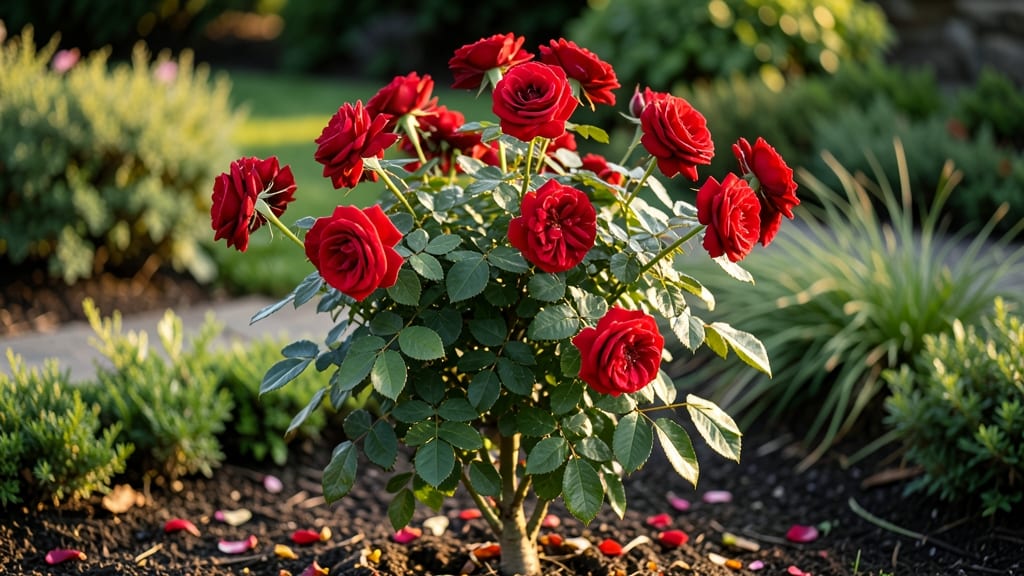
My Knockout roses types collection starts with Radrazz, the deep red variety that stops passersby in their tracks. 🌹 This isn’t your grandmother’s rose—it’s a disease-resistant powerhouse that blooms nonstop from spring until frost, thriving in full sun with minimal fuss.
The glossy, velvety petals stay vibrant even in heatwaves, and it handles humidity better than most roses I’ve tried.
What makes these roses stand out is their low-maintenance nature—no deadheading needed, no fussy soil requirements, and they bounce back from pruning like champs. Double Knock Out is my go-to for lush clusters, while Blaze adds a fiery orange punch to summer borders.
Each type handles pruning the same way: cut back by one-third in early spring, and they’ll reward you with bold, repeat blooms all season.
The real magic happens in color variety—from Pink Knockout’s soft blush to Tiny Tiki’s miniature charm. They all share the same disease resistance and pest tolerance, making them perfect for beginners or busy gardeners.
Just give them well-draining soil and 6+ hours of sun, and they’ll reward you with effortless beauty.
Whether you’re filling a foundation bed or adding height to a mixed border, these roses deliver year-round interest with almost no work. Here’s how to choose the perfect one for your space!
📚 In This Guide
- What you need
- Instructions
- Tips and common mistakes
- Wrapping up and next steps
What you need
- ● Knockout Rose Plants: 1–5 plants (depending on desired coverage; spacing: 3–4 ft apart)
- ● Types: Choose from varieties like ‘Double Knock Out,’ ‘Radrazz,’ or ‘Blizzard’ (disease-resistant and vibrant!)
- ● Soil: 6–8 bags (40 lb each) of well-draining potting mix or garden soil amended with compost (pH 6.0–6.5)
- ○ Optional: Rose-specific fertilizer (e.g., Espoma Rose-Tone) for nutrient boost
- ● Planting Supplies: 1–2 garden trowels or shovels
- ● 1 measuring tape (for spacing)
- ● 1–2 mulch bags (2–3 cubic feet; use wood chips or straw)
- ● Watering: 1 hose with adjustable nozzle or watering can (5+ gallons)
- ○ Optional: drip irrigation kit for consistent moisture
- ● Pruning Tools: Bypass pruners (sharp and clean!) and loppers for shaping.
- ● Support: Stakes or cages (3–4 ft tall) if your variety needs extra support.
- ● Pest Control: Neem oil or rose-specific fungicide (preventative care!).
- ● Gloves & Sun Protection: Garden gloves and hat/sunscreen for comfort.
How to select and plant knockout roses for year-round color
Here's how I choose the best disease-resistant varieties and establish them for effortless, vibrant blooms.
🌱 Step 1: Choose Your Knockout Rose Variety
Knockout roses come in four main color families, each with distinct characteristics. The original pink ('Knock Out') is the most widely planted, thriving in zones 5-11 with minimal care. For bold contrast, try red ('Double Knock Out') which blooms even more prolifically but needs slightly richer soil. Yellow ('Sunny Knock Out') tolerates more heat and drought once established, while white ('White Knock Out') offers elegant foliage that resists black spot better than most roses.
I always check the plant tag for the specific variety—some newer hybrids like 'Rainbow Knock Out' combine multiple colors in one bush. Choose a size that fits your space: standard bushes reach 3-4 feet, while miniature varieties stay under 2 feet. Dwarf varieties like 'Peach Drift' work beautifully in containers or small gardens.
☀️ Step 2: Select the Perfect Planting Location
Knockout roses demand full sun for maximum blooms—aim for 6-8 hours of direct sunlight daily. I look for spots with morning sun and afternoon shade in hot climates, as afternoon sun can scorch leaves. The soil should drain well but retain moisture; amending heavy clay with 2-3 inches of compost improves drainage without suffocating roots.
Spacing is critical: standard varieties need 3-4 feet between plants, while dwarf types can grow 2 feet apart. Avoid planting near large trees—competition for water and nutrients weakens roses. I always sketch my garden layout first to ensure proper airflow, which reduces fungal diseases like powdery mildew.
🪴 Step 3: Prepare the Planting Hole
Dig a hole twice as wide as the root ball but only as deep as the container. This prevents burying the graft union, which can cause weak growth. I loosen the roots gently if they're circling the container—never prune healthy roots. Mix the removed soil with 1 part compost to create a nutrient-rich backfill.
Place the rose in the hole so the graft union sits 2 inches above soil level. Backfill with the amended soil, pressing lightly to remove air pockets. Water deeply to settle the soil and eliminate gaps. The top of the root ball should sit 1-2 inches below the surrounding soil—this prevents the graft union from drying out during hot weather.
💧 Step 4: Establish Proper Watering and Mulching
Water immediately after planting, then once weekly for the first month to encourage root establishment. Deep watering—1-2 inches per week—is better than frequent shallow watering. I always water at the base, avoiding leaves to prevent fungal diseases. After the first month, reduce to every 10-14 days unless your region experiences extreme heat or drought.
Apply 2-3 inches of mulch around the base, keeping it 6 inches away from the stem to prevent rot. I use shredded bark or pine straw because they improve soil moisture retention while allowing airflow. Replenish mulch annually in spring—this protects roots from temperature swings and suppresses weeds that compete for nutrients.
✂️ Step 5: Prune for Continuous Blooms
Knockout roses bloom continuously, so pruning focuses on removing dead wood and opening the center for airflow. In early spring, cut back any dead canes to the base. Then, remove 1/3 of the oldest canes each year to encourage new growth. I always prune just above an outward-facing bud to promote bushier growth.
Deadhead spent blooms throughout the season to maintain the plant's energy on new flowers. For severe pruning, I wait until late winter when the plant is dormant. Never prune in fall—new growth won't harden off before winter, making the plant vulnerable to cold damage. After pruning, apply a balanced rose fertilizer to support the plant's recovery and blooming cycle.
Tips & tricks for perfect knockout rose Selection and planting
These insider tricks will help you choose the right varieties and establish them for years of effortless beauty.
Variety Selection: The original 'Knock Out' rose is the safest choice for beginners—it thrives in zones 5-11 with minimal care. For dramatic impact, consider 'Double Knock Out' in red, which produces even more blooms but prefers slightly richer soil. If you're in a hot, dry climate, 'Sunny Knock Out' (yellow) handles heat and drought better once established. Always check the plant tag for disease resistance ratings—look for varieties labeled "black spot resistant" or "powdery mildew tolerant."
Sunlight Strategy: The 6-8 hours of daily sunlight requirement is non-negotiable for maximum blooms, but here's the pro move: position your roses to catch morning sun and afternoon shade in hot climates. This prevents leaf scorch while still giving them enough light. I've seen roses in full afternoon sun develop crispy edges—trust me, it's not pretty. If you're working with partial shade, choose 'White Knock Out' first—it handles lower light better than other varieties.
Graft Union Protection: That 2-inch clearance above soil level for the graft union isn't just a suggestion—it's critical. When you bury it too deep, the plant focuses energy on growing roots from the graft rather than producing flowers. After planting, I always do a final check with my finger to confirm the graft union is clearly visible above the soil line. This simple step prevents years of weak growth and poor blooming.
Watering Wisdom: The first month's weekly watering is crucial for root establishment, but here's what nobody tells you: water deeply enough to moisten the soil 6-8 inches down. I use a long screwdriver to check—if it comes out clean, you've watered enough. After the first month, reduce to every 10-14 days, but always check the top 2 inches of soil first. If it's dry, water; if it's moist, wait. This prevents both underwatering and overwatering, which are the two biggest causes of poor performance in newly planted roses.
Pro Tips for Knockout Roses Types
- These insider tricks will help you choose the right varieties and establish them for years of effortless beauty.
- Variety Selection: The original 'Knock Out' rose is the safest choice for beginners—it thrives in zones 5-11 with minimal care.
- Sunlight Strategy: The 6-8 hours of daily sunlight requirement is non-negotiable for maximum blooms, but here's the pro move: position your roses to catch morning sun and afternoon shade in hot climates.
Frequently asked questions
Got questions about knockout roses?
You’re not alone! These stunning, low-maintenance bloomers are a gardener’s dream—but like any star, they come with a few quirks. Below, we tackle the most common queries to help you pick, plant, and pamper the perfect knockout roses for your garden.
What’s the best time of year to plant knockout roses?
For most U.S. regions, early spring or early fall (4–6 weeks before your first frost) is ideal. This gives roots time to establish before extreme heat or cold. Avoid planting in summer—roots can overheat, and winter planting risks frost damage. Pro tip: If you’re in a warm climate (zones 8–10), plant in winter to escape summer heat stress!
Do knockout roses need a lot of water?
Not at all! These roses are drought-tolerant once established (after the first year). Water deeply 1–2 times per week during dry spells, aiming for 1–1.5 inches of water per week. Key trick: Water at the base (not the leaves) to prevent fungal diseases like black spot. Mulch around the plant to retain moisture.
Can I grow knockout roses in containers?
Many knockout varieties thrive in containers, making them perfect for patios, balconies, or small spaces. Use a large pot (at least 15–20 gallons) with drainage holes and a high-quality potting mix. Choose dwarf or patio varieties like ‘Double Knock Out’ or ‘Radrazz’ for smaller spaces. Just ensure they get 6+ hours of sun daily!
Why aren’t my knockout roses blooming as much as they should?
Overpruning, poor soil, or underwatering are common culprits. Check these fixes:
- Prune lightly—knockout roses bloom on new wood, so avoid heavy cuts in late winter.
- Fertilize in early spring with a balanced rose food (10-10-10).
- Ensure full sun (6+ hours) and well-draining soil.
- Watch for pests like aphids or Japanese beetles—spray with neem oil if needed.
Are there knockout roses that bloom in colors other than pink?
Yes! While pink is iconic, knockout roses come in a rainbow of hues. Try these standout varieties:
Color
Variety
Height
Red
‘Fireworks’
3–4 ft
Yellow
‘Sunset Sunset’
3–4 ft
Purple-Blue
‘Vintage Wine’
3–4 ft
Peach
‘Pink Peace’
3–5 ft
Wrapping up and next steps
From the disease-resistant charm of Knock Out® Rose 'Double Knock Out' to the vibrant hues of Knock Out® Rose 'Rainbow Punch', these roses prove that low-maintenance beauty is possible! 🌸 Whether you're a seasoned gardener or just starting, these varieties bring color, durability, and ease to your landscape.
Ready to transform your garden? Pick your favorite type, grab some gardening essentials, and start planting! 🌱 For extra tips, check out our gardening guide to keep your roses thriving all season long.