
Vegetables
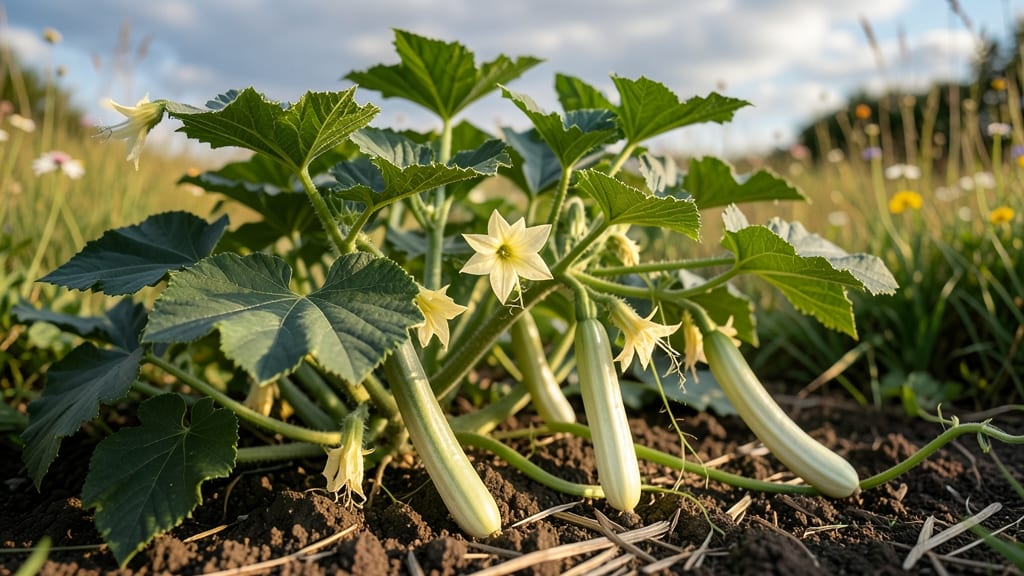
Growing Pale Armenian cucumbers unlocks a crisp, striped treasure perfect for small gardens. 🌱 Their pale skin and tender flesh set them apart from standard cucumbers, offering a unique harvest that thrives in containers or tight spaces.
Unlike bushy varieties, these vines grow long and productive with minimal fuss—ideal for balconies or patios where space is limited.
These heirlooms demand sunny spots (6+ hours daily) and well-draining soil mixed with compost. A sturdy trellis or cage keeps vines organized, preventing sprawl while maximizing fruit production.
Water consistently at the base—never overhead—to avoid mildew, which is their biggest foe. Companion plants like dill or radishes deter pests naturally, while nasturtiums repel cucumber beetles.
Harvest begins 55-65 days after planting, snipping fruits when they’re 6-8 inches long for peak flavor. The pale stripes deepen as they ripen, signaling perfect timing. Store unwashed in the fridge for up to a week, or slice fresh into salads where their mild, sweet taste shines.
One vine can yield 10-15 pounds—enough to share with neighbors.
For heirloom success, start seeds indoors 4 weeks before last frost or transplant young plants after soil warms to 60°F. Prune suckers regularly to focus energy on fruit, and mulch to retain moisture.
The payoff? A bold, striped harvest that outshines store-bought cucumbers in both flavor and beauty—no greenhouse required.
📚 In This Guide
- What you need
- Instructions
- Tips and common mistakes
- Wrapping up and next steps
What you need
- ● Seeds: 3–5 pale Armenian cucumber seeds (heirloom or organic preferred)
- ● Containers or Garden Bed: 1–2 5-gallon fabric pots (or larger) or
- ● A 4’ x 8’ raised bed (if planting in-ground)
- ● Potting Mix: 1–2 bags of high-quality, well-draining soil (add perlite or compost for aeration)
- ● Trellis or Cage: 1 4–6 ft tall cucumber trellis (or a sturdy wire cage)
- ● Fertilizer: 1 cup balanced organic fertilizer (5-5-5 or 10-10-10)
- ● 1 tbsp Epsom salt (for magnesium boost)
- ● Watering Supplies: 1 watering can or drip irrigation kit
- ● 1 spray bottle (for seedling care)
- ● Pruning Shears (for trimming vines)
- ● Garden Gloves (to protect hands)
- ● pH Test Kit (to monitor soil acidity, ideal: 6.0–6.8)
- ● Shade Cloth (for seedlings if in hot climates)
- ● Sunlight: 6–8 hours of full sun daily (partial shade in extreme heat)
- ● Warmth: Wait until soil temps reach 60°F+ (use a soil thermometer if unsure)
- ● Patience: 70–80 days to harvest (varies by climate)
Step-by-step instructions for growing pale Armenian cucumbers
Here's how to grow these striking striped beauties—perfect for containers, small gardens, and even balconies.
🌱 Step 1: Choose the Right Location and Prep Soil
Pale Armenian cucumbers thrive in full sun—at least 6-8 hours daily—so pick a spot where they’ll get morning light and afternoon warmth. If growing in containers, ensure pots are at least 12 inches deep with drainage holes. These cucumbers love rich, well-draining soil with a pH of 6.0-6.8, so mix in 2-3 inches of compost into the top 6 inches of soil or potting mix.
I always test soil moisture before planting—stick your finger 1 inch deep. If it feels dry, water thoroughly the day before transplanting. Pale Armenians are sensitive to soggy roots, so avoid planting in low spots where water pools. If your soil drains poorly, raise beds or use containers to prevent root rot.
☀️ Step 2: Plant Seeds or Transplants at the Right Time
Start seeds indoors 3-4 weeks before your last frost date in biodegradable pots to avoid disturbing roots later. Plant 1 seed per pot, ½ inch deep, and keep soil consistently moist at 70-80°F until germination, which takes 5-10 days. If using transplants, wait until soil temperatures reach at least 60°F—cold soil stunts growth.
When transplanting outdoors, bury stems 1-2 inches deeper than they were in pots. This encourages stronger root systems. Space plants 12-18 inches apart in rows 3 feet apart to allow airflow and prevent disease. Pale Armenians climb, so install trellises or cages early—you’ll see vines reach 6-8 feet by midseason.
💧 Step 3: Water Deeply and Train Vines Early
Water deeply 1-2 times per week, aiming for 1 inch of water weekly. Pale Armenians are drought-tolerant but produce best with consistent moisture. Water at the base of plants in the morning to reduce fungal risks. You’ll know you’re doing it right when the top 2 inches of soil stay dry between waterings—stick your finger in to check.
Train vines onto trellises as they grow by gently weaving them through supports. This keeps fruit off the ground, improves air circulation, and prevents disease. Prune side shoots (suckers) that grow below the first flower cluster—this directs energy to main vines and fruit production. Harvest when cucumbers reach 6-8 inches long for the best flavor and stripes.
✂️ Step 4: Maintain and Harvest for Continuous Production
Fertilize lightly every 3-4 weeks with a balanced 10-10-10 or 5-5-5 fertilizer after vines start climbing. Too much nitrogen leads to leafy growth at the expense of fruit. Watch for powdery mildew—a common issue with cucumbers—and treat early with neem oil if you spot white powder on leaves.
Harvest every 2-3 days to encourage more production. Use pruning shears to cut stems cleanly, leaving a small stub. Pale Armenians are ready to pick when 6-8 inches long—longer cucumbers get seedy and lose their signature striped pattern. Store in the fridge for up to 5 days or use immediately in salads, pickling, or fresh eating.
Tips & tricks for growing pale Armenian cucumbers
These simple tricks will help you maximize your harvest and keep your striped cucumbers thriving—even in tight spaces.
Sunlight Strategy: Pale Armenians need those 6-8 hours of full sun daily, but morning sun is especially important. If your space gets afternoon shade, position plants to catch morning rays first. I’ve seen vines stretch dramatically toward light when they’re not getting enough—this weakens the plant and reduces fruit quality. For containers, rotate pots weekly to ensure even sun exposure all around.
Soil Prep Secret: The pH of 6.0-6.8 is critical, but don’t stress about testing kits. Most garden centers sell pre-mixed compost that’s already in this range. I like to mix in 2-3 inches of compost into the top 6 inches of soil, which also improves drainage—something Pale Armenians really appreciate. Pro tip: If your soil drains poorly, consider raised beds or containers with drainage holes to prevent root rot.
Timing is Everything: Those 3-4 weeks before last frost for indoor starts might feel like a long wait, but it’s worth it. I’ve found that seedlings grown this way establish stronger roots and start producing faster. When transplanting outdoors, wait until soil temps hit at least 60°F—cold soil can stunt growth. Burying stems 1-2 inches deeper than in pots gives them a root boost that makes all the difference.
Harvest Hack: The 6-8 inch size window is tight, so I set a timer for every 2-3 days to check. Use pruning shears to cut stems cleanly—this prevents damage that could invite disease. Longer cucumbers lose their signature stripes and develop seedy centers, so don’t wait! Store harvested cucumbers in the fridge for up to 5 days to keep them crisp.
Pro Tips for Pale Armenian Cucumber
- These simple tricks will help you maximize your harvest and keep your striped cucumbers thriving—even in tight spaces.
- Sunlight Strategy: Pale Armenians need those 6-8 hours of full sun daily, but morning sun is especially important. If...
- Soil Prep Secret: The pH of 6.0-6.8 is critical, but don’t stress about testing kits. Most garden centers sell pre-mi...
Frequently asked questions
Got questions about growing or using pale Armenian cucumbers? You’re not alone! Here are answers to the most common queries—from planting to harvest—so you can confidently grow these striking striped beauties in even the smallest spaces.
What’s the best time to plant pale Armenian cucumbers?
Plant these cucumbers after the last frost when soil temperatures reach at least 60°F (15°C). Since they’re warm-season plants, they thrive in full sun (6+ hours daily). If your growing season is short, opt for container gardening—they grow well in pots with vertical support!
How do pale Armenian cucumbers differ from regular cucumbers?
Beyond their striking pale stripes, they’re longer (8–12 inches), thinner, and less seedy than slicing cucumbers. They’re also more tender and flavorful, perfect for fresh eating, salads, or pickling. Plus, their compact vines make them ideal for small gardens or balconies!
Why aren’t my pale Armenian cucumbers turning striped?
Stripe intensity depends on sun exposure—they need full sun (6+ hours daily) for vibrant stripes. If stripes are faint, check for shade (trees, buildings, or overcrowding). Also, ensure consistent watering (1–2 inches weekly) and balanced fertilizer (too much nitrogen = leafy growth, fewer stripes).
Can I eat pale Armenian cucumbers like regular cucumbers?
Their mild, sweet flavor makes them great for raw snacks, salads, or stir-fries. Peel the skin if you prefer (though it’s edible), and slice them thinly for gourmet dishes. Pro tip: Harvest when 6–8 inches long for the best texture and taste.
What’s a good alternative if I don’t have space for vining cucumbers?
Try bush varieties like ‘Bush Champion’ or compact Armenian cucumbers (e.g., ‘Armenian Yellow’). For vertical gardening, use trellises or cages—pale Armenian cucumbers thrive with support! If space is super limited, grow them in hanging baskets with a small trellis.
Wrapping up and next steps
Growing pale Armenian cucumbers is a rewarding adventure—whether you're a space-conscious gardener or a cucumber enthusiast craving bold, striped harvests! With their compact vines and striking appearance, these cucumbers prove that big flavors don’t need big plots. 🌱
Now that you’re armed with the right materials and answers to common questions, it’s time to roll up your sleeves and plant those seeds. Start small, experiment with containers or trellises, and let your garden become a vibrant showcase of these unique cucumbers.
Happy growing—and enjoy the crisp, satisfying rewards of your labor! 🥒✨