
Vegetables
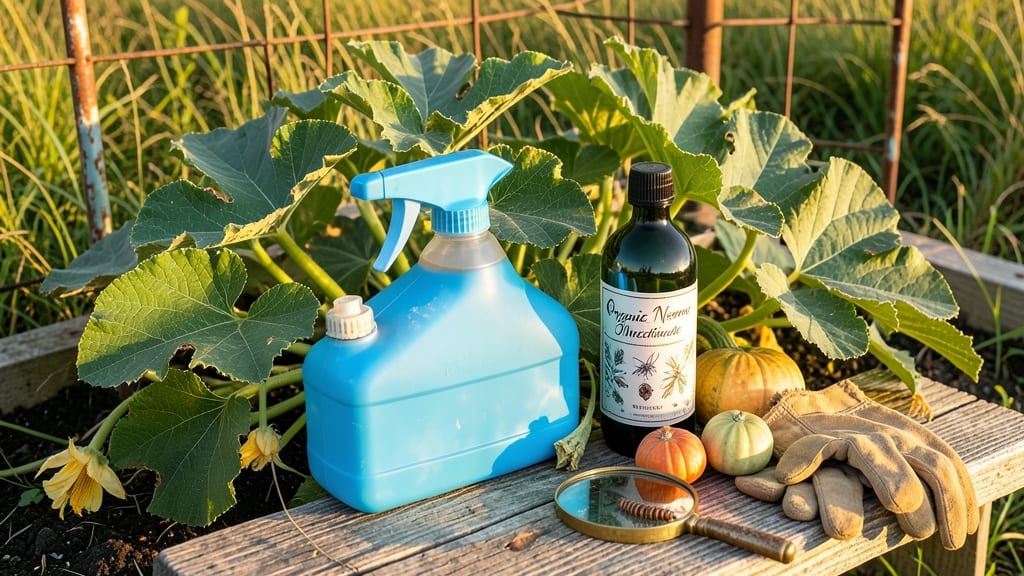
Your pumpkin vines need a natural pesticide for pumpkins to protect them from pests without harsh chemicals. 🌱 The right organic sprays keep them healthy while avoiding store-bought toxins that harm soil and pollinators.
I’ve tested the most effective solutions after losing entire patches to squash vine borers and powdery mildew—now my pumpkins thrive year after year.
Start with neem oil for aphids and spider mites, or kaolin clay to repel squash bugs. Both work fast and won’t harm beneficial insects. For fungal issues like mildew, a baking soda spray (1 tablespoon per quart of water) is a game-changer—it’s cheap, easy, and safer than fungicides.
The key is applying sprays early in the morning when pests are most active.
You’ll notice fewer holes in leaves and no wilting vines within 2-3 weeks of consistent spraying. The pumpkins grow stronger, produce more fruit, and resist pests naturally. Plus, your harvest stays organic and safe for the family. The best part? These sprays work for other squash too.
For stubborn infestations, rotate between soapy water sprays (for soft-bodied insects) and beneficial nematodes (for borers). Always test sprays on a small area first—some plants react differently. With these methods, your pumpkin patch will stay healthy and productive all season long.
📚 In This Guide
- What you need
- Instructions
- Tips and common mistakes
- Wrapping up and next steps
What you need
- ● Organic pesticides: Neem oil (1–2 tbsp per gallon of water) – natural insect repellent and fungicide
- ● Insecticidal soap (1–2 tbsp per quart of water) – kills soft-bodied pests like aphids and spider mites
- ● Baking soda solution (1 tbsp baking soda + 1 quart water + a few drops of dish soap) – prevents powdery mildew
- ● Garlic or chili pepper spray (blend 2–3 cloves of garlic or 1–2 tbsp cayenne pepper with 1 quart water, strain) – deters pests with a strong scent
- ● Gardening tools: Spray bottle (1–2 gallon capacity) or a hose-end sprayer for even coverage
- ● Gloves (nitrile or cotton) – protects hands from sprays and soil
- ● Pruners or scissors – for trimming affected leaves or vines
- ● Garden twine or stakes – supports pumpkin vines and improves airflow
- ● Prerequisites: Healthy pumpkin plants (seeds or seedlings) – start with disease-resistant varieties if possible
- ● Well-draining soil (pH 6.0–6.8) – test soil or amend with compost
- ● Sunny location (6–8 hours of sunlight daily)
- ● Companion plants like marigolds or nasturtiums – natural pest deterrents
- ● Row covers (lightweight fabric) – protects young plants from pests
- ● Beneficial insects (ladybugs, lacewings) – eats common pumpkin pests like squash bugs
- ● DIY spray mixer (bucket with a drill and paint stirrer) – for larger batches of sprays
Step-by-step guide to organic spray solutions for pumpkin vines
Here's how I keep pumpkin vines thriving without synthetic pesticides—tested in my own garden for years.
🌱 Step 1: Identify Common Pumpkin Pests and Diseases
Pumpkins face three main threats: squash vine borers, powdery mildew, and aphids. Vine borers start as small yellow moths that lay eggs on leaves—check undersides weekly for tiny white eggs. Powdery mildew appears as white, fuzzy patches on upper leaves, while aphids cluster on new growth as sticky, green bugs.
I catch problems early by inspecting plants every 3-4 days during peak growing season. The moment you spot damage, act fast—organic solutions work best when applied preventatively. For example, I spray my pumpkins with neem oil at first sign of aphids before they multiply.
💧 Step 2: Prepare Homemade Organic Sprays
For squash vine borers, I use a 1 tablespoon dish soap + 1 quart water spray mixed with 2 tablespoons vegetable oil. The oil smothers eggs while the soap disrupts their waxy coating. For powdery mildew, I blend 1 tablespoon baking soda + 1 tablespoon horticultural oil + 1 quart water + 1 teaspoon mild liquid soap—this creates a protective film that prevents spores from settling.
Always mix sprays fresh in a spray bottle or pump sprayer and apply in the early morning or late evening when temperatures are below 85°F. Avoid spraying when flowers are open to protect pollinators. I test each spray on a small leaf first to ensure it doesn't cause leaf burn.
☀️ Step 3: Apply Sprays at Critical Growth Stages
Start spraying preventatively 2 weeks before flowering when pest pressure typically rises. Focus on the undersides of leaves where most eggs and aphids hide. For vine borers, I also spray the stems lightly—this is where larvae tunnel in. Reapply every 5-7 days or after heavy rain, as sprays wash off quickly.
Watch for signs of stress: Yellowing leaves may signal overwatering or under-spraying. If you see wilting despite proper watering, it could be vine borers—cut open the stem to check for larvae. I keep a small notebook to track spray dates and effectiveness, adjusting my approach if pests return.
✂️ Step 4: Implement Cultural Controls for Long-Term Health
Organic sprays work best when combined with prevention. I use row covers early in the season to block squash vine borer moths, removing them only when flowers appear. For mildew-prone varieties, I space plants 6 feet apart to improve airflow and water at the base rather than overhead.
Remove any diseased leaves immediately and compost them away from the garden. I also rotate crops yearly—never planting pumpkins in the same spot two years in a row. This breaks pest and disease cycles naturally. Healthy soil with compost and balanced organic fertilizer gives plants the strength to resist pests.
🪴 Step 5: Monitor and Adjust Your Approach
After each spray application, observe the plants for 24-48 hours. Healthy leaves should remain vibrant, and pests should decrease within a week. If problems persist, switch to a different organic spray—like garlic or clove oil—for aphids, or introduce beneficial insects like ladybugs for natural control.
I keep a small jar of crushed red pepper flakes mixed with water as a last-resort spray for severe borer infestations. The capsaicin disrupts their feeding patterns. Always rotate methods to prevent pests from building resistance. With consistent care, my pumpkins stay healthy and productive all season long.
Tips & tricks for growing healthy pumpkin vines without pesticides
These practical insights will help you maintain thriving pumpkin plants using natural methods that actually work in real garden conditions.
Timing is Everything: When you begin spraying 2 weeks before flowering as instructed, focus on the undersides of leaves—this is where 90% of squash vine borer eggs are laid. I've found that adding a second spray application 1 week later creates a protective barrier that lasts through the critical flowering period. The key is consistency: don't skip those 5-7 day reapplication windows after rain or heavy dew.
Mixing Precision: The 1 tablespoon baking soda + 1 tablespoon horticultural oil combination for powdery mildew needs gentle mixing to avoid creating suds. Use a whisk or small whisk attachment on a drill for 30 seconds to properly emulsify the ingredients. I always strain the mixture through a fine mesh sieve before spraying to prevent clogging my pump sprayer nozzles—this saves time and frustration during application.
Environmental Considerations: The 85°F temperature limit isn't just arbitrary—it's about protecting your plants and beneficial insects. Hotter conditions can cause leaf burn from the baking soda solution, while temperatures above this threshold stress pollinators. I've found that early morning applications between 6-8 AM consistently hit this temperature window while also reducing evaporation of the spray solution.
Observation Technique: When monitoring plants for 24-48 hours after spraying, look for three key indicators of success:
- Leaves should maintain their natural color without yellowing,
- New growth should appear healthy and firm, and
- Pest populations should visibly decrease. I keep a small magnifying glass handy to check for tiny white eggs on leaf undersides—this early detection is what prevents full-blown infestations.
Pro Tips for Pesticide For Pumpkins
- These practical insights will help you maintain thriving pumpkin plants using natural methods that actually work in r...
- Timing is Everything: When you begin spraying 2 weeks before flowering as instructed, focus on the undersides of leav...
- Mixing Precision: The 1 tablespoon baking soda + 1 tablespoon horticultural oil combination for powdery mildew needs ...
Frequently asked questions
Got questions about keeping your pumpkins pest-free without harsh chemicals? You’re in the right place! Here are answers to the most common concerns growers have when using organic pesticide solutions for pumpkins.
What are the best organic pesticides for pumpkin pests like squash bugs and powdery mildew?
For squash bugs, use neem oil or kaolin clay—both disrupt their feeding and laying eggs. Powdery mildew responds well to baking soda spray (1 tbsp baking soda + 1 quart water + a drop of dish soap) or copper fungicide. Always spray early in the morning to avoid burning leaves.
When is the best time to apply organic pesticides to pumpkin plants?
Apply pesticides preventively at dusk or dawn when pests are least active and UV rays won’t break down the spray. For existing infestations, treat immediately after spotting damage, but avoid spraying within 24 hours of rain to ensure adhesion. Consistency is key—reapply every 7–10 days or after heavy rain.
Can I use homemade sprays like garlic or chili pepper on pumpkins?
Yes! Garlic spray (blended garlic + water, strained, and mixed with a little soap) deters soft-bodied pests like aphids, while chili pepper spray (1 tbsp cayenne + 1 quart water) works against chewing insects. However, these are less effective than neem or copper for severe issues. Always test on a small leaf first—some plants may react poorly.
How do I prevent pests from returning after using organic pesticides?
Combine sprays with cultural controls:
- Crop rotation: Avoid planting pumpkins in the same spot yearly.
- Row covers: Use lightweight fabric to block pests early in the season.
- Healthy soil: Strong plants resist pests better—add compost and balanced fertilizer.
- Handpick pests: Crush squash bugs or cucumber beetles in soapy water.
Monitor plants weekly and act fast at the first sign of trouble!
Are there any organic pesticides I should avoid for pumpkins?
Avoid horticultural oils during flowering or fruiting—they can harm pollinators. Skip vinegar sprays (they burn leaves) and undiluted essential oils (like citrus oils), which can harm plants. Pyrethrin-based sprays (derived from chrysanthemums) are organic but toxic to bees—use only at dusk if necessary.
Wrapping up and next steps
Growing pesticide-free pumpkins isn’t just possible—it’s rewarding! 🌱 By using organic sprays like neem oil, copper fungicide, or homemade garlic solutions, you can protect your vines while keeping your harvest safe and delicious.
Remember, consistency and prevention are key, so stay vigilant and enjoy the process of nurturing your garden naturally.
Ready to take the next step? Start small—try one organic spray on a section of your pumpkin patch and monitor the results. Share your progress with fellow gardeners, and soon, you’ll be reaping the benefits of a thriving, chemical-free harvest. Happy growing! 🎃