
Vegetables
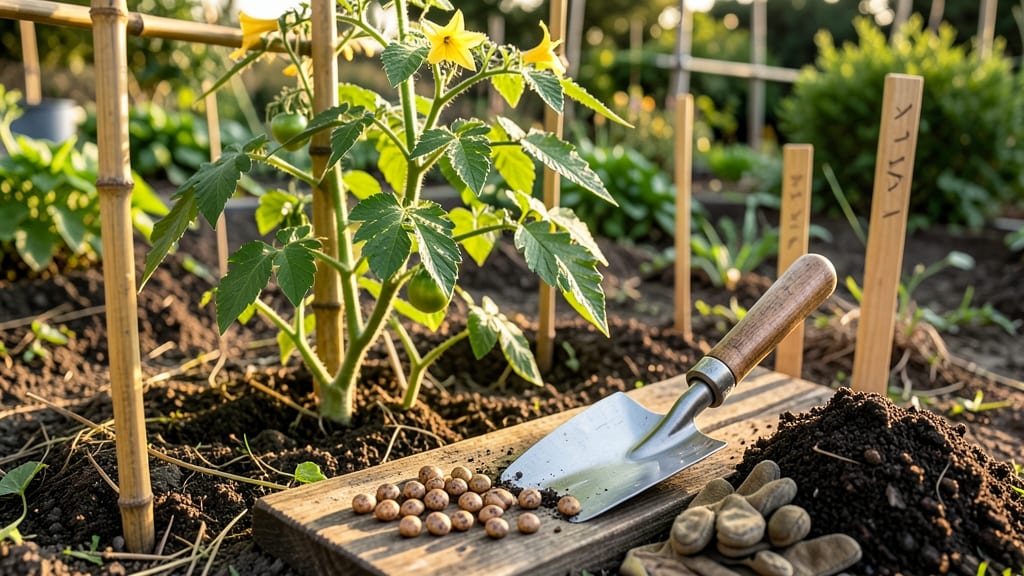
Planting beans with tomatoes isn't just clever—it’s a game-changer for your garden’s productivity. 🌱 I learned this the hard way when my tomatoes struggled with pests until I added pole beans nearby.
The beans climb the tomato stakes, fixing nitrogen in the soil while shading out weeds, and the tomatoes provide structure for the beans to grow upward. Together, they create a self-sustaining duo that outsmarts pests and maximizes space.
This pairing works best with bush or pole beans planted at the base of tomato stakes or cages. Start beans after the soil warms (around 60°F), and choose fast-maturing varieties like 'Blue Lake' or 'Kentucky Wonder' to avoid shading the tomatoes too early.
The key is timing: beans need consistent moisture, while tomatoes prefer slightly drier soil—balance is everything.
By mid-summer, you’ll see vibrant green beans climbing the stakes and heavy tomato fruit hanging below. The beans deter pests like aphids and whiteflies, while the tomatoes’ strong scent masks the beans’ scent from hungry beetles. It’s a foolproof way to double your harvest in the same footprint.
Works in containers too—just use a 5-gallon pot for each tomato plant and let the beans twine up. Perfect for small spaces, urban gardens, or anyone tired of underperforming tomato plants. Here’s how to make it work for you!
📚 In This Guide
- What you need
- Instructions
- Tips and common mistakes
- Wrapping up and next steps
What you need
- ● Tomato seeds or seedlings: Choose disease-resistant varieties like Roma or Cherry (3–5 plants per 10 sq ft).
- ● Bean seeds: Opt for bush beans (e.g., Blue Lake) or pole beans (e.g., Kentucky Wonder)—1–2 lbs per 10 sq ft.
- ● Compost or well-aged manure: 2–3 inches mixed into the top 6–12 inches of soil.
- ● Organic mulch: Straw or grass clippings (2–3 inches thick) to retain moisture and suppress weeds.
- ○ Balanced fertilizer (10-10-10 or 5-5-5): 1–2 lbs per 100 sq ft (optional but helpful for nutrient boost).
- ● Garden trowel or shovel: For digging and planting.
- ● Pruners: Sharp, clean pair for trimming tomato suckers or trellis prep.
- ○ Trellis or stakes (3–5 ft tall): 1–2 per tomato plant (optional but recommended for pole beans).
- ● Watering can or hose with gentle nozzle: Avoid disrupting soil around seedlings.
- ● Garden gloves: Protect your hands from thorns and dirt.
- ● Sunny location: At least 6–8 hours of direct sunlight daily.
- ● Well-draining soil: pH 6.0–7.0 (test kit recommended).
- ● Spacing: Plant Spacing (inches) Tomatoes 18–24" apart (rows 3–4 ft apart) Beans (bush) 4–6" apart (rows 18–24" apart) Beans (pole) 6–8" apart (trellis required)
- ● Water source: Consistent access for deep watering (1–1.5 inches per week).
- ● Plant beans after the last frost date—tomatoes are frost-sensitive!
- ● Interplant beans between tomato rows to save space and improve nitrogen levels.
- ○ Use mycorrhizal fungi (optional) to enhance root health for both plants.
Step-by-step guide for planting beans with tomatoes
This classic companion planting strategy boosts yields and deters pests—here's how to pair them successfully.
🌱 Step 1: Prepare the Planting Site for Both Crops
Choose a location with full sun (at least 6-8 hours daily) and well-draining soil with a pH of 6.0-7.0. Tomatoes need rich, fertile soil, while beans thrive in slightly poorer conditions. I always amend the bed with 2-3 inches of compost mixed into the top 6 inches of soil before planting.
For tomatoes, incorporate 1-2 cups of balanced organic fertilizer (like 5-5-5) per plant. For beans, which fix their own nitrogen, simply work in 1 inch of compost—no additional fertilizer is needed. This prevents nitrogen competition between the two plants.
Here's the thing—beans actually improve soil for tomatoes by adding nitrogen. I like to plant beans on the north side of tomato plants to take advantage of their shade tolerance while still letting tomatoes get full sun exposure.
🌿 Step 2: Plant Tomatoes First at Proper Spacing
Plant tomato seedlings 24-36 inches apart in rows 3 feet apart to allow airflow and prevent disease. Dig holes deep enough to bury ⅔ of the stem—this encourages strong root development. I always remove the lower leaves before planting so they won't rot underground.
Water deeply after planting to settle the soil around roots. The first 2-3 weeks are critical—keep soil consistently moist but never soggy. You'll know moisture is right when the soil feels like a damp sponge, not a dripping wet rag.
Real talk: Don't crowd tomatoes. Overcrowding leads to fungal diseases like early blight, which will ruin your harvest. I've learned this the hard way—space is worth the extra effort.
🌱 Step 3: Interplant Beans Between Tomato Plants
Wait 2-3 weeks after planting tomatoes before adding beans. This gives tomatoes time to establish roots. Plant bush beans 4-6 inches apart in rows 18-24 inches apart, or pole beans 3-4 inches apart near sturdy supports. I like to plant beans in a checkerboard pattern between tomato plants to maximize space.
Plant seeds 1 inch deep—beans need light to germinate, so don't bury them too deeply. Water gently after planting to settle the soil without disturbing seeds. You'll see tiny sprouts emerge in 7-14 days, depending on your climate.
This is the moment that matters: The beans will climb tomato plants naturally, creating a living trellis. If you're using pole beans, provide a separate trellis to avoid overburdening tomato stems.
☀️ Step 4: Maintain Watering and Provide Support
Water the pair 1-2 inches per week, directing moisture at the base of plants. Tomatoes need consistent moisture, while beans prefer slightly drier conditions. I use drip irrigation to avoid wetting leaves, which prevents fungal diseases like early blight on tomatoes.
As beans grow, they'll need support. For bush beans, a low cage works fine. For pole beans, install 5-6 foot tall trellises near tomato plants. I like to weave bean vines through tomato plants lightly to create a natural living fence—just don't let them smother the tomatoes.
Watch for signs of stress: Wilting tomato leaves or yellowing bean leaves signal overwatering or underwatering. Adjust based on soil moisture—stick your finger 1 inch deep to check.
✂️ Step 5: Prune and Harvest for Maximum Yield
Prune tomato suckers (the shoots that grow in the leaf axils) regularly to direct energy to fruit production. For beans, harvest every 2-3 days once pods form—this encourages continuous production. I always pick beans when they're firm and fully colored but before they get too large.
The real magic happens when you harvest both crops together: Tomatoes ripen faster with beans nearby, and beans produce more pods when nitrogen levels are balanced. You'll notice tomatoes stay healthier and beans grow bushier than when planted alone.
Don't skip this (I learned the hard way): Remove any diseased leaves immediately. Beans are less susceptible to tomato diseases, but they can still catch fungal spores if left unchecked.
Tips & tricks for perfect companion planting of beans and tomatoes
These garden-smart strategies will help you maximize yields while keeping pests at bay—no guesswork required.
Sunlight Strategy: While both plants thrive in full sun, tomatoes need that 6-8 hours daily without compromise. Position beans on the north side of tomato plants to take advantage of their shade tolerance while still letting tomatoes bask in direct sunlight. This creates a natural microclimate where beans get partial shade during peak afternoon heat, reducing stress on both plants.
Soil Preparation Secret: The key difference between tomato and bean soil needs is all in the nitrogen. Tomatoes crave that 1-2 cups of balanced fertilizer per plant, while beans actually fix their own nitrogen—so just 1 inch of compost is perfect. I always mix compost into the top 6 inches of soil and let it sit for a week before planting. This gives beneficial microbes time to activate, creating the ideal foundation for both crops.
Planting Timing: That 2-3 week gap between planting tomatoes and beans isn't just arbitrary—it's biological. Tomatoes need time to establish their root systems before beans arrive. During this period, I often plant fast-growing radishes or lettuce in the empty spaces. These quick crops help break up soil compaction and mark where beans will eventually go, creating a more organized planting scheme.
Harvest Hack: The 2-3 day harvest window for beans might seem tight, but it's crucial for continuous production. I set a timer on my phone for every third day as a reminder. For tomatoes, focus on harvesting when they're fully colored but still firm—this prevents overripe fruit from attracting pests that could spread to your bean plants. A quick visual check: Tomatoes should have a slight give when gently squeezed near the stem.
Pro Tips for Planting Beans With Tomatoes
- These garden-smart strategies will help you maximize yields while keeping pests at bay—no guesswork required.
- Sunlight Strategy: While both plants thrive in full sun, tomatoes need that 6-8 hours daily without compromise.
- Soil Preparation Secret: The key difference between tomato and bean soil needs is all in the nitrogen.
Frequently asked questions
Got questions about pairing beans and tomatoes in your garden? Here are some of the most common concerns—and their answers—to help you grow like a pro!
Can beans and tomatoes grow together in containers?
Just choose a large container (at least 12–15 inches deep) with good drainage. Place the tomato plant in the center and nestle 2–3 bean plants around its base. Use a lightweight potting mix rich in compost to support both plants’ needs. Pro tip: Add a trellis inside the container to keep beans climbing and save space!
What’s the best time to plant beans near tomatoes?
Plant bush beans or pole beans after the last frost when soil temps hit 60°F+—usually 2–4 weeks after transplanting tomato seedlings (or 1–2 weeks after direct-sowing tomatoes). This timing ensures tomatoes have a head start while beans avoid cold stress. Hot tip: Succession plant beans every 2 weeks for continuous harvests!
Will beans protect tomatoes from pests naturally?
Yes! Beans attract beneficial insects like ladybugs and parasitic wasps that prey on tomato pests (e.g., hornworms, aphids). However, they won’t repel everything—watch for Mexican bean beetles, which can harm both plants. Handpick pests early or use neem oil if needed. Bonus: Interplanting with basil or marigolds adds extra pest-deterrent power!
Can I plant green beans with cherry tomatoes instead?
Cherry tomatoes work even better with beans than larger varieties! Their compact size saves space, and the beans’ nitrogen boosts flavor and yield. Just ensure cherry tomatoes get full sun (6+ hours) while beans tolerate partial shade. Warning: Avoid staking cherry tomatoes too close—beans need room to sprawl or climb.
Why are my tomato leaves yellowing near the beans?
Yellowing leaves often signal overwatering, nutrient competition, or fungal issues (like early blight). Check soil moisture—beans need consistent water, but tomatoes hate soggy roots. Add a balanced fertilizer (like 10-10-10) and improve airflow by spacing plants 18–24 inches apart. Quick fix: Mulch with straw to retain moisture and deter soil-borne diseases.
Are there other veggies I can plant with beans instead of tomatoes?
Beans pair well with corn, carrots, cucumbers, and squash—all “Three Sisters” companions! Avoid planting with onions, garlic, or fennel, which stunt bean growth. For a tomato alternative, try basil or lettuce; they share similar care needs and deter pests. Fun fact: Beans also thrive near roses (they improve soil health without competing for nutrients!).
Wrapping up and next steps
Planting beans with tomatoes is a win-win for your garden—beans enrich the soil, tomatoes provide shade, and both thrive together! 🌱 This dynamic duo not only saves space but also boosts yields and deters pests naturally.
Whether you're a beginner or seasoned gardener, give this companion planting a try—your future harvest will thank you!
Ready to grow? Start small with a test patch this season, observe how your plants interact, and expand next year. Happy gardening!