
Vegetables
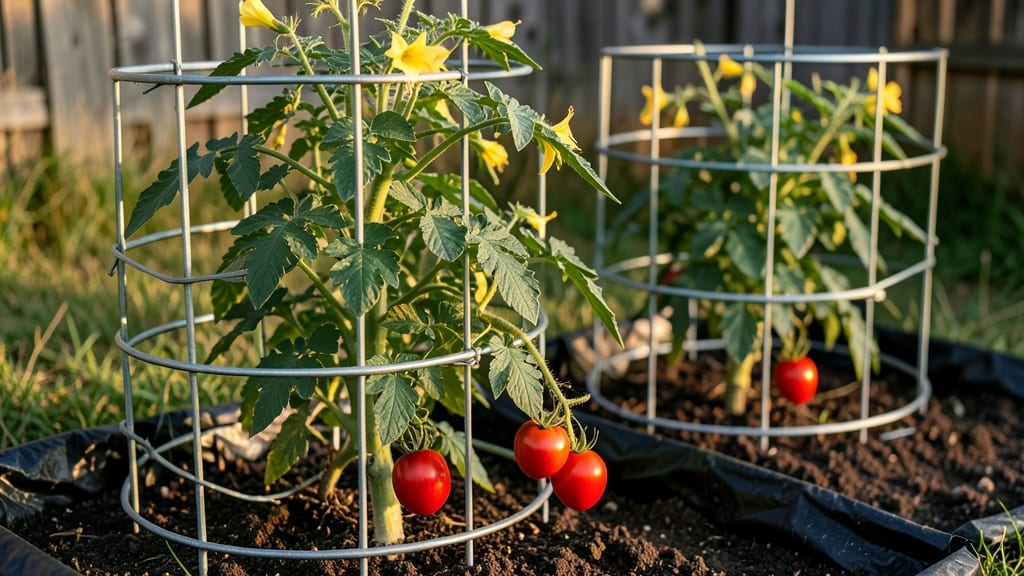
Round tomato cages aren't just supports—they're game-changers for small gardens where every inch counts. I used them last summer to grow six plants in a 4x4-foot space, and the difference was night and day compared to flimsy stakes or sprawling vines on the ground.
These circular designs hold 40-50 pounds of fruit without bending, making them ideal for heirlooms like 'Brandywine' or 'Cherokee Purple' that weigh down traditional cages.
The right size matters more than you'd think. A 4-foot-tall cage works for most determinate varieties, while indeterminate vines need 6-foot cages to climb properly.
I pair mine with tall, narrow containers to maximize vertical space, and the rounded shape lets me tuck them neatly into garden corners or along fences. The sturdy wire construction also resists collapsing when heavy tomatoes press against it—something my old plastic cages couldn't handle.
What you end up with is a neat, productive garden where tomatoes grow upward instead of outward. The vines stay off the ground, reducing disease risk, and you can walk between rows without tripping over sprawling plants.
Plus, the circular shape creates a natural trellis effect that looks intentional in any garden design, whether you're going for rustic charm or modern minimalism.
Works equally well in raised beds, containers, or in-ground gardens, and they're reusable for years. The key is choosing the right height for your varieties and securing them firmly at planting time.
Here's how to make the most of them without common mistakes—like underestimating vine growth or skipping the initial tying process.
📚 In This Guide
- What you need
- Instructions
- Tips and common mistakes
- Wrapping up and next steps
What you need
- ● 1 roll of galvanized wire mesh (18–22 gauge, 1" x 2" mesh size, 25–50 feet long—depending on cage height). Pro tip: 💡 Galvanized wire resists rust and lasts seasons!
- ● Wire cutters (for clean cuts and shaping).
- ● Heavy-duty gloves (to protect hands from sharp wire edges).
- ● Measuring tape or ruler (to ensure even spacing).
- ● Zip ties or wire twist ties (to secure joints—10–20 per cage).
- ○ Optional but handy: A staple gun (for attaching mesh to a base, like a wooden ring).
- ● Plastic-coated wire (if you want a gentler touch for vines).
- ● A helper (for holding wire while you work—teamwork makes the dream work! ✨).
- ● A flat, stable workspace (like a table or clean ground).
- ● Basic wire-bending skills (or patience to practice—no pressure!).
- ● Time to spare (about 30–60 minutes per cage, depending on complexity).
How to build sturdy round tomato cages for heavy vines
These simple, space-saving cages handle 50-pound tomatoes without bending—here's exactly how to construct them.
Gather Materials for Four Sturdy Cages
You'll need four 4-foot lengths of 1-inch galvanized pipe (or PVC pipe) and 16 feet of 12-gauge wire fencing (1 foot wide). The pipe forms the vertical support while the wire creates the circular framework. I use galvanized steel because it won't rust when exposed to rain or soil splatter—critical for long-term durability.
Cut the pipe into four 3-foot sections (this accounts for the 1-foot buried depth). For the wire, cut four 4-foot lengths (each will form one cage's circular base) and four 2-foot lengths (for the top ring). Mark each piece clearly with a paint pen to avoid mixing them during assembly.
Assemble the Cage Framework
Start by bending each 4-foot wire length into a 24-inch diameter circle (about the width of a standard tomato plant at maturity). Secure the ends with two wire twists on each side to prevent unraveling. This forms the base ring. Repeat for all four cages.
Next, create the top ring by bending each 2-foot wire length into a 12-inch diameter circle. These smaller rings will sit at the very top of the cage to provide stability. Attach the top ring to the pipe using heavy-duty zip ties (three per cage). Position it 4 inches below the pipe's top to create a sturdy upper frame.
Attach the Vertical Supports
Insert one 3-foot pipe section into the center of each base ring, ensuring it stands vertically and extends 1 foot above the top ring. Use four zip ties per cage—two at the base ring level and two at the top ring level—to secure the pipe firmly. The pipe should be flush with the wire on all sides for even weight distribution.
Test the stability by gently pushing each cage side-to-side. If it wobbles, add an extra zip tie at a 45-degree angle from the base to the top ring. This diagonal support prevents leaning, especially important in windy conditions. Bury the bottom 12 inches of the pipe when planting to anchor the cage deeply into the soil.
Weave the Vertical Supports for Vine Guidance
Cut four 3-foot lengths of wire (from your remaining fencing) to create the vertical spokes. Bend each length into a U-shape, with the straight sections measuring 24 inches (matching the base ring diameter). Insert the U-shaped wire into the base ring, positioning it vertically and securing it with two zip ties—one at the base and one at the top ring.
Repeat this for four spokes per cage, spacing them 90 degrees apart around the pipe. This creates a spiderweb-like structure that guides vines upward while distributing weight evenly. The vertical wires should not touch the pipe—leave a 1-inch gap to prevent rubbing and rust.
Reinforce and Bury for Long-Term Stability
Before planting, bend the base ring's wire outward slightly at the bottom to create four small "feet" that dig into the soil. This prevents the cage from sinking unevenly. Wrap the entire cage in landscape fabric (secured with zip ties) to protect the wire from sharp soil particles and extend its lifespan.
When transplanting your tomato, bury the cage up to the base ring—this ensures the pipe is fully anchored and won't tip over as the plant grows. Water the soil around the buried pipe to compact it slightly, creating a stable foundation. Your cages are now ready to support heavy fruit loads without bending.
Tips & tricks for building sturdy round tomato cages
These practical insights will help you construct cages that truly stand the test of time—and tomatoes.
Material Selection: While galvanized pipe is ideal for durability, PVC pipe works perfectly for a lighter, budget-friendly alternative. Just be aware that PVC won't handle the same weight as steel over time. For the wire, 12-gauge fencing provides the best balance of flexibility and strength—anything heavier will be difficult to bend, while lighter gauges may not support heavy vines. I've found that using pre-cut pieces from a hardware store eliminates measurement errors and saves time during assembly.
Precision in Bending: Creating those 24-inch base rings and 12-inch top rings requires consistent pressure. Use a sturdy workbench or table to bend the wire against, and apply even pressure with pliers to maintain perfect circles. The key is to bend gradually—too much force at once can cause the wire to kink or break. For the vertical spokes, maintain that 1-inch gap from the pipe to prevent metal-on-metal contact that could lead to rust over time.
Zip Tie Strategy: Heavy-duty zip ties are your best friend here, but don't skimp on quantity. Use the full four zip ties per cage as specified—two at the base and two at the top—to ensure maximum stability. When adding that extra diagonal zip tie for wobbly cages, position it at a 45-degree angle from the base ring to the top ring. This creates a triangular support system that dramatically improves wind resistance. I've seen cages collapse in storms where this diagonal support was omitted.
Soil Preparation: Before burying, loosen the soil around where the pipe will go to create a clean, deep hole. Pack the soil firmly around the buried portion using your hands or a tamping tool—this creates a solid anchor. For particularly heavy tomato varieties like beefsteak, consider adding a small amount of gravel around the buried pipe to further stabilize the base. The goal is to make the cage feel like it's part of the earth itself, not just resting on top.
Pro Tips for Round Tomato Cages
- These practical insights will help you construct cages that truly stand the test of time—and tomatoes.
- Material Selection: While galvanized pipe is ideal for durability, PVC pipe works perfectly for a lighter, budget-friendly alternative.
- Precision in Bending: Creating those 24-inch base rings and 12-inch top rings requires consistent pressure.
Frequently asked questions
Got questions about round tomato cages? You’re not alone—gardeners love these space-saving supports, but they come with a few curveballs! Here’s what you need to know before diving in.
What’s the best time to install round tomato cages?
Install your round tomato cages at planting time—whether you’re transplanting seedlings or sowing directly. For heavy varieties like beefsteaks, add cages after the first true leaves appear to avoid disturbing roots. If using them for indeterminate tomatoes, secure them early to prevent vine damage as they grow. Pro tip: Bury the bottom 6–8 inches of the cage for stability!
Can I reuse round tomato cages year after year?
Round tomato cages are highly durable and can last 5–10+ years with proper care. After the season, hose them down, let them dry, and store them in a dry place. If rust appears, scrub with a wire brush or spray with vinegar. Avoid leaving them in damp soil over winter to prevent corrosion.
Are round tomato cages better than stakes or trellises?
It depends on your space and tomato type! Round cages are ideal for compact gardens because they:
- Save space (no sprawling vines).
- Support heavy fruit without toppling.
- Reduce disease risk by improving airflow.
Why are my tomatoes falling through the round tomato cage?
This usually happens when:
- The cage isn’t buried deep enough (dig 6+ inches).
- It’s overloaded—prune vines to reduce weight.
- The cage is too small for your tomato variety (e.g., 4-foot cages for 6-foot plants).
Are DIY round tomato cages cheaper than buying them?
Yes! DIY options like welded wire mesh or plastic-coated wire cost $5–$15 per cage vs. $15–$30 for store-bought. Use:
- 1/2-inch hardware cloth (cut into circles, bend into cages).
- Reinforced window screen (cheap but less sturdy).
- PVC pipes + zip ties (budget-friendly but less airflow).
Wrapping up and next steps
Round tomato cages are a game-changer for gardeners looking to grow thriving, space-efficient tomato plants! 🌱 With their sturdy design and easy assembly, they provide the perfect support for heavy vines while keeping your garden organized.
Whether you're a beginner or a seasoned pro, these cages make tomato gardening simpler and more rewarding.
Ready to elevate your gardening game? Grab your materials and start building your round tomato cages today! Your future tomatoes will thank you for the extra care—and so will your garden’s layout. Happy planting! 🌿