
Vegetables
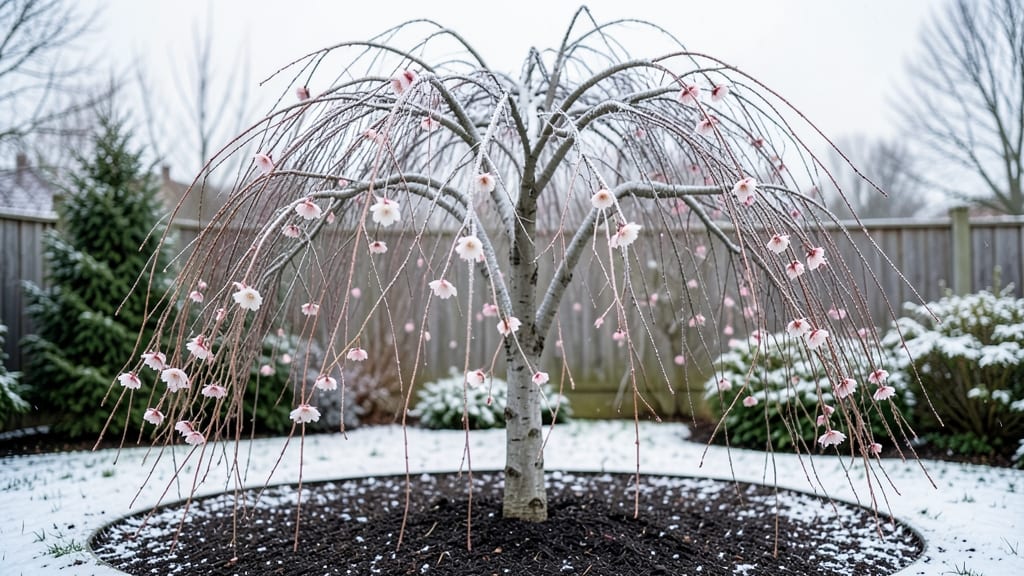
Your weeping cherry’s winter magic starts with protecting its delicate branches from heavy snow. ✨ The Snow Fountain variety thrives in cold climates because of its graceful habit and frost-resistant bark—but it still needs your help to keep its cascading branches intact.
I’ve learned the hard way that ignoring winter care means broken limbs and lost shape by spring.
First, wrap young trees in burlap or use tree guards to shield them from snow buildup, which can snap branches under weight. Mature trees benefit from light pruning in late winter (after the worst cold passes) to remove any damaged wood and encourage fresh growth.
Watering isn’t usually needed in winter, but if the ground stays frozen for months, a deep soak in early spring helps roots wake up faster.
What makes this tree special? Even when bare, its peeling bark adds texture, and any lingering berries or buds create winter interest. Snow clings beautifully to the weeping branches, turning your yard into a frosty waterfall.
With the right care, you’ll have a tree that’s just as stunning in January as it is in June.
For extra protection in icy climates, stake the branches gently to prevent them from bending under snow. And don’t prune too late—wait until late winter when new growth signals the tree’s ready to shape up for spring. A little effort now means years of effortless winter beauty.
📚 In This Guide
- What you need
- Instructions
- Tips and common mistakes
- Wrapping up and next steps
What you need
- ● Weeping Cherry Tree (Prunus subhirtella or Prunus serrulata 'Pendula') – Choose a 3-5 gallon container-grown specimen (10-15 ft mature height) for best winter resilience.
- ● Well-draining soil mix – 60% native soil, 30% compost, and 10% perlite or sand (for aeration). Pro tip: Test soil pH (aim for 5.5–7.0).
- ● Slow-release fertilizer – 10-10-10 NPK blend (1 lb per tree). Apply in early spring and fall.
- ● Mulch (cedar or pine straw) – 2-3 inches thick (preserves moisture and insulates roots).
- ○ Drip irrigation system – Optional but ideal for winter hydration (set to shallow, frequent cycles).
- ● Shovel & garden fork – For digging and loosening soil (borrow or rent if needed).
- ● Pruning shears – Sharp, sterilized shears (size 8-10 inches) for shaping and winter cleanup.
- ● Garden gloves – Heavy-duty, waterproof pair (to protect against thorns and cold).
- ○ Staking kit (optional) – 2-3 wooden stakes + flexible ties (if planting in windy areas).
- ● Frost cloth (lightweight) – 30-50% shade cloth (for young trees in harsh winters).
- ● Sunlight & space – Full sun (6+ hours/day) and 15-20 ft diameter clearance for mature growth.
- ● Anti-desiccant spray – Horticultural oil or wax (applied in late fall to prevent leaf burn).
- ○ Tree wrap (optional) – Burlap or specialized wrap (for trunk protection in sub-freezing temps).
- ● Snow removal tool – A broom or rake (to gently clear heavy snow from branches).
How to care for a weeping cherry tree in winter
Winter transforms your Snow Fountain weeping cherry into a stunning, frosted sculpture—but only if you take these simple steps.
☀️ Step 1: Protect Against Heavy Snow Load
When snow accumulates on branches, the weight can snap delicate weeping limbs. I always check the tree after each storm and gently brush off snow with a soft broom or my hands. Start at the lowest branches and work upward to avoid damaging the structure.
For trees in high-snowfall areas, wrap the main trunk with tree wrap to prevent rodent damage and sun scald. Apply it loosely—too tight and you'll restrict growth. The goal is to mimic the tree's natural bark texture while shielding it from winter elements.
💧 Step 2: Water Deeply Before Ground Freezes
Weeping cherries need consistent moisture to survive winter. Water the tree deeply 2-3 weeks before the first hard freeze—this gives roots time to absorb moisture before the ground freezes. You'll know it's enough when water drains 6-8 inches deep.
I always water in the late afternoon so the soil has time to absorb before evening temperatures drop. Mulch the base with 3-4 inches of organic mulch (like shredded bark) to insulate roots and retain moisture. Keep mulch 6 inches away from the trunk to prevent rot.
✂️ Step 3: Prune Dead or Damaged Branches Early
Winter is the best time to prune weeping cherries because the tree is dormant. Remove any branches that died over winter or were damaged by snow/ice. Use clean, sharp pruners to make cuts just outside the branch collar—the swollen area where the branch meets the trunk.
Here's the thing—don't over-prune. Weeping cherries have a natural, graceful shape, and removing too many branches can disrupt their elegant form. Limit cuts to 10-15% of the tree's total branches to maintain its signature cascading silhouette.
🪴 Step 4: Shield from Windburn and Sun Scald
Exposed bark is vulnerable to winter sun and wind. If your tree faces south or west, wrap the trunk with lightweight burlap or tree wrap to protect it from harsh afternoon sun. Remove the wrap in early spring before buds swell.
For extra protection, I place a windbreak (like a temporary fence or evergreen barrier) on the tree's windward side. Weeping cherries have thin branches that can dry out in winter winds. You'll notice healthier foliage in spring if you shield the tree from winter's harshest elements.
🌱 Step 5: Monitor for Pest and Disease Signs
Winter isn't pest-free—check for signs of scale insects or cankers on branches. Scale appears as small, bumpy growths on bark, while cankers look like sunken, dead patches. Prune out any infected branches immediately and sterilize your tools with rubbing alcohol.
If you spot pests, don't treat until spring—most winter sprays are ineffective when the tree is dormant. Instead, note the problem areas and be ready to act early in the season. A healthy winter means fewer pest problems when spring arrives.
Tips & tricks for winterizing your weeping cherry tree
These simple but game-changing strategies will help your Snow Fountain weeping cherry survive—and even thrive—through winter's harshest conditions.
Snow Removal Technique: When clearing snow from branches in Step 1, work from the bottom up to prevent damage to the delicate weeping structure. Use a soft-bristled broom or even your hands—never metal tools that can scratch the bark. For heavy snow, gently shake branches to dislodge accumulation rather than scraping. Remember, these graceful limbs can't handle sudden weight shifts, so patience is key.
Timing Your Deep Watering: The 2-3 week window before freeze-up in Step 2 is critical—don't wait until the last minute! Test soil moisture by pushing a screwdriver into the ground. If it goes in easily, water again. For clay soil, water more frequently but less deeply (4-6 inches) to prevent waterlogging. A soil moisture meter helps track progress without guesswork.
Pruning Precision: In Step 3, when making those clean cuts outside the branch collar, angle your pruners slightly upward to prevent water from pooling on the wound. For larger branches, use three-step pruning: first make an undercut, then a top cut, and finally remove the stub. This method reduces tearing and promotes faster healing. And always sterilize your tools between cuts to prevent disease spread.
Winter Protection Layering: Combine the tree wrap from Step 1 with the mulch from Step 2 for maximum protection. Use a breathable wrap that allows some airflow to prevent moisture buildup. For extra insulation in cold climates, add a layer of straw mulch around the base after the initial organic mulch. This double-layer system creates a microclimate that shields roots from extreme temperature swings.
Pro Tips for Snow Fountain Weeping Cherry In Winter
- These simple but game-changing strategies will help your Snow Fountain weeping cherry survive—and even thrive—through winter's harshest conditions.
- Snow Removal Technique: When clearing snow from branches in Step 1, work from the bottom up to prevent damage to the delicate weeping structure.
- Timing Your Deep Watering: The 2-3 week window before freeze-up in Step 2 is critical—don't wait until the last minute!
Frequently asked questions
Got questions about creating a snow fountain weeping cherry display that thrives in winter? You’re not alone!
Here are answers to the most common queries—from timing to troubleshooting—so you can craft your frost-defying masterpiece with confidence.
Can weeping cherry trees survive heavy snowfall?
Yes! Weeping cherries are hardy and can handle snow, but their branches may bend under weight. To prevent damage, gently shake off snow or install a lightweight support (like a bamboo stake) if your tree is young or top-heavy. Prune in late winter to encourage strong growth before spring.
When is the best time to plant a weeping cherry for winter interest?
Fall is ideal—plant 4–6 weeks before the first frost (typically October in most U.S. zones). This gives roots time to establish before winter while avoiding transplant shock. For container-grown trees, wait until spring (after last frost) to minimize stress.
What’s the secret to making the “snow fountain” effect look magical?
Combine three layers:
- Tree placement: Position near a light source (snow reflects moonlight beautifully!).
- Snow texture: Use a mix of fine (for draping) and coarse snow (for contrast).
- Accents: Add white gravel or glittery pinecones at the base for extra sparkle.
Why did my weeping cherry’s branches turn brown this winter?
Brown branches usually mean winter burn (sun scald) or drought stress. To fix it:
- Apply anti-desiccant spray (like Wilt-Pruf) in late fall.
- Mulch heavily (3–4 inches) to protect roots.
- Avoid pruning until late winter—brown tissue won’t regrow.
Are there alternatives to weeping cherry for winter snow displays?
Try these low-maintenance options:
Plant
Why It Works
Dwarf Alberta Spruce
Holds snow well; dense branches create a natural fountain shape.
Japanese Maple (Bloodgood)
Striking red foliage contrasts with snow; compact growth.
Boxwood (Buxus)
Evergreen and highly sculptable—prune into a weeping form!
Wrapping up and next steps
The snow fountain weeping cherry in winter isn’t just a fleeting seasonal wonder—it’s a year-round statement of resilience and beauty. With the right care, this frost-defying tree transforms your landscape into a serene, ever-evolving masterpiece, even when snow blankets the ground.
Whether you’re a seasoned gardener or a curious beginner, its adaptability makes it a joyful addition to any outdoor space.
Ready to bring this magical touch to your garden? Start by sketching your vision—will it be a standalone centerpiece or part of a winter wonderland? Then, gather your tools and dive in! The snow fountain weeping cherry awaits to turn your winter dreams into reality. 🌸❄️