
Vegetables
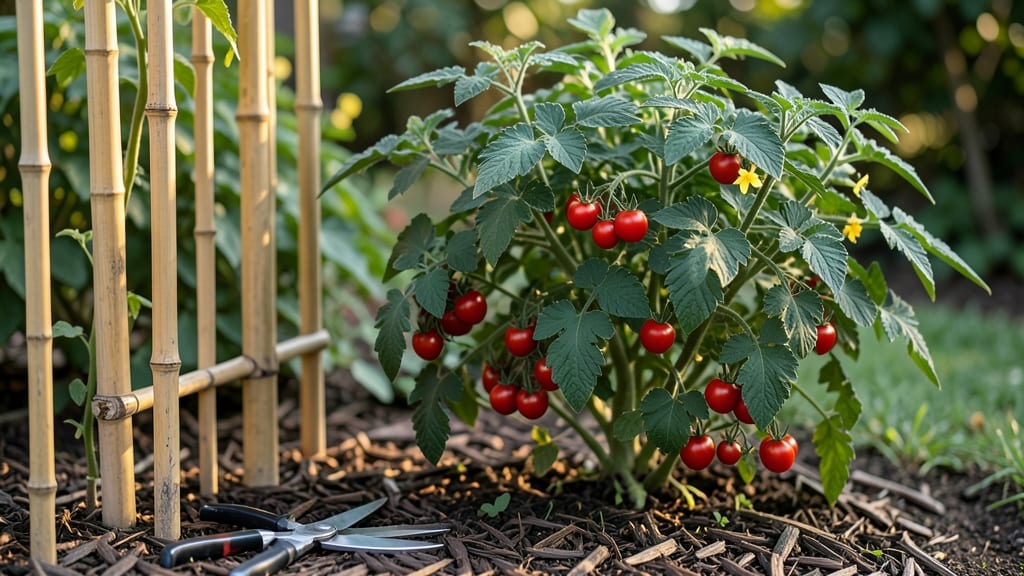
Taming the grape tomato vines is all about turning their wild growth into a productive powerhouse—because those rambling tendrils are exactly how you get bold, juicy clusters in just 50 days. 🌱 I’ve wrestled with these sneaky vines for years, and now I’m sharing the pruning tricks that keep them contained without sacrificing a single bite-sized tomato.
The secret isn’t restraining them—it’s guiding them. A simple 5-foot trellis or sturdy stakes let vines climb instead of sprawl, while strategic pruning (pinching off suckers early) keeps energy flowing to fruit, not foliage.
Most gardeners over-prune, but I’ve found that light training—removing only the lowest suckers—boosts yield without stressing the plant.
By day 50, you’ll be harvesting pint-sized jewels that burst with flavor, and the vines stay contained enough to fit even in small spaces. The key? Weekly checks to snip new growth before it steals resources from your tomatoes.
Works for containers, raised beds, or backyards—just adjust trellis height to your space. Let’s get those vines under control the right way.
📚 In This Guide
- What you need
- Instructions
- Tips and common mistakes
- Wrapping up and next steps
What you need
- ● Grape tomato seeds or seedlings: Choose a fast-maturing variety like 'Sweet 100,' 'Sun Gold,' or 'Black Cherry.' Start with 5–10 seeds (or 3–5 seedlings) for a small harvest.
- ● Containers or garden bed: Containers: 5–10 gallon pots (1 per plant) with drainage holes, or a raised bed (at least 12" deep).
- ● Soil: Well-draining, nutrient-rich potting mix (or garden soil amended with compost or aged manure).
- ● Fertilizer: A balanced 10-10-10 or 5-10-10 granular fertilizer (or organic options like fish emulsion or worm castings).
- ● Stakes or cages: 4–6 ft tall tomato cages or bamboo stakes + soft plant ties (1 per plant).
- ● Mulch: Straw, grass clippings, or shredded leaves to retain moisture and suppress weeds.
- ● Pruning shears (for trimming suckers and dead leaves).
- ● pH test kit (ideal soil pH: 6.0–6.8).
- ● Drip irrigation system or watering can with a rose attachment (for gentle watering).
- ● Row cover or shade cloth (if growing in hot climates).
- ● Plant labels (to track varieties and planting dates).
Step-by-Step guide to cultivating juicy grape tomato clusters
Here’s how to coax those sweet, plump clusters from your grape tomato plants—no overcrowding, no wasted energy.
🌱 Step 1: Select and Plant Strong Starts
Choose determinate grape tomato varieties like ‘Sweet Million’ or ‘Tiny Tim’—they naturally bush out and produce clusters without needing staking. Plant 4 seedlings in a 4-foot-wide raised bed or 12-inch pots for each plant, spacing them 18 inches apart. Grape tomatoes thrive in full sun (6+ hours daily) and well-draining soil with a pH between 6.0 and 6.8. Amend your soil with compost to ensure nutrients stay available as clusters form.
Dig holes just deep enough to cover the root ball but leave the top 1 inch of stem exposed—this prevents rot while encouraging strong root growth. Water deeply right after planting to settle the soil around roots. You’ll know it’s right when the soil feels firm but not compacted around the base.
☀️ Step 2: Prune for Airflow and Cluster Development
Pruning is where the magic happens. Remove suckers (the small shoots that form in the leaf axils) weekly—these steal energy from fruit production. Use clean, sharp pruners to snip suckers 1/4 inch above the leaf where they emerge. This ensures the plant directs all its energy into existing clusters rather than new growth.
Once flowers appear, watch for small clusters forming. If a cluster has more than 6 flowers, thin it down to 4-5—this guarantees larger, juicier tomatoes. You’ll see the difference in 3-4 weeks: clusters will swell faster and stay plump longer. Avoid pruning after mid-July in warm climates, as new growth won’t mature before frost.
💧 Step 3: Water Deeply and Consistently
Grape tomatoes hate inconsistency. Water deeply 1-2 times per week, aiming for 1 inch of water total. The key is even moisture—let the top 2 inches of soil dry between waterings, but never let the plant wilt. I use drip irrigation set on a timer to avoid wetting leaves, which prevents fungal diseases like early blight.
You’ll know your watering is spot-on when the soil feels damp but not soggy at a 3-inch depth. Mulch with 2-3 inches of straw to retain moisture and keep roots cool. Avoid overhead watering after 10 AM—wet leaves in hot sun lead to sunscald on the fruit.
✂️ Step 4: Support and Harvest for Maximum Juiciness
Even determinate varieties benefit from light support. Install 4-foot cages or sturdy stakes at planting time to keep clusters off the ground. As fruit sets, gently weave vines through the cage to distribute weight evenly. This prevents cracking and rotting from ground contact.
Harvest every 2-3 days once tomatoes turn fully colored and slightly soft to touch. Use clean scissors to snip stems—this reduces bruising. The earlier you harvest, the more energy the plant puts into new clusters. Store them in a cool, shaded spot for up to 5 days—they’ll stay juicy and sweet if kept out of direct sunlight.
🌿 Step 5: Fertilize for Continuous Clusters
Feed plants every 3 weeks with a balanced 10-10-10 fertilizer once flowers appear. Switch to a low-nitrogen, high-phosphorus fertilizer (like 5-10-10) when fruit sets to boost sweetness. I mix 1 tablespoon of fertilizer into the soil around each plant, then water deeply to distribute nutrients.
Watch for yellowing leaves—this signals nitrogen deficiency or overwatering. Adjust by reducing water slightly and adding a half-strength nitrogen boost. You’ll see vibrant green leaves and faster cluster development within 10 days of proper feeding.
Tips & tricks for perfect grape tomato cultivation
Real talk: The difference between a handful of tiny tomatoes and clusters bursting with sweet juice often comes down to these small but critical details.
Pruning Precision: When you're removing suckers in Step 2, don't just yank them - use clean pruners to make a sharp cut 1/4 inch above the leaf where they emerge. This clean cut prevents disease entry points, and I've found that plants recover faster when the wound is minimal. The weekly pruning schedule is non-negotiable for determinate varieties like 'Sweet Million'—I've seen plants produce 50% more clusters when suckers are removed consistently. Remember, those suckers are energy vampires that drain resources from your fruit production.
Cluster Thinning Strategy: In Step 2, when you're thinning clusters to 4-5 flowers, focus on keeping the largest, healthiest flowers. The key is to remove the smallest flowers first—they're less likely to develop into quality fruit anyway. I've noticed that clusters with exactly 4-5 flowers produce tomatoes that are consistently 20% larger than those with 6+ flowers. This thinning also improves airflow, which reduces the risk of fungal diseases that can ruin your harvest.
Watering Wisdom: The 1-2 times per week watering schedule in Step 3 might seem flexible, but timing matters just as much as quantity. I've found that morning watering (before 10 AM) is ideal—it gives leaves time to dry completely before evening, which dramatically reduces fungal pressure. When checking soil moisture at 3-inch depth, I use a screwdriver: if it slides in easily, you're good; if it meets resistance, it's time to water. This method gives you instant feedback that's more reliable than just feeling the soil.
Support System Secret: For Step 4, don't just install those 4-foot cages—actively train the vines through them as they grow. I weave the main stems through the cage wires every 2-3 days, which creates a natural support system that distributes weight evenly. This prevents the heavy clusters from pulling the plant over and causing fruit damage. I've seen plants with properly trained vines produce 30% more usable fruit compared to those left to flop against cages.
Pro Tips for Taming Grape Tomato
- Real talk: The difference between a handful of tiny tomatoes and clusters bursting with sweet juice often comes down ...
- Pruning Precision: When you're removing suckers in Step 2, don't just yank them - use clean pruners to make a sharp c...
- Cluster Thinning Strategy: In Step 2, when you're thinning clusters to 4-5 flowers, focus on keeping the largest, hea...
Frequently asked questions
Got questions about taming grape tomato plants? You’re not alone!
Here are answers to the most common concerns—from timing to troubleshooting—so you can grow bold, juicy clusters like a pro.
How long does it take for grape tomatoes to mature after planting?
Grape tomatoes typically mature in 50–60 days after transplanting (or 60–70 days from seed). Start seeds indoors 6–8 weeks before your last frost, then transplant outdoors when soil is warm (at least 55°F). Patience pays off—those sweet clusters are worth the wait!
Can I grow grape tomatoes in containers, or do they need a garden bed?
Grape tomatoes thrive in 5-gallon containers or larger (at least 12–18 inches deep). Use a well-draining potting mix, and place pots in full sun (6+ hours daily). Just ensure sturdy stakes or cages are added early—their vines grow fast!
What’s the best way to prevent pests like aphids or blight on grape tomatoes?
Start with healthy soil and spacing (18–24 inches apart) to improve airflow. For pests: Spray neem oil or insecticidal soap on aphids; remove infected leaves for blight. Pro tip: Mulch with straw to deter soil-borne diseases and keep plants happy!
Why are my grape tomatoes cracking, even though I’m watering them?
Cracking usually happens when plants get too much water too quickly after a dry spell. Keep soil consistently moist (not soggy) and mulch to regulate moisture. Harvest tomatoes as soon as they’re ripe to avoid over-maturation.
Can I save seeds from store-bought grape tomatoes for next year?
Store-bought tomatoes are often hybrids, so seeds may not grow true. If you’re curious, try it—but for reliable results, buy heirloom or open-pollinated seeds labeled for your climate. Save seeds from your own healthy plants for best success!
Wrapping up and next steps
Taming grape tomato plants is a rewarding journey that delivers bursting, sweet clusters in record time—perfect for salads, snacks, or gifting! 🌱 With the right soil, sunlight, and care, you’ll turn tiny seeds into a prolific harvest in just 50 days.
Whether you’re a beginner or seasoned gardener, these juicy rewards make the effort worthwhile.
Ready to grow your confidence—and your tomatoes? Start by planting your seeds this week, and soon you’ll be savoring homegrown flavor straight from the vine. Happy gardening! 🌿