
Vegetables
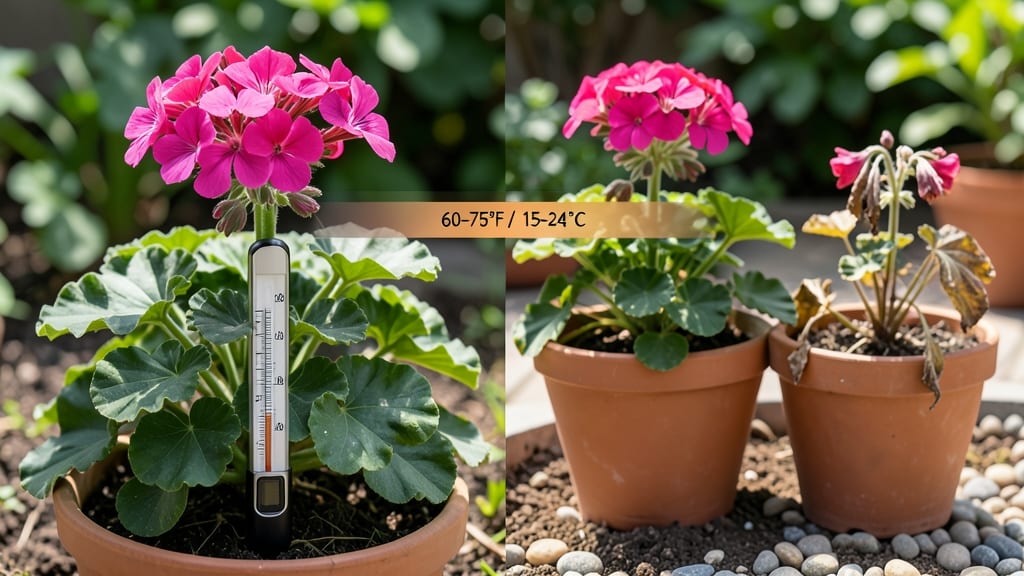
Geraniums thrive best when you nail the temperature for geraniums, ideally between 65°F and 75°F, where they burst into vibrant blooms and lush foliage. 🌸 I learned this the hard way when my first batch of geraniums wilted overnight after a sudden cold snap—turns out, they’re far more sensitive to temperature swings than I realized.
The key isn’t just avoiding frost or scorching heat; it’s creating consistent warmth that keeps them happy all season long.
Outdoor geraniums love basking in sunlight but need protection when temperatures dip below 50°F or climb above 90°F. If you’re growing them in pots, move them indoors during chilly nights or provide shade cloth during heatwaves.
Indoor geraniums, on the other hand, do best near sunny windows where temperatures stay steady—just avoid drafty spots or radiators that can stress their delicate leaves.
Watch for signs of temperature stress: drooping leaves, yellowing foliage, or buds that refuse to open. These are your geraniums’ way of saying, “It’s too hot or too cold!” Adjusting their environment—whether by relocating pots or adding a light layer of mulch—can turn things around in just a few days.
With the right balance, you’ll have blooms that last from spring until the first frost.
Whether you’re in a warm climate or a cooler region, geraniums adapt surprisingly well with a little extra care. The trick is observing their cues and making small adjustments before stress sets in.
Once you master their ideal temperature range, you’ll have geraniums that thrive year after year—no wilting in sight!
📚 In This Guide
- What you need
- Instructions
- Tips and common mistakes
- Wrapping up and next steps
What you need
- ● Thermometer (digital or analog): A reliable indoor/outdoor thermometer (range: 32°F to 104°F / 0°C to 40°C) to track temperatures accurately.
- ● Geranium plants: Healthy potted geraniums (Pelargonium species) in 6-inch to 10-inch pots with drainage holes.
- ● Well-draining potting mix: A lightweight, fast-draining blend (e.g., 60% peat moss, 30% perlite, 10% sand or vermiculite). 1 gallon per plant is ideal.
- ● Containers or pots: Terracotta or ceramic pots (preferred for breathability) with drainage holes. Size: 6"–12" diameter, depending on plant size.
- ○ Grow lights (LED or fluorescent): Optional but helpful for extending daylight (12–16 hours/day) in cooler climates. Choose full-spectrum bulbs (4000K–6500K).
- ● Heat mat or seedling mat: Useful for indoor setups to maintain soil temps above 60°F (15°C) in cooler rooms.
- ● Fan (small oscillating): Helps circulate air and prevent heat stress in high-temp zones (place on low setting).
- ● Mulch (organic, like straw or bark): 1–2 inches thick to regulate soil temperature and retain moisture.
- ● Spray bottle: For light misting to cool leaves on days above 85°F (29°C).
- ● A sunny location with at least 6 hours of direct sunlight daily (south-facing windows or outdoor spots).
- ● Access to water with room temperature (avoid cold water shocks!).
- ● Basic knowledge of geranium care (e.g., pruning, fertilizing schedules).
How to maintain perfect temperature for geraniums
Geraniums thrive in a narrow heat range—get this right, and you’ll see nonstop blooms all season.
☀️ Step 1: Understand Their Ideal Heat Range
Geraniums love 65-75°F during the day, with nighttime temperatures staying above 55°F. Below 50°F, growth slows dramatically, and buds may drop. Above 85°F, leaves scorch, and flowers fade fast. I’ve found that morning sun (when temps are cooler) is perfect for them—just avoid the harsh afternoon heat of summer.
Watch for signs: If leaves curl upward or take on a silvery cast, it’s too hot. Drooping or yellowing foliage means nights are too cool. Geraniums are tough, but they’re not heat-tolerant like succulents—they’ll tell you when they’re stressed.
🌿 Step 2: Protect Them in Extreme Weather
When temperatures creep above 80°F, move potted geraniums to partial shade or a covered patio. I use a sheer curtain draped over a trellis to filter direct sun—it keeps the roots cool while still letting light through. For in-ground plants, mulch heavily with 2-3 inches of organic mulch to insulate roots and retain moisture.
Frost is the real enemy: Geraniums die back at 32°F. If frost is forecast, bring containers indoors or wrap plants in frost cloth. I’ve dug up my favorite varieties and overwintered them in a bright, cool garage—no blooms, but they come back stronger in spring.
⏰ Step 3: Adjust Care for Seasonal Shifts
Spring and fall are the sweet spots for geraniums. In spring, when nights dip below 55°F, I add a light row cover at dusk to trap warmth. By summer, focus on afternoon shade and frequent watering—hot roots mean poor blooms. I water mine in the early morning to let soil dry slightly by evening, which prevents fungal issues.
In late summer, when temps rise, reduce fertilizer. Geraniums go semi-dormant in heat, and feeding them stresses them further. I switch to a diluted bloom booster only when temps drop below 78°F—that’s when they perk up again.
🪴 Step 4: Choose the Right Location for Stability
Geraniums hate temperature swings. A south-facing window works indoors, but avoid drafty spots near AC vents or heaters. Outdoors, plant them where they get morning sun and afternoon shade—like near a west-facing wall with afternoon relief. I’ve seen geraniums in full sun wilt by noon, while those in filtered light keep blooming until evening.
Containers heat up faster than garden beds. Use terracotta pots—they breathe and dissipate heat better than plastic. If your patio gets scorching, elevate pots on bricks or a stand to improve airflow underneath. A fan on low can also help circulate air without stressing the plants.
✂️ Step 5: Prune for Better Heat Tolerance
Overgrown geraniums suffer more in heat. Pinch back leggy stems in early summer to encourage bushier growth, which stays cooler. I cut back stems to just above a leaf node, and within weeks, new side shoots fill in—these are more heat-resistant than tall, thin stems.
Deadhead spent blooms regularly, even in heat. It sounds counterintuitive, but removing faded flowers redirects energy to root strength, not seed production. I do this in the morning when temps are mildest, and the plants bounce back faster than if I wait for afternoon heat.
Tips & tricks for perfect geranium temperature management
Mastering geranium care comes down to understanding their delicate temperature needs—here's how to keep them thriving without the guesswork.
Heat Sensitivity: The 65-75°F daytime range is non-negotiable for peak blooming. I've seen geraniums in hotter climates struggle when temps climb above 80°F—their leaves develop a silvery sheen, and buds drop like flies. If your forecast shows afternoon highs near 85°F, move containers to partial shade by 11 AM. A simple trick: Place them near a west-facing wall where they get morning sun but afternoon relief. The key is gradual shade transition—don't shock them with sudden darkness.
Nighttime Protection: Those 55°F minimum nighttime temps are critical. I learned this the hard way when my geraniums developed yellowing leaves after a cold snap—turns out they were sitting at 50°F overnight. For container plants, use frost cloth or even a lightweight blanket draped loosely over them. For in-ground plants, focus on the 2-3 inches of organic mulch mentioned earlier—it acts like a thermal blanket for roots. Pro tip: Check nighttime temps using a cheap outdoor thermometer for a few days to understand your microclimate.
Seasonal Care Adjustments: The 78°F threshold for fertilizer is your summer guide. When temps stay above this for more than a week, geraniums go semi-dormant. I've found that switching to a diluted bloom booster only when temps drop below 78°F prevents stress. Another seasonal trick: In spring, if nights dip below 55°F, add a row cover at dusk—it traps just enough warmth to prevent stunted growth. The difference between a thriving plant and one struggling to bloom often comes down to these small temperature adjustments during transitional seasons.
Equipment Upgrade: A soil thermometer is your new best friend. I use one to check root zone temps—geraniums prefer 60-65°F at the soil level. If your pots are getting too hot (common with black containers), elevate them on bricks or use terracotta instead. For extreme heat, a small fan on low circulation helps without damaging delicate foliage. The goal is to mimic their natural preference for stable, moderate temperatures rather than drastic fluctuations.
Pro Tips for Temperature For Geraniums
- Mastering geranium care comes down to understanding their delicate temperature needs—here's how to keep them thriving without the guesswork.
- Heat Sensitivity: The 65-75°F daytime range is non-negotiable for peak blooming.
- Nighttime Protection: Those 55°F minimum nighttime temps are critical.
Frequently asked questions
about maintaining the perfect temperature for geraniums can help you troubleshoot issues and keep your plants blooming beautifully. Here are some common queries answered for your convenience:What’s the ideal temperature range for geraniums indoors vs. outdoors?
Geraniums thrive in 60–75°F (15–24°C) during the day and 50–55°F (10–13°C) at night. Indoors, keep them away from drafts or heating vents, while outdoors, they handle heat well but may struggle below 50°F (10°C). Use a thermometer to monitor fluctuations!
Can geraniums survive frost or cold snaps?
No—geraniums are tender perennials and die in frost (32°F/0°C or below). If temperatures drop, move potted plants indoors or cover them with frost cloth. For garden geraniums, treat them as annuals and replant after the last frost in spring.
How do I protect geraniums from extreme heat?
Heat stress shows as drooping leaves or wilting. To help, provide afternoon shade (especially in zones above 90°F/32°C), water deeply at the base (not overhead), and mulch to retain moisture. Avoid fertilizing during heatwaves—focus on hydration first!
What should I do if my geranium leaves turn yellow in warm weather?
Yellowing leaves often signal overwatering, root rot, or heat stress. Check soil moisture—it should be dry 1–2 inches down before watering. Improve airflow by spacing plants 12–18 inches apart and trim leggy growth to encourage bushier, cooler foliage.
Are there geranium varieties that tolerate cooler temperatures?
Yes! Hardy geraniums (like Geranium macrorrhizum) survive down to 20°F (-7°C) and thrive in partial shade. For tropical climates, Pelargonium varieties (e.g., P. peltatum) handle humidity better but still prefer warmth. Choose based on your zone!
Wrapping up and next steps
Finding the perfect temperature for geraniums is all about balance—keeping them cozy but not overheated ensures vibrant blooms and lush foliage. 🌡️ Aim for 65–75°F (18–24°C) during the day, with cooler nights (around 55–60°F (13–15°C)) to encourage flowering.
If your climate strays too far, don’t stress—simple adjustments like shade cloth or indoor relocations can work wonders!
Now that you’re armed with the ideal temperature for geraniums, it’s time to put your knowledge into action. Start by monitoring your plants’ environment—observe their leaves, adjust as needed, and watch them thrive!
Whether you’re a seasoned gardener or just beginning, your geraniums will thank you with bold, beautiful blooms all season long.