
Vegetables
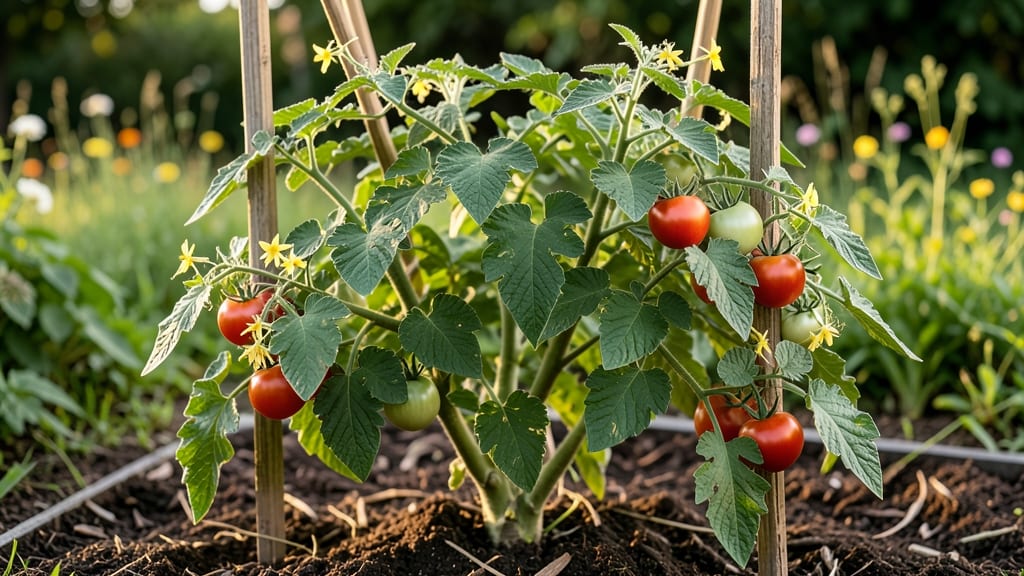
Growing tomatoes on the vine transforms a sprawling mess into a sturdy, high-yielding vertical garden that saves space and keeps fruit clean. 🌱 I learned the hard way—my first vine-training attempt collapsed under 20-pound tomatoes, but now I use a cage-and-trellis combo that holds even the heaviest heirlooms without sagging.
The secret isn’t just the trellis—it’s the soil prep (compost-rich, well-draining) and watering rhythm (deep soaks twice a week). Prune suckers early to focus energy on fruit-bearing branches, and you’ll see 10-15 pounds of tomatoes per plant by harvest season.
By late summer, your plants will be bursting with glossy red (or purple, or yellow) fruit, all within arm’s reach. The trellis also cuts disease risk by improving airflow, so you’ll spend less time spraying and more time picking.
Works for determinate or indeterminate varieties, containers, or ground beds. Let’s build that vine system right.
📚 In This Guide
- What you need
- Instructions
- Tips and common mistakes
- Wrapping up and next steps
What you need
- ● Tomato plants: 3–6 heirloom or beefsteak varieties (e.g., 'Brandywine,' 'Cherokee Purple,' or 'Sungold')—choose indeterminate types for continuous growth.
- ● Trellis system: 1–2 8-foot wooden posts (4x4 inches, pressure-treated) or metal T-posts for stability.
- ● 1–2 rolls of 16-gauge galvanized wire (100+ feet) or UV-resistant twine (¼-inch diameter).
- ● OR a pre-made tomato cage trellis (6+ feet tall, reinforced with stakes).
- ● Garden soil: Well-draining, amended with compost (5+ gallons per plant). Add perlite or vermiculite (1 part per 3 parts soil) for aeration.
- ● Fertilizer: Balanced 10-10-10 NPK or compost tea (mix 1 tbsp per gallon of water).
- ● Support ties: Soft jute twine or velcro plant ties (20+ pieces).
- ● Watering tools: Drip irrigation kit or soaker hose (½-inch diameter) + timer.
- ● Hand tools: Trowel, pruners (sterilized with rubbing alcohol), and gloves (nitrile for grip).
- ● Measuring tape (25+ feet) and level for trellis alignment.
- ● Sunlight: 6+ hours of direct sun daily (south-facing spot ideal).
- ● Climate check: Frost-free dates (plant after last frost; hardiness zone 5+ recommended).
- ● Mulch (straw or wood chips) to retain moisture and deter weeds.
- ● Mycorrhizal fungi (powder or granules) for stronger root growth.
- ● Shade cloth (30–50% coverage) for hot climates (10x10 feet).
- ● Suction cup windbreaks (if growing in breezy areas).
- ● Grow lights (for extending season in short-day zones).
Step-by-Step instructions for building a sturdy tomato trellis
Here's how to create a support system that handles heavy vines and fruit without bending or breaking.
🪴 Step 1: Choose and Prepare Your Trellis Materials
For four tomato plants, I recommend using two 8-foot tall bamboo stakes or heavy-duty metal T-posts as your main vertical supports. These materials provide the rigidity needed to support 10-15 pounds per plant of fruit at peak harvest. If using bamboo, soak the stakes in water for 24 hours before assembly to prevent cracking—this is especially important if your climate runs dry.
For additional support, gather four 6-foot long wooden dowels (at least 1-inch diameter) or plastic-coated wire (12-gauge or heavier). These will serve as horizontal crossbars to distribute weight evenly. Cut the dowels to size if needed, ensuring clean cuts with a handsaw to prevent splintering that could damage vines later.
☀️ Step 2: Assemble the Vertical Supports
Drive your vertical stakes into the ground 6-8 inches deep, placing them 3-4 feet apart to create a stable base. For bamboo stakes, use a mallet to tap them gently but firmly into the soil until they stand upright without wobbling. If using T-posts, drive them with a sledgehammer until the top 2 inches remain above ground level—this prevents them from toppling when weight is added.
Check for vertical alignment by holding a level against each stake. If one leans, carefully adjust it while the soil is still loose. Once set, give each stake a firm shake to test stability. You'll feel resistance when the stakes are properly anchored—this ensures they won't shift when laden with fruit later in the season.
🌿 Step 3: Install Horizontal Crossbars for Vine Support
Attach your horizontal dowels or wire crossbars at three different heights: 12 inches, 24 inches, and 36 inches from the ground. For wooden dowels, use galvanized metal brackets or zip ties to secure them to the vertical stakes. Space the brackets 6 inches apart along each dowel to prevent sagging under the weight of vines and fruit.
If using wire, wrap it tightly around each stake at the designated heights, securing with two full twists on each side. Leave 6 inches of slack between the stakes to allow for vine growth. The crossbars should form a ladder-like structure—this design helps distribute the weight of heavy tomato clusters evenly and prevents the vines from breaking under their own weight.
✂️ Step 4: Train Tomato Vines to the Trellis
When your tomato plants reach 12-18 inches tall, begin gently tying the main stem to the lowest crossbar using soft plant ties or strips of old T-shirt fabric. Avoid using wire or plastic ties—they can cut into the stem as it grows. Tie the vine loosely enough that you can still slide two fingers between the tie and the stem; this prevents constriction as the plant thickens.
As the vine grows, guide it upward in a spiral pattern around the trellis, securing it to each crossbar as you go. Prune suckers (the small shoots that form in the leaf axils) regularly to encourage the plant to focus its energy on fruit production rather than excessive foliage. You'll know you're doing it right when the vine climbs steadily upward without bending or sagging between supports.
💧 Step 5: Maintain and Reinforce the Trellis
After the first 4-6 weeks of growth, inspect the trellis for stability, especially after heavy rain or wind. If you notice any wobbling, add additional stakes or guy wires to the sides for extra support. Water the base of the trellis deeply once a week to keep the soil moist, which helps the stakes settle further into the ground and increases stability.
As the tomato fruit begins to swell, check the crossbars weekly for signs of stress. If any dowels sag or wires bend, reinforce them immediately by adding extra ties or supporting the vines with small stakes tied to the trellis. A well-maintained trellis will keep your tomatoes off the ground, reducing rot and making harvesting easier—plus, you'll avoid the heartbreak of broken vines mid-season.
Tips & tricks for sturdy tomato trellis construction
Building a trellis that won't collapse under heavy tomato loads requires attention to detail—here's what I've learned from years of trial and error in the garden.
Material Selection Matters: For the two 8-foot tall bamboo stakes or heavy-duty metal T-posts mentioned in Step 1, I recommend treating bamboo stakes with a natural wood preservative if your climate gets particularly wet. This prevents rot at the soil line where moisture collects. For T-posts, look for galvanized options—they resist rust better over time, especially if you're in a coastal area where salt spray can be an issue.
Soaking Secret: The 24-hour soaking for bamboo stakes in Step 1 isn't just about preventing cracking—it's also about ensuring they're fully hydrated before planting. Dry bamboo can absorb water from the soil and shrink, creating gaps that compromise stability. If you're short on time, soak them for at least 12 hours but don't skip this step entirely.
Crossbar Placement Precision: When installing the horizontal supports at 12 inches, 24 inches, and 36 inches in Step 3, use a tape measure and mark each stake before attaching. I like to use a pencil to make small marks at each height—this helps maintain perfect alignment between both stakes. The 6-inch spacing between brackets on dowels is crucial; any wider and the crossbars will sag under fruit weight.
Tie-Tight Technique: For Step 4's vine training, I've found that old T-shirt fabric strips work better than commercial plant ties because they stretch slightly as the vine thickens. Cut strips about 18 inches long and tie them in a loose bow—you should be able to fit two fingers between the tie and the stem. This prevents the fabric from cutting into the vine as it grows thicker.
Pro Tips for Tomatoes On The Vine
- Building a trellis that won't collapse under heavy tomato loads requires attention to detail—here's what I've learned from years of trial and error in the garden.
- This prevents rot at the soil line where moisture collects.
- Soaking Secret: The 24-hour soaking for bamboo stakes in Step 1 isn't just about preventing cracking—it's also about ensuring they're fully hydrated before planting.
Frequently asked questions
Got questions about growing tomatoes on the vine? You’re not alone! Here are some of the most common queries—plus quick, no-nonsense answers to help you master the trellis game.
When should I start training my tomato plants up the trellis?
Start guiding your vines upward as soon as they’re 6–12 inches tall. Use soft ties or twine to gently weave the main stem along the trellis. Wait until the first flowers appear to prune suckers (side shoots)—this prevents overcrowding and directs energy to fruit production. Pro tip: Avoid tying too tightly; let the plant grow into its support!
How long does it take for tomatoes on the vine to bear fruit?
Most indeterminate varieties (the ones that climb!) take 60–85 days from transplanting to first harvest, depending on your climate. In warm regions, you might see tomatoes as early as 50 days, while cooler zones could stretch it to 100+. Patience is key: Keep soil temps above 55°F for best results.
What if my tomatoes on the vine aren’t climbing—what’s wrong?
If your vines are sprawling instead of climbing, check these fixes:
- Weak stems: Use a stronger trellis (like bamboo or metal) and tie stems every 6–12 inches.
- Overcrowding: Prune lower leaves to improve airflow and reduce weight.
- Nutrient deficiency: Add compost or a balanced fertilizer (like 10-10-10) if leaves are yellowing.
Can I grow cherry tomatoes on a trellis too, or are they better bush-style?
Cherry tomatoes thrive on trellises—they’re lighter and produce more fruit when supported. Use a horizontal trellis or cage to prevent breakage from heavy clusters. Just avoid over-pruning; cherries rely on leafy growth for energy. Win-win: More tomatoes + easier picking!
What’s the best alternative if I don’t have a trellis?
No trellis? No problem! Try these space-saving hacks:
- Cages: Sturdy 5-foot cages work for smaller varieties like ‘Roma’ or ‘Celebrity.’
- Stakes: Drive 6-foot bamboo stakes into the ground and tie vines loosely.
- Wall-mounted planters: Perfect for patios—just ensure drainage and support.
Wrapping up and next steps
Growing tomatoes on the vine is a rewarding journey that turns your garden into a bountiful paradise—just imagine the satisfaction of plucking ripe, sun-kissed tomatoes straight from your trellis! 🌱 With the right sturdy trellis, proper care, and a dash of patience, you’ll soon be enjoying homegrown flavors that store-bought can’t match.
Whether you’re a seasoned gardener or a beginner, these secrets will help you cultivate a heavy harvest that’ll make your neighbors green with envy.
Now that you’re armed with trellis tips and troubleshooting know-how, it’s time to roll up your sleeves and get planting! Start by selecting your favorite vine-ripened varieties, set up that trellis, and let nature do its magic. Happy growing—and here’s to your first (or next!) bumper crop! 🍅✨