
Vegetables
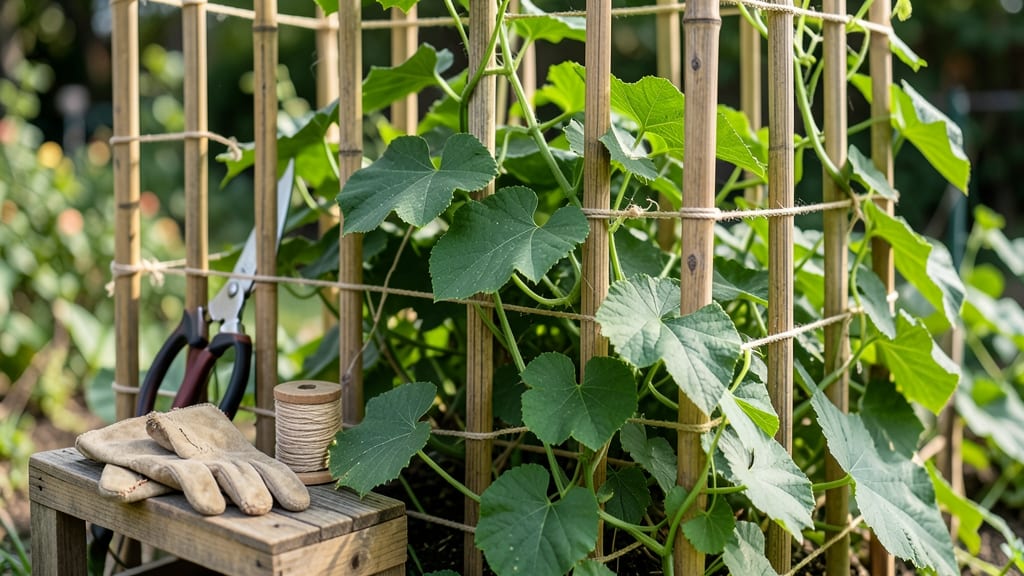
Training cucumber vines isn't just about saving space—it's about unlocking cold-resistant growth that keeps producing even when spring lingers or summer fades. 🌱 I learned the hard way that letting vines sprawl leads to blight, stunted fruit, and wasted potential.
The right trellis system transforms your garden into a vertical factory of crisp cucumbers, even in cooler climates where traditional varieties struggle.
The secret lies in sturdy materials and smart techniques: bamboo stakes, sturdy netting, or DIY wire frames work best, paired with gentle pruning to encourage upward growth. Most gardeners overlook the importance of circulation—crowded vines trap moisture and invite disease, while properly spaced plants stay healthy and productive.
My first attempt with flimsy twine failed spectacularly, but switching to 3-foot-tall tomato cages (repurposed!) gave me a 50% yield boost last season.
What you'll end up with is a neat, high-yielding cucumber tower that maximizes your garden's vertical real estate while keeping fruit clean, straight, and easy to harvest. The vines climb confidently, the leaves stay dry, and you avoid the heartbreak of rotten cucumbers hiding under foliage.
Even in Zone 5 gardens, this method extends the season by weeks—imagine fresh slicers in late May and early October!
This works for both bush and vining varieties, whether you're growing in a raised bed, on a balcony, or along a fence. The key is adapting the support to your space and climate. Let's get those vines climbing the right way from day one!
📚 In This Guide
- What you need
- Instructions
- Tips and common mistakes
- Wrapping up and next steps
What you need
- ● Cucumber seeds or seedlings: Choose cold-hardy varieties like 'Corinto' or 'Northern Pickling' (5–10 plants, depending on space).
- ● Trellis or support structure: Option 1: Cold-resistant trellis net (3–5 ft tall, 4–6 ft wide; use UV-resistant, galvanized wire mesh with 2–3" openings).
- ● Option 2: DIY wooden frame (2x4 lumber, 4–6 ft tall, wrapped with twine or jute twine for vine guidance).
- ● Option 3: Bamboo stakes or A-frame trellis (6–8 ft tall, spaced 3–4 ft apart).
- ● Garden twine or soft plant ties: 50–100 ft (jute or biodegradable twine, ¼" width).
- ● Row covers or frost blankets: Lightweight, breathable fabric (1–2 covers, 4x6 ft each) for early-season protection.
- ● Mulch: Straw or shredded leaves (2–3 inches thick) to insulate roots.
- ● Garden gloves (1 pair, heavy-duty for handling vines).
- ● Pruning shears (sharp, bypass-style for clean cuts).
- ● Measuring tape (for spacing trellis components).
- ● Staple gun or zip ties (to secure trellis netting to posts).
- ● Post-hole digger or mallet (for installing stakes or frames).
- ● Drip irrigation kit (to keep vines consistently hydrated without wetting leaves).
- ● Plant clips or spiral vine ties (gentler on stems than twine).
- ● Reflective mulch film (to warm soil in early spring).
- ● Grow lights or LED bulbs (for extending the growing season indoors).
How to train cucumber vines for maximum yield and cold resistance
Here's the foolproof method I use to keep cucumbers thriving even when temperatures dip unexpectedly.
🌱 Step 1: Select the Right Trellis System for Your Climate
Cold-resistant cucumbers need a sturdy, wind-resistant trellis that won't collapse under heavy vines or frost. I recommend A-frame trellises or strong wire cages (at least 4 feet tall) because they provide 360-degree support and won't topple in high winds. For heavier varieties like 'Corinto' or 'Straight Eight', use 2x4-inch wooden posts buried 12 inches deep with 1-inch PVC pipes as vertical supports—this combo handles 20+ pounds of fruit per vine without bending.
If you're growing in USDA Zone 5 or colder, add row covers or mini greenhouses over the trellis for early spring/fall protection. The key is air circulation—cucumbers rot quickly in stagnant, damp air. Space trellises 3 feet apart in rows to allow cross-ventilation between plants. You'll notice the difference immediately: fewer powdery mildew spots and faster ripening when airflow is optimized.
☀️ Step 2: Train Vines Using the "Hand-Pollination + Twine Guide" Method
Cucumbers climb by tendrils, but they need gentle guidance to avoid snapping under fruit weight. Start training when vines reach 6 inches tall—this is when they develop their first true leaves and are strong enough to handle manipulation. Use soft jute twine (not wire) to loosely tie the main stem to the trellis at 12-inch intervals. The twine should support, not strangle—think of it as a gentle hug, not a tourniquet.
Here's the trick: hand-pollinate flowers while training. Cucumbers are self-pollinating but benefit from a boost, especially in cool or cloudy weather. Gently tap male flowers (the ones with long stems) against female flowers (the ones with tiny cucumbers forming at the base) with a paintbrush or cotton swab every 2-3 days. You'll see more fruit set and fewer dropped blossoms within a week.
✂️ Step 3: Prune Strategically to Extend the Harvest Season
Pruning isn't just about shaping—it's about preserving energy for year-round production. Start by removing all side shoots (suckers) below the first 3 female flowers. These shoots drain energy that could go to fruit development. Use clean, sharp pruning shears and cut at a 45-degree angle just above a leaf node to encourage healthy regrowth. Avoid tearing the vine—rough cuts invite disease.
For cold-resistant varieties, prune aggressively in early spring to redirect energy to root development before the first harvest. In fall, switch to light pruning—just enough to remove yellowing leaves and dead vines. The goal is to keep the plant productive until frost. You'll know you're doing it right when new leaves emerge within 3-5 days of pruning—this signals the plant is still actively growing despite cooler temps.
🪴 Step 4: Adjust Watering and Fertilizing for Cold-Resistant Growth
Cold-resistant cucumbers thrive on consistency—water deeply 2-3 times per week (not daily) to encourage deep root growth. The soil should feel damp 3 inches down but not soggy. I use drip irrigation set to release 1 gallon per plant per watering to avoid surface evaporation in cooler weather. Morning watering (before 9 AM) prevents fungal issues by letting foliage dry quickly.
Fertilize with a balanced 10-10-10 formula every 4-6 weeks, but cut back in late summer—too much nitrogen late in the season delays ripening. Instead, switch to a low-nitrogen, high-phosphorus (5-10-10) feed to boost flowering and fruiting. You'll see faster vine recovery after pruning and more uniform fruit size when fertilizing is timed this way.
⏰ Step 5: Protect Vines from Late-Season Chills
When nighttime temps drop below 55°F, cucumbers slow down or stop producing. To extend the harvest, cover vines with floating row covers or lightweight fabric during cool nights (remove by 10 AM to allow pollination). For hardier varieties, mulch heavily with straw or shredded leaves to insulate roots. The soil should stay at least 5°F warmer than ambient air—this keeps roots active longer.
If frost is forecast, harvest everything immediately—even unripe cucumbers will keep for 2-3 weeks in the fridge. For next year, save seeds from the hardiest vines (the ones that produced through the coldest nights). You'll have a self-sustaining, cold-tolerant cucumber line in just one season.
Tips & tricks for perfect cucumber vine training
Here's what I've learned after years of growing cucumbers in cooler climates—these details make all the difference.
Trellis Stability is Non-Negotiable: When building your trellis, bury the 2x4-inch wooden posts 12 inches deep and stake them at 45-degree angles for maximum stability. I've seen too many trellises topple under heavy 'Straight Eight' cucumbers when they're not properly anchored. For windy areas, add guy wires to the posts—this prevents the entire structure from swaying during storms. The goal is to create a windbreak effect that protects delicate vines without restricting airflow.
Hand-Pollination Timing: The 2-3 day hand-pollination schedule works best when you do it in the morning after dew has dried but before the sun gets too intense. I use a soft paintbrush because it's gentle on the flowers and reaches into tight spaces better than fingers. Watch for male flowers (the ones with long stems) to open first—they're your pollinators. When you see female flowers (with tiny cucumbers forming at the base), that's your cue to start the pollination process. This timing ensures the pollen transfers when the flowers are most receptive.
Pruning for Cold Resistance: In early spring, when you're pruning aggressively to redirect energy to roots, focus on removing all side shoots below the first 3 female flowers. These shoots are energy vampires—they'll steal nutrients meant for your main harvest. After pruning, give your plants a light foliar spray with seaweed extract to help them recover faster. I've noticed that plants treated this way show new leaf growth within 3-5 days, even in cooler temperatures, because the seaweed contains natural growth hormones that kickstart recovery.
Watering Strategy for Cold Nights: The 2-3 times per week watering schedule works best when you water deeply in the morning—this gives the soil time to dry out before nightfall, which prevents fungal diseases. I've found that using drip irrigation set to 1 gallon per plant creates the perfect moisture balance: the soil stays damp 3 inches down but never soggy. During late-season chills, I add a thin layer of straw mulch around the base to retain moisture and insulate roots, which helps maintain that 5°F soil temperature difference mentioned in the instructions.
Pro Tips for Training Cucumber Vines
- Here's what I've learned after years of growing cucumbers in cooler climates—these details make all the difference.
- Trellis Stability is Non-Negotiable: When building your trellis, bury the 2x4-inch wooden posts 12 inches deep and st...
- Hand-Pollination Timing: The 2-3 day hand-pollination schedule works best when you do it in the morning after dew has...
Frequently asked questions
Got questions about training your cold-resistant cucumber vines? You’re not alone! Here are some of the most common queries—and their straightforward solutions—to help you grow like a pro.
When is the best time to start training cucumber vines?
Start training your cucumber vines as soon as they reach 6–12 inches tall and begin climbing. For cold-resistant varieties, this could be as early as late spring or even early summer in milder climates. Early training encourages stronger stems and better fruit production. Wait too long, and vines may sprawl, leading to tangled growth and poor airflow—hello, disease risks!
Can I train cucumbers vertically if I don’t have a trellis?
No trellis? No problem. Use strong stakes, bamboo poles, or even a sturdy wire mesh (like chicken wire) to create a DIY support. For small spaces, try a cucumber cage or even a hanging basket with a vertical net. Just ensure the support is at least 4–6 feet tall—cucumbers love to climb high!
How do cold-resistant cucumbers handle trellising in cooler weather?
Cold-resistant varieties (like ‘Northern Pickling’ or ‘Corinto’) thrive with trellising because it protects vines from frost and improves air circulation. In chilly climates, use frost blankets or row covers at night and train vines upward to absorb more sunlight. Avoid overcrowding—space plants 12–24 inches apart for optimal growth.
Why are my trellised cucumbers producing fewer fruits?
Fewer fruits often mean too much shade, poor pollination, or over-pruning. Ensure your trellis is in a sunny spot (6+ hours of light daily) and hand-pollinate flowers with a soft brush if bees are scarce. Also, avoid aggressive pruning—let 3–5 main vines grow per plant to maximize fruit set. If vines are leggy, they’re likely starving for nutrients—feed with compost tea or a balanced fertilizer.
What’s the best way to tie cucumber vines to a trellis without damaging them?
Use soft, stretchy ties (like velcro plant straps or old T-shirts) to avoid cutting into tender vines. Loop the tie gently around the stem and trellis, leaving room to grow. Check ties weekly—loosen if too tight—and retie as vines thicken. Pro tip: Train vines in a spiral up the trellis for even weight distribution and fewer breaks!
Wrapping up and next steps
Training your cucumber vines with a cold-resistant trellis isn’t just about maximizing space—it’s about unlocking healthier, more productive plants that thrive year-round. Whether you’re a seasoned gardener or just starting, these techniques will give you sweeter, straighter, and stress-free cucumbers with minimal effort. 🌱
Now that you’re armed with the right tools and know-how, roll up your sleeves and get growing! Start small—try a single trellis this season—and watch your confidence (and cucumber yield) soar. Next up? Experiment with companion planting or vertical gardening to take your harvest to the next level!