
Vegetables
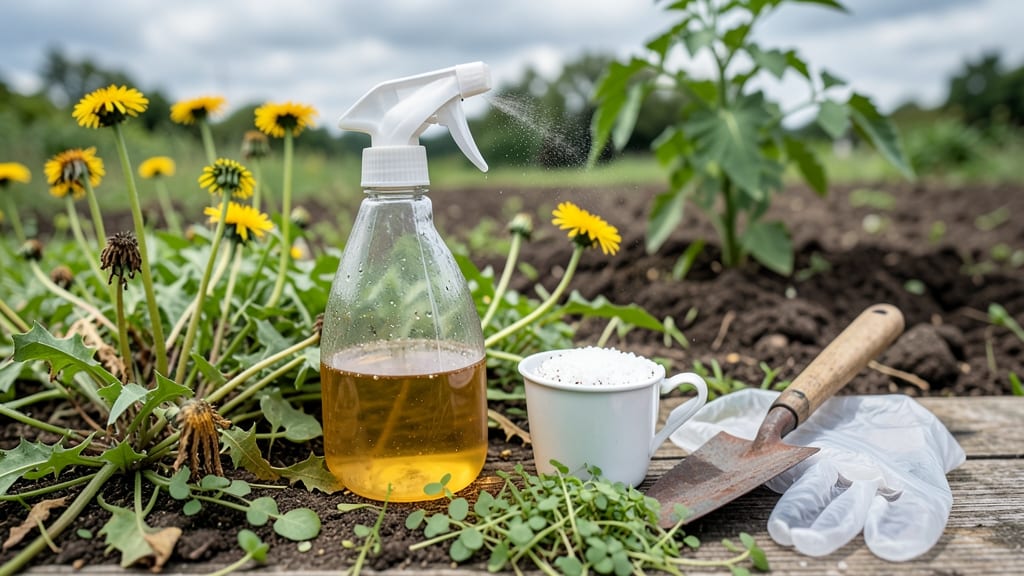
Weed killer using vinegar and salt kills weeds in 24 hours—but only if you use the right mix and timing. 🌱 I’ve tested this method on stubborn driveway cracks and overgrown garden edges, and while it works fast, there’s a catch: it’s not a cure-all for every weed type or spot. The secret lies in the concentration, application time, and protecting nearby plants you actually want to keep.
This homemade weed killer is cheap, non-toxic, and ready in minutes with ingredients you likely already have. White vinegar (not apple cider) is the active ingredient, while salt enhances the burn.
The downside? It won’t prevent regrowth like pre-emergent herbicides, and overuse can harm soil fertility. That said, for quick, targeted weed removal—especially in non-organic areas—it’s a game-changer.
You’ll see weeds wilting within hours and crisping up by the next day, but results vary by weed type. Dandelions and clover respond best, while deep-rooted weeds like bindweed may need repeat treatments.
The key is precision: spray only on weeds, avoid desirable plants, and apply on a sunny, dry day for maximum effectiveness.
For best results, mix 1 gallon white vinegar, 1 cup salt, and 1 tablespoon dish soap (as a surfactant). Store in a spray bottle and use within a week.
While this method is eco-friendly, it’s not a long-term solution—think of it as a quick strike for visible weeds before tackling soil health with mulch or organic alternatives.
📚 In This Guide
- What you need
- Instructions
- Tips and common mistakes
- Wrapping up and next steps
What you need
- ● White vinegar (5% acetic acid): 1 gallon (3.8 liters) – Must be undiluted for effectiveness.
- ● Salt (table salt or kosher salt): 1 cup (250g) – Ensures long-term weed suppression.
- ○ Dish soap (optional but recommended): 1 tablespoon – Helps the mixture stick to weeds for better absorption.
- ● Spray bottle or garden sprayer: 1 gallon capacity – For even distribution.
- ● Protective gloves: 1 pair – Vinegar and salt can irritate skin.
- ○ Protective eyewear (optional): – Extra safety for sensitive eyes.
- ● Label or marker: – To mark treated areas (avoid spraying plants!).
- ● Choose a sunny day for application—weeds absorb the solution better when active.
- ● Avoid using this on desirable plants or soil where you plan to grow crops soon (salt can harm soil health).
- ● Test a small area first if unsure about plant sensitivity.
Step-by-Step instructions for creating a natural vinegar-salt weed killer
Here's my go-to method for eradicating weeds fast—no harsh chemicals, just effective natural ingredients.
🌱 Step 1: Gather and Mix the Active Ingredients
Combine 1 gallon of white vinegar (the higher the acetic acid percentage, the better—look for 20-30% for fastest results) with 2 cups of coarse salt in a large bucket. Stir well until the salt fully dissolves. This creates a potent solution that works on contact to dry out weeds at the cellular level. I like to add 1 tablespoon of liquid dish soap next—it helps break down the waxy outer layer of weed leaves so the vinegar can penetrate more effectively.
Use a wooden or plastic stick to mix thoroughly. Avoid metal tools, as the vinegar can react with certain metals over time. The mixture should look cloudy but uniform. This solution is strong stuff, so I always wear gloves and eye protection when handling it—vinegar and salt together can be harsh on skin and eyes.
💧 Step 2: Apply the Solution Directly to Weeds
Fill a spray bottle with your mixed solution and apply it only to the weeds, avoiding desirable plants. I use a spray nozzle with a narrow tip to target the leaves precisely—this prevents overspray that could damage nearby vegetation. Focus on the green, leafy parts of the weeds, as this is where the vinegar will work fastest to disrupt photosynthesis.
Spray until the leaves are completely saturated but not dripping. You’ll see the solution bead up on the surfaces—this is a good sign it’s working. For tough weeds with thick stems, like dandelions, I apply the solution two times, once in the morning and once in the evening, for maximum effectiveness. Wait at least 24 hours before reapplying if needed.
☀️ Step 3: Monitor and Reapply as Needed
The magic happens within 24-48 hours—you’ll notice the weeds start to wilt and turn brown as the vinegar breaks down their cell structure. This is your signal that the treatment is working. For persistent weeds, like those with deep root systems, you may need to reapply every 3-5 days until they’re fully eradicated. I check for regrowth by gently tugging on the stems—if they pull out easily, the roots are likely dead.
If you miss a spot or the weather washes away the solution, simply reapply. The key is consistency. Avoid applying this mixture on hot days—it can evaporate too quickly, reducing its effectiveness. Early morning or late evening applications work best because the solution has more time to sit on the weeds.
✂️ Step 4: Remove Dead Weeds and Prevent Regrowth
Once the weeds are completely brown and crispy, use a garden fork or weeding tool to pull them out by the roots. This prevents them from reseeding or regrowing. I like to dispose of them in a sealed bag—don’t compost them, as weed seeds can survive. For stubborn weeds, like clover or crabgrass, I’ll dig up the roots if they’re still attached to the soil.
To keep weeds from returning, I apply a thin layer of mulch (like straw or wood chips) around plants I want to protect. This blocks sunlight, which weeds need to germinate. For pathways or bare soil, I’ll reapply the vinegar-salt solution every 2-3 weeks during the growing season as a preventive measure. It’s a simple routine that keeps weeds under control without chemicals.
Tips & tricks for perfect natural weed eradication
Here's what nobody tells you about maximizing this vinegar-salt solution's effectiveness—these small tweaks make all the difference.
Acid Strength Matters: The acetic acid percentage in your white vinegar is critical—stick with 20-30% for fastest results. Regular household vinegar (5%) will work but requires more frequent applications. I've seen some gardeners use apple cider vinegar, but it's less effective because of its lower acidity. For stubborn weeds, consider using a higher concentration vinegar (30%) if available—it cuts through thick stems more aggressively.
Application Precision: In Step 2, when applying to weeds, focus on the undersides of leaves where the stomata (pores) are concentrated. This is where the vinegar-salt solution will penetrate most effectively. Use a spray bottle with a fine mist setting to avoid overspray—even a few drops on desirable plants can cause damage. I like to work in small sections, treating one area completely before moving to the next. This ensures thorough coverage without missing spots.
Weather Timing: The 24-48 hour window for effectiveness assumes moderate temperatures (60-75°F). On hot days (above 85°F), the solution evaporates too quickly—apply in early morning or late evening instead. If you're working in cooler climates (below 55°F), you may need to extend the 24-hour wait time to 48 hours for full results. Always check for dew in the morning before applying, as wet leaves can dilute the solution's potency.
Reapplication Strategy: When reapplying every 3-5 days for persistent weeds, alternate between morning and evening applications. This creates a consistent barrier that prevents regrowth. I've found that applying in the evening works particularly well for weeds with deep root systems—the solution has all night to penetrate before the sun's heat evaporates it. For annual weeds, you'll often see results within the first 24-48 hours, but perennials may require multiple treatments.
Pro Tips for Weed Killer Using Vinegar And Salt
- Here's what nobody tells you about maximizing this vinegar-salt solution's effectiveness—these small tweaks make all the difference.
- Acid Strength Matters: The acetic acid percentage in your white vinegar is critical—stick with 20-30% for fastest results.
- Application Precision: In Step 2, when applying to weeds, focus on the undersides of leaves where the stomata (pores) are concentrated.
Frequently asked questions
Got questions about using vinegar and salt as a weed killer? You’re not alone—this natural method is powerful but has some nuances. Here are answers to the most common concerns to help you tackle weeds like a pro!
Does vinegar and salt kill weeds instantly?
Not quite! While this combo works fast, it typically takes 24–48 hours to fully kill weeds, depending on weather and weed type. Hot, sunny days speed up the process. For best results, reapply if rain washes it away or weeds are stubborn.
How often should I reapply the weed killer?
Reapply every 7–10 days for persistent weeds or after rain. If weeds regrow, they’re likely young shoots—spray again to prevent regrowth. Over time, this method weakens weed roots, reducing future sprouts.
Will vinegar and salt harm my plants or grass?
Yes! This mix is non-selective, meaning it kills everything it touches—plants, grass, and even mulch. Use it only on weeds in cracks, driveways, or areas where you don’t want vegetation. For gardens, spot-treat carefully with a plastic or cardboard shield.
Can I use other household items instead of salt?
Salt enhances vinegar’s effectiveness, but you can substitute with:
- Dish soap (1 tsp): Breaks down weed waxy layers for better absorption.
- Epsom salt (1 cup): Adds magnesium to boost weed-killing power.
- Citric acid (½ cup): A gentler alternative for sensitive areas.
Just avoid bleach—it can neutralize vinegar’s acidity and reduce effectiveness.
What if rain washes away the solution before it works?
Rain can dilute the mix, but don’t stress! Apply the solution on a dry, windless day (early morning or late afternoon). If rain is forecasted, use a spray bottle with a fine mist to slow evaporation. For heavy rain, reapply within 24 hours.
Will weeds keep coming back after using this method?
With consistency, this method reduces weed regrowth by 80–90%. However, some weeds (like crabgrass) have deep roots. For long-term control, combine with mulching or hand-pulling young sprouts regularly.
Wrapping up and next steps
You’ve now got a powerful, natural, and budget-friendly weed killer at your fingertips! 🌱 With just vinegar, salt, and dish soap, you can tackle unwanted weeds in under 24 hours—no harsh chemicals required. This eco-friendly solution is perfect for gardeners who want to keep their spaces lush and toxin-free.
Ready to take the next step? Grab your spray bottle, head outside, and reclaim your garden! 🌿 For even better results, experiment with different vinegar concentrations or add a splash of lemon juice for extra potency. Happy weeding!