
Vegetables
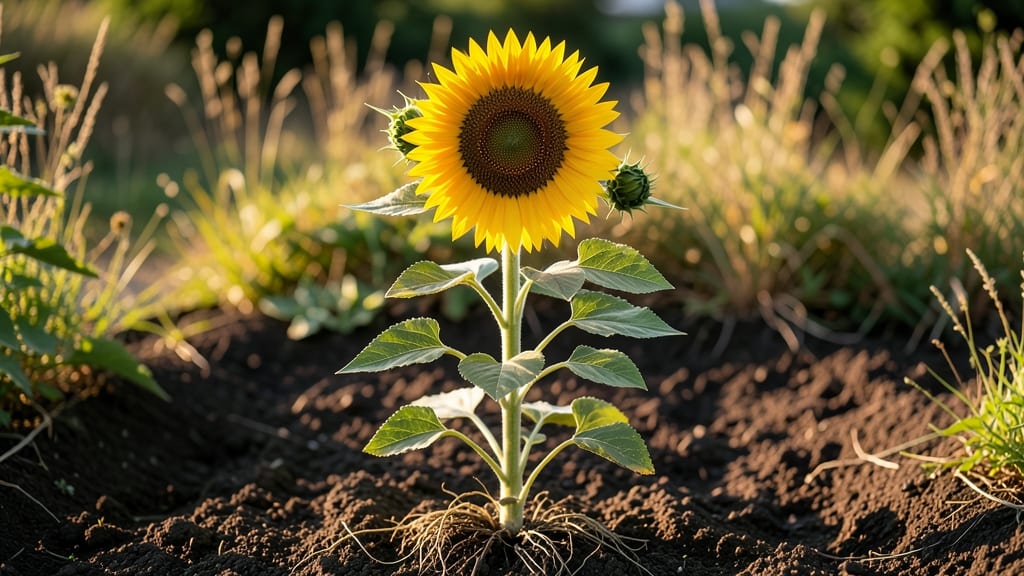
A single season of sunflowers can transform your property into a golden wave that turns heads and feeds pollinators. 🌻 A large population of sunflowers is established in a field after seeing how quickly they take root—within weeks, the field was buzzing with bees and hummingbirds, and the visual impact was undeniable.
The secret lies in spacing, soil prep, and choosing the right varieties for your climate.
Sunflowers thrive in full sun and well-drained soil, making them perfect for open fields or large garden spaces. You’ll need about 15-20 seeds per square foot for a dense stand, and varieties like ‘Mammoth’ or ‘Autumn Beauty’ deliver both height and impact.
The payoff? A pollinator magnet that supports local ecosystems while adding dramatic color to your landscape.
By mid-summer, your field will be a sea of blooms, attracting bees, butterflies, and birds while improving soil health through deep roots. The sheer volume of flowers creates a stunning backdrop for photos, weddings, or simply enjoying your outdoor space.
Plus, the seeds provide food for wildlife long after the blooms fade.
This approach works for both gardeners and farmers—whether you’re aiming for a dramatic border or a large-scale harvest. The key is patience and proper spacing to ensure every plant gets enough sunlight and nutrients. Ready to turn your land into a sunflower spectacle?
📚 In This Guide
- What you need
- Instructions
- Tips and common mistakes
- Wrapping up and next steps
What you need
- ● Sunflower seeds: Choose high-yield varieties like Mammoth or Russian Giant. Plan for 10–15 lbs per acre (or ~500–750 seeds per 100 sq ft). Opt for untreated seeds if organic certification is a goal.
- ● Seedling trays or biodegradable pots: If starting indoors, use 72-cell trays or 2-inch pots (50–100 trays for a small field).
- ○ Planting tape or precision planter (optional): Speeds up direct sowing in large fields by marking rows 18–36 inches apart.
- ● Tiller or rototiller: For breaking up soil in 12–18 inch deep passes. A mid-sized walk-behind model (e.g., 6–8 HP) works for small to medium fields.
- ● Broadcast spreader (for fertilizer) or drop spreader (for precision).
- ● Garden rake or land leveler: To smooth soil after tilling.
- ● Watering system: Drip irrigation (recommended for large fields) with ¼-inch tubing and emitters spaced 12–18 inches apart.
- ○ Sprinkler system (optional) with low-pressure nozzles for even coverage.
- ● Soil test kit: To check pH (ideal range: 6.0–7.0) and nutrient levels. Adjust with lime (if pH sulfur (if pH > 7.0).
- ● Compost or well-rotted manure: 2–3 cubic yards per 100 sq ft to improve soil structure.
- ● Balanced fertilizer: 10-10-10 or 5-10-10 at 20–30 lbs per 100 sq ft. Add phosphorus-heavy (e.g., 0-20-0) if soil tests are low.
- ● Row covers or shade cloth: Protects seedlings from pests or harsh sun (30–50% shade for young plants).
- ● Mulch (straw or wood chips): 2–3 inches thick to retain moisture and suppress weeds.
- ● Weed barrier fabric: For perennial weed control in long-term fields.
- ● Pest control: Neem oil spray (organic option).
- ● Row cover stakes to deter birds/squirrels.
Instructions for establishing a bold sunflower field population
Here’s how to create a field of sunflowers that bursts with color and structure in just one growing season.
🌱 Step 1: Prepare the Soil for Optimal Germination
Sunflowers thrive in well-drained, nutrient-rich soil with a pH between 6.0 and 7.5. Before planting, till the soil to a depth of 8-12 inches to loosen compacted layers and improve root penetration. Work in 2-3 inches of compost or aged manure to boost organic matter and microbial activity—this ensures strong early growth and disease resistance.
Level the field gently with a rake to create an even planting surface. Sunflowers dislike soggy roots, so avoid planting in low-lying areas where water pools. If your soil is heavy clay, mix in sand or perlite to improve drainage. Test for moisture by squeezing a handful—it should crumble slightly but not feel powdery.
🌿 Step 2: Plant Seeds at the Right Depth and Spacing
Sunflowers grow best when sown directly into the field, as they dislike transplanting. Plant seeds 1 inch deep in rows spaced 2-3 feet apart for a dense, thriving population. For a bold visual impact, stagger rows by 18 inches to create a staggered, layered effect. Drop seeds every 12-18 inches within rows to prevent overcrowding—thin later if needed.
Press the soil lightly around each seed to ensure good seed-to-soil contact, which speeds up germination. Water gently but thoroughly after planting to settle the soil and trigger moisture uptake. Avoid overhead watering once seeds sprout—direct water to the base to prevent fungal diseases like damping-off, which can wipe out seedlings in days.
☀️ Step 3: Provide Consistent Water and Light for Rapid Growth
Sunflowers need full sun (6-8 hours daily) to reach their towering heights and vibrant blooms. Once seedlings emerge—typically in 7-14 days—thin to the strongest plant every 12-18 inches to reduce competition. Mulch around the base with 2-3 inches of straw or wood chips to retain moisture and suppress weeds, which can steal nutrients from your sunflowers.
Water deeply 2-3 times per week during dry spells, aiming for 1-1.5 inches of water per week. Let the top 2 inches of soil dry out between waterings to encourage deep root growth. Overwatering leads to weak stems and disease, while underwatering stunts growth. You’ll know your watering is right when leaves stay upright and vibrant, not wilting or yellowing.
✂️ Step 4: Monitor and Support for a Bold, Thriving Field
As sunflowers grow taller, their heavy heads may need staking or spacing adjustments. If plants lean excessively, gently tie them to 6-foot stakes or use a lightweight trellis for support. Remove any flowers that appear diseased or pest-ridden immediately—sunflowers are resilient but can spread issues quickly in dense populations.
Watch for common pests like aphids or sunflower moths. A strong spray of water usually deters them, but for severe infestations, use neem oil or insecticidal soap as a preventative. Harvest seeds when the back of the flower head turns yellow and the seeds rattle inside—this ensures viability for next season’s planting. Cut stems at the base with clean shears and let them dry in a warm, dry place.
Tips & tricks for establishing a bold sunflower field
Creating a thriving sunflower field takes more than just tossing seeds into the dirt—here's what transforms good intentions into a stunning visual spectacle.
Soil Preparation Secret: The 8-12 inch tilling depth in Step 1 isn't just about loosening soil—it's about creating an oxygen-rich environment for those deep sunflower roots. I've found that adding a thin layer of biochar (optional) alongside the 2-3 inches of compost can further boost microbial activity. This isn't just about nutrients; it's about creating the perfect ecosystem for your sunflowers to thrive from day one.
Planting Precision: When you're planting those seeds 1 inch deep in Step 2, here's my pro move: use a simple garden marker to label each row with the planting date. This helps track germination times across your field—especially important since sunflowers can emerge unevenly between 7-14 days. The staggered row technique you're using creates that professional, layered look, but make sure to mark those 18-inch offsets clearly so you don't accidentally plant too close.
Watering Wisdom: The 2-3 times per week guideline in Step 3 works perfectly in most climates, but here's the key: water in the early morning. This gives leaves time to dry completely before evening, which dramatically reduces fungal risks. I've seen damping-off wipe out entire fields when people water at night. Also, consider investing in a rain gauge—those 1-1.5 inches per week measurements become much easier to track when you have actual data.
Pest Prevention: While neem oil is mentioned for severe infestations in Step 4, here's my preventative approach: introduce beneficial insects like ladybugs and lacewings at the first sign of aphids. They'll keep populations in check before they become a problem. For larger fields, you can even plant a border of marigolds—their scent naturally repels many sunflower pests while adding another layer of visual interest to your field's edge.
Pro Tips for A Large Sunflower Population Is Established In A Field
- Creating a thriving sunflower field takes more than just tossing seeds into the dirt—here's what transforms good intentions into a stunning visual spectacle.
- Soil Preparation Secret: The 8-12 inch tilling depth in Step 1 isn't just about loosening soil—it's about creating an oxygen-rich environment for those deep sunflower roots.
- Planting Precision: When you're planting those seeds 1 inch deep in Step 2, here's my pro move: use a simple garden marker to label each row with the planting date.
Frequently asked questions
How long does it take for a large sunflower population to become fully established?
A large sunflower population typically reaches full establishment—meaning dense stands with minimal gaps—within 6 to 8 weeks after planting, assuming ideal conditions (proper soil prep, irrigation, and sunlight). Early blooming varieties may show progress sooner, but full maturity (ready for harvest or pollinator support) usually takes 85 to 120 days depending on the cultivar.
What’s the best time of year to plant for maximum establishment?
Sunflowers thrive in warm soil (60°F/15°C+), so plant after the last frost in your region. For most U.S. climates, this means late April to early June. In cooler zones, aim for May to early July to avoid fall frosts. Check your local frost dates and choose early, mid-, or late-season varieties based on your goals (e.g., pollinator support vs. seed production).
How much water do sunflowers need during establishment?
Sunflowers are drought-tolerant once established, but consistent moisture is critical in the first 4–6 weeks to encourage root development. Water 1–2 inches per week, either through rainfall or irrigation, especially during germination. Once plants are 6+ inches tall, reduce frequency but keep soil evenly moist. Avoid waterlogging, as sunflowers hate soggy roots!
Can I plant sunflowers in the same field year after year?
While sunflowers aren’t heavy feeders, planting them in the same field consecutively can lead to soil-borne diseases (like Sclerotinia or Verticillium wilt) or pest buildup (e.g., sunflower moths). Rotate crops with legumes, grasses, or non-host plants (like corn or small grains) every 2–3 years to maintain soil health and reduce risks.
What should I do if my sunflower population is sparse or uneven?
Uneven stands often stem from poor seed-to-soil contact, uneven planting depth, or compacted soil. Thin seedlings to 12–18 inches apart once they’re 4–6 inches tall to reduce competition. If gaps persist, consider oversowing or adjusting your planter’s seed spacing. For compacted soil, aerate or till before replanting. Pro tip: Use a seed drill or precision planter for more consistent results!
Are there sunflower varieties better suited for large-scale fields?
Yes! For high-density plantings or pollinator habitats, opt for open-pollinated, dwarf, or multi-branched varieties like:
- ‘Moulin Rouge’ (compact, great for borders)
- ‘Autumn Beauty’ (tall, multi-branched, pollinator magnet)
- ‘Russian Giant’ (classic, but needs space)
- ‘Teddy Bear’ (dwarf, ideal for small fields or containers)
Wrapping up and next steps
Establishing a large sunflower population in a single season is not just possible—it’s a rewarding challenge that brings beauty, biodiversity, and even potential harvests to your field! 🌻 By carefully selecting high-quality seeds, preparing the soil, and staying vigilant against pests, you’re setting the stage for a thriving ecosystem.
Whether you’re aiming for pollinator support, biofuel crops, or simply a stunning landscape, your efforts will pay off in vibrant blooms and lasting impact.
Ready to take the next step? Start small—plant a test patch this season to refine your techniques, then scale up as confidence grows. Share your progress with fellow gardeners or local farming groups for tips and inspiration. Your sunflower field isn’t just a project; it’s a legacy in the making.