
Vegetables
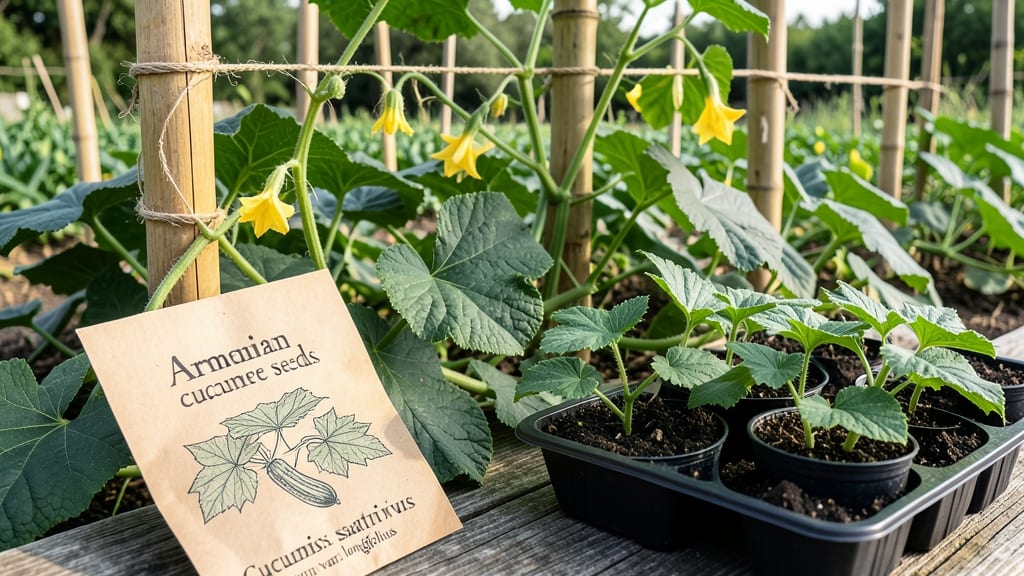
Armenian cucumber seeds bring bold green-and-white stripes to your garden. 🌱 I fell for these heirloom beauties after seeing their striking vines sprawling across a neighbor's balcony—and now I can't imagine growing anything else.
Their crisp, sweet flavor and disease resistance make them the perfect container garden star, especially for small spaces or urban growers.
The key to success starts with well-draining soil mix (equal parts potting soil and compost) and a 5-gallon container for each plant. Armenian cucumbers thrive in full sun (6+ hours daily) and need a sturdy trellis or cage to support their vigorous growth—those stripes don't come without ambition.
Plant seeds ½ inch deep, 2-3 per container, and keep soil consistently moist (not soggy) until germination, which takes 5-10 days in warm conditions.
By midsummer, you'll be harvesting 3-4 inch cucumbers with that signature striped pattern—crisp, sweet, and perfect for slicing. The plants produce prolifically if you pinch off early flowers to encourage stronger vines, and they resist common cucumber diseases like powdery mildew better than standard varieties.
One plant can yield 10+ pounds of cucumbers over the season, making it a high-reward, low-space crop.
For best results, start seeds indoors 4-6 weeks before your last frost, then transplant when soil reaches 60°F. If you're in a short-season area, opt for compact varieties like 'Armenian Yellow' or 'Armenian Green'—both stay manageable in containers.
The real magic happens when you see those striped cucumbers climbing your trellis, ready to be picked straight from the vine.
📚 In This Guide
- What you need
- Instructions
- Tips and common mistakes
- Wrapping up and next steps
What you need
- ● Armenian cucumber seeds – 10–20 seeds (or a small packet for a few plants). Look for heirloom varieties like 'Armenian Yellow' or 'Armenian Green' for those iconic stripes!
- ● Containers or garden bed – 5-gallon pots or larger (1 plant per container) with drainage holes. For in-ground planting, ensure 6+ inches of soil depth.
- ● High-quality potting mix – Well-draining, organic mix (avoid garden soil—it compacts too easily!). Add compost or perlite for fluffiness.
- ● Trellis or sturdy stakes – 4–6 feet tall (Armenian cucumbers are vining champions!). Use galvanized wire, bamboo, or a cage.
- ● Fertilizer – Balanced organic fertilizer (10-10-10) or compost tea to kickstart growth. Avoid high-nitrogen—it’s a cucumber, not a leafy green!
- ● Mulch – Straw or shredded leaves to retain moisture and suppress weeds.
- ● Hand trowel or small shovel for transplanting.
- ● Spray bottle for gentle watering (especially post-planting).
- ● Pruning shears to trim runners and encourage upward growth.
- ● pH test kit (ideal soil pH: 6.0–6.8 for cucumbers).
- ● Shade cloth (30–50% coverage) if your climate gets scorching hot.
Step-by-step instructions for growing Armenian cucumber seeds
Here's how to bring back the dramatic, striped beauty of Armenian cucumbers in containers—where their vines thrive and fruit explodes with flavor.
🌱 Step 1: Start Seeds Indoors for Early Growth
Sow Armenian cucumber seeds 4-6 weeks before your last frost date in biodegradable pots (3-4 inches deep) filled with seed-starting mix. These seeds need warmth to germinate, so place them in a seedling heat mat set to 75-85°F. Plant 1-2 seeds per pot just ½ inch deep—deeper planting delays germination.
Cover the pots with clear plastic wrap to retain moisture and warmth, then place in a bright, indirect light area. Check daily for condensation on the wrap—remove it when seeds sprout, usually in 5-10 days. The moment you see first true leaves (not the initial seed leaves), remove the wrap entirely to prevent damping-off.
☀️ Step 2: Harden Off and Transplant to Containers
When seedlings have 3-4 true leaves and are 4-6 weeks old, it’s time to move them to their 5-gallon containers. Fill each with well-draining potting mix mixed with compost (I use 1 part compost to 3 parts mix). Armenian cucumbers need deep roots, so these large containers prevent stress.
Transplant on an overcast day or in late afternoon to reduce shock. Bury seedlings slightly deeper than they were in pots—up to the first true leaves—to encourage stronger root growth. Water deeply right after planting so the soil settles around the roots. Place containers in full sun (6+ hours daily) and watch for new growth within 3-5 days.
💧 Step 3: Train Vines and Maintain Consistent Care
Armenian cucumbers grow fast and vigorous, so install trellises or cages immediately after transplanting. Gently weave vines through the support as they grow—this prevents sprawl and improves air circulation, reducing disease risk. Prune side shoots (suckers) that form in the leaf axils to direct energy to fruit production rather than foliage.
Water deeply 2-3 times per week, ensuring the top 2 inches of soil stay dry between waterings. These cucumbers are drought-sensitive, so consistent moisture prevents bitter fruit. Feed with a balanced liquid fertilizer (10-10-10) every 2 weeks once flowers appear. You’ll know you’re on track when vines climb 8-10 feet and yellow flowers bloom within 6-8 weeks of transplanting.
✂️ Step 4: Harvest and Encourage Continuous Production
Harvest Armenian cucumbers when they reach 6-8 inches long—any longer and they’ll turn seedy and bitter. Use pruning shears to cut stems ½ inch above the fruit, leaving the vine intact for more production. Check vines every 2-3 days because these cucumbers grow rapidly and develop bold stripes when picked young.
To extend the harvest, remove spent flowers after picking to redirect the plant’s energy. If vines slow down in late summer, give them a light pruning (cut back by ⅓) to stimulate new growth. With proper care, a single plant can yield 10-15 cucumbers over a 6-8 week season—each one a striped masterpiece worth the effort.
Tips & tricks for growing Armenian cucumber seeds
These game-changing insights will help you coax those stunning striped cucumbers from seed to harvest—without the common pitfalls that trip up even experienced gardeners.
Heat Mat Precision: The 75-85°F range on your seedling heat mat isn't just a suggestion—it's the Goldilocks zone for germination. I've seen seeds take twice as long when temps dip below 70°F. Place your heat mat under the pots, not beside them, to maintain even warmth. Pro tip: Use a small thermometer to verify the soil temperature matches the mat setting—some models run hotter than advertised.
Lighting Strategy: Armenian cucumbers crave light from day one, but don't rush to direct sun. Start with bright, indirect light (like a south-facing window with sheer curtains) until you see those first true leaves. After transplanting, move to full sun—but beware of afternoon heat waves. I've had plants bolt prematurely when exposed to sudden 90°F+ temperatures after gentle indoor starts. Gradually acclimate them over 3-4 days.
Container Depth Matters: Those 5-gallon containers aren't just for show—they provide the 12+ inches of root space Armenian cucumbers demand. If you're tempted to use smaller pots, you'll sacrifice yield and vigor. I've seen plants in 3-gallon containers produce half the fruit size and with paler stripes. For maximum production, consider stacking containers vertically to save space while maintaining depth.
Pruning Payoff: The side shoots you're tempted to remove? They're actually your secret weapon for bigger cucumbers. Leave the first 2-3 suckers per vine to develop—these will produce the largest fruit. Once they've grown 6-8 inches, then prune them back to redirect energy to the main vine. This technique can boost your harvest by 30% without extra work. Just remember: prune in the morning so wounds have time to callus before evening moisture sets in.
Pro Tips for Armenian Cucumber Seeds
- These game-changing insights will help you coax those stunning striped cucumbers from seed to harvest—without the common pitfalls that trip up even experienced gardeners.
- Heat Mat Precision: The 75-85°F range on your seedling heat mat isn't just a suggestion—it's the Goldilocks zone for germination.
- Lighting Strategy: Armenian cucumbers crave light from day one, but don't rush to direct sun.
Frequently asked questions
Got questions about growing Armenian cucumbers from seed? You’re not alone! Here are some of the most common queries—and their answers—to help you crush your container garden goals.
When is the best time to plant Armenian cucumber seeds?
Plant seeds after the last frost when soil temps hit 60–70°F (15–21°C). For container gardens, start indoors 3–4 weeks before transplanting or direct-sow in warm soil. If your zone has a short season, opt for fast-maturing varieties (50–60 days).
Can I grow Armenian cucumbers in containers? Yes—but what size pot do I need?
These vines thrive in 5-gallon pots or larger (at least 12–18 inches deep). Use a trellis or cage to save space and improve airflow. If using smaller pots, limit to 1 plant per container—crowding stresses roots and reduces yield. Drainage holes are a must!
Why aren’t my Armenian cucumber seeds germinating?
Check these fixes:
Soil too cold? Use a heat mat (seeds need 70–90°F to sprout).
Too dry? Keep soil consistently moist (not soggy).
Old seeds? Test viability by soaking in water—sinkers sprout!
Poor contact? Press seeds ½ inch deep into soil.
If still stuck, try scarification (nick the seed coat) or a germination spray.Are Armenian cucumbers different to eat than regular cucumbers?
Yes! They’re milder, sweeter, and less seedy—perfect for snacking raw or pickling. The bold stripes fade as they ripen, but flavor peaks when dark green and 6–8 inches long. Skin stays tender, so no peeling needed! Try them in salads, tzatziki, or grilled.
What can I plant with Armenian cucumbers to boost growth?
Pair them with:
- Companion plants: Dill, radishes, or nasturtiums (repel pests).
- Avoid: Potatoes or fennel (compete for nutrients).
- Container tip: Add bush beans or lettuce in the same pot—they share space well!
Can I save seeds from Armenian cucumbers for next year?
Let a cucumber fully ripen on the vine (turn yellow and soft), scoop out seeds, and ferment them in water for 3–5 days to remove gelatinous coating. Dry on paper towels, then store in a cool, dark place. Note: Heirloom varieties maintain traits best—hybrids may not.
Wrapping up and next steps
Growing Armenian cucumber seeds is a rewarding way to bring bold, striped beauty—and delicious harvests—to even the smallest garden spaces! Whether you’re a container gardening beginner or a seasoned green thumb, these versatile plants thrive with minimal fuss, offering both visual appeal and crunchy, flavorful rewards. 🌱
Ready to dive in? Start by ordering your seeds today, then grab your pots, soil, and sunniest spot—your garden’s next star is just a sprout away! 🌿✨