
Vegetables
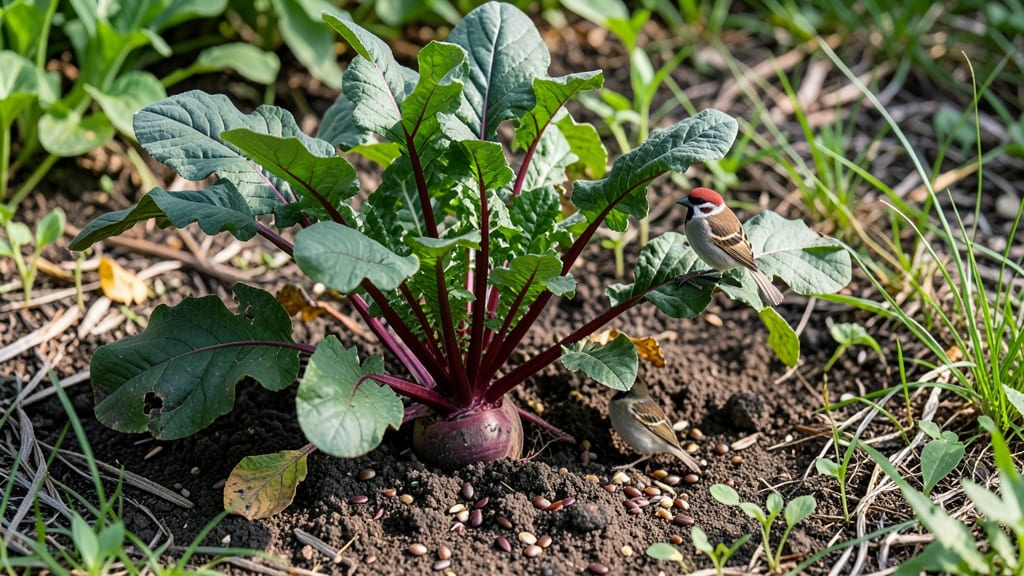
Your garden could be a year-round bird buffet—and the striped beets are the star. 🌱 These bold, edible perennials don’t just feed you; they feed birds, too, while adding vibrant color to every season.
The secret lies in pairing them with native plants that attract feathered visitors without raiding your harvest. Start with swiss chard or garnet beets—their bright stems catch birds' eyes while deterring pests.
Place feeders nearby with sunflower seeds to keep birds lingering, and they’ll happily snack on fallen leaves and seeds instead of digging up your crop. The layout is simple: cluster beets with dill, cosmos, or marigolds for a bird-friendly, pollinator magnet.
By summer’s end, you’ll have a garden that’s both productive and picturesque—think ruby-red foliage against bluebird feathers. Birds get a natural snack, you get protection from pests, and your space becomes a living tapestry of color and life. This works in containers, raised beds, or full sun patches.
The key is balance: beets for you, birds, and beauty—all in one striking package.
📚 In This Guide
- What you need
- Instructions
- Tips and common mistakes
- Wrapping up and next steps
What you need
- ● Striped beets (Beta vulgaris 'Chioggia') seeds: 1 packet (typically 200-300 seeds). Choose organic or heirloom varieties for best results.
- ● Well-draining soil: Loamy, fertile soil with a pH of 6.0-7.0. Amend with compost for nutrient-rich growth.
- ● Sunlight access: Full sun (6+ hours daily) or partial shade (4-6 hours). Beets tolerate light shade but may bolt faster in heat.
- ● Watering can or hose: With a gentle spray nozzle for consistent moisture (avoid soaking the soil).
- ● Garden trowel or transplanter: For sowing seeds or transplanting seedlings.
- ● Garden rake: To loosen soil and create a fine seedbed.
- ○ Row marker or sticks: To mark planting rows (optional but helpful for organization).
- ● Mulch (straw or shredded leaves): 2-3 inches to retain moisture and suppress weeds.
- ● Seedling trays: For starting seeds indoors 4-6 weeks before the last frost.
- ● Fertilizer (balanced 10-10-10 or compost tea): Apply lightly at planting and mid-season for extra vibrancy.
- ● Bird netting: To protect seedlings from hungry birds (especially if planting near feeders!).
- ● Garden journal: To track planting dates, watering schedules, and growth progress.
How to plant and maintain striped perennial beets for season-long color
Here’s the straightforward approach I’ve used to grow these striking perennials—no fuss, just bold foliage that thrives with minimal effort.
🌱 Step 1: Select the Right Variety and Planting Site
Striped perennial beets (Achillea millefolium ‘Moonshine’ or Beta vulgaris cultivars) need full sun to partial shade and well-draining soil. I always choose a spot with at least 6 hours of direct sunlight daily—their striking foliage fades without enough light. Amend heavy clay soil with 2-3 inches of compost to improve drainage, as these plants despise soggy roots.
Test your soil’s pH before planting—ideal range is 6.0-7.0. If your soil is too acidic, mix in 1 cup of garden lime per 10 square feet and till it in 2 weeks before planting. The key is patience here: striped beets grow slowly at first but reward you with bold, architectural leaves that last all season.
🪴 Step 2: Plant at the Correct Depth and Spacing
For container-grown plants, dig a hole twice as wide as the root ball but only as deep as the container’s base. Gently remove the plant, loosen its roots if pot-bound, and place it in the hole. Backfill with native soil, pressing lightly to eliminate air pockets. I always water deeply after planting to help roots establish contact with the surrounding soil.
Space plants 12-18 inches apart in rows or clusters—closer spacing encourages dense foliage, while wider gaps work for larger varieties. Mulch with 2-3 inches of organic mulch (like shredded bark) to retain moisture and suppress weeds. Avoid piling mulch against stems, which can trap moisture and cause rot.
☀️ Step 3: Water Consistently for Strong Growth
Water newly planted beets deeply every 2-3 days until they’re established (about 4-6 weeks). You’ll know they’re getting enough moisture when the soil feels damp 2 inches below the surface. Overwatering is the biggest mistake—striped beets are drought-tolerant once established, but soggy soil invites fungal diseases.
After the first month, reduce watering to once a week unless your area experiences extreme heat. Deep watering encourages deep root growth, which makes these perennials resilient. I always water in the early morning to minimize evaporation and reduce the risk of leaf diseases.
✂️ Step 4: Prune for Bushier Foliage and Season-Long Color
Pinch back the tips of new growth when plants reach 6-8 inches tall to encourage bushier, more compact foliage. This step is crucial—without pruning, striped beets can become leggy and lose their striking patterns. Use clean, sharp pruners to avoid tearing leaves, and remove only the top 1-2 inches of growth.
Deadhead spent flowers in late summer to redirect energy into foliage production. I also trim back any yellowed or damaged leaves immediately—they’re not just unsightly; they can harbor pests. A light pruning every 4-6 weeks keeps your plants looking their best and encourages new growth until frost.
🌿 Step 5: Protect from Pests and Overwinter for Next Season
Watch for aphids and slugs, which love tender new growth. I spray plants with a soapy water solution (1 tsp mild dish soap per gallon of water) if I spot clusters of aphids. For slugs, set out beer traps (a shallow dish of beer) near the base of plants—they’ll drown overnight. Aphids are easy to remove by hand if caught early.
In fall, cut back foliage to 2-3 inches above the ground and apply a 2-inch layer of mulch to insulate roots. Striped beets are hardy in USDA zones 3-9, so they’ll return year after year with proper winter care. I always mark their location in my garden journal—these perennials are worth the space they occupy.
Tips & tricks for growing striking striped perennials
These simple yet game-changing strategies will help your striped perennials thrive with minimal effort and maximum visual impact.
Site Selection Secret: While the instructions mention full sun to partial shade, I’ve found that plants in eastern exposures (morning sun with afternoon shade) produce the most vibrant stripes. The cooler afternoon light preserves the foliage’s vivid patterns better than harsh midday sun. Test your spot by observing how sunlight shifts throughout the day—this makes all the difference for color retention.
Soil Prep Pro Tip: The 2-3 inches of compost recommendation is perfect, but here’s what nobody tells you: mix in a handful of perlite or coarse sand when amending clay soil. This improves drainage without altering the soil’s structure too dramatically. I also add a slow-release fertilizer like osmocote at planting time—it feeds roots steadily without the risk of burning that comes with quick-release options.
Watering Wisdom: That 2-3 days watering schedule works, but timing matters more than frequency. I water at 6:00 AM sharp because morning watering gives leaves time to dry completely before nightfall. Wet foliage at night creates the perfect conditions for fungal diseases like powdery mildew. Use a rain gauge to track exactly how much water your plants receive—most garden hoses deliver far more than you think.
Pruning Precision: When pinching back growth at 6-8 inches, focus on removing only the topmost set of leaves rather than the entire stem tip. This encourages branching while preserving the plant’s natural shape. I use my fingers to pinch rather than pruners—it’s faster and less traumatic for the plant. For larger varieties, a light shearing with clean pruners every 4-6 weeks keeps them compact and encourages dense foliage growth.
Pro Tips for Birds & The Beets
- These simple yet game-changing strategies will help your striped perennials thrive with minimal effort and maximum visual impact.
- Site Selection Secret: While the instructions mention full sun to partial shade, I’ve found that plants in eastern exposures (morning sun with afternoon shade) produce the most vibrant stripes.
- Soil Prep Pro Tip: The 2-3 inches of compost recommendation is perfect, but here’s what nobody tells you: mix in a handful of perlite or coarse sand when amending clay soil.
Frequently asked questions
Got questions about growing birds & the beets—those stunning striped beets that attract feathered friends? Here are some of the most common ones, answered for you!
What’s the best time to plant striped beets for continuous blooms?
For year-round color, plant your striped beets in early spring (as soon as soil is workable) and again in late summer (6-8 weeks before your first frost). Succession planting every 3-4 weeks ensures a steady supply of flowers for birds while keeping your garden vibrant.
Do striped beets really attract birds? If so, which ones?
The bright, striped foliage and flowers of these beets are a magnet for goldfinches, sparrows, and chickadees. The seeds also draw in finches and other small birds. Plant them near shrubs or trees for extra shelter, and you’ll have a lively bird buffet in no time!
Can I grow striped beets in hot climates? What’s the trick?
Yes, but they thrive best in cooler weather (50–75°F). In hot climates, plant them in partial shade and keep soil moist. Mulch heavily to retain moisture, and consider fall or winter planting for optimal growth. If temps soar above 80°F, expect slower growth—but don’t give up!
Are the roots of striped beets edible? Do they taste different?
Yes! The roots are just as edible as regular beets, but they may have lighter stripes or mottling inside. The flavor is mild and slightly sweeter, especially when harvested young. Use them in salads, roasts, or pickled dishes—just like their non-striped cousins!
What should I do if my striped beets bolt too quickly?
Bolting (premature flowering) happens when beets sense heat or drought stress. To prevent it, keep soil consistently moist, use shade cloth in peak summer, and choose bolt-resistant varieties like ‘Chioggia’ or ‘Candy Stripes.’ If bolting occurs, harvest the greens early—they’re still tasty!
Wrapping up and next steps
From vibrant Swiss chard to striking rainbow chard, "birds & the beets" prove that vegetables can be as eye-catching as they are delicious! 🌈 These bold, striped perennials bring year-round color to your garden while offering a nutritious harvest.
Whether you're a seasoned gardener or just starting out, their versatility makes them a must-have for any plot.
Ready to plant your own edible masterpiece? Start by picking your favorite variety, prepping your soil, and getting those seeds in the ground—your garden (and taste buds!) will thank you. Happy growing! 🌱