
Vegetables
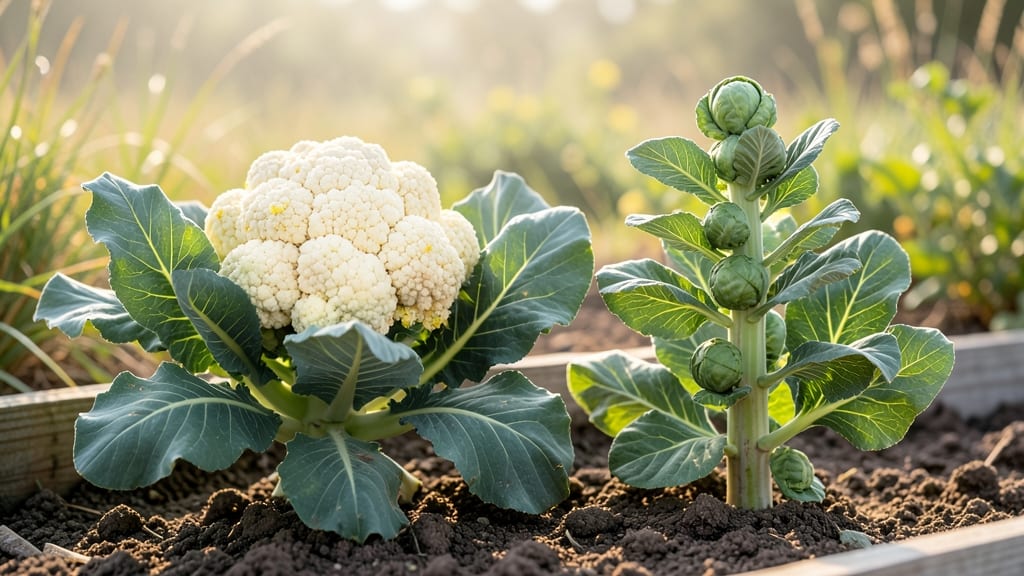
Growing Brussels sprouts and cauliflower in containers feels like cheating—these cold-hardy vegetables thrive when most other crops would freeze. 🌱 I’ve grown them in 5-gallon pots on my balcony for years, and the secret isn’t fancy soil or expensive setups, but timing and consistency.
These plants reward patience with harvests that last from fall through winter, even in chilly climates.
Both love full sun (6+ hours daily) and well-draining soil mixed with compost—think rich, crumbly, and slightly acidic. Brussels sprouts need deeper containers (at least 12 inches) since they grow tall, while cauliflower does fine in 10-inch pots.
Space them 12–18 inches apart to avoid crowding, and keep the soil moist but not soggy. Overwatering is the fastest way to lose them.
By mid-fall, you’ll see Brussels sprouts forming tight, gem-like buds along their stalks, while cauliflower heads swell into dense, creamy crowns. Harvest Brussels sprouts from the bottom up, and cauliflower when heads are firm and tight—don’t wait too long, or they’ll turn bitter.
The flavor? Deep, nutty, and sweeter after a light frost.
Even in small spaces, this duo delivers. Start seeds indoors 6–8 weeks before your last frost, or buy sturdy transplants. With the right containers and care, you’ll harvest through winter—proof that cold weather doesn’t mean empty gardens. Ready to try?
📚 In This Guide
- What you need
- Instructions
- Tips and common mistakes
- Wrapping up and next steps
What you need
- ● Containers: 5-gallon buckets or pots (minimum 12" deep for Brussels sprouts, 10" deep for cauliflower). Quantity: 1 per plant.
- ● Potting Mix: High-quality, well-draining organic mix (avoid garden soil). Quantity: 1 bag (1.5–2 cubic feet) per 4–6 plants.
- ● Seeds or Seedlings: Brussels sprouts: Cold-hardy varieties like ‘Long Island Improved’ or ‘Ruby’ (start seeds indoors 8–10 weeks before last frost).
- ● Cauliflower: Varieties like ‘Snowball’ or ‘Purple of Sicily’ (start seeds indoors 6–8 weeks before last frost).
- ● Fertilizer: Balanced organic fertilizer (10-10-10) or compost. Tip: Mix 1 tbsp per gallon of soil at planting.
- ● Watering Can or Hose: With a gentle spray nozzle for consistent moisture.
- ○ Garden Gloves: Optional but helpful for handling soil and plants comfortably.
- ● Grow Lights: For indoor seed starting (LED or fluorescent, 12–16 hours/day).
- ● Mulch: Straw or shredded leaves to retain moisture and regulate soil temp.
- ● Plant Labels: To track varieties and planting dates.
- ● Epsom Salt: (1 tbsp per plant monthly) for magnesium boost, especially for cauliflower.
- ● Row Covers: Lightweight fabric to protect young plants from pests or frost.
How to grow Brussels sprouts and cauliflower together in containers
This cold-hardy pairing thrives side by side—here’s how to set them up for maximum harvests.
🌱 Step 1: Select the Right Containers and Soil Mix
Use 12-18 inch deep containers (at least 20 gallons capacity) for each plant—Brussels sprouts need deep roots, and cauliflower benefits from extra soil volume. I like fabric grow bags because they allow roots to breathe and prevent waterlogging. Fill with a sterile potting mix blended with 20% compost for nutrients and 10% perlite for drainage. The mix should feel like a damp sponge when squeezed—neither clinging nor dripping.
Brussels sprouts and cauliflower both hate soggy feet, so add a 1-inch layer of coarse sand at the bottom of each container. This creates a drainage layer that prevents root rot, which is especially critical in containers where water pools easily. Mix in a slow-release fertilizer (like 5-10-5) at planting time—these heavy feeders will reward you with bigger harvests.
☀️ Step 2: Plant at the Correct Depth and Spacing
Start with transplants (not seeds) for faster results—Brussels sprouts and cauliflower take 60-80 days to mature, and container growing is slow. Plant transplants 12-15 inches apart in the center of each container. Brussels sprouts go slightly deeper (1 inch below soil line) while cauliflower can sit ½ inch shallower—their heads need room to swell without crowding.
Here’s the thing—water deeply before planting to settle the soil around roots. Tap the container gently to eliminate air pockets. After planting, water again until it drains from the bottom holes. You’ll know it’s right when the soil surface looks evenly moist but not glistening. Mulch with 2 inches of straw to retain moisture and suppress weeds—containers dry out fast, and these plants need consistent dampness.
💧 Step 3: Manage Light and Water for Optimal Growth
Both plants need full sun (6+ hours daily)—a south-facing spot or grow lights if indoors. Without enough light, cauliflower heads stay small and Brussels sprouts get leggy. I place my containers on castor wheels so I can rotate them weekly—this prevents plants from leaning toward the sun. You’ll notice straighter stems and fuller growth within a few weeks if you rotate consistently.
Water every 2-3 days, checking when the top 1-2 inches of soil feel dry. Containers dry out faster than garden beds, so I set a timer reminder—overwatering is just as bad as underwatering. For cauliflower, increase water slightly when the head starts forming (you’ll see a tight cluster of leaves). Brussels sprouts, meanwhile, need even moisture to prevent bitter sprouts—let the soil dry slightly between waterings as they mature.
✂️ Step 4: Fertilize and Prune for Maximum Yield
Feed every 3-4 weeks with a balanced liquid fertilizer (like 10-10-10) diluted to half-strength. Too much nitrogen makes cauliflower leaves grow at the expense of the head, and Brussels sprouts get leafy but sparse sprouts. I also side-dress with compost mid-season—just sprinkle a handful around the base and water it in. This gives them a steady nutrient supply without burning roots.
For cauliflower, blanch the head when it’s 6-8 inches wide—wrap the head loosely in leaves tied with twine or a paper bag to protect it from sun exposure. This prevents the head from turning yellow or bitter. For Brussels sprouts, prune lower leaves as they yellow—this directs energy to the upper sprouts. Harvest bottom-up, starting when the lowest sprouts reach 1 inch in diameter. You’ll get 4-6 weeks of harvests this way.
⏰ Step 5: Extend the Season with Cold Protection
Both plants handle light frosts, but heavy freezes will kill them. Cover with frost blankets when temps drop below 25°F—I use remay cloth secured with bricks. For cauliflower, harvest before hard frost (the heads won’t regrow). Brussels sprouts, however, sweeten in cold weather, so I leave them planted until snowfall—just protect them with straw mulch and a clear plastic dome for extra insulation.
If you’re growing in winter months, move containers to a sheltered porch or garage during daytime if temps stay below 40°F. These plants are tough, but consistent chilling (below 50°F) triggers better flavor. You’ll taste the difference in sweeter sprouts and tighter cauliflower heads when you grow them this way.
Tips & tricks for perfect container-grown Brussels sprouts and cauliflower
These simple strategies will help you maximize your harvests while avoiding common container-growing pitfalls.
Container Depth Matters: Since Brussels sprouts need those deep roots, don't skimp on container size. I've seen gardeners use 12-inch pots and wonder why their sprouts stayed small—they need that full 18-inch depth to develop properly. For cauliflower, the extra volume helps prevent root-bound stress, which can make heads split or stay small. If you're working with limited space, consider growing one plant per container rather than trying to squeeze both in together.
Soil Mix is Non-Negotiable: That 1-inch layer of coarse sand at the bottom isn't just for show—it's your insurance against root rot. I learned this the hard way when my first batch of cauliflower plants turned yellow and wilted. The perlite in your mix should make up about 10% of the total volume, not just a sprinkle on top. Think of it like building a foundation: you want that perfect balance of nutrients (compost) and aeration (perlite) to keep roots happy and healthy.
Light Rotation Game-Changer: Those castor wheels aren't just for moving containers—they're your secret weapon against leggy plants. I rotate my containers every 3-4 days, and the difference in plant structure is night and day. Brussels sprouts will grow straighter and cauliflower heads will form more compactly. If you don't have wheels, just pick up and rotate containers by hand—your plants will thank you with better yields and stronger stems.
Cold Weather Strategy: When temperatures dip below 40°F, don't just cover your plants—think about their environment. I move my containers to a sheltered porch during the day if temps stay below freezing, then bring them back to the garden at night. This mimics their natural cold-hardy behavior while protecting them from extreme temperature swings. For Brussels sprouts, the cold actually improves flavor—just make sure they're getting that consistent chilling below 50°F for those sweetest sprouts.
Pro Tips for Brussel Sprouts And Cauliflower
- These simple strategies will help you maximize your harvests while avoiding common container-growing pitfalls.
- Container Depth Matters: Since Brussels sprouts need those deep roots, don't skimp on container size.
- Soil Mix is Non-Negotiable: That 1-inch layer of coarse sand at the bottom isn't just for show—it's your insurance against root rot.
Frequently asked questions
Got questions about growing Brussels sprouts and cauliflower in containers? You’re not alone! Here are some of the most common ones—and their answers—to help you grow like a pro.
Can I grow Brussels sprouts and cauliflower in the same container?
While both are cold-hardy, they have slightly different needs. Brussels sprouts thrive in cooler temps and need more space (at least 12" deep). Cauliflower prefers slightly warmer soil and does well in 10-12" containers. For best results, grow them separately or pair them with shallower-rooted plants like lettuce.
How long does it take for Brussels sprouts and cauliflower to mature in containers?
Brussels sprouts take 90-120 days from transplant to harvest, while cauliflower matures in 70-100 days. Start seeds indoors 6-8 weeks before your last frost date, then transplant seedlings into containers when they’re 4-6 inches tall. Patience pays off—both love cool weather!
Why are my cauliflower heads turning yellow or brown before harvest?
Yellowing or browning heads usually mean heat stress or nutrient deficiency. Cauliflower bolts (premature flowering) when temps rise above 80°F—try growing them in partial shade in summer. For brown spots, check for clubroot disease (common in soggy soil) and ensure well-draining soil with a balanced fertilizer (like 10-10-10).
What’s the easiest way to harvest Brussels sprouts from containers?
Harvest sprouts from the bottom up! Use a sharp knife or clean scissors to snip off individual sprouts when they’re 1-2 inches wide (about 2-3 months after flowering). Leave the top leaves intact to keep the plant producing. Pro tip: Harvest in the morning for the freshest flavor and to encourage more growth!
Are there cold-hardy alternatives if Brussels sprouts or cauliflower fail?
Try these container-friendly swaps:
- Kale: Thrives in cold and can be harvested young for tender leaves.
- Broccoli: Similar care to cauliflower but more forgiving of cooler temps.
- Radishes: Fast-growing (30 days!) and perfect for small pots.
- Cabbage: Cold-tolerant and great for stir-fries or fermenting.
Wrapping up and next steps
Brussels sprouts and cauliflower are fantastic choices for container growing—hardy, nutritious, and rewarding! With the right setup, you can enjoy a bountiful harvest even in cooler months. Whether you’re a beginner or a seasoned gardener, their versatility makes them a must-try for small-space gardens.
Ready to dive in? Start by picking your favorite variety and gathering your containers—then watch your cold-hardy greens thrive! 🌱