
Vegetables
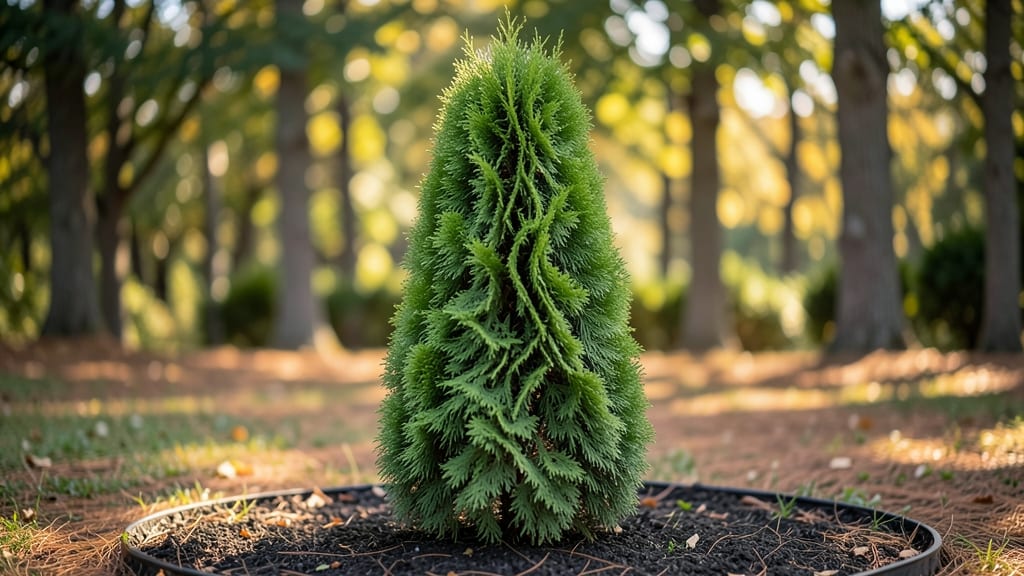
Emerald Green Arborvitae turns dull corners into lush, year-round privacy screens with minimal effort. 🌿 This cold-hardy evergreen thrives where others struggle—partial shade, poor soil, even harsh winters—while keeping its signature vibrant green color.
After planting mine three years ago, I’ve watched it grow into a dense, 8-foot-tall hedge that blocks wind and noise perfectly, all while requiring almost no maintenance.
The secret to its success lies in its adaptability: it tolerates full sun to deep shade, survives on 1 inch of water per week once established, and handles USDA zones 3-8 without complaint. For soil, it’s not picky—just well-draining works, though amended soil with compost speeds up early growth.
Planting in 3- to 5-foot-wide rows ensures proper airflow and prevents disease, while its slow growth means you won’t need to prune more than once or twice a year.
By summer’s end, you’ll have a hedge so dense it feels like a living wall, with soft, feathery foliage that smells faintly of pine when brushed.
The best part? It stays green all winter, providing structure and color when other plants fade. Even my black thumb couldn’t kill this one—it’s that resilient.
Perfect for foundation plantings, property lines, or even as a solitary specimen. Once established, it’s nearly indestructible, making it the ideal choice for busy gardeners or anyone tired of fighting finicky evergreens. Let’s get yours planted right the first time.
📚 In This Guide
- What you need
- Instructions
- Tips and common mistakes
- Wrapping up and next steps
What you need
- ● Arbor Vitae Plants: 1–3 Thuja occidentalis (American Arbor Vitae) saplings or seedlings (3–5 ft tall for mature look in 3–5 years).
- ● Emerald Green cultivar (preferred for its compact, dense growth and vibrant color).
- ○ Soil Amendments (Optional but Helpful): 2–3 gallons of peat moss or compost (for improving drainage and fertility).
- ● 1 lb of slow-release fertilizer (10-10-10 or 5-10-5 NPK ratio, organic preferred).
- ● Planting Supplies: 1 shovel (round-point for digging, flat for amending soil).
- ● 1 garden trowel (for precision planting).
- ● 1–2 5-gallon buckets (for watering or mixing soil).
- ● 1 measuring tape (to mark planting spacing—3–6 ft apart for mature trees).
- ● Mulch: 2–3 inches of pine straw, wood chips, or shredded bark (to retain moisture and suppress weeds).
- ● Watering Tools: 1 hose with adjustable nozzle or watering can (for deep, slow watering).
- ○ 1 soaker hose (optional, for efficient moisture control).
- ○ Pruning Tools (Optional): 1 pair of bypass pruners (for shaping or removing dead branches).
- ● 1 hand saw (for thicker branches, if needed).
- ● Location: A partially shaded to fully shaded spot (dappled sunlight or <6 hours of direct sun daily). Avoid soggy or waterlogged soil.
- ● Climate: Hardy in USDA Zones 2–7 (cold-hardy down to -40°F!).
- ● Soil pH: Slightly acidic to neutral (6.0–7.0). Test soil if unsure—amend with sulfur or lime as needed.
- ● Time of Year: Plant in early spring or fall for best root establishment.
How to plant and care for emerald Green Arbor Vitae in shade
This cold-hardy evergreen thrives where others fail—here's how to give it the perfect start.
🌱 Step 1: Choose the Right Planting Location
Emerald Green Arbor Vitae handles shade better than most evergreens, but it still needs at least 3-4 hours of indirect light daily. Look for spots with dappled sunlight or filtered light from nearby trees. Avoid deep shade where branches grow sparse and weak—this tree needs some light to maintain its signature vibrant color.
Test the site for moisture—these trees prefer well-drained soil but won't tolerate soggy conditions. If your yard holds water after rain, amend the area with 2-3 inches of compost mixed into the top 12 inches of soil to improve drainage. The ideal spot balances shade with just enough light to prevent yellowing needles.
🪴 Step 2: Prepare the Planting Hole
Dig a hole twice as wide as the root ball but no deeper—planting too deep suffocates roots and causes stress. Loosen the sides of the hole with a shovel or hands to encourage root spread into surrounding soil. This tree's roots are shallow but extensive, so breaking up compacted soil helps long-term stability.
Remove the plant from its container and gently tease apart any circling roots with your fingers. If roots are tightly bound, make 2-3 vertical cuts around the root ball to encourage outward growth. Place the tree in the hole so the top of the root ball sits 1 inch above ground level—this prevents water from pooling around the stem.
💧 Step 3: Plant and Water Thoroughly
Backfill the hole with native soil, tamping gently in 2-inch layers to eliminate air pockets. Avoid compacting too firmly—you want roots to penetrate easily. Water immediately after planting to settle the soil and remove any air gaps. Give the tree 1-2 gallons of water to encourage roots to spread into the surrounding soil.
Mulch the base with 2-3 inches of organic mulch (like shredded bark), keeping it 6 inches away from the trunk to prevent rot. This mulch layer retains moisture and regulates soil temperature, which is especially important in shade where soil can stay cooler and wetter. Check soil moisture weekly—water when the top 2 inches feel dry.
☀️ Step 4: Provide Ongoing Care for Shade Adaptation
Emerald Green Arbor Vitae handles shade well, but it still benefits from occasional bright light to maintain its signature color. If needles start losing their vibrant green hue, consider pruning nearby trees to increase light exposure slightly. Prune in late winter or early spring before new growth begins—this tree responds best to shaping cuts made just above outward-facing buds.
Fertilize lightly in early spring with a balanced, slow-release fertilizer (10-10-10 ratio) to support new growth. Over-fertilizing in shade can lead to weak, leggy growth. Watch for spider mites or bagworms in dry conditions—these pests target stressed trees. A strong spray of water usually deters them, but severe infestations may require horticultural oil.
⏰ Step 5: Monitor for Long-Term Health
After the first year, your Emerald Green Arbor Vitae should establish a strong root system. Check for signs of stress like yellowing needles or sparse growth—these often signal either too much shade or poor drainage. If branches grow unevenly, prune to maintain a balanced shape and encourage denser foliage.
This tree thrives in cold climates but still benefits from winter protection in its first few years. A light layer of mulch (up to 4 inches) around the base helps insulate roots during freezing temperatures. In extreme cold zones, consider wrapping the trunk with burlap for added protection against winter burn.
Tips & tricks for perfect emerald Green Arbor Vitae planting
These pro tips will help you avoid common mistakes and give your shade-loving evergreen the best possible start.
Light Balance Secret: While this tree handles shade better than most, those crucial 3-4 hours of indirect light make all the difference. I've seen trees planted in spots with only 2 hours of light develop sparse growth—look for areas where sunlight filters through tree canopies rather than direct beams. A simple test: if the spot stays dim even on sunny days, it's too shaded.
Root Preparation Technique: When loosening the root ball in Step 2, don't just pull at the roots—gently work your fingers between them to separate any circling roots. I learned this the hard way after seeing a tree struggle for years with bound roots. Those 2-3 vertical cuts if needed can make the difference between a thriving tree and one that fights for nutrients.
Mulching Strategy: The 2-3 inches of organic mulch should extend out to the tree's drip line (where the branches naturally reach), not just around the trunk. This creates a moisture-retaining zone that mimics natural forest conditions. Just remember to keep it 6 inches away from the trunk to prevent rot—this is where many gardeners go wrong.
Winter Protection Insight: For the 4 inches of winter mulch, I recommend using straw or shredded leaves instead of bark. These materials provide better insulation against cold winds while still allowing moisture to penetrate. In particularly harsh climates, add a layer of burlap around the trunk—it's the difference between winter burn and a healthy start in spring.
Pro Tips for Emerald Green Arbor Vitae
- These pro tips will help you avoid common mistakes and give your shade-loving evergreen the best possible start.
- Light Balance Secret: While this tree handles shade better than most, those crucial 3-4 hours of indirect light make all the difference.
- Root Preparation Technique: When loosening the root ball in Step 2, don't just pull at the roots—gently work your fingers between them to separate any circling roots.
Frequently asked questions
Got questions about growing emerald green arbor vitae? You’re not alone—this stunning evergreen has some unique quirks! Below, we tackle the most common queries to help you nurture a thriving, shade-loving plant with confidence.
Is emerald green arbor vitae really cold-hardy?
Emerald Green Arbor Vitae is one of the toughest choices for cold climates, thriving in USDA Zones 3-8. It can handle winter temps as low as -40°F (-40°C) once established, making it perfect for snowy regions. Just avoid planting in late fall—wait until spring or early fall for best root establishment.
How fast does it grow, and what’s the mature size?
This evergreen grows at a moderate rate (12–24 inches per year), reaching its mature height of 12–15 feet in about 10–15 years. Its width is more compact at 3–4 feet, making it ideal for small yards or as a privacy hedge. Pro tip: Prune in late winter or early spring to maintain shape without stressing the plant.
Why is my arbor vitae turning brown? Is it dying?
Brown needles are usually a sign of overwatering, underwatering, or pest issues. Check the soil—it should be moist but well-draining. Spider mites or bagworms (common in shade) can also cause browning. Solution: Water deeply but infrequently, and inspect for pests. If the browning is at the tips, it’s often environmental stress (e.g., salt spray or poor airflow).
Can I grow emerald green arbor vitae in full shade?
Yes! This variety is one of the few arbor vitaes that thrives in partial to full shade (3–6 hours of sunlight). In deep shade, growth may slow, but it won’t die—just expect a denser, bushier form. For the best color and vigor, plant it in dappled shade or morning sun.
What’s the best alternative if I need a faster-growing evergreen?
If you want faster growth but still need shade tolerance, consider:
- Thuja occidentalis ‘Sunkist’ – Golden foliage, grows 12–18”/year.
- Picea pungens ‘Glauca Globosa’ – Compact blue spruce (6–12”/year).
- Chamaecyparis lawsoniana ‘Ellwoodii’ – Soft texture, shade-friendly (12”/year).
Wrapping up and next steps
Emerald Green Arbor Vitae isn’t just a stunning evergreen—it’s a low-maintenance, shade-loving superstar that brings life to your garden year-round. Whether you're a seasoned gardener or a beginner, this cold-hardy beauty proves that growing lush greenery in shady spots is totally doable with the right care. 🌿
Ready to transform your space? Start by selecting a spot with partial shade, gather your tools, and give this resilient plant the love it deserves. Before you know it, you’ll have a thriving, vibrant evergreen that’s as tough as it is beautiful—and that’s a win-win!