
Vegetables
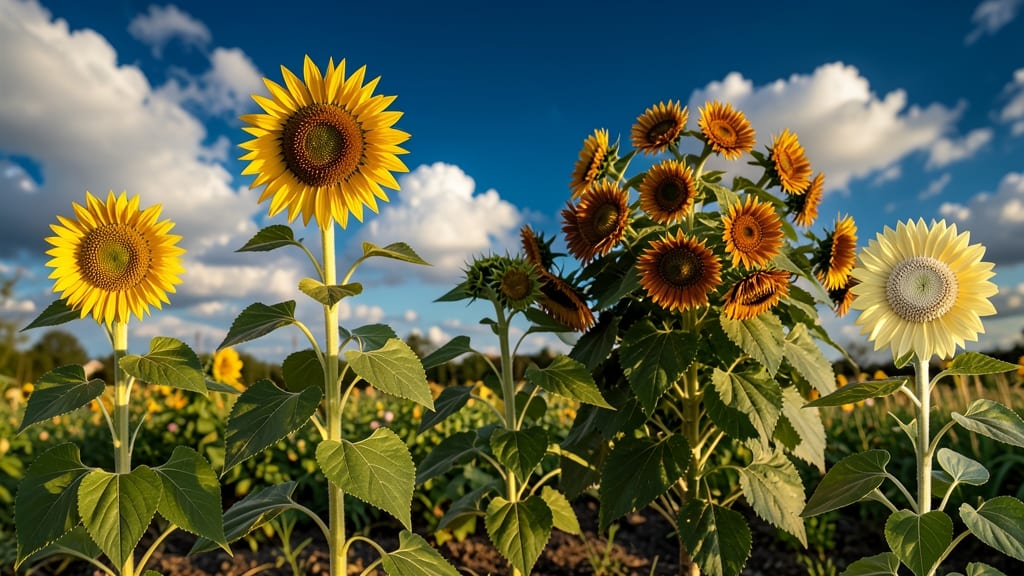
Sunflowers aren’t just one type—there are how many types of sunflowers are there over 70 recognized varieties, each with its own height, color, and purpose. 🌻 From towering giants that top 12 feet to tiny, bushy dwarfs perfect for containers, choosing the right type changes everything about how you grow them.
The wrong pick could mean floppy stems in windy yards or seeds that never mature.
Most gardeners start with annual sunflowers (the classic, one-season wonders) or perennial varieties (like the hardy Helianthus species) that return year after year. Then there’s the split between edible types (think Mammoth or Russian Giant) and ornamental hybrids (like the velvety ‘Teddy Bear’ or bi-color ‘Presto’).
Each group demands different soil, sunlight, and spacing—so your garden’s layout depends entirely on which you pick.
Here’s the game-changer: dwarf varieties (under 3 feet) thrive in small spaces or urban gardens, while giant types need deep, fertile soil and staking. Even color matters—dark-centered sunflowers attract more pollinators, while pastel varieties bloom longer.
Your choice isn’t just about looks; it’s about how much sun your yard gets, how tall your fence is, and whether you’re growing for seeds, snacks, or show.
Ready to match your sunflower to your space? Let’s break down the categories that’ll make your garden pop—without the guesswork. (Spoiler: Your neighbors won’t believe you grew them all yourself.)
📚 In This Guide
- What you need
- Instructions
- Tips and common mistakes
- Wrapping up and next steps
What you need
- ● Sunflower seeds or plants: At least 5-10 varieties (e.g., Helianthus annuus cultivars) for comparison—check local nurseries or seed catalogs for diverse types like Mammoth, Teddy Bear, or Russian Giant.
- ● Field guide or botanical reference: A printed or digital guide to sunflower species (e.g., The Sunflower: Helianthus annuus by Charles Heiser).
- ● Measuring tape or ruler: For recording plant height, leaf width, and flower diameter (precision: ±0.1 inch).
- ○ Digital camera or smartphone: With a macro lens or zoom (optional but helpful for close-up details like seed heads or leaf patterns).
- ● Notebook or data sheet: For logging observations (include columns for species name, height, flower color, leaf shape, and growth habits).
- ● Pruning shears: Small, sharp pair for harvesting samples or trimming plants.
- ● Glove: Lightweight gardening gloves to protect hands while handling thorny stems or prickly seed heads.
- ● Hand lens or magnifying glass: For inspecting fine details like bracts, seed patterns, or pollen.
- ● pH testing kit: To analyze soil conditions if growing sunflowers from seed (ideal pH: 6.0–7.5).
- ● Dried flower press: For preserving samples of different sunflower varieties for long-term study.
- ● Online plant databases: Access to resources like USDA Plants Database or Kew Gardens’ Plant List for cross-referencing.
Botanist-approved classification of sunflower types
Sunflowers aren't just one type—they're a diverse genus with distinct categories. Here's how to identify and understand the botanical classifications that matter most.
🌻 Step 1: Understand the Two Primary Botanical Groups
All sunflowers belong to the Helianthus genus, but botanists divide them into two main groups: annual and perennial types. Annual sunflowers (Helianthus annuus) complete their life cycle in one season and are the most common garden varieties, prized for their bold blooms and edible seeds. Perennial sunflowers, like Helianthus maximiliani or Helianthus giganteus, return year after year, often growing wild in prairies and offering delicate, smaller flowers.
Here's the key difference: annuals thrive as dramatic centerpieces, while perennials excel in naturalized landscapes. Annuals produce those iconic 12-inch-wide blooms you see in fields, while perennials typically stay under 6 inches in diameter but multiply aggressively. I always plant both types—annuals for instant impact, perennials for long-term pollinator support.
🌱 Step 2: Identify Cultivar Types Within Annual Sunflowers
Within annual sunflowers, you'll find five distinct cultivar types, each bred for specific characteristics. Giant varieties like 'Russian Giant' reach 10-12 feet tall with 16-inch-wide blooms, while dwarf types like 'Teddy Bear' stay under 3 feet and produce 4-inch flowers perfect for containers. Branching types like 'Moulin Rouge' develop multiple stems from the base, creating bushy displays.
Then there are single-flowered types (like 'Autumn Beauty') with classic ray florets and double-flowered varieties (like 'ProCut') with layered petals that resemble pom-poms. Don't overlook oilseed types like 'Sunbright'—these are bred for seed production rather than ornamental value. I always grow at least one of each type to showcase the range in my garden.
🌿 Step 3: Recognize Wild and Native Sunflower Species
Beyond cultivated varieties, over 70 wild species exist in North America alone. These native sunflowers often have smaller flowers (under 3 inches) but play crucial ecological roles. Helianthus debilis (beach sunflower) thrives in coastal dunes, while Helianthus petiolaris (prairie sunflower) dominates midwestern grasslands. Many have narrower petals and darker centers compared to garden varieties.
What sets wild species apart is their adaptability—they survive drought, poor soil, and harsh winds. If you're restoring native habitats, prioritize species like Helianthus rigidus (stiff sunflower) or Helianthus divaricatus (woodland sunflower). These plants support native pollinators that cultivated varieties often can't sustain. I grow Helianthus maximiliani in my prairie border—its 6-foot stalks provide vertical structure while attracting goldfinches.
✂️ Step 4: Differentiate by Growth Habit and Uses
Sunflowers aren't just categorized by appearance—they're also classified by growth habit and human uses. Single-stemmed varieties like 'Mammoth' are ideal for cut flowers, while multi-branching types like 'Autumn Beauty' produce abundant seed heads for birds. Confetti sunflowers (like 'Confetti Mix') have bicolored petals that self-clean when dry, making them perfect for dried arrangements.
Don't forget edible-focused types: 'Valentine' is bred for high oil content, while 'Sunspot' produces small, snackable seeds. Some varieties, like 'Pendulum', grow pendulous flowers that nod with the wind, creating a dynamic garden movement. I always include at least one bird-friendly type (like 'Autumn Beauty') and one cut-flower variety (like 'ProCut') in my seasonal rotations.
📏 Step 5: Use the USDA's Official Classification System
For precise identification, refer to the USDA's Plant Database, which categorizes sunflowers by flower color, stem height, and leaf arrangement. For example, yellow-rayed sunflowers dominate commercial fields, while red-rayed types (like 'Indian Summer') are rarer but highly sought after. Bicolor varieties like 'Cherry Blossom' feature pink and yellow petals arranged in concentric rings.
The USDA also distinguishes between wild-collected and cultivar-bred types. Wild-collected species often have irregular petal patterns and uneven growth, while cultivars exhibit uniformity in size, color, and bloom time. When selecting seeds, check if the variety is open-pollinated (like 'Russian Giant') or hybrid (like 'ProCut')—this affects whether you can save seeds for next year. I stick to open-pollinated varieties to maintain genetic diversity in my garden.
Tips & tricks for mastering sunflower classification
This isn't just about memorizing names—it's about seeing the hidden patterns that make sunflower identification click. Here's how to go beyond the basics and truly understand what sets each type apart.
Look Beyond the Blooms: The 12-inch-wide annual flowers you see in fields aren't the only game in town. Notice how perennial species like Helianthus maximiliani develop 6-foot stalks that provide vertical structure—something garden annuals rarely match. I always scan for these architectural differences first; they tell you more about the plant's ecological role than just flower size.
Petal Patterns Are Your Secret Weapon: While garden varieties focus on bold colors, wild species often have narrower petals and darker centers that create intricate patterns. The USDA's classification system actually prioritizes these subtle differences over just color. Try holding a magnifying glass to examine the concentric rings in bicolor varieties like 'Cherry Blossom'—you'll spot the subtle pink-to-yellow transitions that distinguish them from pure yellow types.
Growth Habit Reveals Purpose: The single-stemmed 'Mammoth' variety isn't just tall—it's bred specifically for cut flowers because its single, sturdy stem stays upright. Compare that to multi-branching types like 'Moulin Rouge', which develop multiple stems from the base. This branching habit makes them perfect for pollinator gardens because they create dense flower clusters that bees can easily navigate. I always plant both types: one for bouquets, one for wildlife.
Seed Characteristics Matter: Don't overlook the seed heads! Oilseed types like 'Sunbright' produce seeds with higher fat content, while bird-friendly varieties like 'Autumn Beauty' develop abundant, small seeds that goldfinches adore. Even the seed head shape varies—some are pendulous (like 'Pendulum'), while others remain upright. This is where the USDA's classification system gets particularly useful for identifying unknown plants.
Pro Tips for How Many Types Of Sunflowers Are There
- This isn't just about memorizing names—it's about seeing the hidden patterns that make sunflower identification click.
- Look Beyond the Blooms: The 12-inch-wide annual flowers you see in fields aren't the only game in town.
- Petal Patterns Are Your Secret Weapon: While garden varieties focus on bold colors, wild species often have narrower petals and darker centers that create intricate patterns.
Frequently asked questions
Got questions about sunflowers? You’re not alone! Here are some of the most common queries—plus clear, expert-backed answers to help you navigate the world of these cheerful blooms.
How many sunflower varieties are there, and how are they classified?
Sunflowers are typically divided into two main botanical categories: Helianthus annuus (the common sunflower) and wild sunflowers (like Helianthus debilis). Within Helianthus annuus, there are over 70 recognized varieties, grouped by use—oilseed, confectionery, ornamental, or multi-purpose. Ornamental types are further split into single, semi-double, or double blooms, while edible varieties prioritize seed size or oil content.
When is the best time to plant sunflowers for maximum yield?
Sunflowers thrive in warm soil (60–85°F), so plant them after the last frost in spring. For most U.S. regions, this means April–June. If you’re growing them for seeds, opt for early-maturing varieties (50–60 days) to avoid fall frost. Pro tip: Direct-sow seeds 1 inch deep—sunflowers hate transplanting!
Can I grow sunflowers in containers, or do they need a garden bed?
Yes! Sunflowers adapt well to containers if given enough space. Choose dwarf varieties (like ‘Teddy Bear’ or ‘Moulin Rouge’) for pots—these stay under 3 feet tall. Use a 5-gallon container minimum with drainage holes and fill it with well-draining potting mix. Place them in full sun (6+ hours/day) and fertilize lightly every 2–3 weeks for best results.
Why are my sunflower heads drooping, and how do I fix it?
Drooping sunflower heads usually signal overwatering, underwatering, or pest stress. Check the soil—it should be moist but not soggy. If the stems feel mushy, you’re overwatering; if dry and brittle, they need hydration. Spider mites or aphids can also cause wilting. Spray leaves with neem oil or introduce ladybugs for natural pest control.
Are there sunflower alternatives for small spaces or low-maintenance gardens?
If sunflowers seem too tall or high-maintenance, try these low-growing or compact alternatives:
- Jerusalem artichokes (Helianthus tuberosus): Edible tubers, drought-tolerant, and spread via rhizomes.
- Maximilian sunflower (Helianthus maximiliani): Native perennial with yellow daisy-like blooms (3–5 ft tall).
- False sunflower (Heliopsis helianthoides): Shorter (2–4 ft), thrives in partial shade, and attracts pollinators.
- Echinacea (Coneflower): Not a sunflower, but similar perennial blooms with medicinal benefits.
All are deer-resistant and perfect for pollinator gardens!
Wrapping up and next steps
Sunflowers aren’t just one type—they’re a vibrant world of over 70 recognized species, each with unique traits, colors, and uses! Whether you’re drawn to towering giants for bouquets, compact varieties for gardens, or edible seeds for snacks, there’s a sunflower perfect for you. 🌻
Now that you’ve explored the diversity, why not plant your own? Pick a type that matches your space and goals—whether it’s a sunflower for show, shade, or sustenance. Happy gardening!