
Vegetables
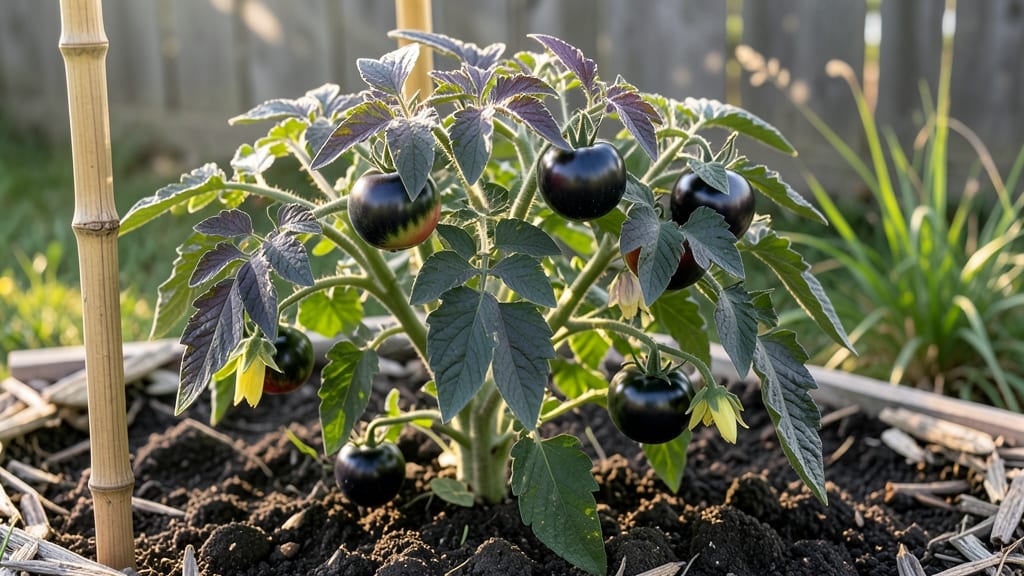
Growing Indigo Apple tomatoes changes how you think about heirloom varieties—this cold-hardy perennial produces deep purple fruits that taste like sun-ripened sweetness with a hint of smoky earth. 🌿 Unlike most tomatoes, it actually thrives in cooler climates and returns year after year, making it the ultimate low-maintenance showstopper for gardeners tired of annuals.
The secret to success starts with well-draining soil rich in organic matter—think compost blended into garden beds or raised beds. Plant in full sun (6+ hours daily) but protect from harsh afternoon heat in hotter zones.
Unlike traditional tomatoes, Indigo Apples handle light frosts and even produce in partial shade, though fruit size may shrink.
By mid-summer, you'll be harvesting glossy purple tomatoes that ripen to a deep red inside—slicing one reveals a flavor profile that's sweeter than most heirlooms, with a meaty texture that holds up perfectly for sauces or fresh eating.
The plants themselves stay compact (4-5 feet tall), making them ideal for small spaces or container growing.
Pair them with basil or nasturtiums to deter pests naturally, and watch how the vibrant foliage becomes the star of your garden. Unlike blight-prone varieties, Indigo Apples develop a natural resistance once established—just avoid overwatering to prevent cracking. Here's how to make them thrive in your climate.
📚 In This Guide
- What you need
- Instructions
- Tips and common mistakes
- Wrapping up and next steps
What you need
- ● Indigo apple tomato seeds – 1 packet (or 10-15 seeds if starting from scratch). Look for Solanum lycopersicum ‘Indigo Apple’ or heirloom varieties.
- ● Well-draining potting mix – 2-3 gallons for seed starting (or a seedling tray with cells). Use a sterile, organic mix (e.g., 60% peat/coir, 30% perlite, 10% compost).
- ● Containers or garden space – For seedlings: 4-6 inch biodegradable pots (or 1020 seedling trays).
- ● For transplanting: 1-gallon pots or a sunny garden bed with 6+ hours of sunlight.
- ● Fertilizer – Seedlings: Balanced organic fertilizer (5-5-5 or fish emulsion, diluted to half-strength).
- ● Mature plants: Low-nitrogen, high-phosphorus fertilizer (e.g., 2-3-1 ratio) or compost tea.
- ● Watering can or hose with a gentle spray nozzle – Avoid overwatering to prevent fungal issues.
- ○ Grow lights (optional but helpful) – If starting indoors, use a full-spectrum LED grow light (12-16 hours/day) until seedlings are hardened off.
- ● Hand trowel or small shovel – For transplanting seedlings.
- ● Pruning shears – To shape plants and remove suckers (encourages fruit production).
- ● Mulch (straw or shredded leaves) – Helps retain moisture and regulate soil temperature.
- ● Cage or trellis – Supports vining growth (especially useful in small spaces).
- ● pH test kit – Ideal soil pH for tomatoes: 6.0–6.8. Adjust with lime (to raise pH) or sulfur (to lower).
- ● Row cover or frost cloth – Protects young plants from late frosts (this variety is cold-hardy but benefits from extra warmth early on).
How to grow Indigo Apple tomatoes as a cold-hardy perennial
This striking heirloom thrives in cooler climates—here's the method I've perfected for robust, productive plants year after year.
🌱 Step 1: Select and Prepare the Planting Site
Choose a location with full sun exposure (6-8 hours daily) and well-draining soil. Indigo Apples tolerate cooler temperatures than most tomatoes, but they still need protection from late frosts. Amend heavy clay soil with 2-3 inches of compost to improve drainage and fertility.
These tomatoes grow best in slightly acidic to neutral soil (pH 6.0-7.0). Test your soil and adjust with lime if needed—too alkaline soil weakens the plant's ability to absorb nutrients. I always work in a 5-gallon bucket of compost per plant to ensure strong root development during the first growing season.
☀️ Step 2: Plant in Early Spring After Frost Risk Passes
Wait until all danger of frost has passed in your zone—Indigo Apples can handle light frosts once established, but young plants are vulnerable. Plant seeds ¼ inch deep or established plants 12-18 inches apart in rows spaced 24-36 inches apart to allow for air circulation and prevent disease.
Here's the thing—I've found that planting in early spring gives the roots time to establish before summer heat arrives. If you're in a cooler climate (zones 3-6), you can even get away with planting as late as early summer, but expect a shorter harvest window. Water deeply right after planting to settle the soil around roots.
💧 Step 3: Water Consistently and Mulch Heavily
Indigo Apples need 1-1.5 inches of water weekly, but they're more drought-tolerant than most tomatoes once established. Water at the base of the plant in the morning to reduce disease risk. I use a soaker hose for even moisture distribution—this prevents wetting the foliage, which can lead to fungal issues.
Apply 3-4 inches of organic mulch around each plant to retain moisture and regulate soil temperature. Straw or shredded leaves work well, but avoid wood chips—they can compact and suffocate roots over time. The mulch also helps suppress weeds, which compete for nutrients these heavy feeders need.
✂️ Step 4: Prune and Support for Optimal Growth
These tomatoes benefit from light pruning to improve air circulation and fruit production. Remove suckers (the small shoots that grow in the leaf axils) regularly, but don't over-prune—Indigo Apples are more vigorous than standard tomatoes and can handle a fuller growth habit. I leave 2-3 main stems for better fruit load and easier harvesting.
Install cages or stakes at planting time to support the plants as they grow. The deep blue fruit can be heavy, and the plants may topple without support. I prefer sturdy tomato cages buried halfway into the soil—they provide better stability than stakes alone. Prune any diseased or yellowing leaves immediately to prevent spread.
🌿 Step 5: Overwinter for Perennial Growth
In colder climates, protect the base of the plant with 12-18 inches of mulch before the first frost. Indigo Apples are cold-hardy to 10°F, but their roots need insulation to survive winter. I cover the mulch with a layer of straw bales or leaves for extra protection against freezing temperatures.
In spring, remove the mulch gradually as new growth appears. The plants will send up new shoots from the base—this is your sign that they've survived the winter. Fertilize lightly with compost tea or a balanced organic fertilizer when you see new growth to encourage vigorous regrowth. With proper care, these plants can produce for 5-7 years or more.
Tips & tricks for growing stunning Indigo Apple tomatoes
These insights will help you cultivate thriving Indigo Apple tomato plants that produce vibrant blue fruit year after year.
Soil Preparation Secret: The 5-gallon bucket of compost per plant in Step 1 isn't just about fertility—it creates a perfect moisture-retaining environment these heavy feeders love. For clay-heavy soils, mix in 1 part sand to 3 parts compost to improve drainage while maintaining that nutrient-rich profile. I've seen plants struggle when the soil stays too compacted, so don't skip this amendment even if your soil looks fertile.
Planting Timing Strategy: While the instructions mention planting after frost risk passes, here's what nobody tells you: In zones 4-6, I've had success planting as early as mid-April by using row covers for the first 2 weeks. The plants handle the cooler temps better than most tomatoes, but they need that extra protection from late frosts. This early start gives roots a head start before summer heat arrives—trust me, your harvest will thank you.
Watering Technique: That 1-1.5 inches of water weekly in Step 3 is a guideline, but timing matters just as much. I water my Indigo Apples every other morning rather than once a week to prevent stress. The key is consistent moisture—these plants show stress through yellowing leaves when they're thirsty. A soaker hose makes this easy while preventing fungal issues that come from wetting foliage.
Overwintering Insulation: The 12-18 inches of mulch for winter protection is non-negotiable, but here's my extra trick: I add a thin layer of cardboard under the mulch to block weeds and preserve moisture. In particularly cold zones (below 10°F), I've even wrapped the base with burlap sacks for that extra insulation. The goal is to mimic the natural frost protection these plants evolved with in their native cooler climates.
Pro Tips for Indigo Apple Tomato
- These insights will help you cultivate thriving Indigo Apple tomato plants that produce vibrant blue fruit year after year.
- Soil Preparation Secret: The 5-gallon bucket of compost per plant in Step 1 isn't just about fertility—it creates a perfect moisture-retaining environment these heavy feeders love.
- The plants handle the cooler temps better than most tomatoes, but they need that extra protection from late frosts.
Frequently asked questions
Got questions about growing or caring for Indigo Apple tomatoes? You’re not alone!
This unique, cold-hardy perennial is packed with flavor and beauty, but it does have some quirks. Here are answers to the most common queries—so you can grow these stunning blue-hued gems with confidence.
How cold-hardy is the Indigo Apple tomato, really?
The Indigo Apple is one of the hardiest tomato varieties, surviving light frosts down to 15–20°F (-9 to -7°C) if mulched well. In warmer climates, it thrives as a perennial, while in colder zones, it may die back but regrows from the roots. Pro tip: Use heavy mulch (straw or leaves) to protect roots in winter.
When is the best time to harvest Indigo Apple tomatoes?
Harvest when tomatoes are fully colored (deep indigo-blue) and slightly soft to the touch—usually 70–80 days after transplanting. Unlike red tomatoes, they won’t ripen further off the vine, so pick them at peak flavor. Fun fact: Their skin stays intact longer, making them great for slicing!
Can I grow Indigo Apple tomatoes in containers?
These vining plants thrive in 5-gallon+ containers with well-draining soil and trellis support. Ensure pots have drainage holes and fertilize regularly (every 2–3 weeks). Container tip: Place them in full sun (6+ hours/day) and keep soil consistently moist.
What’s the best way to use Indigo Apple tomatoes in cooking?
Their smoky, slightly sweet flavor shines in raw dishes (salads, salsas) or cooked (grilled, roasted, or sauces). Try pairing them with feta, basil, or balsamic glaze for a gourmet twist. Storage hack: Keep unripe tomatoes at room temp; refrigerate only after full ripeness to preserve texture.
Why are my Indigo Apple tomatoes cracking or splitting?
Cracking often happens due to inconsistent watering (too much after drought) or over-fertilizing with nitrogen. To prevent it:
- Water deeply but evenly (1–2 inches per week).
- Avoid heavy watering late in the day.
- Use mulch to retain moisture.
Wrapping up and next steps
The indigo apple tomato isn’t just a feast for the eyes with its stunning blue-black hues—it’s a low-maintenance, cold-hardy perennial that brings bold flavor and sustainability to your garden. Whether you’re drawn to its unique color, disease resistance, or year-round productivity, this tomato is a game-changer for home growers.
Ready to elevate your harvest? Start small—plant a few seeds or seedlings this season—and watch your garden transform into a vibrant, flavorful paradise! 🌱✨