
Vegetables
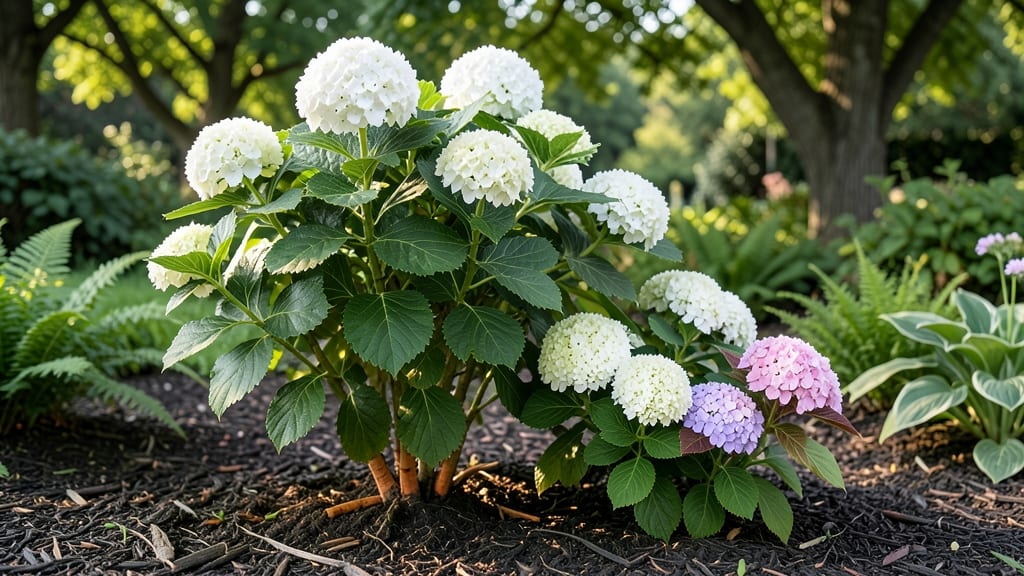
Oakleaf hydrangea types transform shady corners into showstoppers with blooms that shift from white to pink. 🌿 I’ve grown them for years, and their unique oak-shaped leaves make them stand out in any garden.
The real magic? Their flowers change color as the season progresses, giving you free seasonal color updates.
There’s a variety for every space—'Snow Queen' reaches 6-8 feet with dramatic blooms, while 'Pee Wee' stays compact at 3-4 feet, perfect for small gardens.
'Alice' offers deep pink flowers, and 'Snowflake' produces lacy white blooms that fade to pale pink. Each thrives in partial shade and moist, well-drained soil.
You’ll love how these hydrangeas reward you with three seasons of interest: spring blooms, summer foliage, and fiery fall colors. They’re also low-maintenance once established, making them ideal for busy gardeners who still want drama.
Compare them side-by-side to pick the perfect fit for your landscape—whether you want a statement shrub or a delicate border plant. Here’s how to choose and care for yours!
📚 In This Guide
- What you need
- Instructions
- Tips and common mistakes
- Wrapping up and next steps
What you need
- ● Oakleaf hydrangea plants: 1–3 bare-root or container-grown plants (depending on desired size)
- ● Recommended types: Oakleaf Hydrangea (Hydrangea quercifolia), ‘Snow Queen,’ ‘Amethyst,’ or ‘Pee Wee’ (dwarf variety)
- ● Planting site: Partially shaded area (3–6 hours of dappled sunlight daily)
- ● Well-draining, acidic soil (pH 4.5–6.0)
- ● Space: 6–10 feet apart (or 3–5 feet for dwarf varieties)
- ○ Soil amendments (optional but helpful): 2–3 gallons of peat moss or compost per plant
- ● 1 cup of sulfur (to lower pH if needed)
- ● Tools: Garden trowel or shovel
- ● Pruning shears (sterilized)
- ● Garden gloves
- ● Watering can or hose with a gentle nozzle
- ● Mulch (2–3 inches of pine bark or shredded leaves)
- ● Slow-release fertilizer (10-10-10 or acid-loving plant formula)
- ● Epsom salt (for magnesium boost, 1 tbsp per gallon of water)
- ● Stakes or cages (for support if planting in windy areas)
- ● pH test kit (to monitor soil acidity)
- ● Drip irrigation system (for consistent moisture)
How to identify and select oakleaf hydrangea varieties for year-round color
Here’s how to choose the perfect oakleaf hydrangea for your shade garden—each type brings unique seasonal drama.
🌿 Step 1: Recognize the Classic Oakleaf Hydrangea (Hydrangea quercifolia)
The original Hydrangea quercifolia—often called "smooth oakleaf"—is the foundation of the group. Its large, lobed leaves resemble oak foliage (hence the name), and its creamy white summer blooms mature to rosy-pink by fall. This variety thrives in partial to full shade and handles humid climates beautifully, making it a staple in Southern gardens.
Look for deep green leaves that turn burnt orange or red in autumn—a hallmark of the species. The exfoliating bark adds winter interest, peeling in tan and brown stripes like a tree bark palette. If you want a low-maintenance workhorse, this is your go-to.
☀️ Step 2: Choose a Color-Changing Cultivar for Seasonal Drama
For bold foliage shifts, opt for ‘Snow Queen’ or ‘Pee Wee’—both retain pure white blooms but develop vibrant crimson leaves in fall. ‘Snow Queen’ grows 6-8 feet tall, while ‘Pee Wee’ stays compact at 3-4 feet, perfect for small spaces. These varieties also handle drier shade better than the species type.
If you crave pink blooms, ‘Alice’ and ‘Amethyst’ are standouts. ‘Alice’ produces lavender-pink flowers that deepen to rusty red by autumn, while ‘Amethyst’ offers soft lilac blooms with deep purple foliage in cool weather. Both thrive in morning sun with afternoon shade—ideal for East-facing beds.
🌱 Step 3: Select a Compact or Dwarf Variety for Small Gardens
For containers or tight spaces, ‘Little Sweetheart’ and ‘Dwarf Oakleaf’ are game-changers. ‘Little Sweetheart’ tops out at 3-4 feet with white flowers that age to peachy-pink, and its leaves turn bright red in fall. ‘Dwarf Oakleaf’ (from Proven Winners) stays under 4 feet and blooms prolifically even in deep shade. Both are heat-tolerant, making them great for urban courtyards.
If you want fragrant blooms, ‘Pendula’ is a hidden gem. Its weeping habit and vanilla-scented flowers make it a conversation piece, though it needs sheltered shade to prevent leaf scorch. Prune lightly in late winter to encourage long, graceful branches—ideal for espalier or as a specimen focal point.
✂️ Step 4: Plan for Sun Exposure and Soil Preferences
All oakleaf hydrangeas prefer well-draining, acidic soil (aim for pH 5.0–6.0). Amend heavy clay with compost or pine bark fines to improve aeration. In full shade, blooms may be sparser, but foliage color intensifies. For maximum flowers, provide 3–4 hours of morning sun—this triggers stronger bud formation without stressing the plant.
Mulch annually with 2–3 inches of organic matter (like shredded leaves or bark) to retain moisture and cool roots. Oakleaf hydrangeas are drought-tolerant once established, but consistent moisture in their first year ensures vigorous growth. Avoid overhead watering—soak at the base to prevent fungal issues on the large leaves.
🌿 Step 5: Pair Varieties for Extended Seasonal Interest
Combine ‘Snow Queen’ (tall, white blooms) with ‘Little Sweetheart’ (compact, red foliage) for vertical layers. Add ‘Amethyst’ nearby for purple-pink contrast—its foliage turns deep burgundy, creating a fall rainbow effect. In winter, the exfoliating bark of the species type adds texture, while ‘Pendula’’s arching branches hold interest even when bare.
For year-round structure, plant near evergreens like boxwood or ornamental grasses (e.g., Miscanthus). The hydrangea’s lobed leaves provide bold contrast to the grasses’ feathery plumes, while the grasses soften the hydrangea’s height. This combo works in shady borders, woodland gardens, or as a privacy screen.
Tips & tricks for perfect oakleaf hydrangea selection
Between us, selecting the right oakleaf hydrangea varieties can transform your shade garden into a seasonal masterpiece. Here's what nobody tells you about making the most of these stunning plants.
Seasonal Color Timing: The classic Hydrangea quercifolia delivers its best show by transitioning from creamy white blooms in summer to rosy-pink by fall, while foliage shifts from deep green to burnt orange or red. For maximum impact, plant it where you can observe these changes throughout the day—morning sun highlights the blooms, while afternoon shade protects the delicate foliage from scorching.
Size Matters for Spacing: When selecting cultivars like ‘Snow Queen’ (6-8 feet) versus ‘Pee Wee’ (3-4 feet), remember that mature size determines both plant placement and garden layout. The ‘Snow Queen’ needs 6-8 feet of horizontal space for its broad canopy, while ‘Pee Wee’ fits perfectly in containers or small garden beds. I always measure the space before planting to avoid overcrowding, which can reduce both bloom quality and foliage color intensity.
Light Exposure Nuances: While all oakleaf hydrangeas tolerate shade, the 3–4 hours of morning sun mentioned in Step 4 is crucial for bud formation. If your garden only offers afternoon shade, position plants to catch morning light—this simple adjustment can double your flower production. For varieties like ‘Amethyst’ that thrive in morning sun with afternoon shade, an east-facing location is ideal.
Soil pH Precision: The recommended pH range of 5.0–6.0 is non-negotiable for vibrant blooms and foliage. I've seen gardeners use a simple soil test kit (available at garden centers) to verify pH before planting. If your soil tests higher, amend with sulfur or peat moss to lower the pH gradually—this takes about 2–3 months to take full effect. The exfoliating bark characteristic of these plants actually helps maintain slightly acidic conditions around the roots over time.
Pro Tips for Oakleaf Hydrangea Types
- Between us, selecting the right oakleaf hydrangea varieties can transform your shade garden into a seasonal masterpiece.
- Seasonal Color Timing: The classic Hydrangea quercifolia delivers its best show by transitioning from creamy white blooms in summer to rosy-pink by fall, while foliage shifts from deep green to burnt orange or red.
- Size Matters for Spacing: When selecting cultivars like ‘Snow Queen’ (6-8 feet) versus ‘Pee Wee’ (3-4 feet), remember that mature size determines both plant placement and garden layout.
Frequently asked questions
Got questions about oakleaf hydrangeas? You’re not alone! Here are answers to the most common queries to help you grow and enjoy these stunning, shade-loving plants with confidence.
What’s the best time to plant oakleaf hydrangeas?
Plant oakleaf hydrangeas in early spring or fall when soil temperatures are cool (50–60°F). Avoid extreme heat or frost—young roots need time to establish before stress. If planting in summer, keep soil moist and provide afternoon shade to prevent transplant shock.
How long does it take for oakleaf hydrangeas to bloom?
Patience pays off! Mature plants (3–5 years old) typically bloom in late spring to summer, with some varieties reblooming into fall. Young plants may take 1–2 years to produce flowers. Prune lightly in late winter to encourage stronger growth and more abundant blooms next season.
Can oakleaf hydrangeas grow in full shade?
Oakleaf hydrangeas thrive in partial to full shade (2–6 hours of sunlight). Too much sun can scorch leaves or reduce vibrant fall colors. If your yard is shady, choose ‘Snow Queen’ or ‘Pee Wee’—they handle low light beautifully. Just ensure well-draining soil to prevent root rot.
What pests or diseases should I watch for?
Common issues include aphids, spider mites, and powdery mildew. Spray leaves with water to deter pests, and improve airflow by pruning crowded branches. For mildew, apply a fungicide in early spring or use neem oil. Healthy soil (rich in organic matter) builds resilience!
Why are my oakleaf hydrangea leaves turning brown?
Brown leaves often signal overwatering, underwatering, or stress. Check soil moisture—it should stay consistently damp but not soggy. If edges crisp, increase humidity (mulch helps!). Yellowing leaves may mean nutrient deficiency; fertilize lightly in spring with acidic compost.
Wrapping up and next steps
From the bold foliage of 'Snow Queen' to the romantic charm of 'Pee Wee', oakleaf hydrangeas offer a stunning, low-maintenance way to transform your garden into a seasonal masterpiece. 🌿 Whether you love their fall color shifts or their versatile growth habits, these shade-loving stars are perfect for adding drama and texture to any landscape.
Ready to dive in? Start by choosing the variety that fits your space—then grab your gloves and get planting! Your future garden will thank you. 🌸