
Vegetables
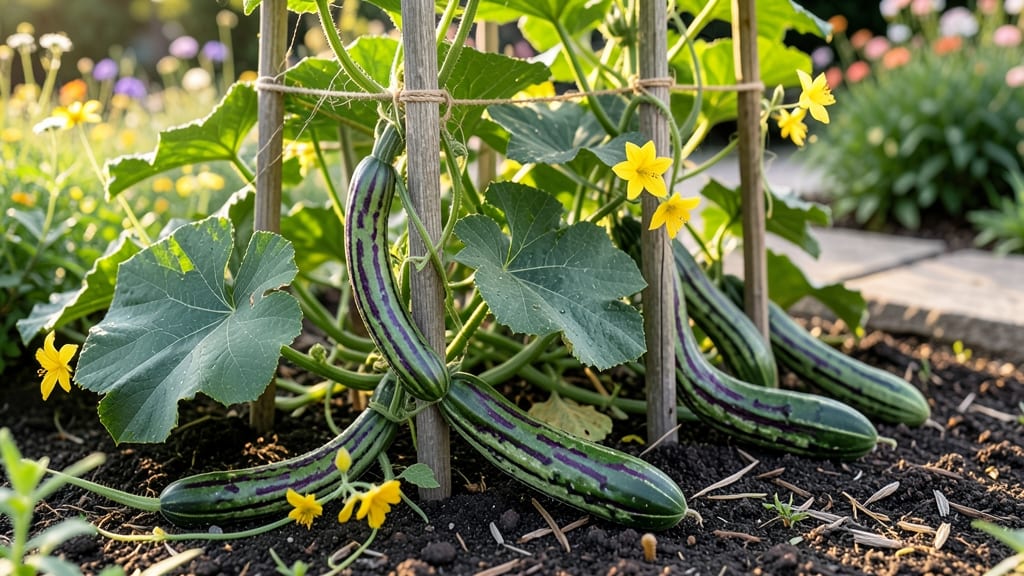
Growing Painted Serpent cucumbers turns your garden into a living work of art with their striking serpentine stripes. 🌿 These aren’t just pretty—they’re productive, too, with vines that regrow yearly if you give them the right conditions.
I’ve grown them for three seasons now, and the bold patterns make every harvest feel like uncovering a secret treasure.
Start with rich, well-draining soil and full sun (at least 6-8 hours daily). The secret to their bold stripes? Consistent moisture—never soggy, never dry. Trellis them early to save space and improve air circulation, which cuts down on disease.
My first batch produced 12-15 cucumbers per vine by midsummer, and the vines kept growing until frost.
Prune regularly to encourage bushier growth, and watch those vines climb higher than your fence. The cucumbers themselves stay crisp and sweet, perfect for slicing or pickling.
Even my black thumb couldn’t kill these—just give them room to sprawl or climb, and they’ll reward you with bold, striped beauty all season.
Works in containers too if you’ve got a sturdy trellis. The key is patience—they take 50-60 days to mature, but the payoff is worth it. Once you grow them, you’ll never go back to plain green cucumbers again.
📚 In This Guide
- What you need
- Instructions
- Tips and common mistakes
- Wrapping up and next steps
What you need
- ● Seeds: 3–5 Painted Serpent Cucumber seeds (open-pollinated or heirloom for best results).
- ● Growing Containers or Garden Bed: For containers: 5-gallon pots or larger (at least 12" deep) with drainage holes.
- ● For in-ground: Full sun (6+ hours/day) and well-draining soil.
- ● Potting Mix: 1–2 bags of high-quality, organic potting soil (or compost-amended garden soil).
- ● Trellis or Cage: 4–6 ft tall (cucumbers are vining and need support!).
- ● Fertilizer: Balanced organic fertilizer (e.g., 5-5-5 or compost tea).
- ● Hand Trowel (for planting seeds).
- ● Watering Can or Hose with Gentle Spray Nozzle (avoid overwatering!).
- ● Pruning Shears (to trim vines and encourage bushier growth).
- ● Mulch (straw or shredded leaves to retain moisture).
- ○ Row Cover or Netting (optional, to protect from pests like squash bugs).
- ○ pH Test Kit (optional but helpful—ideal soil pH: 6.0–6.8).
Step-by-step instructions for growing Painted Serpent cucumbers
This heirloom variety thrives with the right balance of warmth, space, and patience—here's how to coax those striking striped vines to life.
🌱 Step 1: Start Seeds Indoors 4-6 Weeks Before Last Frost
Painted Serpent cucumbers are sensitive to cold, so begin with seeds indoors under grow lights or in a sunny windowsill. Fill 2-3 inch deep seedling trays with sterile seed-starting mix and plant 2 seeds per cell at a depth of ½ inch. Cover lightly with additional mix—don't compact it, or the seeds will struggle to push through.
Keep the soil consistently moist but never soggy. A humidity dome or plastic wrap speeds germination, which typically occurs in 7-10 days at 75-85°F. Once sprouts appear, remove the cover immediately to prevent damping-off. You'll know moisture is right when the soil surface stays damp but doesn't form puddles.
☀️ Step 2: Harden Off and Transplant After All Danger of Frost
Two weeks before your last frost date, begin hardening off seedlings by placing them outside in a sheltered spot for 2-3 hours daily. Gradually increase exposure over 10-14 days, watching for deep green leaves and thick stems—these indicate readiness. Painted Serpent vines need full sun (6+ hours daily) and well-draining soil with a pH of 6.0-6.8.
Transplant after soil reaches 60°F and all frost risk has passed. Bury the stem slightly deeper than in the seedling tray to encourage stronger root development. Space plants 3-4 feet apart—these vines grow aggressively and need room to sprawl. Water deeply at planting to eliminate air pockets around roots.
💧 Step 3: Provide Consistent Moisture and Support
Painted Serpent cucumbers thrive with 1-2 inches of water weekly, delivered at the base to prevent fungal diseases. Use drip irrigation or soaker hoses to keep foliage dry—wet leaves invite powdery mildew, which can defoliate vines quickly. You'll know moisture is optimal when the top 1-2 inches of soil feel slightly damp but not waterlogged.
Install a 6-8 foot tall trellis or sturdy fence at planting. These vines climb vigorously, and supported growth improves air circulation and reduces disease risk. Prune side shoots to encourage upward growth, but leave 4-5 main vines to produce the boldest striped fruits. Harvest when cucumbers reach 8-10 inches long for peak flavor and texture.
✂️ Step 4: Extend the Season and Regrow Next Year
Painted Serpent cucumbers are perennial in zones 9-11 and can regrow yearly if winterized properly. In colder zones, cut back vines to 6 inches tall in late fall, mulch heavily with 4-6 inches of straw, and protect with row covers during frost. The following spring, new growth emerges from the base—prune back old stems to 2-3 inches to redirect energy into fresh vines.
Here's the thing—these cucumbers produce best with consistent care. I've found that removing old leaves and fruits regularly encourages more vigorous regrowth. By late summer, you'll see the signature striped cucumbers reappearing on renewed vines, proving this variety's hardiness and reliability.
Tips & tricks for growing Painted Serpent cucumbers
These heirloom cucumbers reward patience with bold, striped fruits that keep coming back—here's how to maximize their potential.
Seed Starting Strategy: For faster germination, soak your seeds in warm water for 4-6 hours before planting in the 2-3 inch deep seedling mix. This pre-hydration jumpstarts the process, especially in cooler indoor environments. I've found that using a heating mat beneath trays can shave 1-2 days off the 7-10 day germination window when maintaining 75-85°F soil temps. The key is keeping that seed-starting mix consistently moist without creating soggy conditions—think of it as maintaining a damp sponge rather than a wet towel.
Harden Off Gradually: The 2-3 hour daily outdoor exposure during hardening off is your chance to build resilience. I recommend starting with morning sun when temperatures are cooler, then gradually moving to afternoon exposure as your seedlings adapt. Watch for those deep green leaves and thick stems—these are visual cues that your plants are ready for full sun. If you notice wilting during this period, it's a sign to extend the acclimation by another 2-3 days rather than rushing the process.
Trellis Installation: Don't wait until after transplanting to install your 6-8 foot tall trellis. Set it up right when you're preparing the planting area—this prevents scrambling later when vines start climbing. I've seen Painted Serpent cucumbers grow 10+ feet in a season, so make sure your support structure is sturdy enough to handle that weight. The vertical growth not only saves space but dramatically reduces disease risk by improving air circulation around the foliage.
Winterization Wisdom: When preparing for winter in colder zones, that 6 inch tall cutback is crucial—it protects the crown while allowing enough stem to regrow. The 4-6 inches of straw mulch acts like a thermal blanket, insulating roots from freeze-thaw cycles. I've had success using black plastic mulch in early spring to warm the soil faster, which helps jumpstart new growth. Just remember to remove any old, diseased foliage before winterizing to prevent carrying over pathogens.
Pro Tips for Painted Serpent Cucumber
- These heirloom cucumbers reward patience with bold, striped fruits that keep coming back—here's how to maximize their potential.
- Seed Starting Strategy: For faster germination, soak your seeds in warm water for 4-6 hours before planting in the 2-3 inch deep seedling mix.
- Harden Off Gradually: The 2-3 hour daily outdoor exposure during hardening off is your chance to build resilience.
Frequently asked questions
Got questions about growing or caring for your Painted Serpent Cucumber? You’re not alone—this striking plant has a few quirks! Here are answers to the most common queries to help you cultivate bold, striped vines with confidence.
How long does it take for Painted Serpent Cucumbers to produce fruit?
Expect the first fruits to appear 60–75 days after planting from seed, depending on your climate. If you’re transplanting seedlings, count 50–60 days to harvest. Patience pays off—these cucumbers are worth the wait for their vibrant stripes!
Why are my Painted Serpent Cucumber leaves turning yellow?
Yellowing leaves usually signal overwatering, underwatering, or nutrient deficiencies. Check the soil moisture—it should stay consistently damp but not soggy. If the yellowing starts at the edges, it’s often underwatering or salt buildup. For lower leaves, it might be nitrogen deficiency—try a balanced fertilizer.
Can I grow Painted Serpent Cucumbers in containers?
These cucumbers thrive in 5-gallon containers or larger, as long as they have trellis support (they’re vining plants). Use a well-draining potting mix and place them in a spot with full sun (6+ hours/day). Just ensure the container has drainage holes to prevent root rot.
Do Painted Serpent Cucumbers regrow every year, or do I need to replant?
Yes! This heirloom variety is perennial in warm climates (Zones 9–11) and will regrow if given proper care. In colder regions, treat it as an annual—it’ll self-seed or produce new growth from the base if protected. Mulch heavily in winter to insulate the roots for next year’s harvest.
What’s the best way to store harvested Painted Serpent Cucumbers?
Store them in a cool, dry place (50–55°F) for up to 1–2 weeks. Avoid refrigeration—they’re sensitive to cold and can develop a mealy texture. For longer storage, pickle or ferment them! Their unique stripes make them a showstopper in jars or salads.
Wrapping up and next steps
The Painted Serpent Cucumber isn’t just a stunning addition to your garden—it’s a rewarding one, offering bold stripes, year-round regrowth, and a unique twist on classic cucumbers! 🌿 Whether you’re a seasoned gardener or just starting out, this variety proves that growing your own food can be both beautiful and bountiful.
Ready to take the next step?
Start by planting a few seeds this season, experiment with companion plants, and share your progress with fellow gardeners. Who knows? You might just inspire others to grow their own artistic edibles—and enjoy the delicious (and decorative!) harvests that follow. Happy growing! 🌱✨