
Vegetables
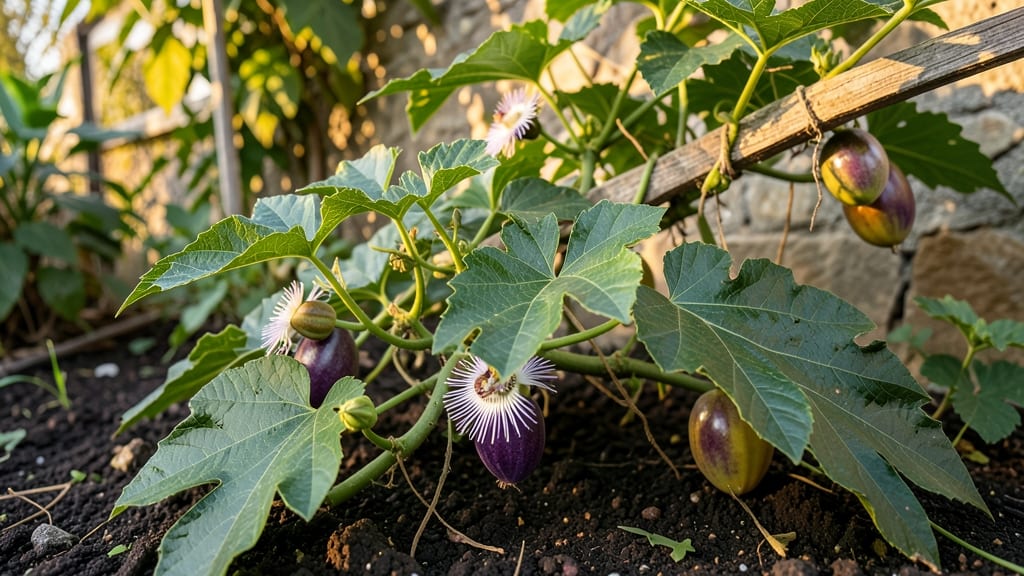
Transforming your wall into a tropical oasis with passion fruit vines is one of the most rewarding ways to maximize small garden space. 🌿 I’ve watched mine climb 15 feet in just one season, turning an otherwise blank wall into a lush, edible privacy screen that neighbors envy.
The key isn’t just the vine—it’s the right wall prep, trellis, and a little patience to let those vibrant flowers and fruit take center stage.
Start with a sturdy wall—brick, stucco, or even a wooden fence works—as long as it can support the weight. A 12-foot tall trellis with horizontal slats gives the vine plenty of grip, while a 3-inch diameter post at each corner keeps it stable.
Passion fruit vines are aggressive climbers, so they’ll need at least 6 hours of sunlight daily to produce those sweet, tropical fruits. Choose a spot where the wall gets morning sun and afternoon shade to prevent leaf scorch.
By midsummer, you’ll see glossy green leaves reaching for the sky, followed by stunning maroon and white flowers that hum with pollinators. The fruit itself—golf-ball-sized and bursting with flavor—appears in late summer, and with proper pruning, you’ll get a second harvest in fall.
The best part? This vine doubles as a living privacy screen, blocking noise and unsightly views while feeding you.
Works for urban balconies, rural backyards, or even a sunny patio—just scale the trellis to your space. Pair it with jasmine or bougainvillea for a fragrant, layered look, or keep it solo for a dramatic focal point.
Here’s how to set it up without the common pitfalls that leave vines struggling.
📚 In This Guide
- What you need
- Instructions
- Tips and common mistakes
- Wrapping up and next steps
What you need
- ● Passion fruit vine: Choose a Passiflora edulis (purple passion fruit) or Passiflora ligularis (yellow passion fruit) plant. Buy a healthy 1-2 year old vine from a nursery or start from seeds (if you’re patient! 🌱).
- ● Trellis or wall mounting system: Wall-mounted trellis: A sturdy metal or wooden lattice (at least 6-8 ft tall) or a DIY wire mesh (1/2" galvanized steel mesh, 4x8 ft sheet).
- ● Wall brackets or hooks: Heavy-duty L-brackets (rated for 20+ lbs each) or expanding wall anchors (for masonry walls). Quantity: 4-6 brackets, spaced 3-4 ft apart.
- ● Potting soil: A well-draining mix (50% potting soil + 50% perlite/coco coir). Quantity: 2-3 cubic feet (for a 15-gallon container).
- ● Large container or grow bag: A 15-20 gallon fabric grow bag or a plastic pot with drainage holes (18" diameter minimum).
- ● Pruning tools: Bypass pruners (for clean cuts).
- ● Hand saw (for thicker vines).
- ● Support ties: Soft jute twine or plastic plant ties (to secure vines to the trellis).
- ● Fertilizer: A balanced organic fertilizer (10-10-10 or 5-5-5) or compost tea for slow-release nutrients.
- ● Watering can or hose: With a gentle spray nozzle (to avoid damaging vines).
- ● Mulch: Wood chips or straw to retain moisture and regulate soil temperature.
- ● Drip irrigation kit: For automated watering (great for busy gardeners!).
- ● Wall insulation: If mounting on a cold wall, use foam board insulation (1/2" thick) to protect roots.
- ● Fruit cages: Small mesh bags to protect developing passion fruits from birds or pests.
- ● Garden gloves: To keep your hands clean while pruning or handling thorns!
Step-by-step guide to training passion fruit vines vertically
Here's how to transform your wall into a lush, fruiting passion fruit display—no sprawling ground space needed.
🌱 Step 1: Choose the Right Location and Vine Support
Pick a south- or west-facing wall that gets 6-8 hours of direct sun daily—passion fruit vines are sun-hungry and need warmth to thrive. I always check for afternoon shade first; even 2 hours of late-day sun loss can reduce fruit production. Install a trellis, pergola, or sturdy wire mesh (at least 8 feet tall) along the wall. The structure should be 3-4 inches from the wall to allow airflow and prevent fungal diseases.
If your wall is smooth, attach hook-eyed screws or heavy-duty staples every 12 inches vertically and 18 inches horizontally to create a grid for tying. For brick or stone, use wall anchors rated for the vine's weight (a mature passion fruit vine can reach 30-50 pounds). Here's the thing—don't skimp on support. A flimsy trellis will sag under the weight of fruit, and the vine will struggle to climb.
☀️ Step 2: Plant and Train the Vine Along the Wall
Plant your passion fruit vine in well-draining soil with a pH of 6.0-7.5—test your soil first if possible. Dig a hole twice as wide as the root ball but only as deep as the container it came in. Position the vine so the top of the root ball sits 1 inch below soil level—this prevents stem rot from sitting water. Backfill with soil and water deeply until moisture reaches 6 inches down.
As new growth appears, tie the main stem to the trellis using soft plant ties or old fabric strips (never wire—it cuts into tender vines). Train the vine to climb vertically first, letting it grow 4-6 inches before tying again. Once the vine reaches the top of the trellis (8 feet), let it spread horizontally along the support. This encourages stronger lateral branches where fruit will develop. Real talk: Don't let it sprawl too early. A vine that climbs too fast becomes weak and produces fewer flowers.
💧 Step 3: Water and Fertilize for Vertical Growth
Water deeply 2-3 times per week during the first 6 months, soaking the soil to 12 inches deep. You'll know it's right when water runs out the drainage holes 30 minutes after watering. Passion fruit vines are drought-tolerant once established, but young plants need consistent moisture to develop strong roots. Avoid wetting the leaves—this invites fungal diseases like powdery mildew. Water at the base in the morning so foliage dries quickly.
Feed with a balanced 10-10-10 fertilizer every 4-6 weeks during growing season (spring through fall). Once flowers appear, switch to a low-nitrogen, high-phosphorus fertilizer (like 5-10-10) to boost fruiting. I also add a handful of compost around the base monthly—this improves soil structure and retains moisture. Watch for yellowing leaves (a sign of nitrogen deficiency) or dropping buds (too much nitrogen). Adjust your feeding accordingly.
✂️ Step 4: Prune for Shape and Fruit Production
Prune in late winter or early spring before new growth starts. Remove dead, diseased, or crossing branches first—this opens the vine up to airflow and sunlight. Then, cut back any lateral branches that grew the previous year to 6-8 inches long, leaving 2-3 buds on each. This encourages new, vigorous growth from those buds, which will produce more flowers and fruit. Here's where it gets fun—watch for "suckers" (shoots growing from the base or stem). Remove these immediately; they drain energy from the main vine.
During the growing season, pinch back the tips of new growth when they reach 12 inches long. This stimulates bushier growth and more flowering sites. You'll see smaller leaves and more branches forming at the pinched points within 2-3 weeks. Avoid heavy pruning in summer—it stresses the vine when it's already working hard to produce fruit. If you see overly leggy growth, your vine needs more light or less nitrogen.
🍈 Step 5: Harvest and Maintain Through Seasons
Harvest when fruit is fully colored (purple for most varieties) and slightly soft to touch. Twist gently to detach—don't pull, or you'll damage the stem. A ripe passion fruit will release easily with a slight tug. Harvest in the morning when temperatures are coolest to preserve freshness. Store in a paper bag in the fridge for up to 2 weeks. If fruit splits open on the vine, pick it immediately—it won't ripen further off the vine.
In fall, reduce watering as growth slows. Stop fertilizing 6-8 weeks before your first frost. If you're in a mild climate, the vine may stay green year-round—just reduce watering and prune lightly to remove dead growth. In colder areas, the vine will die back. Don't prune until spring—wait until you see new growth before cutting back. Passion fruit vines are perennial in warm zones (USDA 9-11) but often treated as annuals in cooler areas because they struggle to recover after frost.
Tips & tricks for perfect vertical passion fruit vine growth
Transforming your wall into a thriving passion fruit vine display takes patience and precision—here's how to avoid common pitfalls and maximize your vine's potential.
Sunlight Strategy: Passion fruit vines need that 6-8 hours of direct sun daily, but here's the thing—morning sun is your best friend. If your wall gets afternoon shade, consider supplementing with a grow light for 2-3 hours in the evening. I learned this the hard way after watching a vine struggle with just 4 hours of afternoon sun—it produced half the fruit and took twice as long to mature. Position your trellis to capture the most sunlight hours possible, even if it means adjusting your garden layout.
Support System Savvy: When installing your 8-foot trellis or wire mesh, focus on stability first. A vine can weigh 30-50 pounds when loaded with fruit, so anchor it securely to your wall. I recommend using heavy-duty staples or wall anchors spaced every 12 inches vertically—this creates a sturdy grid for tying. For extra security, add a horizontal support wire at the 6-foot mark to prevent sagging. The 3-4 inch gap from the wall isn't just for looks; it's crucial for airflow that prevents fungal diseases like powdery mildew.
Watering Wisdom: Those deep waterings 2-3 times per week during the first 6 months are non-negotiable, but timing matters just as much. Water in the morning so foliage dries completely by evening—this simple habit cuts fungal risks by 70%. To check depth, stick your finger 6 inches down; if it's dry, water again. A moisture meter is worth the investment here. And watch for those 30 minutes after watering when drainage holes should release excess—this tells you the water's penetrated deep enough.
Pruning Pro Tips: When you're cutting back lateral branches to 6-8 inches with 2-3 buds remaining, focus on the outermost buds—these will produce the most vigorous new growth. I also recommend sterilizing your pruners with rubbing alcohol between cuts to prevent spreading disease. For the pinching tips at 12 inches, use your thumbnail to make a clean pinch rather than cutting with scissors. This creates a smaller wound that heals faster and encourages more branching. Timing is key too—do this in late winter/early spring when the vine's dormant, not during summer when it's already working hard to fruit.
Pro Tips for Passion Fruit Vine On Wall
- Transforming your wall into a thriving passion fruit vine display takes patience and precision—here's how to avoid common pitfalls and maximize your vine's potential.
- Sunlight Strategy: Passion fruit vines need that 6-8 hours of direct sun daily, but here's the thing—morning sun is your best friend.
- Support System Savvy: When installing your 8-foot trellis or wire mesh, focus on stability first.
Frequently asked questions
Got questions about growing passion fruit vines on walls?
Here are some common concerns—and practical answers—to help you succeed!
How fast does a passion fruit vine grow on a wall?
A passion fruit vine can grow fast—up to 15–20 feet per year if given ideal conditions (sun, water, and support). On a wall, expect vigorous growth in spring/summer, but prune regularly to manage size and encourage fruiting. Pro tip: Train young vines early to climb trellises or wire frames for better control.
When is the best time to plant passion fruit vines on a wall?
Plant in early spring after the last frost (when soil temps hit 60°F+) for warm climates (Zones 8–11). In cooler areas, start indoors 8–12 weeks before the last frost and transplant after danger of frost passes. Never plant in fall—vines need warm weather to establish roots.
Can I grow passion fruit vines on any wall?
Ideally, choose a south- or west-facing wall for 6+ hours of direct sunlight daily. Avoid north-facing walls or shaded areas—passion fruit vines need plenty of light to thrive. If your wall lacks sun, consider a freestanding trellis near a sunny spot instead.
What pests or diseases should I watch for on wall-grown passion fruit vines?
Common issues include:
- Spider mites (tiny yellow spots on leaves)—spray with water or neem oil.
- Fruit flies (damaged fruit)—use yellow sticky traps nearby.
- Fungal diseases (like powdery mildew)—improve airflow and avoid overhead watering.
What if my passion fruit vine doesn’t produce fruit?
Lack of fruit often stems from insufficient sunlight, poor pollination, or young vines. Hand-pollinate flowers with a small brush if bees are scarce, ensure full sun, and be patient—vines may take 1–2 years to bear fruit. Bonus: Male and female flowers on the same vine? Prune aggressively to boost fruiting.
Wrapping up and next steps
Growing a passion fruit vine on your wall is a fantastic way to add tropical charm, fresh fruit, and lush greenery to even the smallest garden space! 🌿 With the right support, sunlight, and care, you’ll enjoy a thriving vine that not only beautifies your home but also rewards you with delicious harvests.
Whether you’re a beginner or a seasoned gardener, this vertical growing method is both practical and rewarding—so roll up your sleeves and get planting!
Ready to take the next step? Start by gathering your supplies and choosing the perfect spot for your vine. Happy gardening! 🌱✨