
Vegetables
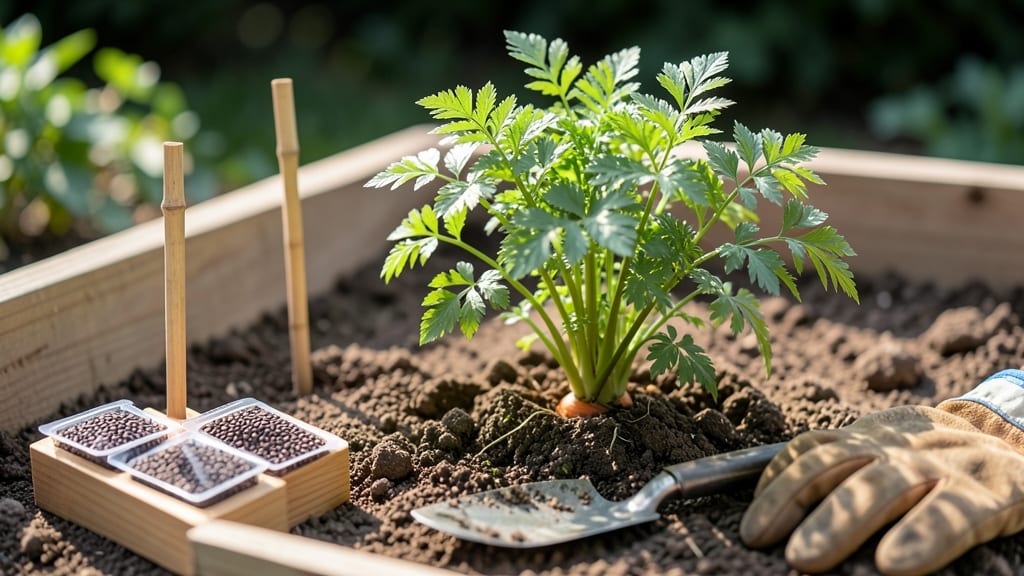
Planting carrots in raised beds solves the two biggest carrot-growing problems: rocky soil and poor drainage—both of which cause forking or stunted roots. 🌱 I’ve grown carrots in raised beds for five years, and the difference is night-and-day compared to my first attempt in the backyard, where half the harvest was unusable.
The secret isn’t just the bed—it’s the loose, stone-free soil mix you create. Start with 6 inches of coarse sand or perlite mixed into the top 12 inches of soil to prevent forking.
Carrots need 12-18 inches of depth to grow properly, so raised beds are perfect for varieties like ‘Danvers’ or ‘Nantes’ that love space to stretch. You’ll end up with straight, finger-length roots that pull cleanly from the soil—no bending, no breaking.
The raised bed also keeps pests like carrot rust flies at bay, and weeds stay shallow, so you spend less time weeding. By midsummer, you’ll be harvesting crisp, sweet carrots that taste like they came from a market stall.
This method works for any climate, from short-season zones to warm winters. The only real mistake? Skipping the soil prep. Trust me—I’ve learned that the hard way.
📚 In This Guide
- What you need
- Instructions
- Tips and common mistakes
- Wrapping up and next steps
What you need
- ● Raised bed: At least 12 inches deep (18" is ideal for long carrot varieties) and 4’ x 8’ in size (standard dimensions). Use untreated wood (cedar or redwood) or composite materials.
- ● High-quality soil: A mix of 60% topsoil, 30% compost, and 10% coarse sand or perlite (for drainage). Avoid clay-heavy soil!
- ● Carrot seeds: Choose open-pollinated varieties like ‘Danvers Half Long’ (70 days) or ‘Nantes’ (60 days) for sweet, tender roots.
- ● Garden tools: Trowel (for planting)
- ● Hoe (for weeding)
- ● Watering can or hose with a gentle spray nozzle
- ● Row markers or stakes: To create shallow trenches (½" deep) for seeds (or use a stick or string line for straight rows).
- ○ Mulch (optional but recommended): Straw or shredded leaves (1–2 inches) to retain moisture and suppress weeds.
- ● Seed starter kit: For pre-sprouting seeds indoors (speeds up germination by 2–3 weeks!).
- ● Organic fertilizer: Low-nitrogen blend (e.g., 5-5-5) to avoid leafy, skinny carrots.
- ● Drip irrigation system: For consistent moisture (carrots hate drying out!).
- ● Row cover or shade cloth: To protect seedlings from pests like carrot rust flies.
- ● Soil thermometer: Carrots germinate best in 60–85°F soil—this helps time planting perfectly!
Step-by-Step instructions for planting carrots in raised beds
Here's the foolproof method I use to grow carrots with perfect depth and straight roots every time.
🪴 Step 1: Prepare the Raised Bed Soil for Carrot Success
Carrots demand loose, stone-free soil to grow straight and long. Start by removing any rocks, clumps, or debris from the bed—those will deform your roots. I like to work in a 3-inch layer of coarse sand (like horticultural sand) mixed into the top 6 inches of soil to improve drainage and prevent forking.
Add a 2-inch layer of compost and work it in gently with a garden fork or trowel. The goal is a fluffy, almost powdery texture—carrots hate compacted soil. Moisten the bed until the soil feels like a damp sponge, but not soggy. You'll know it's right when a handful crumbles easily between your fingers.
🌱 Step 2: Sow Carrot Seeds at the Correct Depth and Spacing
Carrot seeds are tiny and slow to germinate, so I use a seed spacing tool or toothpick to create ¼-inch deep furrows spaced 2 inches apart. Plant seeds ½ inch apart along the furrow—crowding them leads to stunted, misshapen roots. I tap the seed packet gently to release one seed at a time, then cover lightly with fine sifted soil or vermiculite.
Water gently with a fine-mist spray bottle until the soil surface looks uniformly damp. Avoid overwatering—the seeds need just enough moisture to swell but not so much they rot. Place a small marker at each end of the row to remember where you planted, since seedlings are so small they're easy to miss.
☀️ Step 3: Provide Consistent Moisture and Light for Germination
Carrot seeds need consistent warmth (60-70°F) and moisture to germinate. Cover the bed with row fabric or a clear plastic dome to retain heat and humidity. Check daily—water only when the soil surface feels dry to the touch. You'll see first true leaves in 10-21 days (yes, that's a wide range—your climate matters).
Once seedlings emerge, remove the cover immediately to prevent damping-off. Thin seedlings to 2 inches apart when they reach 2 inches tall, using scissors to snip at soil level. This prevents overcrowding and ensures straight, well-formed roots. I always harvest the thinned seedlings—they make great microgreens!
💧 Step 4: Maintain Even Watering and Monitor for Pests
Carrots need 1 inch of water per week, delivered consistently. I water deeply 2-3 times per week (depending on rain) using a soaker hose to keep the soil evenly moist. Let the top ½ inch dry out between waterings—this prevents splitting and encourages sweetness. Mulch with 1 inch of straw to retain moisture and suppress weeds.
Watch for carrot rust fly and wireworms—common pests that chew holes in roots. If you spot damage, cover the bed with floating row fabric for a few days to disrupt their life cycle. I also rotate crops yearly to break pest cycles. Harvest when roots reach ¾ of your desired size—they'll keep growing if left in the ground!
Tips & tricks for perfect carrot cultivation in raised beds
These game-changing strategies will help you grow carrots that are perfectly straight, deep, and sweet every single time.
Soil Texture is Everything: In Step 1, when you're preparing your raised bed, take an extra moment to sift the top 6 inches of soil through a quarter-inch mesh screen. This removes any hidden stones or clumps that could cause forking. I've found that adding a handful of perlite to the coarse sand mixture creates even better drainage while maintaining that powdery texture carrots love. Think of it as giving your roots a cloud-like environment to grow in.
The Seed Spacing Secret: During Step 2, when creating those quarter-inch deep furrows, I recommend using a ruler to mark your seed spacing every half inch. Carrot seeds are notorious for being uneven, so this ensures consistent spacing. Here's what nobody tells you—place a small piece of cardboard or aluminum foil at the end of each row. When you water, these will catch any seeds that might wash away, preventing gaps in your crop.
Germination Environment Matters: For Step 3, when maintaining that 60-70°F warmth, consider using a small greenhouse or even a clear plastic storage container cut in half as your cover. This creates a more stable microclimate than row fabric alone. Place a small thermometer inside to monitor temperatures—carrot seeds need that consistent warmth to germinate reliably. I've seen germination rates jump from 60% to 95% just by maintaining that precise temperature range.
Thinning Technique That Saves Time: When you reach the thinning stage in Step 3, use a pair of clean, sharp scissors to cut seedlings at soil level rather than pulling them. This prevents disturbing the roots of your remaining plants. I've found that thinning in two stages—first when seedlings are 1 inch tall, then again at 2 inches—results in straighter, more uniform carrots. The first thinning removes the weakest seedlings, while the second gives your remaining plants more space to develop properly.
Pro Tips for Planting Carrots In Raised Beds
- These game-changing strategies will help you grow carrots that are perfectly straight, deep, and sweet every single time.
- Soil Texture is Everything: In Step 1, when you're preparing your raised bed, take an extra moment to sift the top 6 inches of soil through a quarter-inch mesh screen.
- The Seed Spacing Secret: During Step 2, when creating those quarter-inch deep furrows, I recommend using a ruler to mark your seed spacing every half inch.
Frequently asked questions
When is the best time to plant carrots in raised beds?
Carrots thrive in cool weather, so aim to plant them 2–3 weeks before your last frost date in spring or 8–10 weeks before your first frost in fall. In warm climates, opt for late summer planting to avoid bolting (premature flowering). Use a frost chart for your zone to pinpoint the ideal window!
How deep should the soil be in a raised bed for carrots?
Carrots need 12–18 inches of loose, stone-free soil to grow straight and long. If your bed isn’t deep enough, mix in compost or sand to improve drainage and prevent forking. Pro tip: Test soil depth with a trowel—if roots hit obstacles, they’ll grow gnarled instead of perfect!
Can I plant carrots with other vegetables in raised beds?
Yes! Carrots pair well with onions, leeks, rosemary, or lettuce (they deter pests and share space efficiently). Avoid planting near dill or parsley, as they can cross-pollinate and reduce carrot flavor. For maximum yield, use interplanting—sow fast-growing greens between carrot rows to save space.
Why are my carrot seeds not germinating in the raised bed?
Carrot seeds need consistent moisture (60–70°F soil temp) and darkness to sprout. If seeds aren’t germinating, check for:
- Dry soil—keep it evenly moist (not soggy) until sprouts appear (2–3 weeks).
- Poor seed contact—lightly press seeds into soil (don’t bury deep).
- Old seeds—carrot seeds lose viability after 1–2 years. Store them in a cool, dry place.
- Pests—rodents may nibble seeds; use row covers until sprouts emerge.
What’s the fastest way to harvest straight, pencil-thin carrots?
For uniform, tender carrots, thin seedlings to 2–3 inches apart when they’re 2–3 inches tall. Harvest "baby carrots" in 4–6 weeks by gently pulling them from the soil. Leave larger varieties to mature (70–80 days). Pro tip: Use a small hand fork to loosen soil around roots before pulling to avoid breaking them!
Wrapping up and next steps
Planting carrots in raised beds is a rewarding way to grow sweet, straight roots with minimal fuss—especially when you follow these pro tips! 🥕 With the right soil prep, spacing, and care, you’ll enjoy a bountiful harvest that’s both delicious and satisfying.
Now that you’re armed with the know-how, there’s no better time to roll up your sleeves and get growing.
Ready to take the next step? Start small—try a single raised bed this season, then expand as your confidence (and carrot crop!) grows. Happy planting! 🌱