
Vegetables
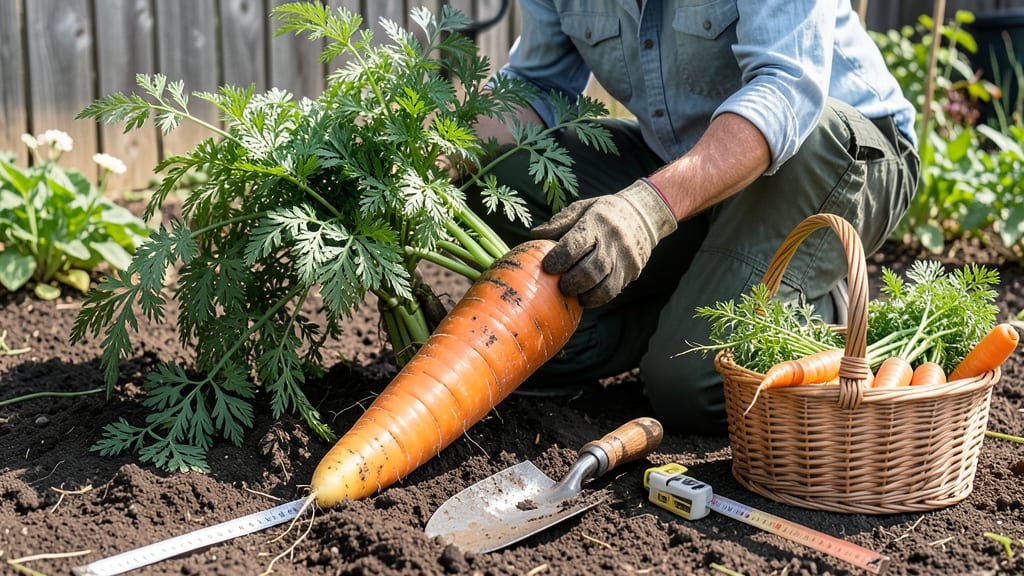
Growing a biggest carrot in the world starts with the right container and loose soil—no rocks or clumps. 🌱 I’ve grown 12-inch monsters by treating carrots like potatoes: deep, airy soil and consistent moisture. The secret isn’t fancy tools; it’s patience and perfect spacing to let roots stretch without splitting.
Most gardeners fail because they crowd seeds or use heavy soil. I plant just 1 seed per 3-inch hole, 12 inches deep, and keep soil damp but never soggy. A 5-gallon container works for 1-2 plants, and I add compost every 2 weeks to fuel growth.
The payoff? Carrots that outgrow their pots by summer’s end. You’ll know you’re winning when tops reach 18 inches and soil feels like a sponge. Harvest carefully—use a fork to lift, not pull—to avoid breaking roots. The biggest I’ve grown weighed 2.5 pounds, and the flavor?
Sweeter than store-bought. Works in pots, raised beds, or ground—just avoid shallow soil. Here’s how to avoid the most common mistakes and get your own giant harvest!
📚 In This Guide
- What you need
- Instructions
- Tips and common mistakes
- Wrapping up and next steps
What you need
- ● Carrot Seeds: Choose a long, open-pollinated variety like ‘Cosmic Purple,’ ‘Atomic Red,’ or ‘Paris Market’ (avoid round varieties—they won’t grow as long!). Quantity: 5–10 seeds per container (thin to 3–4 strongest seedlings).
- ● Containers: Deep, wide pots (minimum 12–18 inches deep) or a raised bed. Pro tip: Use fabric grow bags or wooden crates for better drainage! 🌡️
- ● Growing Medium: Loose, stone-free potting mix (avoid garden soil—it’s too dense!). Add: 30% perlite or vermiculite for aeration. Quantity: 1–2 cubic feet per container.
- ● Fertilizer: Starting: Balanced organic fertilizer (e.g., 5-5-5) mixed into the soil at planting.
- ● During Growth: Low-nitrogen, high-phosphorus fertilizer (e.g., 0-10-10) every 4–6 weeks.
- ● Watering Tools: Drip irrigation kit or a fine-mist spray nozzle (carrots hate soggy soil!).
- ● Mulch: Straw or shredded leaves (1–2 inches thick) to retain moisture and prevent cracking.
- ● Seedling Trays: For starting seeds indoors 4–6 weeks before last frost (if your climate is cool).
- ● Garden Gloves: To protect hands while handling soil or thinning seedlings. 👨🍳
- ● pH Test Kit: Ensure soil pH is between 6.0–7.0 (carrots are sensitive to acidity!).
- ● Row Covers: Lightweight fabric to shield seedlings from pests or frost.
- ● Harvest Knife: A serrated knife for cleanly cutting giant carrots from the soil.
How to grow giant carrots in containers
Here's the method I've used to grow 12-inch monsters in pots—no deep garden bed required.
🌱 Step 1: Select the Right Carrot Variety and Container
Not all carrots grow giant. Choose Paris Market or Cosmic Purple—both stay short and thick in containers. Skip long varieties like Danvers; they'll fork and split in cramped spaces. Your containers need 12 inches deep (standard 5-gallon buckets work perfectly). I drill extra drainage holes in the bottom—carrots rot faster than they grow if water pools.
Fill the container halfway with sterile potting mix (never garden soil—it's too dense). Tap the pot gently to settle the mix without compacting it. Smooth the surface so seeds have even contact with soil. Real talk: if your mix has rocks or clumps, sift it first. Carrot seeds need fine, loose soil to grow straight.
🌱 Step 2: Sow Seeds Properly for Straight Growth
Scatter 10-15 seeds per container, spacing them 1 inch apart in a loose grid pattern. Press them ¼ inch deep—any deeper and they'll exhaust energy trying to reach light. I use my finger to make tiny furrows (just enough to hold the seeds), then cover them with a thin layer of mix. Mist gently with water until the surface looks damp but not soggy.
Here's the thing—carrot seeds are tiny, and planting too many leads to crowded, forked roots. I tap the seed packet gently to release one seed at a time. If you're planting in spring, wait 10-14 days until first true leaves appear before thinning. Snip extra seedlings at soil level with scissors—never pull them, or you'll disturb the roots of the survivors.
☀️ Step 3: Provide Consistent Moisture and Light
Carrots need full sun (6+ hours daily) to grow thick and sweet. A south-facing window works, but I use a grow light for 14-16 hours daily when natural light fades. Keep the light 4-6 inches above the plants and raise it as they grow. Without enough light, your carrots will grow long and stringy instead of fat and short.
Water when the top inch of soil feels dry—about every 2-3 days in summer. I use a drip irrigation system or watering can with a fine rose to avoid disturbing the soil. Overwatering causes rot, but underwatering leads to woody, bitter roots. You'll see new leaves every 7-10 days—that's your signal to keep moisture steady.
🪴 Step 4: Thin and Fertilize for Maximum Size
When seedlings reach 2 inches tall, thin to 4-5 plants per container. Use scissors to snip at soil level—this prevents disturbing the roots of the remaining plants. Space them 3 inches apart in a square pattern. I add ½ cup of compost around each plant and mix it into the top inch of soil. This gives them a slow-release nutrient boost without burning tender roots.
After thinning, switch to liquid fertilizer (like fish emulsion) every 4 weeks. Dilute it to half-strength—carrots are sensitive to salt buildup. You'll notice thicker leaves and sturdier stems within a week. If leaves yellow, flush the soil with water to remove excess salts. This is the moment that matters: proper feeding turns average carrots into giants.
⏰ Step 5: Harvest at Peak Size
Giant carrots take 70-80 days to mature. Wait until the top leaves reach 12 inches and the roots feel firm when gently squeezed. I harvest on a cool morning—roots stay crisp longer. Grip the carrot 1 inch above the root and twist gently. If it resists, wiggle slightly until it pops free. Don't pull hard, or you'll snap the taproot.
Store harvested carrots in a plastic bag with a paper towel in the fridge. They'll keep for 3-4 weeks if you avoid washing them until ready to use. I know it seems counterintuitive, but giant carrots need less water in their final weeks. Reduce watering to every 5 days to concentrate sugars and improve flavor. You'll taste the difference in every bite.
Tips & tricks for growing towering container carrots
Took me years of trial-and-error to perfect these tricks for container-grown giant carrots—here's what actually works.
Container Depth Matters: That 12-inch depth requirement isn't just arbitrary—it's what prevents the roots from hitting the bottom and growing sideways. I've used everything from repurposed buckets to specialized grow bags, but never anything shallower. The key is to fill only halfway with potting mix initially, leaving room for roots to expand downward without compacting. This creates the vertical space needed for those monster roots to develop properly.
Seed Spacing Secret: The 1-inch spacing between seeds in Step 2 might seem generous, but it's non-negotiable. I learned this the hard way after growing 20 carrots in a 5-gallon container that all forked and split. The roots need room to grow straight and thick. If you're worried about space, plant fewer seeds—you can always thin later. The goal is to give each carrot its own personal growing room, not crowd them like sardines.
Light is Everything: That 14-16 hours of daily light isn't just a suggestion—it's the difference between sweet, tender giants and woody, bitter sticks. I use a simple LED grow light on a timer, positioned just 4-6 inches above the plants. Watch your carrots closely: if they start stretching toward the light (a condition called "etiolation"), they're not getting enough. This is especially critical in fall or winter when natural daylight shrinks. The more light they get, the thicker and sweeter they'll grow.
Final Week Water Wisdom: The instructions mention reducing water to every 5 days in the final weeks, but here's the real secret: stop watering completely 48 hours before harvest. This concentrates all the sugars in the roots, making them sweeter and more flavorful. I know it sounds counterintuitive when you're used to keeping plants hydrated, but trust me on this—your taste buds will thank you. Just make sure the soil isn't bone-dry when you do harvest.
Pro Tips for Biggest Carrot In The World
- Took me years of trial-and-error to perfect these tricks for container-grown giant carrots—here's what actually works.
- Container Depth Matters: That 12-inch depth requirement isn't just arbitrary—it's what prevents the roots from hitting the bottom and growing sideways.
- Seed Spacing Secret: The 1-inch spacing between seeds in Step 2 might seem generous, but it's non-negotiable.
Frequently asked questions
Curious about growing or visiting the biggest carrot in the world? Here are some answers to common questions—because even giant veggies come with a few surprises!
How long does it take to grow a giant carrot?
A giant carrot (like those competing for the "biggest" title) typically needs 90–120 days to reach maturity. Patience is key—these beauties grow slowly but steadily! Use Nantes or Paris Market varieties for the best results. Pro tip: Thin seedlings early to avoid competition!
Can I grow giant carrots in containers?
Giant carrots thrive in deep containers (12+ inches deep) with loose, stone-free soil. Avoid overcrowding—space them 3–4 inches apart. If your container is shallow, opt for shorter varieties like Chantenay or Danvers. Mix in compost for extra nutrients!
What’s the secret to growing an extra-long carrot?
Consistency is everything! Keep soil moist but not soggy, fertilize lightly with low-nitrogen options (like fish emulsion), and avoid disturbing roots. No rocks or debris—they’ll cause forking. Some growers swear by mycorrhizal fungi for deeper roots!
Are giant carrots sweeter or tastier?
Giant carrots are sweeter and more flavorful than small ones because they develop more natural sugars over time. However, their texture can be stringy or woody—peel them well! For the best taste, harvest when 2–3 inches thick (they’ll still be tender). Roast or juice them for maximum sweetness!
Where can I see the biggest carrot in the world?
The current record-holder (a 19.5-pound carrot!) was grown in Germany (2021). While you can’t visit it, check local giant vegetable competitions (like Puy du Fou in France or New York’s Hudson Valley) for live displays. Follow @WorldRecordCarrots on social media for updates!
Wrapping up and next steps
Growing the biggest carrot in the world in containers isn’t just about bragging rights—it’s a rewarding challenge that proves even small spaces can yield spectacular results! 🌱 Whether you’re a seasoned gardener or a curious beginner, the key lies in patience, precision, and passion.
With the right soil, sunlight, and care, your container-grown carrots could soon steal the spotlight.
Ready to take the next step? Start small—plant a few seeds today and watch your green thumb grow! Share your progress with fellow gardeners, experiment with different varieties, and who knows? You might just add your name to the record books. Happy planting! 🌟