
Vegetables
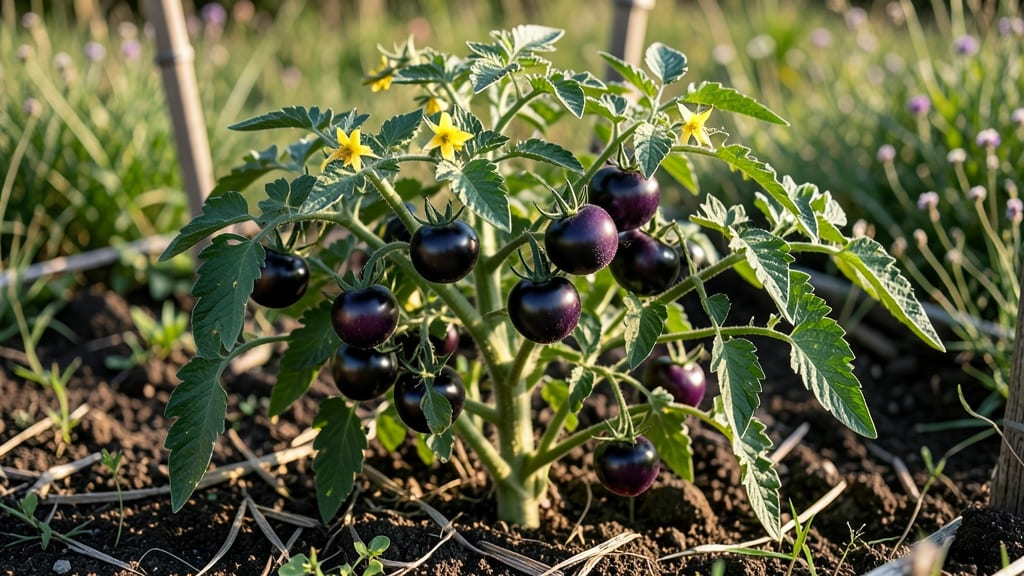
Growing purple tomatoes in New Hampshire’s chilly climate means choosing the right varieties that can handle early frosts and short seasons. ✨ I’ve grown these striking heirlooms for years in my Zone 5 garden, and the key is selecting cold-tolerant types like ‘Black Krim’ or ‘Cherokee Purple’—both thrive in cooler temperatures and produce rich, antioxidant-packed fruit even when summer lingers just a few months.
The secret to success starts with timing: plant seeds indoors 6-8 weeks before your last frost, then transplant hardened-off seedlings into well-draining soil after all danger of frost has passed.
Purple tomatoes need full sun (6+ hours daily) and rich, slightly acidic soil—amend with compost before planting to give them a nutrient boost. Spacing is critical too; give each plant 2-3 feet of room to prevent disease and encourage robust growth.
Once established, these tomatoes reward patience with vibrant purple-red fruit that ripens later in the season. Regular watering at the base (avoid wetting leaves to prevent blight) and a balanced fertilizer every 3-4 weeks keep plants productive.
Prune suckers early to direct energy into fruit production, and watch for pests like hornworms—handpick them before they devour your harvest.
Harvest begins in late summer, continuing into fall if temperatures stay mild. Purple tomatoes store well in a cool, dark place for 2-3 weeks, but their flavor peaks when eaten fresh.
Save seeds from your best fruit to grow next year’s crop—NH’s short season makes heirloom varieties all the more precious. With the right approach, you’ll enjoy homegrown purple tomatoes that outshine store-bought any day.
📚 In This Guide
- What you need
- Instructions
- Tips and common mistakes
- Wrapping up and next steps
What you need
- ● Purple tomato seeds or seedlings: Choose a cold-hardy variety like ‘Indigo Rose’ or ‘Black Krim’ (10–20 seeds or 3–5 seedlings).
- ● Containers or garden beds: For containers: 5-gallon pots (1 per plant) with drainage holes.
- ● For in-ground: Full-sun spot (6+ hours/day) with well-draining soil.
- ● High-quality potting mix: 1 bag (40 qt) of organic, peat-free mix (e.g., FoxFarm Ocean Forest).
- ● Slow-release fertilizer: 1 lb of 10-10-10 or organic tomato fertilizer (e.g., Espoma Tomato-Tone).
- ● Row covers or cold frames: 2–4 ft wide (e.g., Agribon fabric) to extend the season.
- ● Stakes or cages: 6 ft tall tomato cages (1 per plant) or bamboo stakes.
- ● Watering can or drip irrigation: 2+ gallons capacity for consistent moisture.
- ● pH test kit: To ensure soil pH is 6.0–6.8 (tomatoes thrive in slightly acidic soil).
- ● Garden trowel or transplant spade (for planting seedlings).
- ● Pruning shears (for trimming suckers and dead leaves).
- ● Gloves (to protect hands from thorns and soil).
- ● Sunlight tracker: NH’s short season means maximizing light—place containers on a south-facing window or balcony if growing indoors early.
- ○ Optional but helpful: Heating mat (for starting seeds indoors, 60–75°F range).
- ● Compost or worm castings (to boost soil fertility).
- ● Mulch (straw or shredded leaves) (to retain moisture and insulate roots).
Step-by-step guide to growing purple tomatoes in New Hampshire’s climate
New Hampshire’s short season demands smart choices—here’s how to thrive with cold-resistant purple varieties.
🌱 Step 1: Select the Right Purple Variety for NH
Cold-tolerant purple tomatoes like ‘Black Krim’ or ‘Purple Cherokee’ handle NH’s cooler springs and fall frosts better than standard red types. Look for varieties labeled early-maturing (60-70 days) or disease-resistant—these are your best bets for our region’s humidity and variable weather. I always check seed packets for cold-hardiness ratings before buying.
Start seeds indoors 8-10 weeks before your last frost date (typically mid-April in NH). Use biodegradable pots to avoid disturbing roots later. Purple tomatoes often need a longer growing season, so don’t skimp on the head start—cool nights slow their growth significantly.
🪴 Step 2: Prepare Containers or Raised Beds for Maximum Heat Retention
NH’s cool soil holds back tomato roots, so use black plastic mulch or straw bales to warm the soil 2-3 weeks before transplanting. Fill containers with well-draining potting mix (never garden soil—it’s too dense and cold). Add a handful of compost to each planting hole for nutrients.
Place containers or raised beds in the sunniest, warmest spot you have—south-facing walls or fences work best. If your yard has afternoon shade, consider a small greenhouse tent or row covers to extend the season. Purple tomatoes need full sun (8+ hours daily), but NH’s summer days are short—plan accordingly.
☀️ Step 3: Harden Off and Transplant at the Right Time
Start hardening off seedlings 2 weeks before your last frost date by placing them outside in partial shade for 1-2 hours daily, gradually increasing time. Watch for wilting or yellowing leaves—this means they’re not ready yet. Purple tomatoes are sensitive to transplant shock, so take your time.
Transplant after all danger of frost has passed and soil temps reach at least 60°F. Bury stems deeper than usual (up to the first true leaves) to encourage strong root growth. Use cage supports immediately—purple varieties can get top-heavy with fruit. Mulch heavily with straw to retain soil warmth and prevent blossom-end rot.
💧 Step 4: Water and Fertilize for NH’s Unpredictable Weather
Water deeply 2-3 times per week, aiming for 1-2 inches total, but adjust based on rainfall. Purple tomatoes need consistent moisture—let soil dry slightly between waterings to prevent cracking. I use drip irrigation to avoid wetting leaves, which reduces disease risk in NH’s damp summers.
Fertilize with a balanced organic fertilizer (like 5-5-5) every 3-4 weeks once flowers appear. Purple tomatoes are heavy feeders, but too much nitrogen leads to leafy growth at the expense of fruit. Look for purple or pink flowers—this signals readiness for pollination. If NH’s cool nights slow fruit set, hand-pollinate with a small brush in the morning.
✂️ Step 5: Prune and Harvest for Maximum Yield in Short Season
Prune suckers (the shoots in the leaf axils) weekly to direct energy to fruit production. Purple tomatoes benefit from open-center pruning—remove leaves below the first flower cluster to improve airflow and reduce disease. Harvest when fully colored and slightly soft to touch, usually 70-85 days after transplanting.
NH’s early frosts can sneak up fast, so pick overripe tomatoes and store them at 55-60°F to ripen indoors. Purple tomatoes store well—use them in sauces or freeze whole for winter. If a plant struggles, don’t give up: one healthy purple tomato plant in NH can yield 10-15 pounds of fruit with the right care.
Tips & tricks for perfect purple tomatoes in New Hampshire’s climate
New Hampshire’s growing season is short but mighty—here’s how to maximize your purple tomato harvest with these battle-tested strategies.
Variety Selection: The 60-70 day maturity window for cold-resistant varieties like ‘Black Krim’ isn’t just a guideline—it’s your lifeline in NH’s unpredictable climate. I’ve learned the hard way that rushing seedlings or choosing late-maturing varieties leads to disappointed harvests. Check seed packets for cold-hardiness ratings specifically, not just disease resistance. Purple tomatoes often need that extra week or two to mature compared to red varieties.
Soil Preparation: That 2-3 week soil warming period before transplanting is critical for NH’s cool springs. I’ve seen dramatic differences when using black plastic mulch versus straw bales—black plastic raises soil temps by up to 10°F faster. For containers, mix in a handful of compost per planting hole (about 1/2 cup) to give roots a nutrient boost right from the start. The key is creating that microclimate where roots can establish quickly before summer’s short window arrives.
Transplant Timing: Waiting for soil to reach at least 60°F isn’t just about avoiding frost—it’s about preventing transplant shock. I’ve noticed purple tomatoes particularly struggle with cold soil because their roots grow slower than red varieties. Burying stems deeper (up to first true leaves) creates a stronger root system that can handle NH’s temperature swings better. And that straw mulch? It’s not just for looks—it maintains soil warmth and prevents blossom-end rot, which purple tomatoes are especially prone to.
Watering Strategy: The 2-3 times per week guideline works, but NH’s humidity means you might need to adjust. I’ve found that purple tomatoes actually prefer slightly drier conditions than red varieties to prevent cracking. Water deeply in the morning (about 1-2 inches total) and let soil dry slightly between waterings. The drip irrigation method mentioned is a game-changer—it keeps leaves dry and reduces disease pressure, which is crucial for our damp summers.
Pro Tips for Purple Tomato Nh
- New Hampshire’s growing season is short but mighty—here’s how to maximize your purple tomato harvest with these battl...
- Variety Selection: The 60-70 day maturity window for cold-resistant varieties like ‘Black Krim’ isn’t just a guidelin...
- Soil Preparation: That 2-3 week soil warming period before transplanting is critical for NH’s cool springs. I’ve seen...
Frequently asked questions
Got questions about growing purple tomatoes in New Hampshire’s chilly climate? You’re not alone! Here are answers to the most common queries to help you succeed with this vibrant, cold-hardy variety.
How cold can purple tomatoes NH handle?
Purple tomatoes (like Black Krim or Indigo Rose) are more cold-tolerant than traditional red varieties, surviving brief dips to 28°F (-2°C). However, young plants may need row covers or cold frames for NH’s early spring/late fall. Start seeds indoors 6-8 weeks before the last frost (usually mid-April) for a head start!
When is the best time to plant purple tomatoes in NH?
Wait until soil temps reach 55°F (13°C)—typically late May to early June in NH—to plant outdoors. For a longer season, transplant hardened-off seedlings in early May under protective covers. Harvest time? Expect ripe fruit 70-90 days later, often stretching into September or October with proper care.
Can I grow purple tomatoes in containers in NH?
Choose 5-gallon pots or larger with drainage holes, and use a lightweight potting mix. Dwarf varieties like Purple Cherry thrive in containers. Place pots in full sun and move them indoors or to a garage if frost threatens. Just ensure they get 6+ hours of sunlight daily for optimal growth.
Why are my purple tomatoes cracking or turning green?
Cracking often happens with uneven watering—soak soil consistently (1-2 inches per week) but avoid soggy roots. Green tomatoes? Likely due to cool temps or insufficient sunlight. Try these fixes:
- Mulch with straw to stabilize soil moisture.
- Use black plastic mulch to warm soil faster.
- Harvest early and ripen indoors with a paper bag + banana.
What’s a good alternative if purple tomatoes don’t thrive?
If NH’s short season proves challenging, try these cold-resistant alternatives:
Variety
Days to Maturity
Cold Tolerance
Stupice (red/pink)
60-70 days
Survives light frosts
Mountain Merit
70-75 days
Resistant to cracking
Glacier
65-70 days
Early producer, cold-hardy
All three handle NH’s climate better than standard heirlooms!
Wrapping up and next steps
Growing purple tomatoes in New Hampshire’s challenging climate is totally doable with the right variety and care! 🌱 These cold-resistant gems pack a flavor punch and add vibrant color to your garden—perfect for NH’s short growing season.
Whether you’re a seasoned gardener or just starting out, their unique taste and hardiness make them a rewarding choice.
Ready to take the next step? Start seeds indoors now (or grab transplants early) and give your purple tomatoes the best shot at thriving. Happy gardening—your future harvest awaits! 🍅✨