
Vegetables
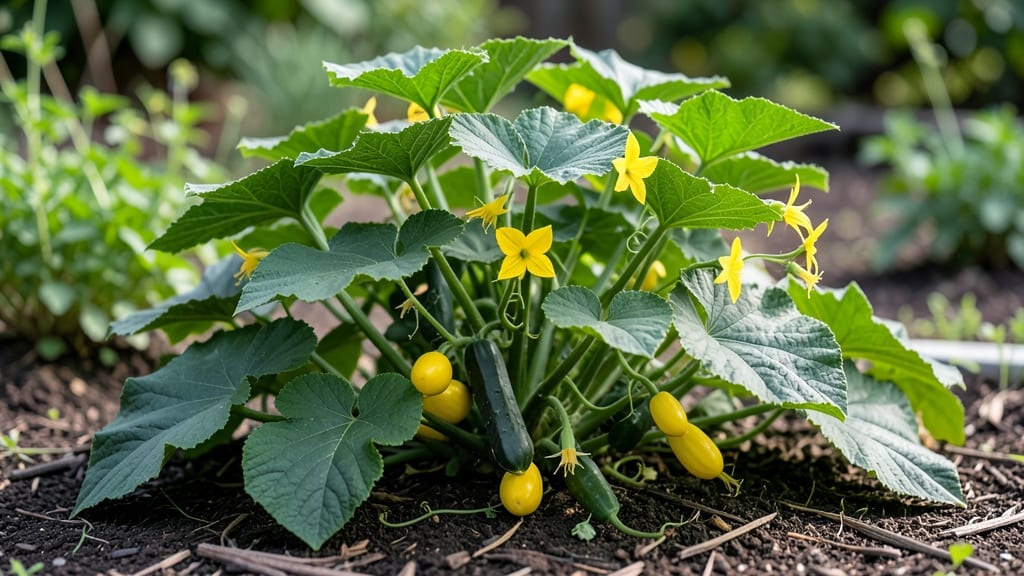
Growing small round yellow cucumbers like 'Lemon Cucumber' delivers crisp, sweet bites in just 50 days—no greenhouse needed. ✨ I've grown these in 5-gallon containers on my balcony, and they outperform store-bought cucumbers every time.
The secret lies in their love of warmth, consistent water, and a sturdy trellis to keep vines climbing instead of sprawling. These cucumbers thrive in full sun (6+ hours daily) and well-draining soil mixed with compost.
Start seeds indoors 3-4 weeks before your last frost, or plant directly after all danger of frost has passed. Water at the base daily, keeping soil moist but never soggy—yellowing leaves usually mean overwatering or poor drainage. A balanced fertilizer every 2 weeks keeps vines vigorous and fruit prolific.
📚 In This Guide
- What you need
- Instructions
- Tips and common mistakes
- Wrapping up and next steps
What you need
- ● Container: At least 5-gallon (19-liter) pot (bigger is better for 2+ plants). Ensure it has drainage holes.
- ● Potting Mix: High-quality, well-draining mix (avoid garden soil). Look for labels like "organic vegetable mix" or "container blend." Quantity: 1 bag (typically 1.5–2 cubic feet).
- ● Seeds or Seedlings: Seeds: Small round yellow cucumber variety (e.g., 'Lemon Cucumber' or 'Bush Champion'). Quantity: 2–3 seeds per container (thin to 1–2 strongest plants).
- ● OR Seedlings: 1–2 healthy, disease-free transplants (check local nurseries for varieties suited to your climate).
- ● Fertilizer: Balanced fertilizer (10-10-10 or 5-5-5) for planting.
- ● Low-nitrogen, high-potassium fertilizer (e.g., 0-10-10) when flowers appear.
- ○ Support System: Trellis, cage, or stakes (optional but recommended to save space and improve air circulation). Height: 3–4 feet.
- ● Gloves (to protect hands from soil and thorns).
- ● Hand trowel or small shovel for transplanting.
- ● Watering can or hose with gentle spray nozzle (avoid soaking the soil).
- ● Mulch (straw or shredded leaves) to retain moisture and suppress weeds.
- ● Pruning shears (for trimming excess vines or yellow leaves).
- ○ pH test kit (optional but helpful—ideal pH: 6.0–6.8).
- ● Shade cloth (30–50%) for hot climates (prevents bolting).
Step-by-step instructions for growing compact yellow cucumbers
Here’s how to coax those sweet, golf-ball-sized yellow cucumbers from seed to harvest in just 50 days.
🌱 Step 1: Start Seeds Indoors for Early Growth
Sow seeds 3-4 weeks before your last frost date in biodegradable pots filled with seed-starting mix. Press each seed ½ inch deep—they need darkness to germinate. Keep the soil consistently moist at 70-75°F until sprouts appear in 5-7 days. A heat mat speeds this along, especially if your home runs cool.
Once the first true leaves appear (those are the second set, not the initial seed leaves), move seedlings under grow lights for 14-16 hours daily. Without enough light, they’ll stretch leggy and never recover. I like to keep the lights 3 inches above the seedlings and raise them as they grow.
🪴 Step 2: Transplant to Containers with Support
Choose 5-gallon containers with drainage holes—cucumbers need room for roots and vines. Fill with a mix of 50% potting soil and 50% compost for fertility. Plant one seedling per container when they’re 3-4 inches tall, burying up to the first true leaves. This encourages stronger stems.
Install a trellis or tomato cage immediately—cucumbers climb aggressively, and supported vines produce straighter, cleaner fruit. Water deeply after transplanting to settle the roots. Yellow cucumbers are sensitive to root disturbance, so handle seedlings gently to avoid shock.
☀️ Step 3: Maintain Warmth and Consistent Moisture
Place containers in full sun (6+ hours daily), but protect from afternoon heat if temperatures exceed 90°F. A shade cloth (30-50%) prevents sunscald on young vines. Water at the base every 2-3 days, keeping the soil evenly moist but not soggy. Yellow cucumbers wilt easily—if leaves droop by midday, it’s time to water.
Feed with a balanced liquid fertilizer (10-10-10) every 2 weeks once flowers appear. Look for tiny yellow blooms—these develop into fruit in 7-10 days. Hand-pollinate if needed by gently shaking the vines on a warm morning (bees do most of the work, but containers sometimes need help).
✂️ Step 4: Harvest at Peak Ripeness
Pick cucumbers when they’re 2-3 inches in diameter and a bright, even yellow. Use pruning shears to snip the stem—this prevents bruising and encourages more fruit. I harvest every 2-3 days to keep the plant producing; neglected vines turn bitter and stop flowering.
Continue harvesting until frost threatens. The vines will die back naturally, but you’ll get 4-6 weeks of production from a single planting. Save seeds from your best cucumbers by letting a few overripe on the vine—they’ll turn brown and soft before drying.
🌿 Step 5: Extend the Season with Succession Planting
For a continuous harvest, sow a second batch 2 weeks after your first harvest. Use the same containers—just refresh the soil with 2 inches of compost before replanting. In warm climates, you can grow yellow cucumbers year-round with shade cloth in summer and row covers in winter.
Here’s the thing—yellow cucumbers are finicky but rewarding. The key is consistency: warm soil, steady water, and prompt harvesting. Once you nail these, you’ll have bushels of sweet, bite-sized cucumbers ready for pickling or fresh snacking.
Tips & tricks for perfect container-grown yellow cucumbers
Real talk: These little yellow gems can be temperamental, but once you master the rhythm, you’ll have a steady supply of sweet, bite-sized cucumbers. Here’s how to avoid the most common pitfalls and get the best results from your 50-day journey.
Seed Starting Secret: The 70-75°F soil temperature range is non-negotiable for germination. If your home runs cool, invest in a small heat mat—it’s worth the $15 to avoid waiting weeks for stubborn seeds. I’ve seen seeds take 10-14 days to sprout when soil stays below 65°F. Pro move: Use a clear plastic dome or wrap your pots in plastic wrap to trap warmth while they germinate.
Lighting Game-Changer: Those 14-16 hours of grow light aren’t just about duration—they’re about intensity. If your seedlings stretch toward the light (a condition called "leggy"), you’re either too far away or the bulbs aren’t strong enough. I use full-spectrum LED grow lights and keep them just 3 inches above the seedlings. When the first true leaves appear, adjust the height so they’re 2 inches away—this prevents burning while maintaining strong stems.
Container Prep Wisdom: The 50% compost mix isn’t just about nutrients—it’s about moisture retention and aeration. Before planting, mix in 1 cup of perlite or vermiculite per 5-gallon container to prevent compaction. I also add a handful of worm castings at the bottom for extra microbial activity, which helps roots establish faster. And here’s what nobody tells you: Water your containers thoroughly 24 hours before transplanting. This prevents transplant shock from dry soil.
Heat Management Strategy: When temperatures hit 90°F or higher, your cucumbers will struggle—even with shade. I’ve seen vines wilt dramatically in afternoon heat, only to recover by evening. The fix? Install a drip irrigation system on a timer for 10-15 minutes every morning and evening. This keeps roots cool while maintaining consistent moisture. For extreme heat, mist the leaves lightly in the early morning, but avoid evening watering to prevent fungal issues.
Pro Tips for Small Round Yellow Cucumber
- Real talk: These little yellow gems can be temperamental, but once you master the rhythm, you’ll have a steady supply of sweet, bite-sized cucumbers.
- Seed Starting Secret: The 70-75°F soil temperature range is non-negotiable for germination.
- Lighting Game-Changer: Those 14-16 hours of grow light aren’t just about duration—they’re about intensity.
Frequently asked questions
What’s the best container size for growing small round yellow cucumbers?
Opt for at least a 5-gallon container (12+ inches deep) to ensure root growth and stability. Larger pots (10+ gallons) work better for multiple plants or trellising. Use well-draining soil and add compost to boost nutrients—these cucumbers thrive in snug but not cramped spaces!
How often should I water small round yellow cucumbers in containers?
Water when the top inch of soil feels dry, usually every 2–3 days in hot weather. Containers dry out faster than gardens, so check daily during heatwaves. Use a drip irrigation system or water at the base to avoid fungal issues. Mulch helps retain moisture!
Can I grow small round yellow cucumbers from store-bought seeds, or do I need heirloom varieties?
Store-bought seeds might work, but they’re often hybridized for shelf life, not flavor or yield. For guaranteed success, choose heirloom or container-specific varieties like ‘Bush Champion’ or ‘Spacemaster.’ Check seed packets for "small-fruited" labels to match your goals!
Why are my small round yellow cucumbers turning bitter or misshapen?
Bitterness or deformities often stem from overcrowding, underwatering, or poor pollination. Thin plants to 12–18 inches apart, hand-pollinate flowers with a paintbrush if bees are scarce, and ensure consistent moisture. Harvest promptly—they’re ready in 50 days!
Are small round yellow cucumbers good for pickling, or should I save them for fresh eating?
They’re perfect for both! Their crisp, sweet flavor shines in pickles (try a vinegar brine with dill and garlic). For fresh eating, slice them into salads or snack on whole—they’re naturally low-calorie and packed with vitamin K. Double win!
Wrapping up and next steps
Growing small round yellow cucumbers in containers isn’t just possible—it’s a rewarding and space-efficient way to enjoy fresh, homegrown produce in just 50 days! 🌱 Whether you’re a beginner or a seasoned gardener, these vibrant little gems prove that big flavors come in tiny packages.
With the right setup and care, you’ll be harvesting crisp, sun-kissed cucumbers to elevate salads, snacks, or pickles.
Ready to dive in? Start by sketching your container garden plan—choose your pots, prep your soil, and mark your calendar for those first tiny sprouts. Soon, you’ll be reaping the sweet taste of success (and maybe even sharing extras with neighbors!). Happy growing! 🌟