
Vegetables
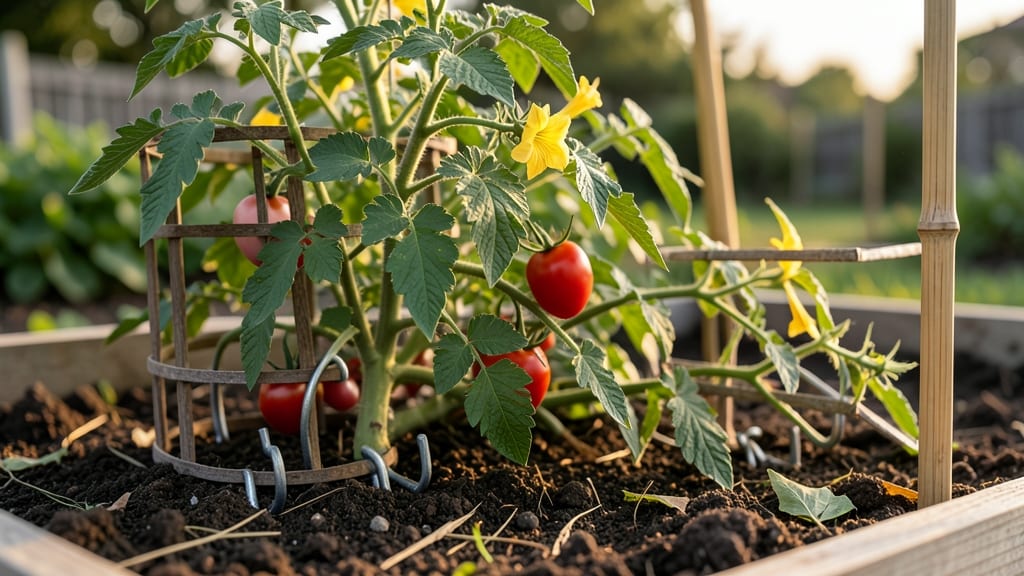
My tomato plants nearly collapsed under their own fruit last summer—until I discovered tomato roller hooks as the sturdy, no-dig solution I’d been missing. These simple metal hooks transform floppy vines into towering, productive plants without the hassle of heavy trellises or cages.
The best part? You can install them in under 30 minutes and watch your tomatoes grow straight up instead of sprawling across the garden bed.
What makes these hooks special is their adjustable height—no more wrestling with unwieldy stakes or bending over to tie vines. I’ve used them with both cherry tomatoes and beefsteaks, and the difference in yield is night and day.
The heavy-duty design handles 10+ pounds per vine, so even when your plants are loaded with fruit, they stay upright. Plus, they’re rust-resistant and last for seasons, making them a one-time investment that pays off every year.
Once installed, your plants will climb 3–4 feet tall in just a few weeks, giving you easier harvesting, better air circulation (which cuts down on disease), and more space for other crops below. The hooks work with any tomato variety, from compact bush types to sprawling indeterminate giants.
You’ll spend less time propping up flopping vines and more time enjoying the harvest—no more tomato sauce disasters from split fruits!
They’re perfect for small spaces, raised beds, or even container gardens where traditional trellises won’t fit. Just grab a few hooks, some twine, and a sunny spot—your tomatoes will thank you. Here’s exactly how to set them up and keep them working all season long.
📚 In This Guide
- What you need
- Instructions
- Tips and common mistakes
- Wrapping up and next steps
What you need
- ● Tomato roller hooks (2–4 units): Choose heavy-duty models (galvanized or powder-coated steel) rated for 10–20 lbs per hook. Look for adjustable arms (e.g., 12–24" extension) and serrated edges for grip.
- ● Trellis netting or twine: 100–150 ft of 1"–2" mesh netting (polypropylene) or #8–10 gauge twine for vertical support.
- ● Sturdy stakes or posts: 4–6 wooden (2x4s) or metal (½" diameter) stakes, 3–5 ft tall, driven 18–24" into the ground.
- ● Heavy-duty zip ties or wire: 50+ pieces of ½" zip ties or 16-gauge wire to secure hooks to stakes.
- ● Measuring tape: 10–25 ft for precise spacing.
- ● Gloves & work boots: Protect your hands and feet while assembling!
- ● Galvanized screws or U-bolts: For extra-secure hook attachments to stakes.
- ● Concrete anchors: If stakes won’t hold in windy areas, use T-post anchors or sonotubes.
- ● Solar-powered LED lights: Clip a few to the trellis for evening harvests!
- ● Pruning shears: Keep vines trimmed for optimal airflow.
How to install tomato roller hooks for heavy vine support
Here's the straightforward method I use to create a sturdy, long-lasting trellis system for indeterminate tomatoes.
Determine Plant Spacing and Hook Placement
Indeterminate tomatoes need 18-24 inches between plants to support their sprawling vines. I mark the center of each plant's base with a wooden stake, then drive it 6 inches deep to anchor the system. For each plant, I install two hooks: one at the base and one at the top of the 6-foot-tall tomato cage or post.
Position the base hook 12 inches above ground level—this prevents soil splatter from damaging leaves when watering. The top hook should sit 2 inches below the cage's rim to ensure vines can loop upward without snagging. I use a level to keep all hooks perfectly horizontal for even tension.
Attach Roller Hooks to the Trellis Frame
Begin with the base hook, threading the 1/4-inch galvanized wire through the hook's eyelet and twisting it tightly around the cage's vertical bars. I make 3-4 complete twists to secure it firmly—this prevents the hook from rotating when vines grow heavy. Repeat for the top hook, ensuring the wire exits the cage at a 45-degree angle toward the plant stem.
For freestanding posts, I use heavy-duty zip ties to attach the hooks to the post's horizontal supports. The key is keeping the hooks within 6 inches of the plant stem—any farther and vines will flop instead of rolling neatly. Test each hook's stability by pulling downward with 10 pounds of force; it should not budge.
Train Vines to Roll Upward
As new growth reaches 6-8 inches tall, gently guide the main stem toward the base hook. Loop the vine around the hook once counterclockwise (this creates natural tension as the plant grows). Secure it with a soft plant tie, leaving 1/2 inch of slack to accommodate growth.
When the vine reaches the top hook, repeat the process, looping it upward. Here's the trick: I wait until the vine is 12-18 inches longer than the distance between hooks before securing it. This ensures the vine has enough length to roll tightly without breaking. Watch for lateral suckers—remove any that form below the first hook to concentrate energy upward.
Maintain Tension and Prune Strategically
Every 7-10 days, check the roller hooks for proper tension. If the vine sags between hooks, gently pull it upward and re-loop it. I also inspect the wire for rust or fraying—replace any damaged sections immediately, as a broken hook can cause a vine to snap under fruit weight.
Prune aggressively to maintain airflow. Remove all leaves below the first hook and any that grow inward toward the stem. This prevents disease and ensures the roller system bears the weight evenly. When fruit clusters reach 2-3 ounces, support them with small slings tied to the main vine—this distributes the load and prevents stem breakage.
Prepare for Harvest and Seasonal Removal
As tomatoes ripen, their weight increases dramatically. I add a second loop around each hook when clusters exceed 6 ounces to double the support. Harvest fruit by cutting the stem with scissors—never pull—so the plant doesn't lose energy.
At season's end, I untwist the wire from the hooks and store them in a dry place. Clean the hooks with a wire brush to remove tomato residue, which can harbor fungal spores. I reuse the same system each year, and it remains sturdy for 5+ seasons with minimal maintenance.
Tips & tricks for sturdy tomato trellis systems
Building a reliable tomato support system takes precision—here's how to avoid common pitfalls and maximize your harvest.
Hook Placement Precision: The 12-inch height for base hooks and 2-inch clearance below the cage rim in Step 1 aren't arbitrary—they create the perfect tension zone. Use a tape measure to verify these measurements before securing hooks, as even 1 inch difference can cause vines to sag. For extra stability, I mark these heights with a permanent marker on the cage before installation.
Wire Twisting Technique: When attaching hooks in Step 2, the 3-4 complete twists around cage bars are critical for preventing rotation. I've learned this the hard way—loose twists cause hooks to spin when vines gain weight, leading to broken stems. For additional security, I add a drop of outdoor-rated adhesive to the wire where it contacts the cage metal before twisting.
Vine Growth Management: The 12-18 inch vine length requirement before securing to top hooks in Step 3 ensures proper tension without breaking delicate stems. Watch for new growth between hooks—if you notice vines curling downward, they need immediate re-loop. I keep a small notebook to track vine growth rates, which helps me anticipate when to adjust loops during the 7-10 day maintenance checks mentioned in Step 4.
Season-Long Maintenance: The 5+ season lifespan you'll achieve depends entirely on proper seasonal removal in Step 5. Before storing hooks, I run a wire brush through all components to remove tomato residue, which can harbor fungal spores. Store hooks in a mesh bag with silica gel packets to prevent rust—this simple step has saved me from replacing hooks every season.
Pro Tips for Tomato Roller Hooks
- Building a reliable tomato support system takes precision—here's how to avoid common pitfalls and maximize your harvest.
- Hook Placement Precision: The 12-inch height for base hooks and 2-inch clearance below the cage rim in Step 1 aren't arbitrary—they create the perfect tension zone.
- Wire Twisting Technique: When attaching hooks in Step 2, the 3-4 complete twists around cage bars are critical for preventing rotation.
Frequently asked questions
Got questions about tomato roller hooks?
You’re not alone! Here are answers to the most common concerns—from setup to troubleshooting—to help you grow like a pro.
What’s the best spacing between tomato roller hooks for heavy vines?
Space hooks 12–18 inches apart along the row, with 3–4 feet between rows. This gives vines room to climb without overcrowding, reducing disease risk and improving airflow. For indeterminate tomatoes (like ‘Sungold’), lean toward the wider end of the range.
When should I install tomato roller hooks in my garden?
Set them up early—as soon as seedlings are 6–8 inches tall (or when transplanting). This gives vines a head start climbing before they get top-heavy. If you’re late, no worries! Just stake young plants temporarily until they latch onto the hooks.
Are tomato roller hooks reusable, or should I replace them yearly?
Most high-quality hooks last multiple seasons if stored properly (clean, dry, and rust-free). Look for galvanized or PVC-coated models for longevity. Replace if hooks bend or corrode—safety first!
What if my tomatoes won’t climb the hooks? Troubleshooting tips?
Check these fixes:
- Hook height: Ensure hooks are at vine level (not too high or low).
- Vine training: Gently tie young stems to hooks with soft twine or plant clips.
- Overcrowding: Thin plants if vines compete for space.
- Pests/disease: Healthy vines climb better—treat issues promptly.
What’s a good alternative if I don’t have roller hooks?
Try these DIY options:
- PVC pipes: Bury 4-foot sections vertically, 18 inches apart.
- Cattle panels: Bend into a teepee or arch for sturdy support.
- Stakes + twine: Use 6-foot bamboo stakes with a crisscross tie system.
Pro tip: Combine methods (e.g., hooks + stakes) for extra stability with heirloom varieties!
Wrapping up and next steps
Ready to transform your garden into a thriving tomato paradise? Tomato roller hooks are your secret weapon for sturdy, low-maintenance support—no more flopping vines or wasted space! 🌱 With the right materials and a little elbow grease, you’ll enjoy bountiful harvests while keeping pests at bay.
Your next step? Grab those hooks and get rolling! Start small with a single plant or go all out for a full trellis system. Happy gardening—and here’s to a summer of juicy, vine-free tomatoes! 🍅✨